
Consistent, thermostat-controlled heat for Walla Walla winters.
Set the hopper, set the thermostat, and let it run. Find the right pellet stove or insert for your Walla Walla Valley home, and connect with a trusted local dealer.
Every Project Starts From One of These Five Situations
A hands-off way to heat the Walla Walla Valley.
At 964 feet in the Walla Walla Valley, winters here are real but not brutal—average lows sit around 31°F and the area logs roughly 4,800 heating degree days a year, noticeably milder than the high country a few hours east or north (Bozeman, Montana, by comparison, routinely sees single-digit lows all winter). That's exactly the kind of climate where pellet heat shines: enough cold to want a serious secondary or primary heat source, but not so extreme that you need a wood stove's raw BTU output every night.
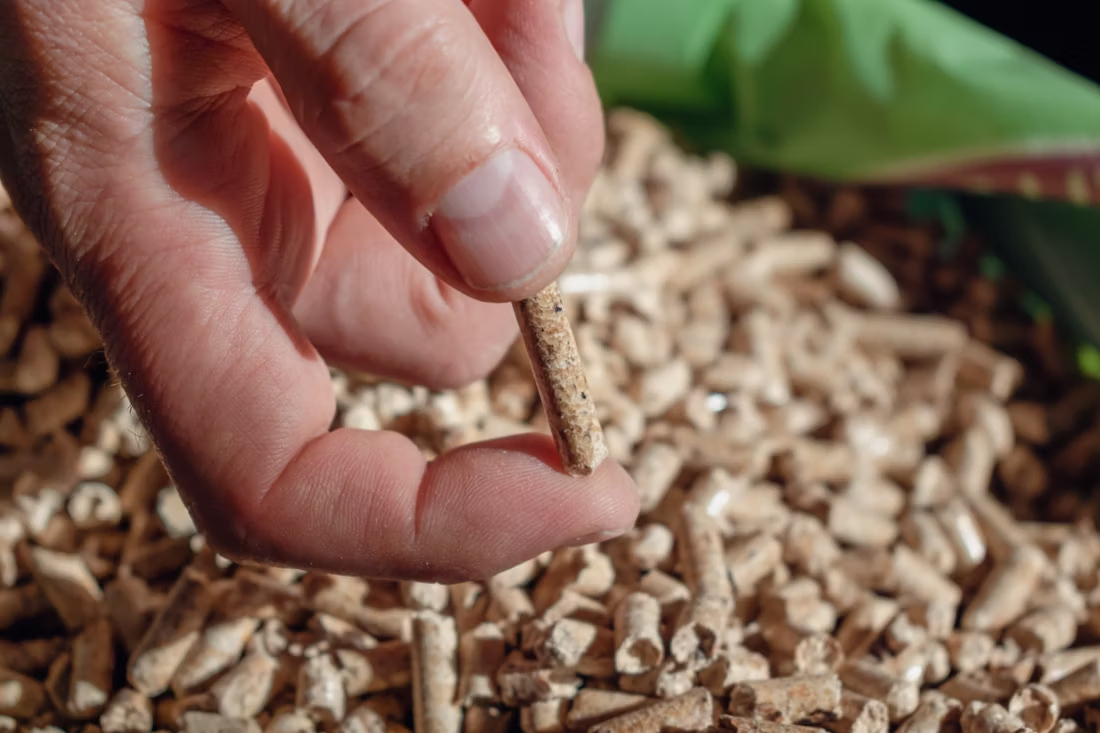
Pellet stoves also fit the practical side of Walla Walla living—no cutting, splitting, or stacking cordwood, no chimney sweep on the roof, and a thermostat that holds a steady temperature while you're at work in the vineyards or downtown. Regional brands like Bear Mountain, Lignetics, and Pacific Pellet are milled from the same Pacific Northwest softwoods—ponderosa pine, lodgepole pine, and Douglas fir—that grow in the Umatilla National Forest just outside town, and they're stocked at farm and hardware stores throughout the valley. During wildfire smoke season, when regional air quality can already be compromised, a clean-burning EPA-certified pellet appliance adds far less particulate to the air than an open wood fire.
Three steps. No salesperson until you're ready.
Tell us about your project
Your zip code, your situation, and the fuel you're leaning toward—or let the answers point you to one.
See what's actually available
The brands dealers within 100 miles genuinely carry—real options, never a catalog mirage.
Get your dealer & Project Guide
A trusted local dealer, plus the free Project Guide & Parts List that names every component of the job.
Frequently Asked Questions
How much does a pellet stove installation cost in Walla Walla?
Across the Walla Walla Valley, a typical pellet stove or insert installation runs about $3,000 to $6,500. A freestanding pellet stove vented through an exterior wall with a simple horizontal pellet vent kit lands on the lower end. A full insert conversion into an existing masonry fireplace—which requires a stainless liner run up the existing chimney—sits toward the higher end. Homes without an existing fireplace or chimney chase will need new wall penetration and venting work, which a local dealer will quote after an in-home walkthrough.
What's the difference between a pellet stove and a wood stove?
A wood stove burns split cordwood and relies on manual loading, damper control, and airflow to manage the fire—it needs no electricity, which makes it a genuine backup heat source. A pellet stove burns compressed wood pellets fed automatically by an electric auger, with a blower distributing heat and a thermostat holding a set temperature. For most Walla Walla homes, that means less daily tending, more consistent room temperatures, and easier venting (pellet stoves can often vent horizontally through a wall rather than needing a full chimney), but the stove goes dark in a power outage unless you add a battery backup.
Where do I buy pellets in Walla Walla, and what do they cost?
Pellets are widely available at farm-supply and hardware stores throughout the Walla Walla Valley, with regional brands like Bear Mountain, Lignetics, and Pacific Pellet the most common on the shelf. Expect to pay roughly $250 to $320 per 40-lb-bag ton, with premium low-ash softwood blends toward the top of that range. A typical Walla Walla winter—given the area's moderate 4,800 heating degree days—runs a primary-heat household through 2 to 3 tons; homes using pellet heat as supplemental warmth for a single room burn considerably less.
Will my pellet stove work during a power outage?
Not without a backup power source. Unlike a wood stove, a pellet stove's auger, igniter, and blower all run on electricity—typically 100 to 400 watts during operation. At PacifiCorp's residential rate of about 12.5 cents per kWh, that's only a few dollars a month to run, but it does mean an outage stops the stove. Many Walla Walla homeowners pair a pellet stove with a small battery backup unit or a portable generator for winter storm outages; ask your local dealer which stove models are compatible with battery backup systems, since not all are.
Do I need a permit to install a pellet stove in Walla Walla?
Yes—a new pellet stove or insert installation requires a building permit, either through the City of Walla Walla or Walla Walla County depending on your address. The permit process verifies clearances to combustibles, correct venting termination points, and hearth pad requirements where applicable. Most local hearth retailers handle the permit application as part of the installation, so you generally won't need to file it yourself. Unlike wood stoves, pellet appliances aren't subject to wood-smoke curtailment periods during winter air quality advisories, since their emissions are substantially lower.
Can a pellet insert go into my existing wood fireplace?
In most cases, yes. A pellet insert slides into an existing masonry or factory-built firebox opening, with a smaller-diameter vent pipe run up through the existing chimney or, in some cases, out through the rear wall instead. This is a popular option for older Walla Walla homes with a wood-burning fireplace that rarely gets used—it keeps the existing look while adding real, controllable heat output. A local dealer will measure your firebox opening and chimney chase to confirm fit before recommending a specific model.
How much maintenance does a pellet stove need?
Pellet stoves need more routine attention than a gas unit but less than a wood stove's annual chimney sweep. Plan on emptying the ash pan every few days during regular use, wiping the glass weekly, and doing a deeper burn-pot and heat-exchanger cleaning every one to two weeks depending on pellet quality and how hard the stove is run. Most manufacturers recommend a professional annual service to check the auger motor, gaskets, and venting—local dealers who sell Bear Mountain and Lignetics pellets typically offer this service directly.
What size pellet stove do I need for a Walla Walla home?
Because Walla Walla's winters are milder than the mountain climates to the north and east—average lows around 31°F rather than the single digits or below-zero nights seen in places like Helena, Montana—many valley homes get by with a mid-size pellet stove in the 40,000 to 50,000 BTU range for a main living area, rather than the largest units on the market. Smaller stoves in the 8,000 to 30,000 BTU range work well for supplemental heat in a single room, sunroom, or converted garage. A dealer will size the unit to your square footage, ceiling height, and insulation level during an in-home visit.
Pellet stove vs. wood stove—which is right for my home?
Wood stoves work without electricity, tend to have lower fuel costs if you're willing to cut your own firewood—Umatilla National Forest permits run about $20 for 4 cords of ponderosa pine, lodgepole pine, or Douglas fir during the May-to-October cutting season—and offer higher raw heat output. Pellet stoves trade some of that off for convenience: automatic feed, steady thermostat control, easier venting, and lower particulate output, which matters during the valley's wildfire smoke season when air quality is already a concern. For a Walla Walla household without the time or interest in splitting and stacking wood, pellet is usually the easier daily-use choice; for anyone who wants a heat source that keeps working through a winter power outage, wood still has the edge.
Why is my open fireplace making my house colder?
Open fireplaces suck—literally. As the fire burns, it consumes air your furnace already paid to heat and pulls it out through the chimney, so the house is actually colder after the fire goes out than before you lit it. An insert fixes this: it seals the chimney, puts fixed glass across the front, and turns that hole in your house into a real heat source.
How often does a pellet stove need cleaning?
A clean pellet stove is a happy pellet stove. Plan on cleaning the burn pot about once a week when you're burning regularly—ash and clinkers gum up the air holes just like a pellet barbecue. Most pellet stove problems trace back to skipped cleaning that nobody explained up front. Some designs make it easy with a trapdoor burn pot: pull a lever and the gunk drops into the ash pan.
Can a fireplace actually lower my heating bill?
Yes—by creating a comfort zone. A furnace heats every square foot of the house just to warm the one room you're in; a gas fireplace on low burns roughly a sixth of the gas a typical furnace does. Set the furnace around 55–60 degrees as a baseline, then heat the rooms your family actually uses. Families who heat this way commonly save $20–$60 a month.
Does a fireplace add value to my home?
On average, a fireplace adds back to the home about the same amount you spent installing it. Add the monthly savings from heating the rooms you actually use instead of the whole house—often hundreds of dollars a year—and the value case is strong before you even count what a fire does for how your family uses the room.
Nearby Dealers
Hearth shops serving Walla Walla and the surrounding area.
Pellet Brands Stocked Around Walla Walla
Manufacturers will point you to the nearest stocking dealer.
Find your pellet stove in Walla Walla.
Tell us about your home and heating goals, and I'll match you with a trusted local Walla Walla dealer and send you a free Project Guide & Parts List—the exact stove or insert, vent kit, and installation plan for your space.
Find Your Fireplace →