
Find the right gas fireplace for your Wahkiakum County home.
Damp Columbia River winters and a county with no natural gas utility mean propane is the standard here. I'll match you with a trusted local dealer who installs it correctly and get you a free parts list.
Every Project Starts From One of These Five Situations
Instant heat for a marine, moisture-heavy climate.
Wahkiakum County sits along the lower Columbia River in southwest Washington, a Climate Zone 4C marine environment where winters are less about deep cold than persistent damp—steady rain, high humidity, and a wildfire-smoke season that can make wood burning less appealing on certain days. With under 4,000 residents spread across Cathlamet, Skamokawa, and the surrounding timberland, there's no natural gas utility serving the county—every gas fireplace or insert here runs on propane, typically from a home tank supplied by a regional propane delivery company.
That doesn't make gas heat any less popular. For homes here, particularly in Cathlamet and along the river where humidity keeps everything feeling cool and clammy even in the mid-40s, a direct-vent propane fireplace gives instant, consistent warmth without the ash, smoke, or chimney maintenance that comes with wood—a real advantage in a county where firewood is abundant but many homeowners still want a low-maintenance option for daily living spaces. It also plays well as a supplemental heat source alongside a woodstove, giving households a fast backup when the propane tank is full and the woodpile is running low.
Three steps. No salesperson until you're ready.
Tell us about your project
Your zip code, your situation, and the fuel you're leaning toward—or let the answers point you to one.
See what's actually available
The brands dealers within 100 miles genuinely carry—real options, never a catalog mirage.
Get your dealer & Project Guide
A trusted local dealer, plus the free Project Guide & Parts List that names every component of the job.
Frequently Asked Questions
How much does a gas fireplace installation cost in Wahkiakum County?
Because there's no natural gas utility in Wahkiakum County, essentially every gas fireplace installation here runs on propane. Costs typically fall in the $4,500 to $11,000 range depending on the unit and whether you already have a propane tank and gas line in place. A direct-vent insert going into an existing masonry fireplace with propane already on site tends to land on the lower end. New construction or a fireplace in a room with no existing gas supply—requiring a new tank setup or longer line run from a regional propane supplier—pushes toward the higher end. A local installer will walk your home before quoting a firm number.
Do I need to be on natural gas to install a gas fireplace here?
No—and in Wahkiakum County, you won't have that option anyway, since there's no natural gas main serving Cathlamet, Skamokawa, or the surrounding areas. Every gas fireplace, insert, or stove installed here runs on propane, either from an existing home tank or a new tank set by a regional propane supplier. Most gas fireplace models sold nationally can be configured for propane with the correct orifice and regulator, so fuel type doesn't limit your options—it just determines which supplier delivers your fuel.
Can I convert my existing wood fireplace to gas?
Yes, and it's a common project for older homes around Cathlamet and along the river where masonry fireplaces were built decades ago. A propane insert typically installs into the existing firebox, using the current chimney (relined with a stainless liner) as the vent path. Costs generally run $4,500 to $9,500 depending on the insert and whether a new propane line needs to be run from the tank. The conversion keeps the look of your existing hearth while trading ash and creosote for a fireplace that lights with a switch or remote.
Will my gas fireplace still work if the power goes out?
Most will, which matters in a county where storms off the Columbia River regularly knock out power for hours or longer. Units with IPI (intermittent pilot ignition) run on AA batteries as backup, so the fireplace lights normally even with the grid down—just keep fresh batteries on hand. Valor fireplaces take it a step further: their pilot generates its own electricity through the thermocouple, so there are no batteries to maintain at all. For a rural, storm-exposed county like Wahkiakum, that's worth asking your local dealer about directly.
What's the difference between a gas fireplace, insert, and stove?
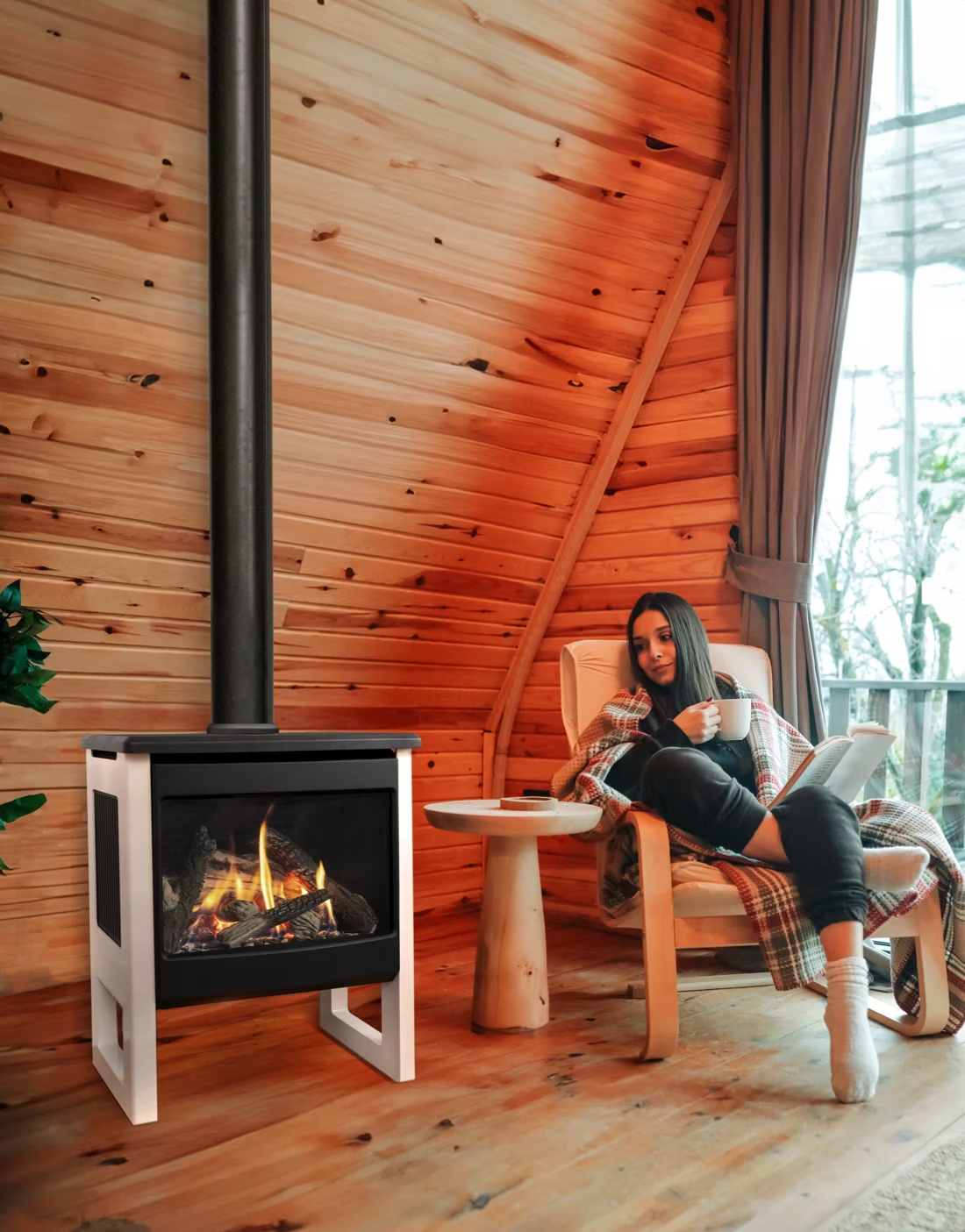
A gas fireplace is a built-in unit framed into a wall, typically chosen for new construction or a major remodel. A gas insert drops into an existing masonry firebox and uses the existing chimney as its vent—the common choice for the older farmhouses and river-town homes found around Cathlamet and Skamokawa. A gas stove is a freestanding cabinet-style unit that sits on a hearth pad like a woodstove but burns propane. For most Wahkiakum County homes with an existing fireplace to upgrade, an insert is the straightforward answer.
Do I need a permit to install a gas fireplace in Wahkiakum County?
Yes—a building permit is required for new gas fireplace or insert installations, and propane line work needs to be handled by a licensed gas-fitter. Most established local dealers coordinate the permitting, the propane line connection, and the final inspection as part of the install, so you're not stuck managing separate trades yourself. Given how rural the county is, using a dealer who already has a working relationship with the county building department tends to move the process along faster.
Vented vs. vent-free gas fireplaces—which should I choose?
Vented (direct-vent) units draw combustion air from outside and exhaust it back outside through sealed venting, keeping combustion byproducts out of the living space entirely. Vent-free units burn propane directly into the room and release some water vapor and trace combustion gases as a result. Washington allows vent-free units under specific room-sizing and ventilation rules, but given the persistent humidity along the lower Columbia—moisture is already a standing issue in a lot of older Wahkiakum County homes—a direct-vent unit is the safer bet for indoor air quality and avoiding excess condensation. Local dealers can walk through both options if you want to weigh the tradeoffs yourself.
How often should my propane fireplace be serviced?
Plan on an annual inspection, ideally before the wet season sets in. A technician checks the burner, pilot assembly, venting, and propane line connections, and cleans the glass and interior components. This matters more in a marine climate like Wahkiakum's, where humidity can accelerate corrosion on metal fittings faster than in a drier region. Expect to pay in the neighborhood of $150 to $250 for a standard annual service call from a local hearth technician.
Gas vs. wood—which makes more sense for a Wahkiakum County home?
Wood is abundant here—douglas fir, red alder, and lodgepole pine are all common locally—and a woodstove still makes sense as a primary or backup heat source, especially since it works without electricity during river-storm outages. But wood burning has downsides on wildfire-smoke days and requires ongoing chimney maintenance in a damp climate where creosote can build up faster. Gas, running on propane since there's no natural gas utility in the county, offers instant, low-maintenance heat that's easy to use daily without the ash and upkeep. Many households here run both: a woodstove for backup and ambiance, propane for the fireplace they use every night.
Why is my open fireplace making my house colder?
Open fireplaces suck—literally. As the fire burns, it consumes air your furnace already paid to heat and pulls it out through the chimney, so the house is actually colder after the fire goes out than before you lit it. An insert fixes this: it seals the chimney, puts fixed glass across the front, and turns that hole in your house into a real heat source.
Can I put a TV above my fireplace?
Yes—with an asterisk. Fireplaces are hot and TVs don't like heat. Either put a mantel between them to deflect rising warmth, or choose a fireplace with heat-management technology that creates a cool zone on the wall above—the wall stays around 125 degrees, barely warm, while the room still gets full heat. If you like clean lines and don't want a mantel, heat management is the answer.
Can I install a fireplace myself?
If you're putting a fire in your house on purpose, it's best to work with an expert. Unless you're genuinely experienced in framing, gas line, vent pipe, and the national code on clearances to combustibles, have a professional do it—and ideally the same company that sells you the fireplace, so warranty, service, and liability all live under one roof.
Can a fireplace actually lower my heating bill?
Yes—by creating a comfort zone. A furnace heats every square foot of the house just to warm the one room you're in; a gas fireplace on low burns roughly a sixth of the gas a typical furnace does. Set the furnace around 55–60 degrees as a baseline, then heat the rooms your family actually uses. Families who heat this way commonly save $20–$60 a month.
Stove and Fireplace Dealers in Wahkiakum County
Listings include WhyFire partner dealers, dealers we have verified as authorized for the brands we recommend, and established local businesses that carry hearth products. Every listing shows which one it is. The ones marked Preferred run on WhyFire's software, so they can show you real pricing and book your appointment right here. No manufacturer pays for placement. How we verify dealers →
Infinite Heating & Cooling LLC
Earth-N-Sun
White's Heating & Sheet Metal
Coast Heating & Cooling
Diamond Heating
Energy Star Systems & Stoves
JnL Stoves & Spas
Get matched with a Wahkiakum County gas fireplace dealer.
Tell me about your home and I'll match you with a trusted local dealer and send over a free Project Guide & Parts List—the right unit, the vent kit, and what it takes to get it installed correctly on propane.
Find Your Fireplace →