
Find the right electric fireplace for your Wahkiakum County home.
No venting, no gas line, no chimney—just a clean install for river-town homes from Cathlamet to Skamokawa. We match you with a local dealer who handles the rest.
Every Project Starts From One of These Five Situations
Simple heat for a county without much natural gas infrastructure.
Wahkiakum County is Washington's least populated county—under 4,000 residents spread along the north bank of the Columbia River, with Cathlamet as the county seat and small communities like Skamokawa and Rosburg tucked into the timbered hills behind. Climate zone 4C means mild, wet winters rather than deep cold, and there's no natural gas utility serving the county, which pushes many homeowners toward propane, wood, or electric rather than a gas line retrofit. For a lot of homes here—older farmhouses along Steamboat Slough Road, cabins near Elochoman, or a second bedroom that never quite gets warm—an electric fireplace fills a real gap without touching the roofline or the gas budget.
Electric units plug into a standard outlet or a dedicated circuit, need no chimney or venting, and can go into a home with zero prior hearth infrastructure—which matters in a county where a lot of housing stock predates modern code and doesn't have masonry to work with. They won't replace a wood stove as primary heat during a Columbia River winter storm with the power out, but for supplemental warmth, ambiance, or a room a woodstove doesn't reach, they're often the most practical fix. A local dealer can also tell you honestly when electric isn't the right call—for a lot of Wahkiakum County homes relying on wood or propane for primary heat, that's still the case, and electric fills in around it.
Three steps. No salesperson until you're ready.
Tell us about your project
Your zip code, your situation, and the fuel you're leaning toward—or let the answers point you to one.
See what's actually available
The brands dealers within 100 miles genuinely carry—real options, never a catalog mirage.
Get your dealer & Project Guide
A trusted local dealer, plus the free Project Guide & Parts List that names every component of the job.
Frequently Asked Questions
How much does an electric fireplace installation cost in Wahkiakum County?
Most electric fireplace installs in Wahkiakum County run $400 to $1,200. A plug-in insert or wall-mount unit on an existing outlet sits at the low end. A built-in electric fireplace requiring a dedicated 20-amp circuit—common in older Cathlamet and Skamokawa homes where the panel wasn't set up for a heat-producing appliance—runs toward the higher end once an electrician is involved. There's no venting or chimney work to price in, which is a big part of why electric installs cost a fraction of a wood or gas project here.
Do I need a permit to install an electric fireplace in Wahkiakum County?
Usually not for the fireplace itself, since there's no fuel-burning appliance, gas line, or chimney involved. If the install requires new electrical circuitry—a dedicated line run to a built-in unit, for example—that electrical work typically needs a permit through the county, and any licensed electrician handling the job will pull it as a matter of course. Straightforward plug-in units generally don't trigger a permit requirement at all.
Will an electric fireplace actually heat a room in a Wahkiakum County winter?
It depends on the room and the goal. Most electric fireplaces are rated for 400-1,500 square feet with a built-in space heater element, which is enough for a bedroom, den, or the room a wood stove or furnace doesn't reach well. In Wahkiakum's zone 4C climate, winters are damp and in the 30s-40s rather than the deep cold of the Cascades or eastern Washington, so electric supplemental heat covers a lot of ground here. What it won't do is replace primary heat during an extended Columbia River winter storm—if the power's out, the fireplace is out too, which matters in a county where outages along the river corridor aren't rare.
What's the difference between an electric insert and a built-in electric fireplace?
An electric insert is sized to slide into an existing fireplace opening—a common move in Wahkiakum County's older masonry-fireplace farmhouses that want to retire an inefficient open wood fireplace without a full remodel. A built-in electric fireplace is designed to be framed into a wall during new construction or a renovation, giving you a flush, modern look with no existing opening required. Freestanding and wall-mount electric units are the third option, and they need nothing more than an outlet or nearby circuit—the simplest path for a rental, a cabin near Elochoman, or a room where you don't want to touch the wall at all.
Can an electric fireplace run during a power outage?
No—electric fireplaces require power to run the heater element and flame effect, so they go dark the moment the power does. That's a real consideration in Wahkiakum County, where winter storms along the Columbia River corridor can knock out power for stretches, sometimes longer in the more rural stretches toward Rosburg or up the Elochoman Valley. Homes that need heat during outages typically pair an electric fireplace for everyday supplemental use with a wood stove or propane heater as the backup that keeps working when the grid doesn't.
Is electric a common choice in Wahkiakum County, or do most people burn wood?
Wood heat has deep roots in Wahkiakum County—douglas fir, red alder, and lodgepole pine are all common locally, and a lot of homes on the more rural stretches of the county still lean on a wood stove for primary heat, partly because there's no natural gas utility here. Electric fireplaces aren't the primary heat source in most homes, but they're a genuinely popular secondary choice—an easy way to add warmth and ambiance to a room, a rental unit, or a space where running a chimney or gas line isn't practical. Think of electric as filling the gaps around a wood or propane system rather than replacing one.
Do I need an electrician to install an electric fireplace?
For a simple plug-in unit on an existing standard outlet, no—most homeowners or the dealer's installer can handle it. If the unit needs a dedicated circuit (common for larger built-in models with a higher-wattage heater), a licensed electrician should handle that portion of the job, especially in older Wahkiakum County housing stock where panels sometimes need updating before they can support a new circuit. Your local dealer will tell you upfront whether your chosen unit needs one.
What's the difference between electric and gas for supplemental heat here?
Gas fireplaces put out real, sustained heat and can run on propane since there's no natural gas line in Wahkiakum County—but they need venting or a vent-free setup, a fuel line or tank, and a bigger installation budget, typically $4,500 and up. Electric fireplaces skip all of that: no venting, no fuel tank, no gas-fitter, and a much smaller upfront cost, but with lower maximum heat output and zero function during a power outage. For a supplemental heat source in a spare room or den, electric is usually the simpler and cheaper answer. For homes wanting a real backup heat source with more BTU, propane gas is worth the bigger investment.
Will an electric fireplace add value to my Wahkiakum County home?
It can, modestly—a well-placed electric fireplace improves the feel of a room and is an easy, low-cost upgrade for a rental or resale listing along Main Street in Cathlamet or a riverfront cabin. It won't move the needle the way a wood stove or gas insert can in a county where primary heating capability matters to buyers, since electric units are understood as supplemental rather than a heating system. Local dealers can tell you honestly whether your money is better spent on an electric unit for ambiance or on a wood or propane upgrade that actually changes your home's heating profile.
Can I put a TV above my fireplace?
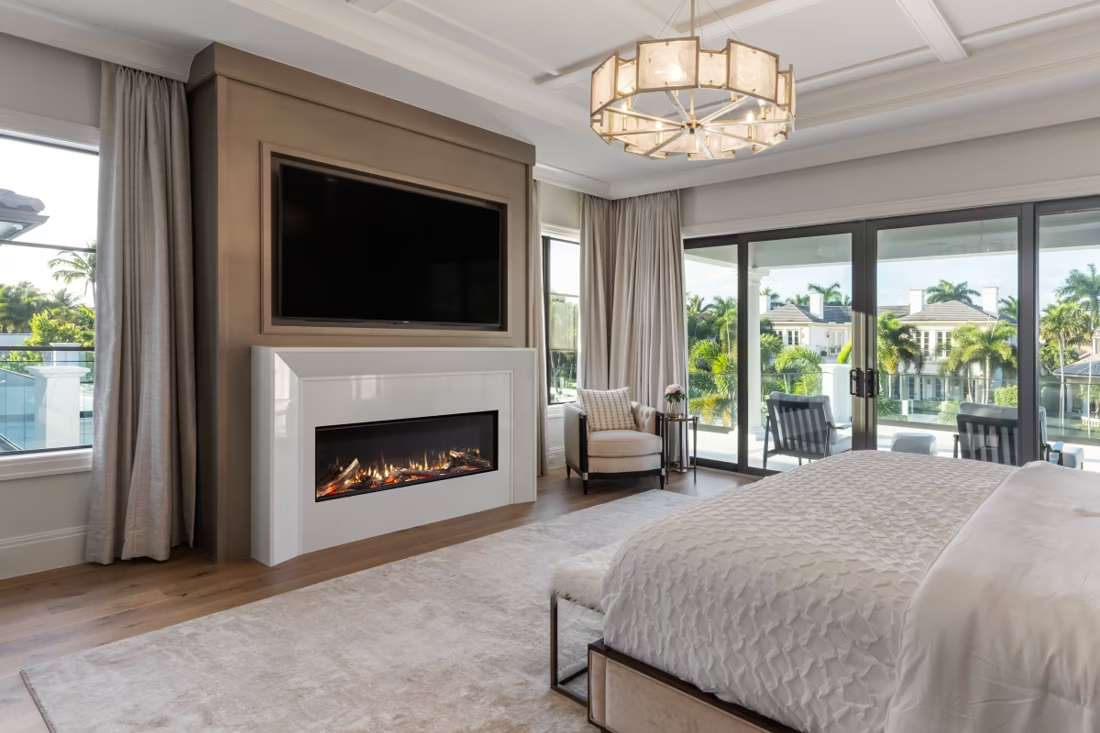
Yes—with an asterisk. Fireplaces are hot and TVs don't like heat. Either put a mantel between them to deflect rising warmth, or choose a fireplace with heat-management technology that creates a cool zone on the wall above—the wall stays around 125 degrees, barely warm, while the room still gets full heat. If you like clean lines and don't want a mantel, heat management is the answer.
How much does an electric fireplace cost to run?
With the heater on, a typical unit draws about 1,500 watts—at average electric rates that's roughly 20 cents an hour. Run the flame effect alone and it costs pennies; the flames are LED-driven and use about as much power as a light bulb. There's no pilot light, no fuel delivery, and essentially no maintenance.
Does a fireplace add value to my home?
On average, a fireplace adds back to the home about the same amount you spent installing it. Add the monthly savings from heating the rooms you actually use instead of the whole house—often hundreds of dollars a year—and the value case is strong before you even count what a fire does for how your family uses the room.
Can a fireplace actually lower my heating bill?
Yes—by creating a comfort zone. A furnace heats every square foot of the house just to warm the one room you're in; a gas fireplace on low burns roughly a sixth of the gas a typical furnace does. Set the furnace around 55–60 degrees as a baseline, then heat the rooms your family actually uses. Families who heat this way commonly save $20–$60 a month.
Stove and Fireplace Dealers in Wahkiakum County
Listings include WhyFire partner dealers, dealers we have verified as authorized for the brands we recommend, and established local businesses that carry hearth products. Every listing shows which one it is. The ones marked Preferred run on WhyFire's software, so they can show you real pricing and book your appointment right here. No manufacturer pays for placement. How we verify dealers →
Infinite Heating & Cooling LLC
Earth-N-Sun
White's Heating & Sheet Metal
Coast Heating & Cooling
Diamond Heating
Energy Star Systems & Stoves
JnL Stoves & Spas
Get your free Wahkiakum County electric fireplace Project Guide & Parts List.
Tell us about your home and we'll match you with a trusted local dealer serving Wahkiakum County, plus a free Project Guide & Parts List—the exact parts and a recommended installer for your electric fireplace project.
Find Your Fireplace →