
Find the right electric fireplace for your Thurston County home.
Mild, marine-influenced winters and no ash, no venting, and no gas line—electric heat fits the way a lot of Thurston County homes actually live. Get matched with a trusted local dealer who can size the right unit for your space.
Every Project Starts From One of These Five Situations
Mild winters, easy install, real ambiance.
Thurston County sits in climate zone 4C with winter lows averaging a mild 33°F and roughly 5,378 heating degree days a year—nothing like the sub-zero stretches you'd see in Duluth or Bismarck. That marine-influenced climate is exactly why electric fireplaces do so well here: most homes in Olympia, Lacey, Tumwater, and out toward Yelm don't need a high-output primary heat source, they need supplemental warmth and ambiance in a specific room, without adding a chimney, gas line, or combustion byproducts to the house.
Because electric units plug into a standard outlet (or a dedicated circuit for larger built-ins), there's no venting to size, no Building Permit process to navigate for most models, and no interaction with the wildfire-smoke air quality concerns that occasionally affect wood burning here during late summer and fall. That makes electric a practical fit for condos, rentals, finished basements, and any room where a wood or gas install isn't realistic—while still giving homeowners a real flame-effect display and zone heat where they spend the most time.
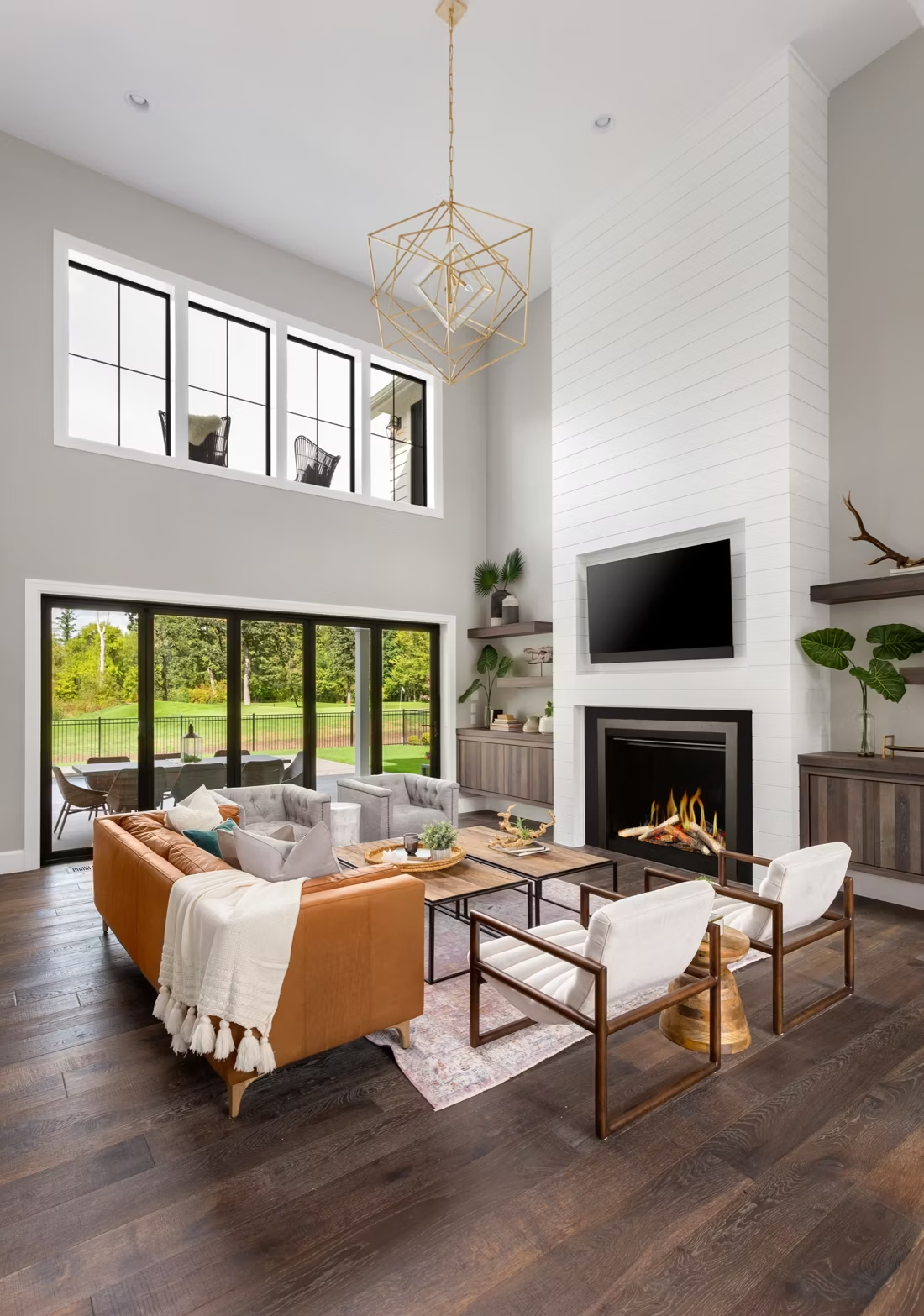
Three steps. No salesperson until you're ready.
Tell us about your project
Your zip code, your situation, and the fuel you're leaning toward—or let the answers point you to one.
See what's actually available
The brands dealers within 100 miles genuinely carry—real options, never a catalog mirage.
Get your dealer & Project Guide
A trusted local dealer, plus the free Project Guide & Parts List that names every component of the job.
Frequently Asked Questions
How much does an electric fireplace installation cost in Thurston County?
Most electric fireplace installs in Thurston County run $400 to $1,200. A plug-in freestanding or wall-mount unit at the low end needs nothing more than an outlet. A built-in electric insert or a linear electric fireplace set into a wall or existing masonry opening runs higher once framing, a dedicated 120V or 240V circuit, and finish trim are factored in. Homes in older Olympia neighborhoods with knob-and-tube or outdated panels sometimes need an electrician to add capacity before installation, which adds to the cost.
Do I need a permit to install an electric fireplace in Thurston County?
Usually not for a plug-in unit—it's treated like any other appliance. A built-in electric fireplace that requires new wiring or a dedicated circuit typically falls under standard electrical permitting through the local jurisdiction (Olympia, Lacey, Tumwater, or Thurston County itself for unincorporated areas), since it's electrical work rather than a combustion appliance install. Most local dealers coordinate with a licensed electrician when new circuit work is needed, so you're not left tracking down the permit yourself.
How much does it cost to run an electric fireplace in Thurston County?
Running costs depend on your local electric utility rate and how many hours a day you run the heater element versus just the flame effect. Most electric fireplaces draw around 1,500 watts on heat mode, which at typical Puget Sound Energy residential rates costs roughly 15-25 cents an hour to run on high heat. Because Thurston County's winters are mild—averaging 33°F lows—many homeowners run the flame effect alone (a few watts) for ambiance and only switch on the heater during the coldest snaps, keeping seasonal costs modest compared to a home relying on electric heat as a primary source.
What's the difference between an electric insert, a built-in electric fireplace, and a freestanding electric stove?
An electric insert is designed to slide into an existing masonry fireplace opening, instantly upgrading an old wood-burning firebox with flame effect and heat without touching the chimney. A built-in electric fireplace is designed for new construction or remodels, framed into a wall like a piece of custom millwork. A freestanding electric stove sits on the floor and looks like a traditional wood or pellet stove, but plugs into an outlet. For Thurston County homes with an existing but unused masonry fireplace, an insert is often the simplest and most affordable upgrade.
Can an electric fireplace actually heat a room, or is it just for looks?
A properly sized electric fireplace can meaningfully heat a single room—most models are rated for 400 to 1,000 square feet on the heater setting, which covers a typical living room or bedroom. It won't replace central heating for a whole house, but for Thurston County's mild climate, that's rarely the goal. Most homeowners here use electric units as zone heat for the room they occupy most, running the central system lower elsewhere. Sizing still matters: an undersized unit in a large, open-concept great room will underperform, so a local dealer should walk through your square footage before recommending a model.
Will an electric fireplace work during a power outage?
No—electric fireplaces require power to operate, both the flame effect and the heater, so they go dark during an outage just like any other plugged-in appliance. For Thurston County homes concerned about winter storm outages (which do happen here, particularly with wind events off the Sound), a wood or propane-fueled gas unit provides backup heat that electric simply can't. Many homeowners pair an electric fireplace for everyday ambiance and convenience with a wood stove or gas insert elsewhere in the home for outage resilience—a combination local dealers see often in this county.
Do electric fireplaces need any maintenance?
Very little compared to wood or gas. There's no chimney to sweep, no gas line to inspect, and no combustion byproducts to worry about. Maintenance is mostly dusting the unit, occasionally replacing an LED or heater element after years of heavy use, and keeping the vents on built-in units unobstructed for proper airflow. This low-maintenance profile is one of the reasons electric fireplaces are popular in rental properties and vacation homes around Thurston County's lakes, where owners aren't on-site year-round to manage upkeep.
Can I put an electric fireplace anywhere in my house?
Almost—that's one of the format's real advantages. Since there's no venting requirement, an electric fireplace can go on an interior wall, in a bedroom, in a basement, or in a condo or apartment where a wood or gas install would be impossible under a lease or HOA. The only real constraint is electrical: built-in units drawing significant wattage may need a dedicated circuit, which an electrician can add almost anywhere in the house. This flexibility is a big part of why electric fireplaces have grown popular in newer Lacey and Tumwater developments where masonry chimneys were never built into the design.
Electric vs. gas—which is right for my Thurston County home?
Gas offers more heat output, works during power outages with the right ignition system, and gives a more authentic flame appearance for homeowners who want real combustion heat. Electric costs far less to install, needs no gas line or venting, and can go in rooms where gas simply isn't an option. Given Thurston County's mild winter lows around 33°F, a lot of homeowners here don't need gas-level BTU output for everyday use—electric covers the ambiance and light supplemental heat most rooms actually need, while a gas or wood unit elsewhere in the home handles the coldest nights and outage backup. A local dealer can walk through both options based on your specific room and budget.
Can I put a TV above my fireplace?
Yes—with an asterisk. Fireplaces are hot and TVs don't like heat. Either put a mantel between them to deflect rising warmth, or choose a fireplace with heat-management technology that creates a cool zone on the wall above—the wall stays around 125 degrees, barely warm, while the room still gets full heat. If you like clean lines and don't want a mantel, heat management is the answer.
What fireplace styles should I know before shopping?
Four cover most of the market: screen-front traditional (mesh front, open feel, fits craftsman homes), traditional door set (the classic look you grew up with), modern linear (wide, low, the statement piece for entertaining), and clean face contemporary (no trim—your tile or stone runs right to the fire's edge). Walk in knowing those four terms and you're ahead of most buyers.
How much should I budget for a fireplace?
For an average home—covering the fireplace, the vent pipe, and basic installation—a budget between $3,900 and $5,500 gives you a lot of options across wood, gas, and pellet. By the time you add finish work, gas line, and electrical, the average complete installation lands between $5,000 and $12,000 all-in. In a remodel or new build, a good rule is to put about 2.5% of the total project cost toward the fireplace.
Can a fireplace actually lower my heating bill?
Yes—by creating a comfort zone. A furnace heats every square foot of the house just to warm the one room you're in; a gas fireplace on low burns roughly a sixth of the gas a typical furnace does. Set the furnace around 55–60 degrees as a baseline, then heat the rooms your family actually uses. Families who heat this way commonly save $20–$60 a month.
Stove and Fireplace Dealers in Thurston County
Listings include WhyFire partner dealers, dealers we have verified as authorized for the brands we recommend, and established local businesses that carry hearth products. Every listing shows which one it is. The ones marked Preferred run on WhyFire's software, so they can show you real pricing and book your appointment right here. No manufacturer pays for placement. How we verify dealers →
Yelm Home Center
JnL Stoves & Spas
Energy Star Systems & Stoves
Rich’s Woodstoves & Spas
Get your free Electric Fireplace Project Guide & Parts List.
Tell us about your home in Thurston County and we'll match you with a trusted local dealer, plus a free Project Guide & Parts List with the exact electric fireplace or insert recommended for your space.
Find Your Fireplace →