
Warmth on Demand, No Chimney Required.
Real flame look, instant zone heat, and none of the venting or wood-hauling—find the right electric fireplace for your Lacey home and connect with a trusted local dealer.
Every Project Starts From One of These Five Situations
Mild winters, honest heat, zero venting.
Lacey sits low in the South Puget Sound basin at just 172 feet of elevation, where winter lows average a mild 33°F and the annual heating load—comparable to a fraction of what homes in Fargo, ND or Duluth, MN deal with—is much lighter. Winters here are wet and gray more often than they're bitterly cold, which means a lot of Lacey homes don't need a full wood or gas heating system running around the clock. What they need is targeted, reliable warmth in the rooms people actually spend time in.
That's where electric fireplaces earn their keep. Puget Sound Energy supplies power to Lacey homes at roughly $0.1463 per kWh, and because the regional grid leans heavily on hydro, running a 1,500-watt electric unit for an evening costs only a couple of dollars. Lacey has also seen a wave of apartment and rental construction tied to its proximity to JBLM, and many of those units—plus older homes with masonry fireplaces nobody uses anymore—are perfect candidates for an electric insert or built-in that adds ambiance and supplemental heat without a permit fight, a gas line, or a chimney sweep.
Three steps. No salesperson until you're ready.
Tell us about your project
Your zip code, your situation, and the fuel you're leaning toward—or let the answers point you to one.
See what's actually available
The brands dealers within 100 miles genuinely carry—real options, never a catalog mirage.
Get your dealer & Project Guide
A trusted local dealer, plus the free Project Guide & Parts List that names every component of the job.
Frequently Asked Questions
How much does an electric fireplace installation cost in Lacey?
A wall-mounted or built-in electric fireplace installed in a Lacey home typically runs $600 to $2,500, covering the unit, mounting or recessing into a wall cavity, and a licensed electrician wiring a dedicated circuit if the unit doesn't run on a standard plug. Freestanding electric stoves and mantel-style units are much cheaper—$200 to $1,200 for the unit—since they plug into an existing outlet and need no professional install at all. Larger linear electric fireplaces built into custom cabinetry or a stone-look wall feature can run $3,000 to $5,000 once finish carpentry is factored in.
Do I need a permit to install an electric fireplace in Lacey?
Usually not. Because there's no gas line, no combustion, and no venting or chimney involved, a plug-in electric fireplace doesn't trigger a permit from the City of Lacey Community Development Department or Thurston County. If your installation requires a new dedicated 20-amp circuit or moving wiring inside a wall for a built-in unit, that electrical work does require a permit pulled by a licensed electrician—which is one more reason to have a pro handle recessed or wall-mounted installs rather than DIY-ing the wiring yourself.
How much does it cost to actually run an electric fireplace here?
Puget Sound Energy bills Lacey homes at about $0.1463 per kWh. Most electric fireplaces pull around 1,500 watts on their heat setting, which works out to roughly $0.22 an hour—about $5.30 if you ran one continuously for 24 hours, though nobody actually does that. In practice, people run these units for a few hours in the evening in the room they're occupying, which is often cheaper than nudging the whole-house heat pump up a few degrees to warm one space.
What's the difference between an electric fireplace, insert, and log set?
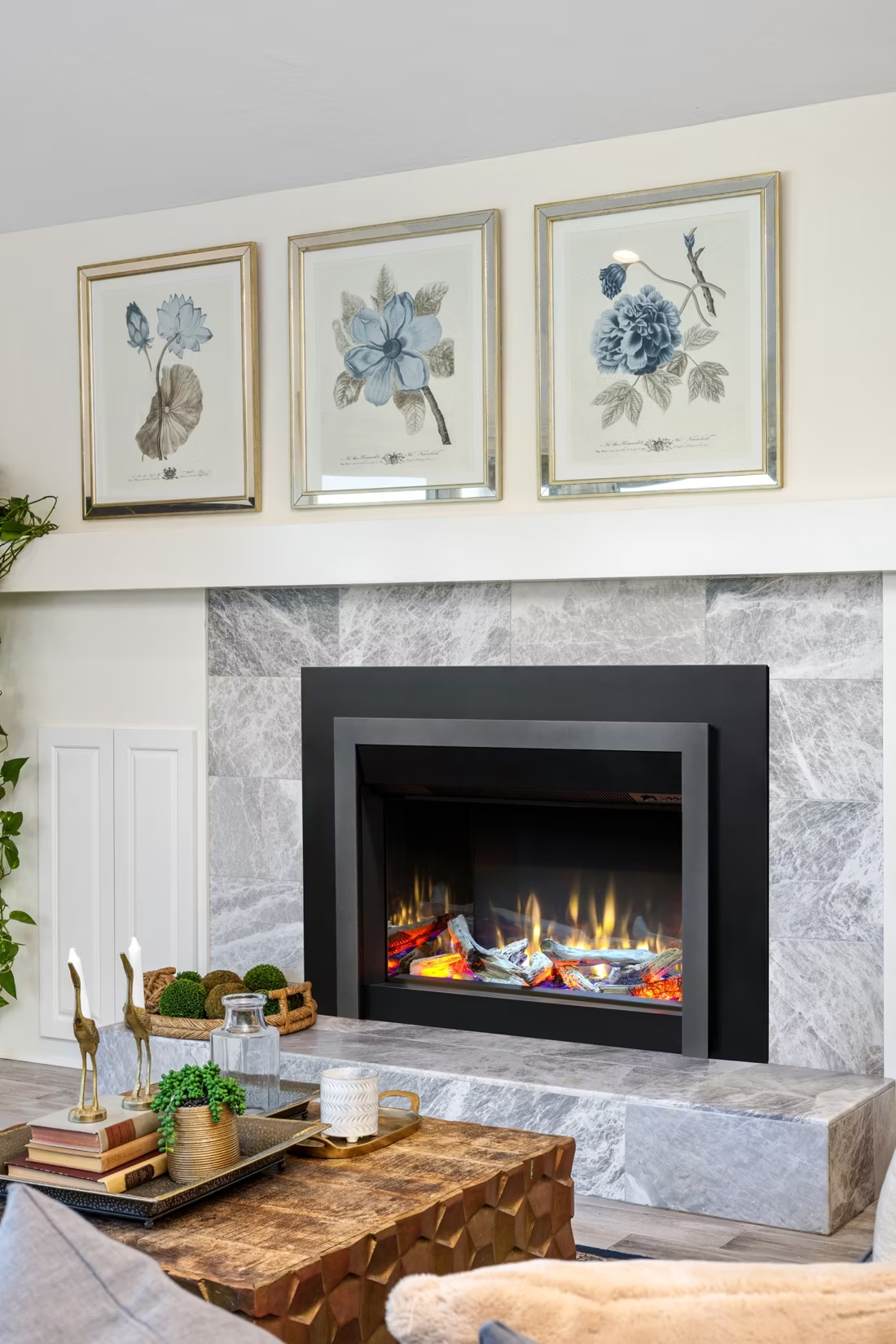
An electric fireplace is typically a built-in or wall-mounted unit designed to be the visual and functional centerpiece of a room. An electric insert is sized to slide into an existing masonry firebox—a common fix for older Lacey homes with a wood fireplace that's fallen out of use, since it delivers flame effect and heat without chimney repair or a sweep. An electric log set is the simplest option: a plug-in log module that sits inside an existing firebox purely for visual effect, with modest or no heat output. For Lacey homes with a disused masonry fireplace, an insert is usually the best value—it revives the fireplace as a working feature without touching the chimney.
Are electric fireplaces enough heat for Lacey's climate?
For whole-home heating, no—and any honest dealer will tell you that. Lacey's climate is mild by national standards (a light winter heating load, with winter lows averaging 33°F), but electric fireplaces are built as zone heaters, not furnace replacements. They're excellent for taking the chill off a bonus room, warming a bedroom without running central heat all night, or adding heat to an addition that isn't on the main HVAC loop. Most Lacey homes still lean on a heat pump or gas furnace as the primary system, with an electric fireplace handling the room-by-room comfort layer.
Will my electric fireplace still work during a power outage?
No—and this is the real tradeoff against wood heat. Thurston County gets its share of winter windstorms that knock out Puget Sound Energy service for hours or occasionally days, and an electric fireplace goes dark right along with everything else in the house. If backup heat during an outage matters to you, a wood stove burning Douglas fir or red alder—species common throughout the South Puget Sound region and cuttable under permit through Olympic National Forest or Mt. Baker-Snoqualmie National Forest—is the appliance that keeps working when the grid doesn't. Many Lacey homeowners run electric for daily convenience and keep a wood-burning option as the fallback.
Electric vs. gas fireplace—which makes more sense for my home?
Gas delivers more heat output and real flame combustion, but it requires either a natural gas line or a propane tank, venting in most configurations, and a higher installed cost. Electric skips all of that—no fuel line, no venting, no annual gas appliance service—in exchange for lower heat output and a flame effect that's visual rather than a true fire. For a Lacey condo, rental, or a room where running gas line or venting isn't practical or allowed by a lease, electric is usually the only realistic option. For a primary living space in a single-family home where higher heat output matters, gas is worth the extra installation cost.
Electric vs. wood—which fits Lacey better?
Wood offers real fire, no electricity dependence, and works with self-cut firewood from nearby national forest land—but it means chimney maintenance, ash cleanup, and attention to Thurston County's periodic wildfire-smoke air quality advisories in late summer and fall, when outdoor burning gets restricted. Electric has zero smoke output, no burn-ban conflicts, and no chimney to maintain, but it won't function without power and can't match wood's raw heat output on the coldest nights. For a rental unit, a bedroom, or a home where nobody wants to deal with firewood, electric wins easily. For a household that values self-sufficient backup heat, wood still has the edge.
What's the best use case for an electric fireplace in Lacey?
The strongest fits are apartments and rental homes near JBLM where lease terms rule out anything with a flame or venting, older homes with a disused masonry fireplace that homeowners want to bring back to life without chimney repair, and any room—a primary bedroom, a converted garage, a sunroom addition—that isn't well served by the home's central heat pump. Because there's no permit hassle for a plug-in unit and no ongoing fuel cost beyond electricity, it's also a low-commitment way to add real ambiance to a space before deciding whether a bigger wood or gas project makes sense down the road.
Can I put a TV above my fireplace?
Yes—with an asterisk. Fireplaces are hot and TVs don't like heat. Either put a mantel between them to deflect rising warmth, or choose a fireplace with heat-management technology that creates a cool zone on the wall above—the wall stays around 125 degrees, barely warm, while the room still gets full heat. If you like clean lines and don't want a mantel, heat management is the answer.
Does an electric fireplace need a vent or chimney?
No—that's its superpower. An electric fireplace needs a wall and an outlet, period. No vent pipe, no gas line, no clearances to design around, which is why it works in bedrooms, offices, apartments, and walls where venting a gas or wood unit would be impractical or impossible. Installation is typically the simplest and least expensive of any fireplace type.
Can a fireplace actually lower my heating bill?
Yes—by creating a comfort zone. A furnace heats every square foot of the house just to warm the one room you're in; a gas fireplace on low burns roughly a sixth of the gas a typical furnace does. Set the furnace around 55–60 degrees as a baseline, then heat the rooms your family actually uses. Families who heat this way commonly save $20–$60 a month.
What is an in-home preview and do I need one?
It's a visit where a hearth professional measures your space, confirms the model you picked actually works in your home, and walks the specs—framing, gas line, venting, finish work—before anything is ordered. Some details you just can't know until you see the house. Never make a down payment without one; it's the single most-skipped step that burns buyers.
Nearby Dealers
Hearth shops serving Lacey and the surrounding area.
Electric Service in Lacey
An electric fireplace's heater draws about 1,500 watts—pennies per hour at local rates.
Puget Sound Energy Inc
Find your electric fireplace in Lacey.
Tell us about your space and we'll put together a free Project Guide & Parts List—the right electric fireplace or insert for your home, plus a trusted local dealer to install it.
Find Your Fireplace →