
Effortless Warmth for Sultan's Mild, Rainy Winters.
No gas line, no chimney, no cutting permit—just clean, flip-a-switch heat for homes along the Skykomish River. Find the right unit and connect with a trusted local dealer.
Every Project Starts From One of These Five Situations
Clean heat that matches Sultan's mild, damp climate.
Sultan sits at just 307 feet in the Skykomish River valley at the foot of the Cascades, in climate zone 4C. Winters here are wet and mild rather than brutally cold—the average winter low hovers around 34°F, and the area sees a winter heating load comparable to a moderate Pacific Northwest season. That's a fundamentally different heating problem than interior cold climates like Fargo, ND or International Falls, MN, where lows regularly drop well below zero for weeks at a time. Sultan homeowners don't need a stove capable of a 20-hour overnight burn; they need steady, reliable warmth to cut the marine chill and dampness of a Pacific Northwest winter, plus clean indoor air during the late-summer wildfire smoke that periodically settles into the valley.
Electric power in Sultan comes from PUD No. 1 of Snohomish County, a largely hydro-supplied utility with a residential rate around $0.1463 per kWh—competitive enough that running a 1,500-watt electric fireplace for a few hours in the evening costs roughly a dollar or two. With no natural gas utility serving much of the Sultan area, extending a gas line for a fireplace often isn't practical, which is part of why electric fireplaces and inserts have become a popular option for zone heating and ambiance in local living rooms, bonus rooms, and basements. Douglas fir and red alder from the surrounding Mt. Baker-Snoqualmie National Forest still fuel plenty of wood stoves here, but for homeowners who want heat without hauling cordwood, sweeping a chimney, or pulling a cutting permit, electric is the low-maintenance alternative.
Three steps. No salesperson until you're ready.
Tell us about your project
Your zip code, your situation, and the fuel you're leaning toward—or let the answers point you to one.
See what's actually available
The brands dealers within 100 miles genuinely carry—real options, never a catalog mirage.
Get your dealer & Project Guide
A trusted local dealer, plus the free Project Guide & Parts List that names every component of the job.
Frequently Asked Questions
How much does it cost to install an electric fireplace in Sultan?
Most electric fireplace installations in Sultan run somewhere between $300 and $2,000. A plug-in wall-mount or freestanding unit on the low end simply needs a standard 120-volt outlet and no permit at all. A built-in electric insert or a larger 240-volt unit—the kind often installed into an existing masonry fireplace opening—costs more once you add a licensed electrician to run dedicated wiring and, for hardwired units, an electrical permit through Snohomish County. Local dealers can tell you within a few minutes of looking at your fireplace opening or wall which category your project falls into.
Do I need a permit to install an electric fireplace in Sultan?
It depends on the unit. A plug-in electric fireplace or insert that runs off a standard household outlet typically doesn't require a permit—you're just plugging in an appliance. If you're installing a hardwired 240-volt unit, adding a new dedicated circuit, or doing any wall modification, Snohomish County's Planning and Development Services requires an electrical permit, and the work needs to be done by a licensed electrician. Most local hearth and electrical retailers who install these units pull the permit as part of the job, so you're not left coordinating it yourself.
How much does it cost to actually run an electric fireplace here?
At Snohomish County PUD's residential rate of about $0.1463 per kWh, a typical 1,500-watt electric fireplace running on high for a few hours a night costs roughly $0.65 to $1.10 per evening—a fraction of what it costs to heat with propane in areas without natural gas service. Most electric fireplaces also let you run the flame effect with the heater off, so you get the ambiance for pennies an hour without pulling any real load on the PUD grid. That combination of hydro-supplied power and low per-kWh cost makes electric heat one of the cheaper supplemental options for a Sultan home.
What type of electric fireplace makes sense for my home?
For a living room that already has a wood-burning masonry fireplace you don't use much, an electric insert slides into the existing firebox and gives you instant heat and flame effect without any venting work. For a bonus room, bedroom, or basement with no existing fireplace, a wall-mount or freestanding electric unit is usually simpler and cheaper, since it just needs an outlet or a short electrical run. If real supplemental heat output matters—not just ambiance—look for a unit rated for the square footage of the specific room, since electric fireplaces are typically zone heaters rather than whole-home solutions.
Electric vs. wood—which is right for a Sultan home?
Wood stoves burning local Douglas fir, red alder, or lodgepole pine remain popular in Sultan, especially for backup heat during storm-related power outages, and cutting permits through the Mt. Baker-Snoqualmie National Forest run $5 to $20 per cord in season from May through October. But wood means chimney maintenance, ash cleanup, and smoke—a real consideration given the wildfire smoke that periodically blankets the Skykomish valley in late summer. Electric produces zero combustion byproducts and zero smoke, which makes it the more livable option for anyone sensitive to smoke or looking to avoid adding to local air quality concerns. Many Sultan homes end up with a wood stove for outage backup and an electric unit for everyday convenience elsewhere in the house.
Electric vs. gas—why not just install a gas fireplace?
Much of the Sultan area isn't served by a natural gas utility, so a gas fireplace usually means either running propane service to the house or installing a tank—both add cost and complexity that an electric fireplace simply avoids. Electric units also skip the annual gas-line and burner inspections that vented and vent-free gas fireplaces require. The tradeoff is heat output: gas fireplaces put out more real, sustained BTUs for whole-room heating, while electric units are better suited to supplemental warmth and ambiance in a single room.
Will my electric fireplace work during a power outage?
No—electric fireplaces require grid power to run, and there's no battery-backup equivalent like some gas units offer. Windstorms coming off the Cascades do knock out power in the Sultan area from time to time, so if backup heat during an outage matters to you, an electric fireplace shouldn't be your only heat source. Many local homeowners pair an electric fireplace for daily convenience with a wood stove or a generator-ready setup for the occasions when PUD service is interrupted.
Can I convert my existing wood-burning fireplace to electric?
Yes, and it's a common, low-disruption project. An electric insert slides directly into your existing masonry firebox opening, typically needs only a nearby outlet (or a short electrical run for larger units), and requires no chimney work, liner, or venting at all—unlike a gas conversion. It's often the fastest and least expensive way to bring a disused or underused wood fireplace back into daily use, particularly in homes where the chimney is old or you'd rather not deal with wood handling and ash cleanup.
Electric fireplace vs. a plug-in space heater—what's the real difference?
A cheap space heater and a quality electric fireplace insert or built-in unit both convert electricity to heat at roughly the same efficiency—the electrical cost is comparable at Snohomish PUD's $0.1463/kWh rate. Where they differ is build quality, safety features, and the fact that a fireplace unit is designed to look like permanent, real cabinetry or masonry rather than an appliance you unplug and put away. Fireplace-grade units also generally have better thermostatic control, quieter fan operation, and a realistic flame effect that can run independently of the heater—something a space heater doesn't offer.
Can I put a TV above my fireplace?
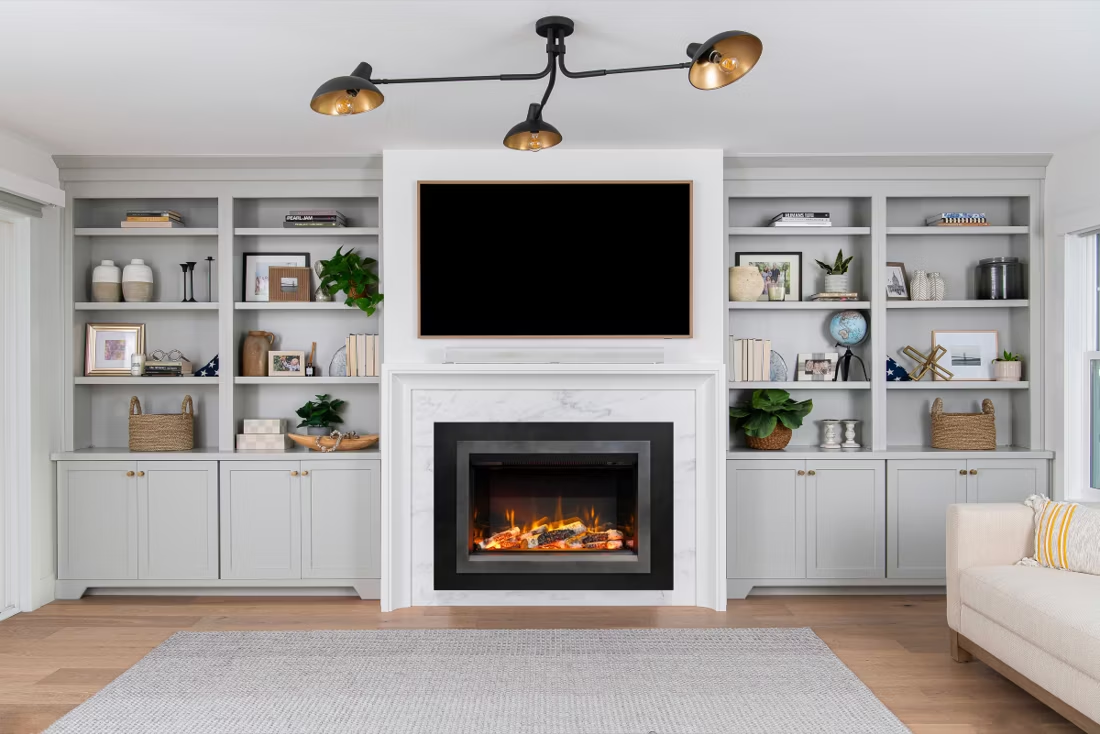
Yes—with an asterisk. Fireplaces are hot and TVs don't like heat. Either put a mantel between them to deflect rising warmth, or choose a fireplace with heat-management technology that creates a cool zone on the wall above—the wall stays around 125 degrees, barely warm, while the room still gets full heat. If you like clean lines and don't want a mantel, heat management is the answer.
Do electric fireplaces actually produce heat?
Yes—most put out around 4,800–5,000 BTUs from a standard outlet, which comfortably warms a bedroom, office, or den as a comfort-zone heater. What they won't do is carry a whole house the way wood, gas, or pellet can. Think of electric as ambiance-first with honest supplemental heat: flames on with no heat in July, flames plus warmth in January.
How much should I budget for a fireplace?
For an average home—covering the fireplace, the vent pipe, and basic installation—a budget between $3,900 and $5,500 gives you a lot of options across wood, gas, and pellet. By the time you add finish work, gas line, and electrical, the average complete installation lands between $5,000 and $12,000 all-in. In a remodel or new build, a good rule is to put about 2.5% of the total project cost toward the fireplace.
Does a fireplace add value to my home?
On average, a fireplace adds back to the home about the same amount you spent installing it. Add the monthly savings from heating the rooms you actually use instead of the whole house—often hundreds of dollars a year—and the value case is strong before you even count what a fire does for how your family uses the room.
Nearby Dealers
Hearth shops serving Sultan and the surrounding area. Every listing shows whether it is a WhyFire partner, a dealer we have verified as authorized for the brands we recommend, or a local business carrying hearth products. No manufacturer pays for placement. How we verify dealers →
T.d.r Masonry LLC
Ecco Supply
Sundance Energy Services, Inc.
Anderson Fireplace
Kirkland Fireplace
Rich's For The Home
Four Day Fireplace
All Points Heating
Rich’s Woodstoves & Spas
Pristine Sweeps
Island Gas Piping & Installations, LLC
Electric Service in Sultan
An electric fireplace's heater draws about 1,500 watts—pennies per hour at local rates.
Pud 1 Of Snohomish County
Find your electric fireplace in Sultan.
Tell us a bit about your home and we'll put together a free Project Guide & Parts List for your electric fireplace project in Sultan—the exact parts you need and a trusted local dealer to install them.
Find Your Fireplace →