
Consistent Warmth Through Shoreline's Wet Winters.
Thermostat-controlled, clean-burning heat for Puget Sound's damp, mild season. Find the right pellet stove or insert and connect with a trusted local dealer.
Every Project Starts From One of These Five Situations
Convenience heat for a mild, marine climate.
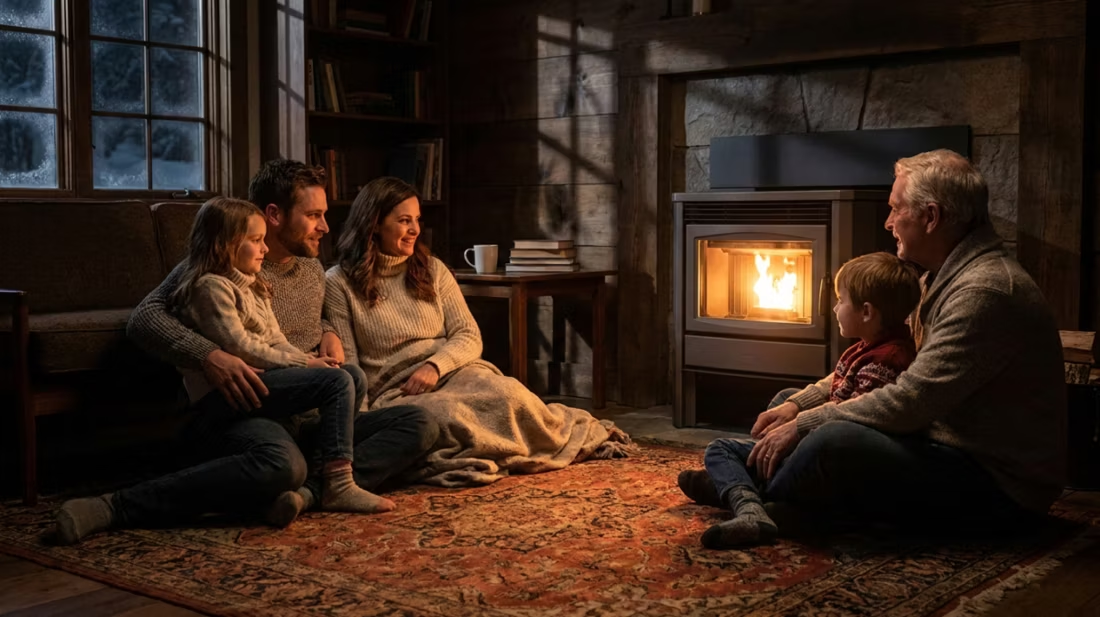
Shoreline sits right on Puget Sound at just 472 feet of elevation, where winter lows average around 37°F and the winter heating season adds up to something like a moderate five-month stretch of chilly days—a fraction of what a place like Duluth, MN or Fargo, ND sees. Nobody in Shoreline is fighting off single-digit nights. What they're fighting is the damp, gray chill that settles in from November through February, the kind of cold that a furnace alone doesn't always take the edge off in a living room or converted garage.
Pellet stoves have caught on around King County partly because they solve a second local problem: air quality. The Puget Sound Clean Air Agency calls burn bans during stagnant-air events, and older uncertified wood stoves are typically the first appliances restricted. EPA-certified pellet stoves are usually exempt from those same bans because they burn far more completely. Add in thermostat control, a hopper that runs 24+ hours on a fill, and regional pellet brands like Bear Mountain and Lignetics stocked at hearth shops throughout the area, and it's easy to see why pellet has become a common supplemental-heat choice in Shoreline's newer and remodeled homes alike.
Three steps. No salesperson until you're ready.
Tell us about your project
Your zip code, your situation, and the fuel you're leaning toward—or let the answers point you to one.
See what's actually available
The brands dealers within 100 miles genuinely carry—real options, never a catalog mirage.
Get your dealer & Project Guide
A trusted local dealer, plus the free Project Guide & Parts List that names every component of the job.
Frequently Asked Questions
How much does a pellet stove installation cost in Shoreline?
A typical pellet stove or insert installation in Shoreline runs roughly $3,500 to $6,500, depending on the unit, whether it vents through an existing masonry chimney or needs new through-wall venting, and whether a dedicated electrical circuit is required for the auger and blower motors (pellet stoves need power to run, unlike a standalone wood stove). Inserts going into an existing fireplace tend to land on the lower end since the chimney chase is already in place; freestanding stoves in a new location cost more once venting and hearth pad work are added.
What size pellet stove do I need for a Shoreline home?
Because Shoreline's winters are mild by national standards—nothing like the sustained cold of a Bozeman, MT or Minneapolis, MN—most homes here don't need a maxed-out unit. A small to mid-size pellet stove (40,000–50,000 BTU) comfortably heats an open living area or a 1,200–1,800 sq ft main floor as supplemental heat. Larger units make sense mainly for homes without gas or heat pump backup, or for owners who want the pellet stove to carry most of the heating load during Puget Sound's wetter, colder stretches. A local dealer will size the unit to your square footage and layout during an in-home visit.
Where can I find certified pellet stove installers near Shoreline?
Look for installers with NFI (National Fireplace Institute) pellet-specific certification, which covers the electrical and venting requirements unique to pellet appliances—different from wood stove certification. Because pellet stoves need both a fuel venting path and a power source, installers here often coordinate with an electrician for the dedicated circuit. Hearth retailers serving the Shoreline and greater Seattle area typically handle this coordination as part of the install rather than leaving homeowners to schedule separate trades.
What's the difference between a pellet stove and a pellet insert?
A pellet stove is a freestanding unit that can be placed almost anywhere with access to venting and an outlet—a common choice for homes without an existing fireplace, including many of Shoreline's ranch and split-level homes built in the 1960s and '70s. A pellet insert fits into an existing masonry or factory-built fireplace opening, using the existing chimney chase (with a proper liner) for venting. For homes with an old, rarely-used wood fireplace, an insert is often the simpler and more cost-effective upgrade.
Do I need a permit to install a pellet stove in Shoreline?
Yes—pellet stove installations require a building permit, and because most units need a dedicated 120V circuit, an electrical permit as well. Homes inside city limits go through the City of Shoreline's Permit Services division; homes just outside the city line fall under King County's Department of Local Services. One advantage worth knowing: EPA-certified pellet stoves are generally exempt from Puget Sound Clean Air Agency burn bans that restrict older wood stoves during stagnant-air advisories, so a pellet appliance keeps working on the days a wood stove might have to sit idle.
What's the best pellet stove for Shoreline's climate?
Since Shoreline doesn't see the extreme lows that drive homeowners toward maximum-BTU catalytic wood setups, the priority here tends to be quiet operation, efficient hopper capacity, and low maintenance—a stove you can run daily through a damp Puget Sound winter without babysitting it. Lopi, manufactured just north in Mukilteo, WA, is a popular regional option with strong local parts and service support. Harman and Quadra-Fire units are also widely available through Seattle-area hearth dealers and hold up well to daily use as supplemental heat.
Where can I buy pellets in Shoreline?
Regional brands including Bear Mountain, Lignetics, and Pacific Pellet are stocked at hearth shops and hardware retailers throughout the greater Seattle area, with typical pricing around $250 to $320 per ton depending on the brand and season. Buying a full ton (or several) before the fall rush is common practice locally, since PNW pellet inventory can tighten once the wet season starts and demand spikes. Bear Mountain pellets, made from Pacific Northwest Douglas fir, are among the most widely available in the region.
How much maintenance does a pellet stove need?
Pellet stoves need more routine attention than a gas unit but less than a wood stove chimney sweep. Plan on emptying the ash pan every few days during regular use, cleaning the burn pot weekly to keep clinkers from building up, and a full annual service—glass, exhaust vent, hopper, and auger—before the season starts. Because pellet stoves rely on electric components (auger motor, combustion blower, igniter), a yearly professional inspection also catches wear on parts that would otherwise fail mid-winter.
Pellet vs. wood—which makes more sense in Shoreline?
Wood is the lower-cost fuel if you're willing to cut your own—Forest Service permits through Mt. Baker-Snoqualmie or Olympic National Forest run $5 to $20 per cord during the May-to-October season, and local species like Douglas fir, red alder, and lodgepole pine all burn well. But wood stoves are the first appliances restricted during Puget Sound Clean Air Agency burn bans, and hauling, splitting, and storing cordwood is real work. Pellet stoves cost more per BTU in fuel but run cleaner, stay legal during burn bans, and only need a bag from the garage rather than a woodpile. For most Shoreline homeowners without an existing wood-cutting setup, pellet is the lower-hassle path to supplemental heat.
Why is a fireplace insert so efficient?
An insert does two things: it seals the chimney completely, so you stop losing air you already paid to heat, and it radiates warmth into the room through the firebox and glass. Most add a heat-exchange fan that pulls cool room air underneath, wraps it around the hot firebox, and pushes it back out warm. Your home is more efficient before you've even lit the first fire.
Why is my open fireplace making my house colder?
Open fireplaces suck—literally. As the fire burns, it consumes air your furnace already paid to heat and pulls it out through the chimney, so the house is actually colder after the fire goes out than before you lit it. An insert fixes this: it seals the chimney, puts fixed glass across the front, and turns that hole in your house into a real heat source.
How much should I budget for a fireplace?
For an average home—covering the fireplace, the vent pipe, and basic installation—a budget between $3,900 and $5,500 gives you a lot of options across wood, gas, and pellet. By the time you add finish work, gas line, and electrical, the average complete installation lands between $5,000 and $12,000 all-in. In a remodel or new build, a good rule is to put about 2.5% of the total project cost toward the fireplace.
Does a fireplace add value to my home?
On average, a fireplace adds back to the home about the same amount you spent installing it. Add the monthly savings from heating the rooms you actually use instead of the whole house—often hundreds of dollars a year—and the value case is strong before you even count what a fire does for how your family uses the room.
Nearby Dealers
Hearth shops serving Shoreline and the surrounding area.
Rich's Stoves & Spas
Pellet Brands Stocked Around Shoreline
Manufacturers will point you to the nearest stocking dealer.
Find your pellet stove in Shoreline.
Tell us a bit about your home and we'll match you with the right pellet stove or insert, plus a free Project Guide & Parts List with your recommended local dealer.
Find Your Fireplace →