
Keep Your Family Warm and Safe—No Matter What
Most Sammamish homes run on gas and electric heat, and for good reason. But for the homeowner who still wants a real wood fire, we'll connect you with a local dealer who can do it right.
Every Project Starts From One of These Five Situations
A mild, gas-and-electric city where wood is the exception.
Sammamish sits at 393 feet on the eastern shore of Lake Sammamish in the Puget Sound lowlands, where winter lows average a mild 36°F and the city logs about 4,991 heating degree days a year—roughly a third of what a genuinely cold-winter city like Duluth, MN sees. Most Sammamish homes were built during the subdivision boom of the 1990s and 2000s, and they were designed around gas furnaces, heat pumps, and gas fireplaces from the start, not wood-burning masonry hearths.
The regulatory picture reinforces that. Sammamish falls under the Puget Sound Clean Air Agency, which restricts new wood-burning appliance installations to EPA-certified units and issues burn bans during winter air stagnation events—on top of summer wildfire smoke advisories that already limit outdoor burning in King County. Electric service comes from Puget Sound Energy, and gas infrastructure reaches most neighborhoods, so the practical case for wood heat here is thin. That said, we still occasionally match Sammamish homeowners who want a wood stove for ambiance, backup heat, or a second property near the Cascades—and for those buyers, we connect you with a dealer who knows the local rules cold.
Firewood Cutting Permits Near Sammamish
Three steps. No salesperson until you're ready.
Tell us about your project
Your zip code, your situation, and the fuel you're leaning toward—or let the answers point you to one.
See what's actually available
The brands dealers within 100 miles genuinely carry—real options, never a catalog mirage.
Get your dealer & Project Guide
A trusted local dealer, plus the free Project Guide & Parts List that names every component of the job.
Frequently Asked Questions
How much does a wood stove installation cost in Sammamish?
Because wood stoves are installed infrequently in Sammamish, pricing isn't as standardized here as it is in nearby cold-climate towns, but regional Puget Sound installers typically quote $4,000 to $8,500 for a freestanding EPA-certified stove with new Class A chimney venting, depending on whether the home already has a masonry chase or needs an exterior chimney built from scratch. Homes without any existing hearth infrastructure sit at the higher end. A local dealer can give you a firm number after seeing your specific floor plan.
Is it even legal to install a wood stove in Sammamish?
Yes, but with conditions. The Puget Sound Clean Air Agency requires any new wood stove to be EPA 2020 NSPS certified, and King County enforces burn bans on high-pollution winter days that apply to uncertified or older stoves first. Certified stoves are generally allowed to operate even during Stage 1 burn bans, but it's worth checking current advisories before you plan to rely on wood as a primary heat source. A permitted installer will build the unit to code and register it correctly, which matters if you ever sell the home.
Why don't more homes in Sammamish have wood stoves?
Two things work against wood heat here. First, the climate: with winter lows averaging 36°F and under 5,000 heating degree days a year, Sammamish simply doesn't get cold enough, often enough, to make wood a practical primary heat source the way it is in places like Bozeman, MT. Second, the housing stock: the city's neighborhoods were largely built out in the 1990s and 2000s with gas furnaces and gas fireplaces already piped in, so there was never a strong retrofit market for wood the way there is in older Pacific Northwest towns.
Can I still install a wood stove if I really want one?
Absolutely—it's just a smaller pool of local dealers and installers to choose from than you'd find for gas or electric. A freestanding EPA-certified stove can go into most Sammamish homes with proper clearances, a hearth pad, and Class A chimney venting through the roof or an exterior wall. The best candidates are homes with vaulted great rooms or daylight basements where a chimney run is straightforward. We'll match you with a dealer who actually installs wood units in the Eastside market rather than someone who mostly does gas conversions.
What wood species are available for burning near Sammamish?
Douglas fir, red alder, and lodgepole pine are the common species in the region. Douglas fir is widely available and burns hot once well-seasoned, though it needs a full year or more of drying due to its resin content. Red alder is a Pacific Northwest staple that seasons faster and burns cleaner, making it a popular choice for occasional-use stoves. Lodgepole pine, more common east of the Cascades, occasionally shows up through regional suppliers and burns fast and hot—good for kindling or shoulder-season fires.
Where would I get a permit to cut my own firewood?
Sammamish itself has no public land for cutting, but the Mt. Baker-Snoqualmie National Forest and Olympic National Forest both issue personal-use firewood permits, typically running $5 to $20 per cord during the May-through-October cutting season. Both forests are roughly an hour or more from Sammamish by car, so most homeowners who do burn wood here buy split, seasoned cordwood from a regional supplier rather than cutting their own—it's simply more practical given the drive.
Wood vs. gas—which makes more sense for a Sammamish home?
For the vast majority of Sammamish homeowners, gas is the better fit: it's already the standard here, it lights instantly, requires no wood storage or ash cleanup, and pairs cleanly with the gas furnaces most homes already have. Wood makes sense in a narrower set of cases—a detached shop or ADU without gas service, a strong personal preference for a real fire, or a backup heat plan for extended power outages, since a wood stove burns without electricity while most gas units still need a small amount of power or battery backup for ignition. If you're weighing both, our gas fireplace guide for Sammamish covers what's typical for this market.
What about a pellet stove instead of wood?
Pellet stoves are also uncommon in Sammamish for similar reasons—mild winters and gas-forward home design mean there's limited local demand and a thin dealer network for either fuel. Regional pellet brands like Bear Mountain, Lignetics, and Pacific Pellet are sold through hearth retailers across the wider Puget Sound area, so pellets themselves aren't hard to find if you already own a stove, but new pellet installations here are rare enough that most local dealers see maybe a handful a year.
Will a wood stove affect resale value or insurance in Sammamish?
It can cut both ways. Because wood heat is unusual in Sammamish's newer subdivisions, some buyers see it as a maintenance burden rather than a selling point, and a few homeowners insurers ask additional underwriting questions or add a small premium for a solid-fuel appliance. On the other hand, a properly permitted, EPA-certified stove with documented professional installation rarely causes problems—insurers mainly want to see it was installed to code, not owner-built. If resale is a concern, ask your dealer to provide the permit and inspection paperwork so it's on file when you eventually sell.
Why is my open fireplace making my house colder?
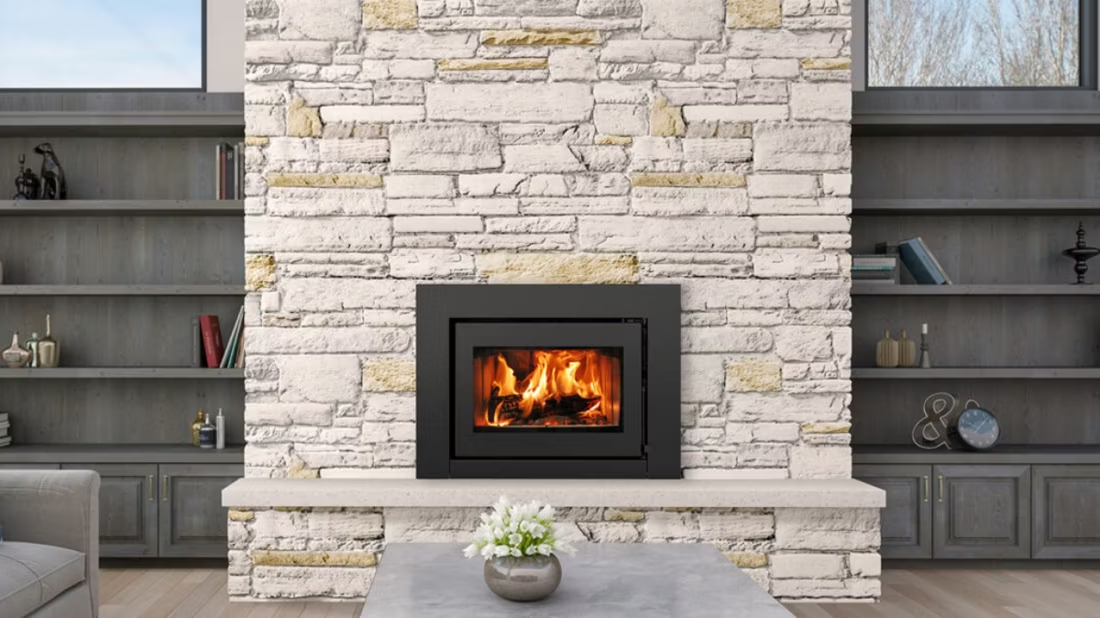
Open fireplaces suck—literally. As the fire burns, it consumes air your furnace already paid to heat and pulls it out through the chimney, so the house is actually colder after the fire goes out than before you lit it. An insert fixes this: it seals the chimney, puts fixed glass across the front, and turns that hole in your house into a real heat source.
Why is a fireplace insert so efficient?
An insert does two things: it seals the chimney completely, so you stop losing air you already paid to heat, and it radiates warmth into the room through the firebox and glass. Most add a heat-exchange fan that pulls cool room air underneath, wraps it around the hot firebox, and pushes it back out warm. Your home is more efficient before you've even lit the first fire.
What is an in-home preview and do I need one?
It's a visit where a hearth professional measures your space, confirms the model you picked actually works in your home, and walks the specs—framing, gas line, venting, finish work—before anything is ordered. Some details you just can't know until you see the house. Never make a down payment without one; it's the single most-skipped step that burns buyers.
How much should I budget for a fireplace?
For an average home—covering the fireplace, the vent pipe, and basic installation—a budget between $3,900 and $5,500 gives you a lot of options across wood, gas, and pellet. By the time you add finish work, gas line, and electrical, the average complete installation lands between $5,000 and $12,000 all-in. In a remodel or new build, a good rule is to put about 2.5% of the total project cost toward the fireplace.
Nearby Dealers
Hearth shops serving Sammamish and the surrounding area.
Rich's Stoves & Spas
Find your wood stove in Sammamish.
Tell us about your home and whether wood is for daily use, backup heat, or ambiance—we'll match you with a local dealer experienced in wood installs and send over a free Project Guide & Parts List with the exact venting and parts your Sammamish home needs.
Find Your Fireplace →