
Pellet Heat in Renton: An Honest Look at Fit.
With mild winters and gas service across most of the city, pellet stoves aren't the default choice in Renton—but for the right home, they still make sense. Here's what to know before you buy.
Every Project Starts From One of These Five Situations
Why pellet stoves are the exception, not the rule, in Renton.
Renton sits at just 84 feet of elevation in the Puget Sound lowlands, where the marine climate keeps winters mild—average lows around 37°F and a fairly short, mild heating season overall. That's a fraction of what a place like Bozeman, MT or Fargo, ND sees in a typical winter, and it changes the math on solid-fuel heat. Most Renton homes rely on natural gas or electric heat pumps for daily comfort, with Puget Sound Energy supplying both electric and natural gas service across nearly all of the city's zip codes.
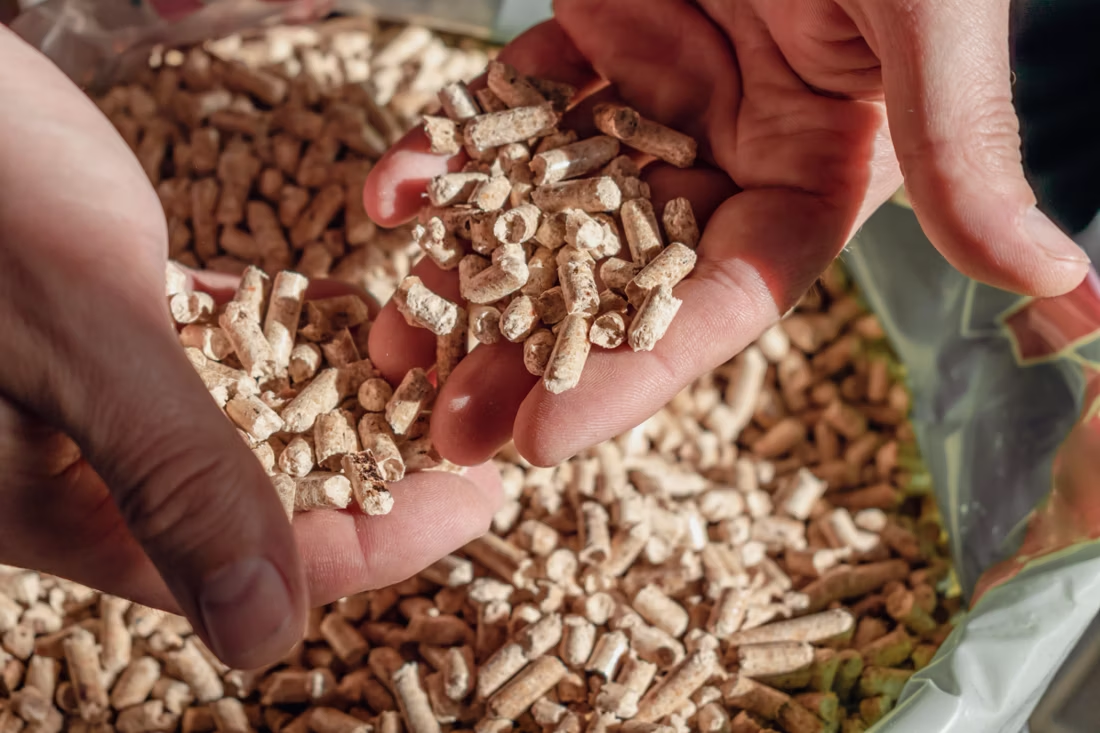
That's why pellet stoves show up here as a niche choice rather than a mainstream one—a homeowner wanting supplemental radiant heat in a rec room, a rural King County property outside the gas footprint, or someone drawn to the lower smoke output of pellet fuel compared to cordwood. Regional pellet brands like Bear Mountain, Lignetics, and Pacific Pellet are sold through hardware and feed stores across the Puget Sound, so fuel supply isn't the obstacle—demand and dealer density are. If you're considering one, working with a dealer who actually installs pellet appliances regularly (rather than mostly gas inserts) matters more here than in a market where every hearth shop carries them.
Three steps. No salesperson until you're ready.
Tell us about your project
Your zip code, your situation, and the fuel you're leaning toward—or let the answers point you to one.
See what's actually available
The brands dealers within 100 miles genuinely carry—real options, never a catalog mirage.
Get your dealer & Project Guide
A trusted local dealer, plus the free Project Guide & Parts List that names every component of the job.
Frequently Asked Questions
Do pellet stoves make sense in Renton's climate?
They can, but the case is narrower here than in colder inland climates. With winter lows averaging 37°F and a fairly short, mild heating season, Renton's climate zone (4C) doesn't demand the kind of sustained, high-output heat that drives pellet stove adoption in places like Duluth, MN or Bismarck, ND. A pellet stove works well as supplemental heat in a family room or basement, or as a primary source in a detached space like a shop or ADU. For whole-home heating in a typical Renton house already served by Puget Sound Energy's gas or electric infrastructure, most homeowners end up choosing gas or a heat pump instead.
How much does a pellet stove installation cost in Renton?
Because pellet stoves are installed far less often here than gas inserts or electric units, pricing is less standardized locally than in regions with a mature pellet market. Expect the same broad cost drivers as anywhere: unit price, hearth pad requirements, and venting through an exterior wall or existing chase. The honest answer is that you'll want a firm, in-home quote from a dealer who regularly installs pellet appliances—ask specifically about their pellet install volume, since a shop that mostly sells gas fireplaces may price the job higher simply due to unfamiliarity.
Where can I buy pellet fuel in the Renton area?
Bear Mountain, Lignetics, and Pacific Pellet are the regional brands most commonly stocked at hardware stores and farm supply retailers across the Puget Sound, including outlets serving King County. Because demand is lower here than in colder parts of the Pacific Northwest, availability can be seasonal—it's worth confirming with a retailer in fall that they're carrying stock for the winter rather than assuming year-round shelf presence. Buying a season's supply early, before the first cold snap, is the safer move in a market where pellet fuel isn't a year-round staple item.
Do I need a permit to install a pellet stove in Renton?
Yes—a new solid-fuel or pellet appliance installation requires a building permit through the City of Renton (or King County if you're in an unincorporated area), along with mechanical permits covering the venting. The good news is that pellet stoves are generally treated more favorably than wood stoves under Puget Sound Clean Air Agency rules, since they burn more cleanly and aren't typically subject to the same burn-ban restrictions during regional air quality events—though wildfire smoke advisories can still affect outdoor air quality broadly. A dealer who installs pellet units regularly will know exactly what the city inspector expects.
Will a pellet stove work during a power outage?
No—this is the trade-off worth understanding before you buy. Pellet stoves rely on an electric auger to feed fuel and a blower to circulate heat, so they shut down without power unless you add a battery backup or generator. In a region served by Puget Sound Energy where windstorms occasionally knock out power for hours or days, that's a real consideration. If backup heat during an outage is a priority, a wood-burning option or a battery-backed gas unit is generally more dependable—though for most Renton homes, pellet is chosen for convenience and cleanliness rather than storm resilience in the first place.
Pellet vs. gas—which is better for a Renton home?
Gas is the more common answer in Renton, and for good reason: Puget Sound Energy's natural gas network reaches most of the city, giving homeowners instant on-demand heat without fuel storage, hopper loading, or ash cleanup. Pellet stoves require you to manage a fuel supply (bags or bulk pellets) and run an electric feed system, which adds a layer of maintenance gas doesn't. Pellet's advantage is a live-flame look with a lower carbon footprint than gas, and it doesn't require a gas line. For most Renton households already on PSE gas service, gas remains the simpler, lower-maintenance choice.
Pellet vs. electric—which is better for a Renton home?
Electric heat—whether a heat pump or an electric fireplace insert—is generally the lower-hassle option in Renton's mild climate, since PSE's residential electric rate (around 14.6 cents per kWh) makes running an electric unit straightforward with no fuel storage at all. Pellet stoves offer a more substantial, radiant heat output and the ambiance of a real flame, which electric inserts can't fully replicate. If you want genuine supplemental heat output for a large room, pellet outperforms electric; if you want zero-maintenance convenience, electric wins.
What size pellet stove do I need?
Given Renton's mild winter heating needs, most homeowners considering a pellet stove are heating a single room, a finished basement, or a detached structure rather than an entire house. Small units (under 40,000 BTU) suit a bonus room or den; mid-size units (40,000–60,000 BTU) can handle an open-concept main floor in a moderately insulated home. Because this is a lower-volume market locally, sizing guidance from a dealer's spec sheet is less reliable than an in-home visual assessment—insist on that before committing to a model.
Why don't more Renton homes have pellet stoves?
Two things work against pellet adoption here: the mild Puget Sound climate keeps overall heating demand low (a fairly short, mild heating season compared to inland Northwest or Rockies climates), and Puget Sound Energy's combined gas and electric service already covers most heating needs without any fuel handling. Add wildfire smoke as the region's main air-quality concern—rather than the wood-smoke inversions that drive pellet adoption in places like Klamath Falls, OR—and there's simply less local pressure pushing homeowners toward pellet fuel. It's a legitimate option for the right property, just not the default one.
Why is my open fireplace making my house colder?
Open fireplaces suck—literally. As the fire burns, it consumes air your furnace already paid to heat and pulls it out through the chimney, so the house is actually colder after the fire goes out than before you lit it. An insert fixes this: it seals the chimney, puts fixed glass across the front, and turns that hole in your house into a real heat source.
How often does a pellet stove need cleaning?
A clean pellet stove is a happy pellet stove. Plan on cleaning the burn pot about once a week when you're burning regularly—ash and clinkers gum up the air holes just like a pellet barbecue. Most pellet stove problems trace back to skipped cleaning that nobody explained up front. Some designs make it easy with a trapdoor burn pot: pull a lever and the gunk drops into the ash pan.
How much should I budget for a fireplace?
For an average home—covering the fireplace, the vent pipe, and basic installation—a budget between $3,900 and $5,500 gives you a lot of options across wood, gas, and pellet. By the time you add finish work, gas line, and electrical, the average complete installation lands between $5,000 and $12,000 all-in. In a remodel or new build, a good rule is to put about 2.5% of the total project cost toward the fireplace.
Can I install a fireplace myself?
If you're putting a fire in your house on purpose, it's best to work with an expert. Unless you're genuinely experienced in framing, gas line, vent pipe, and the national code on clearances to combustibles, have a professional do it—and ideally the same company that sells you the fireplace, so warranty, service, and liability all live under one roof.
Nearby Dealers
Hearth shops serving Renton and the surrounding area.
Rich's Stoves & Spas
Pellet Brands Stocked Around Renton
Manufacturers will point you to the nearest stocking dealer.
Find your pellet fireplace in Renton.
Tell us about your home and your goals, and if pellet is genuinely the right fit, we'll match you with a local dealer who installs them regularly—plus a free Project Guide & Parts List covering the exact parts, including the vent kit, for your Renton project.
Find Your Fireplace →