
Warm, Reliable Heat for Grant County Winters.
Propane-fired warmth built for Quincy's cold, dry Columbia Basin winters. Find the right fireplace or insert and connect with a trusted local dealer.
Every Project Starts From One of These Five Situations
Instant heat for a high desert climate.
Quincy sits at 1,300 feet in the Columbia Basin, in the rain shadow of the Cascades, where winters run cold and dry—average lows near 23°F and a heating season as demanding as Madison, Wisconsin's, a load closer to Madison, Wisconsin than the mild, wet climate most people picture for western Washington. Wood heat is uncommon here: the land around Quincy is irrigated farmland and shrub-steppe rather than dense timber, and summer wildfire smoke already strains local air quality, so few homeowners add wood smoke to the mix. Gas fills the gap instead, and in Quincy that almost always means propane, since the town sits outside any natural gas utility's pipeline network.
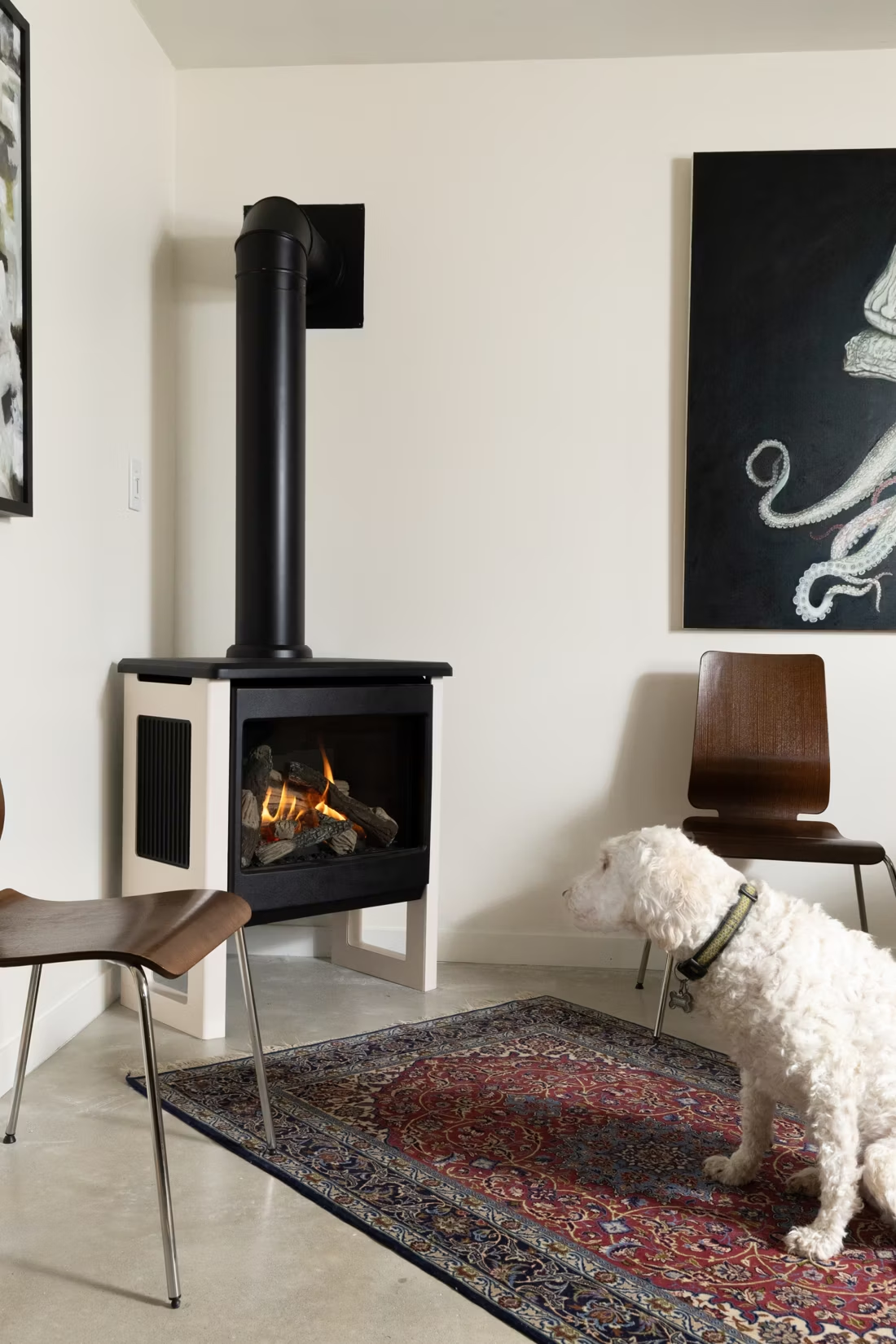
PUD No. 2 of Grant County provides electricity here at one of the lowest residential rates in the country—about 6 cents per kWh, cheap enough that it's part of why data centers cluster nearby—but many homeowners still choose a propane fireplace or insert for instant ambiance, design flexibility, and heat that keeps working when winter weather knocks out rural power lines. A correctly sized, correctly vented gas unit from a trusted local dealer handles both jobs well: everyday zone heat and a fallback source when the grid hiccups.
Three steps. No salesperson until you're ready.
Tell us about your project
Your zip code, your situation, and the fuel you're leaning toward—or let the answers point you to one.
See what's actually available
The brands dealers within 100 miles genuinely carry—real options, never a catalog mirage.
Get your dealer & Project Guide
A trusted local dealer, plus the free Project Guide & Parts List that names every component of the job.
Frequently Asked Questions
How much does a gas fireplace installation cost in Quincy?
Most propane fireplace and insert installations in Quincy run $4,500 to $10,000, with the spread driven by the unit itself, the venting path, and whether you need a new propane tank set and line run versus tapping into an existing tank. A direct-vent insert going into an existing masonry fireplace with propane already on-site tends toward the lower end. New construction or a remodel that requires framing, venting, and a fresh tank installation from a propane supplier lands higher. A local dealer will size the job and give you a firm number after seeing your home.
Is natural gas available in Quincy, or do I need propane?
Quincy sits outside any natural gas utility's service area—PUD No. 2 of Grant County supplies electricity to the town, but there's no piped natural gas. That makes propane the standard fuel for gas fireplaces here, delivered and stored in an above-ground or buried tank by a regional propane supplier. It's a well-established setup in Grant County's farm country, and nearly every gas fireplace, insert, or stove installed in Quincy is configured to run on propane rather than natural gas.
Can I convert an existing wood fireplace to gas in Quincy?
It's possible, but it's less common here than in forested parts of the state simply because wood-burning fireplaces are rare in Quincy to begin with—most homes in this part of the Columbia Basin were built with propane or electric heat in mind, not masonry wood fireplaces. When a conversion does happen, a propane insert is fitted into the existing firebox using the chimney as the vent path, typically running $4,500 to $9,000 depending on the insert and whether new gas line work is needed. More often, Quincy homeowners are installing a first gas fireplace in a remodel or new-build rather than converting one from wood.
Will my gas fireplace still work if the power goes out?
Yes, in most cases. Units with IPI (intermittent pilot ignition) run on a small battery backup that kicks in automatically when grid power drops, so the fireplace lights and heats normally off the batteries. Valor units go a step further—their pilot assembly generates its own electricity through the thermocouple, so there's no battery to remember at all. That matters in Quincy: PUD No. 2's rural distribution lines can lose power during winter storms and irrigation-season lightning, and a propane fireplace that keeps running without grid power is a real backup heat source, not just ambiance.
What's the difference between a gas fireplace, insert, and stove?
A gas fireplace is a fully built-in unit set into framing, typically chosen for new construction or a remodel. A gas insert is sized to slide into an existing masonry firebox, sealing it up and venting through the existing chimney with a liner—the right call if your Quincy home already has a wood-style fireplace opening you want to upgrade. A gas stove is a freestanding cabinet unit that sits on the floor like a wood stove but burns propane. For most Quincy homes, which tend to be newer construction without existing masonry fireplaces, a built-in gas fireplace or freestanding stove is the more common fit.
Do I need a permit to install a gas fireplace in Quincy?
Yes. Grant County requires a building permit for gas fireplace installations, and any new propane tank set or line work needs to meet fire code clearances from the tank to the house, property line, and any ignition sources. Most established hearth dealers coordinate the building permit, the propane line hookup, and the tank placement together, so you're not managing separate trades yourself. Ask your installer to confirm the tank location meets Grant County's setback rules before it's set—moving a tank after the fact is an avoidable expense.
What's the difference between vented and vent-free gas fireplaces?
Vented (direct-vent) gas fireplaces draw combustion air from outside and exhaust it back outside through sealed venting—they're the standard, code-friendly choice everywhere. Vent-free units burn fuel directly into the room without external venting; Washington is one of the states, alongside California and Colorado, that restricts vent-free gas appliances more heavily than most of the country, and some Washington jurisdictions don't permit them at all in new work. For Quincy homeowners, that makes direct-vent propane fireplaces and inserts the practical default—they deliver strong heat output with none of the state-level restrictions to navigate. Ask a local dealer to confirm what Grant County will approve before you fall in love with a specific model.
How often should a propane fireplace be serviced?
Plan on an annual inspection, ideally before the fireplace sees heavy use each fall. A technician checks the burner, pilot assembly, propane connections, and venting, and cleans the glass and interior—a lighter job than wood-stove chimney sweeping, but it matters just as much for safe operation on a pressurized fuel system. Local hearth and propane service providers typically charge $150 to $250 for this visit, and it's also a good time to have your propane supplier check the regulator and tank fittings.
Gas vs. electric fireplace—which makes more sense in Quincy?
This is a closer call in Quincy than in most towns, because PUD No. 2 of Grant County sells electricity at roughly 6 cents per kWh—among the cheapest residential power in the country, thanks to nearby Columbia River hydro. That makes electric fireplaces genuinely cheap to run here, and a good fit for supplemental warmth in a bedroom or den where you mainly want ambiance and zone heat. Propane still has the edge for real heat output, the ability to run during a power outage, and the option to use it as a primary or near-primary heat source in a living area. Many Quincy homeowners end up with both: propane in the main living space, electric elsewhere for low-cost, low-hassle secondary heat.
Can I put a TV above my fireplace?
Yes—with an asterisk. Fireplaces are hot and TVs don't like heat. Either put a mantel between them to deflect rising warmth, or choose a fireplace with heat-management technology that creates a cool zone on the wall above—the wall stays around 125 degrees, barely warm, while the room still gets full heat. If you like clean lines and don't want a mantel, heat management is the answer.
Why is my open fireplace making my house colder?
Open fireplaces suck—literally. As the fire burns, it consumes air your furnace already paid to heat and pulls it out through the chimney, so the house is actually colder after the fire goes out than before you lit it. An insert fixes this: it seals the chimney, puts fixed glass across the front, and turns that hole in your house into a real heat source.
How much should I budget for a fireplace?
For an average home—covering the fireplace, the vent pipe, and basic installation—a budget between $3,900 and $5,500 gives you a lot of options across wood, gas, and pellet. By the time you add finish work, gas line, and electrical, the average complete installation lands between $5,000 and $12,000 all-in. In a remodel or new build, a good rule is to put about 2.5% of the total project cost toward the fireplace.
Does a fireplace add value to my home?
On average, a fireplace adds back to the home about the same amount you spent installing it. Add the monthly savings from heating the rooms you actually use instead of the whole house—often hundreds of dollars a year—and the value case is strong before you even count what a fire does for how your family uses the room.
Nearby Dealers
Hearth shops serving Quincy and the surrounding area. Every listing shows whether it is a WhyFire partner, a dealer we have verified as authorized for the brands we recommend, or a local business carrying hearth products. No manufacturer pays for placement. How we verify dealers →
Big R - Wenatchee
Patriot Plumbing, Heating & Cooling Inc.
Find your gas fireplace in Quincy.
Tell us about your home and propane setup, and we'll match you with a trusted local dealer plus a free Project Guide & Parts List—the exact parts, vent kit, and installer recommendation for your Quincy project.
Find Your Fireplace →