
Pellet Heat Built for Puyallup's Mild, Wet Winters.
Steady, low-maintenance warmth for the Puyallup Valley's damp season—without the splitting, stacking, or winter burn-ban headaches of a wood stove. Find the right unit and connect with a trusted local dealer.
Every Project Starts From One of These Five Situations
Convenience heat for a valley that rarely freezes hard.
At 111 feet in the Puyallup Valley, winters here average 33°F with a mild winter heating load—a fraction of what places like Fargo, ND or Duluth, MN see in a single season. That mild, marine climate means most Puyallup homes don't need a wood-eating furnace to survive January; they need dependable, even heat for the long, gray, wet stretch that runs from November into March. Pellet stoves fit that job well, especially for the valley's older farmhouses and newer construction alike where a hearth is a supplemental zone-heat source rather than a survival appliance.
Pierce County and the greater Seattle-Tacoma basin also deal with wintertime air stagnation and, increasingly, summer wildfire smoke drifting in from the Cascades and eastern Washington. The Puget Sound Clean Air Agency issues burn bans on wood-burning devices during stagnant winter air episodes—and EPA-certified pellet stoves are typically exempt from at least the first stage of those restrictions, which is a real practical advantage for anyone who wants reliable heat regardless of the day's air quality alert. Regional pellet brands like Bear Mountain (milled up in Deming, WA), Lignetics, and Pacific Pellet are all readily available through Puget Sound-area hearth shops and farm supply stores, so fuel sourcing isn't a concern here the way it can be in more rural parts of the state.
Three steps. No salesperson until you're ready.
Tell us about your project
Your zip code, your situation, and the fuel you're leaning toward—or let the answers point you to one.
See what's actually available
The brands dealers within 100 miles genuinely carry—real options, never a catalog mirage.
Get your dealer & Project Guide
A trusted local dealer, plus the free Project Guide & Parts List that names every component of the job.
Frequently Asked Questions
How much does a pellet stove installation cost in Puyallup?
Most pellet stove and insert installations in the Puyallup area run roughly $3,500 to $6,500, depending on the unit, whether it's a freestanding stove or an insert going into an existing masonry fireplace, and how much venting work is involved. Inserts going into a fireplace that already has a usable chimney tend to land on the lower end; new freestanding installations that need fresh through-wall venting and a hearth pad run higher. A local hearth retailer will give you a firm number after seeing your space, since venting length and electrical access (pellet stoves need a standard outlet nearby) both affect the final bill.
What size pellet stove do I need for a Puyallup home?
It depends on square footage and how open your floor plan is, but as a general guide: smaller units (under 1,000 sq ft of heating capacity) suit a single large room or an addition, mid-size units (1,000–1,800 sq ft) cover most Puyallup Valley homes as a zone-heat source in the main living area, and larger units can handle an open-concept main floor as near-primary heat. Because our winters rarely hit the extremes that demand a maxed-out unit, oversizing is a more common mistake here than undersizing—a local retailer can size it correctly during an in-home visit.
Do I need a permit to install a pellet stove in Puyallup?
Yes. If your address falls inside city limits, the City of Puyallup Development & Permitting Services office handles the building permit; homes in unincorporated Pierce County go through the Pierce County Planning and Public Works building permit process instead. Either way, the permit covers the venting installation and hearth clearance, and most local dealers pull it for you as part of the install rather than leaving you to file it yourself.
Pellet stove vs. wood stove—which makes more sense in Puyallup?
Wood stoves give you heat during a power outage and typically cost less per BTU if you're willing to source and season your own firewood—douglas fir, red alder, and lodgepole pine are all common locally, with Forest Service cutting permits available through Olympic National Forest and Mt. Baker-Snoqualmie National Forest for $5 to $20 per cord during the May-to-October season. Pellet stoves trade that off for real convenience: no splitting, less ash, cleaner glass, and—importantly for this area—exemption from the first stage of Puget Sound Clean Air Agency winter burn bans that do restrict uncertified and even some certified wood stoves during stagnant air episodes. If you want set-it-and-forget-it heat that keeps running through an air quality advisory, pellet usually wins.
Where can I buy pellet fuel near Puyallup?
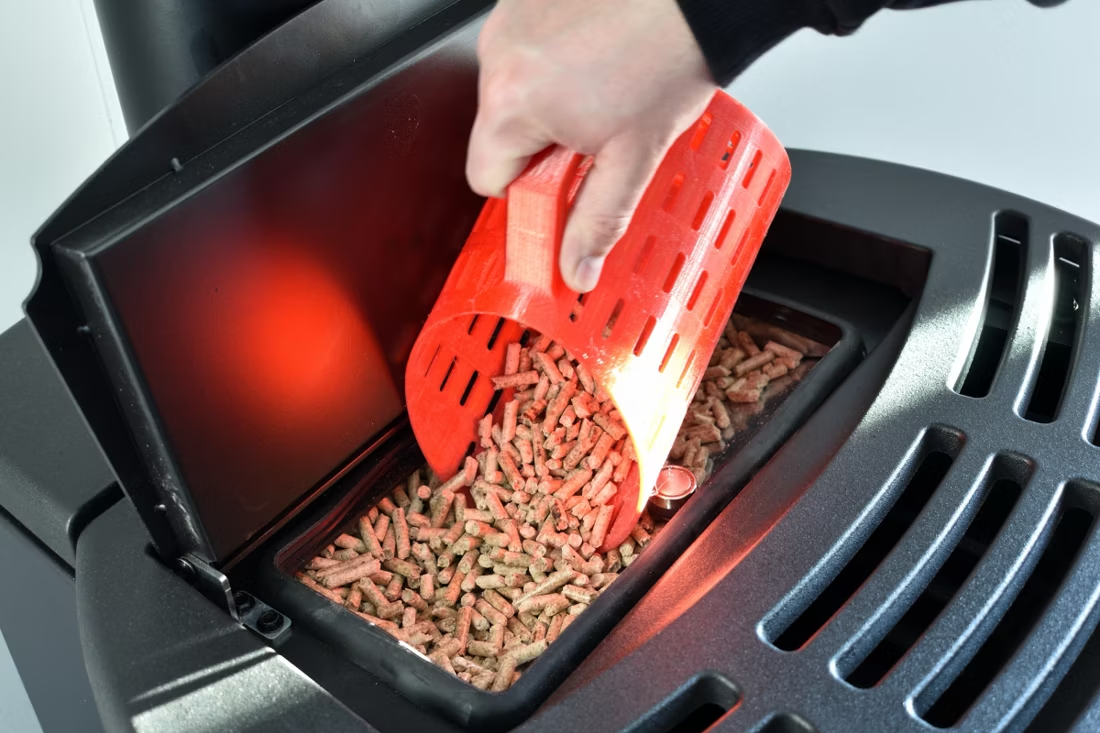
Bear Mountain pellets, milled in nearby Deming, WA, along with Lignetics and Pacific Pellet, are widely stocked at hearth shops and farm and feed stores throughout the Puget Sound region. Pricing typically runs in the $250 to $320-per-ton range locally, and buying a season's supply (usually 2 to 3 tons for a mid-size home) in late summer or early fall—before the first cold snap drives up demand—is the most common way to avoid picked-over shelves in December.
Will my pellet stove work if the power goes out?
No—pellet stoves rely on an electric auger to feed fuel and a blower to distribute heat, so they shut down without power. Puget Sound Energy's service territory does see periodic outages in the Puyallup Valley during fall and winter windstorms, so if backup heat during an outage matters to you, ask your local dealer about a battery backup unit sized for your stove, or consider a small generator. Homes that need heat guaranteed during storm outages sometimes pair a pellet stove for daily convenience with a wood stove as true backup.
Are pellet stoves exempt from winter burn bans in Puyallup?
Generally yes, under most conditions. The Puget Sound Clean Air Agency issues Stage 1 burn bans during winter air stagnation, and EPA-certified pellet stoves are typically allowed to keep operating when uncertified wood stoves and fireplaces are not. During rarer Stage 2 episodes, restrictions can tighten further and apply more broadly, so it's worth checking the agency's current air quality advisory on burn-ban days rather than assuming—but day to day, this exemption is one of the main reasons Puyallup homeowners choose pellet over an older wood stove.
How much maintenance does a pellet stove need?
Less than a wood stove, but it's not zero-maintenance. Plan on emptying the ash pan every few days during regular use, wiping the glass weekly, and vacuuming the burn pot and hopper area every couple of weeks. Once a year—ideally before burning season starts in the fall—the venting system should get a full inspection and cleaning by a certified technician, similar to a chimney sweep for a wood stove but generally quicker since pellet exhaust produces far less creosote buildup.
Pellet stove vs. gas fireplace—which is the better fit?
Gas fireplaces offer instant on-off operation at the flip of a switch or remote, no fuel storage, and—with the right ignition system—some models keep working during a power outage. Pellet stoves need electricity to run but offer a genuine flame and heat output that many homeowners find more satisfying, plus that burn-ban exemption that matters during Puget Sound Clean Air Agency winter advisories. If you want zero-hassle heat and already have gas service to the house, gas is simpler. If you like the idea of a real fire, don't mind refilling a hopper every day or two, and want heat that keeps working when the air quality alerts go up, pellet is usually the better match for Puyallup's climate.
Why is my open fireplace making my house colder?
Open fireplaces suck—literally. As the fire burns, it consumes air your furnace already paid to heat and pulls it out through the chimney, so the house is actually colder after the fire goes out than before you lit it. An insert fixes this: it seals the chimney, puts fixed glass across the front, and turns that hole in your house into a real heat source.
What's the difference between an insert and a zero-clearance fireplace?
An insert is a fireplace that slides into a pre-existing wood-burning fireplace—if you don't have one, there's nothing to insert it into. A zero-clearance fireplace is built into a framed wall, which makes it the answer for remodels and new construction. Simple test: existing masonry fireplace means insert; blank or framed wall means zero-clearance.
What is an in-home preview and do I need one?
It's a visit where a hearth professional measures your space, confirms the model you picked actually works in your home, and walks the specs—framing, gas line, venting, finish work—before anything is ordered. Some details you just can't know until you see the house. Never make a down payment without one; it's the single most-skipped step that burns buyers.
Does a fireplace add value to my home?
On average, a fireplace adds back to the home about the same amount you spent installing it. Add the monthly savings from heating the rooms you actually use instead of the whole house—often hundreds of dollars a year—and the value case is strong before you even count what a fire does for how your family uses the room.
Nearby Dealers
Hearth shops serving Puyallup and the surrounding area.
Pellet Brands Stocked Around Puyallup
Manufacturers will point you to the nearest stocking dealer.
Find your pellet fireplace in Puyallup.
Tell us about your home and we'll put together a free Project Guide & Parts List—the exact pellet stove or insert, vent kit, and a trusted local Puyallup dealer to install it.
Find Your Fireplace →