
Pellet Stoves Are Rare in Pasco, But They Still Have a Place.
Cheap hydropower and mild Columbia Basin winters mean most Pasco homes skip pellet heat. For the right property, though, it still makes sense—and we'll connect you with a local dealer who'll tell you honestly whether it fits.
Every Project Starts From One of These Five Situations
The math rarely favors pellets here.
Pasco sits in the Columbia Basin at just 388 feet of elevation, where the average winter low is 28°F and the winter heating load is moderate—nowhere near places like International Falls, Minnesota, where pellet and wood stoves are the backbone of getting through months of subzero nights. Franklin County PUD sells residential power at roughly $0.0968 per kWh, among the cheapest rates in the country thanks to Columbia River hydroelectric dams, and natural gas service reaches much of the city. That combination of mild winters, cheap electricity, and easy gas access is why most Pasco homes heat with a furnace, heat pump, or gas fireplace, and why pellet stoves show up in only a small share of local installs.
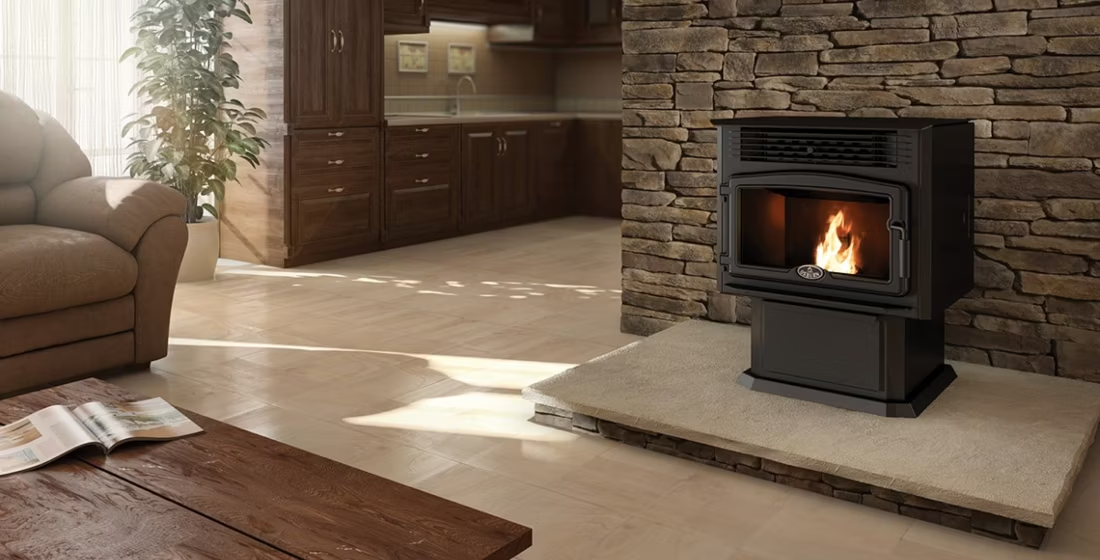
That doesn't mean pellet heat has zero home in Franklin County. Regional brands like Bear Mountain, Lignetics, and Pacific Pellet all distribute through the Tri-Cities, and a rural property outside city gas lines—a detached shop, an outbuilding, or an older farmhouse without ductwork—can still get real value from a pellet insert or freestanding stove. Pellet appliances also burn cleaner than cordwood, which matters during the Columbia Basin's winter temperature inversions, when air quality advisories sometimes ask wood-burning households to curtail; certified pellet stoves are usually exempt from those restrictions. If you're one of the smaller number of Pasco-area homeowners for whom pellet heat genuinely makes sense, we'll match you with a dealer who actually installs and services them—not one who'll just try to upsell you to gas.
Three steps. No salesperson until you're ready.
Tell us about your project
Your zip code, your situation, and the fuel you're leaning toward—or let the answers point you to one.
See what's actually available
The brands dealers within 100 miles genuinely carry—real options, never a catalog mirage.
Get your dealer & Project Guide
A trusted local dealer, plus the free Project Guide & Parts List that names every component of the job.
Frequently Asked Questions
Are pellet stoves common in Pasco?
No—pellet stoves are uncommon here. Between Franklin County PUD's low electric rates, wide natural gas availability, and winters that are moderate compared to true wood-and-pellet country, most Pasco homeowners choose a furnace, heat pump, or gas fireplace instead. The exceptions tend to be rural properties without a gas hookup, detached shops or outbuildings, and homeowners who specifically want a solid-fuel backup that doesn't require a wood-cutting permit.
How much does a pellet stove installation cost in Pasco?
Because pellet installs are relatively rare in this market, there isn't a well-established local price band the way there is for gas fireplace conversions. Costs depend heavily on the specific unit, whether you're venting through an existing chimney or need new through-wall venting, and hearth pad requirements. Rather than quote a generic national number that may not reflect what's actually installable in your home, the free Project Guide & Parts List we put together after matching you with a local dealer includes a firm, itemized parts list and quote for your specific situation.
Where can I buy pellets in Pasco?
Regional pellet brands including Bear Mountain, Lignetics, and Pacific Pellet distribute throughout the Tri-Cities area, and you can typically find bagged pellets at farm supply and hardware stores serving Franklin and Benton counties. Because pellet stoves are less common locally than in wetter, colder parts of the Pacific Northwest, it's worth confirming stock before burning season rather than assuming a store carries a deep supply.
Would gas or electric heat make more sense than pellet in my Pasco home?
For most Pasco homes, yes. Natural gas service is available through much of the city, and Franklin County PUD's residential electric rate of about $0.0968/kWh is low enough that electric fireplaces, heat pumps, and even electric-resistance backup heat pencil out well against the cost of buying and storing pellet fuel. Gas and electric are the standard, well-supported options here—pellet only tends to win out for properties without a gas line or in situations where a self-contained, non-ducted heat source is genuinely needed.
Will a pellet stove work as backup heat during a power outage?
Not without help. Pellet stoves rely on an electric auger to feed fuel and a blower to circulate heat, so a standard unit shuts down the moment the power does. If backup heat during an outage is the goal—which matters in the Tri-Cities during ice storms and hard winter cold snaps—you'd need a battery backup system or a generator sized to run the stove's electronics. A local dealer can tell you which pellet models have low-draw circuit boards that pair well with a small battery unit.
Do winter air quality rules in Pasco affect pellet stoves?
The Columbia Basin, including Franklin County, experiences winter temperature inversions and periodic wildfire smoke that trigger air quality advisories. When those advisories ask households to curtail wood burning, EPA-certified pellet stoves are typically exempt because they burn more completely and produce far less particulate than an open wood fire. That's actually one of the better arguments for pellet over wood for the rare Pasco household that wants solid-fuel heat.
Do I need a permit to install a pellet stove in Pasco?
Generally yes—a building permit is typically required for a new pellet stove or insert installation, whether you're inside Pasco city limits or in unincorporated Franklin County, since it involves venting through an exterior wall or existing chimney. Your local building department (City of Pasco or Franklin County, depending on your address) can confirm the specific requirements. Most established hearth dealers handle this paperwork as part of the installation.
What size pellet stove do I need for a Pasco home?
Because Pasco's winters are milder than deep-cold climates—an average low around 28°F and a moderate winter heating load overall—many homeowners here who do install a pellet stove find a small-to-medium unit is plenty, especially if it's supplementing an existing furnace or heat pump rather than serving as the sole heat source. A detached shop or single large room typically needs less capacity than a whole-home installation would in a colder market. A local dealer will size the unit to your actual square footage and insulation rather than a generic chart.
Pellet vs. wood—which makes more sense in Pasco?
Both are unusual choices here, since cheap electricity and gas service cover most Pasco homes' heating needs. But between the two, pellet generally has the edge locally: it burns cleaner during winter inversion advisories, doesn't require a Forest Service cutting permit, and skips the hauling and splitting that comes with wood species like ponderosa pine, lodgepole pine, or Douglas fir cut through the Umatilla National Forest's May-to-October season. Wood still appeals to homeowners who specifically want a fuel source that works with zero electricity, but for most Pasco properties considering a solid-fuel option, pellet is the more practical of the two.
What's the difference between an insert and a zero-clearance fireplace?
An insert is a fireplace that slides into a pre-existing wood-burning fireplace—if you don't have one, there's nothing to insert it into. A zero-clearance fireplace is built into a framed wall, which makes it the answer for remodels and new construction. Simple test: existing masonry fireplace means insert; blank or framed wall means zero-clearance.
Why is a fireplace insert so efficient?
An insert does two things: it seals the chimney completely, so you stop losing air you already paid to heat, and it radiates warmth into the room through the firebox and glass. Most add a heat-exchange fan that pulls cool room air underneath, wraps it around the hot firebox, and pushes it back out warm. Your home is more efficient before you've even lit the first fire.
Can a fireplace actually lower my heating bill?
Yes—by creating a comfort zone. A furnace heats every square foot of the house just to warm the one room you're in; a gas fireplace on low burns roughly a sixth of the gas a typical furnace does. Set the furnace around 55–60 degrees as a baseline, then heat the rooms your family actually uses. Families who heat this way commonly save $20–$60 a month.
How much should I budget for a fireplace?
For an average home—covering the fireplace, the vent pipe, and basic installation—a budget between $3,900 and $5,500 gives you a lot of options across wood, gas, and pellet. By the time you add finish work, gas line, and electrical, the average complete installation lands between $5,000 and $12,000 all-in. In a remodel or new build, a good rule is to put about 2.5% of the total project cost toward the fireplace.
Nearby Dealers
Hearth shops serving Pasco and the surrounding area.
Pellet Brands Stocked Around Pasco
Manufacturers will point you to the nearest stocking dealer.
Find your pellet stove in Pasco.
Pellet heat isn't the default choice in Pasco, but if it fits your property, we'll match you with a trusted local dealer and send you a free Project Guide & Parts List—the exact parts, vent kit, and recommended installer for your specific home.
Find Your Fireplace →