
Warm your Parkland home without splitting a single log.
Steady, thermostat-controlled heat for South Sound winters—no wood pile, no chimney sweep, no hauling cordwood in the rain. Find the right pellet stove and connect with a trusted local dealer.
Every Project Starts From One of These Five Situations
Convenience built for Puget Sound winters.
Parkland sits at just 303 feet in the Puget Sound lowlands, where the climate is mild by national standards—winter lows average around 37°F and the area's winter heating load is a fraction of what inland cold-climate towns like Bozeman, MT or Fargo, ND see. That mildness is exactly why pellet stoves fit so well here: homeowners want dependable zone heat for the wet, gray stretch from November through March without committing to the labor of splitting, stacking, and drying cordwood in a climate where it rains most of the winter.
Pierce County also deals with summer wildfire smoke advisories, and Washington's Department of Ecology burn-ban rules that kick in during those events and winter inversions typically exempt pellet stoves from curtailment because they burn so much cleaner than open wood combustion. Add in that regional pellet brands like Bear Mountain, Lignetics, and Pacific Pellet are all produced in the Pacific Northwest, and Parkland dealers rarely face the supply crunches that hit pellet buyers in regions dependent on trucked-in fuel from out of state.
Three steps. No salesperson until you're ready.
Tell us about your project
Your zip code, your situation, and the fuel you're leaning toward—or let the answers point you to one.
See what's actually available
The brands dealers within 100 miles genuinely carry—real options, never a catalog mirage.
Get your dealer & Project Guide
A trusted local dealer, plus the free Project Guide & Parts List that names every component of the job.
Frequently Asked Questions
How much does a pellet stove installation cost in Parkland?
Most pellet stove and insert installations in the Parkland area run $3,500 to $7,000, depending on the unit, whether you're venting through an existing masonry fireplace or a new sidewall location, and whether an electrical outlet needs to be added near the install site. Pellet stoves vent through a small-diameter PL pipe rather than a full masonry chimney, which keeps venting costs lower than a comparable wood stove install. Local dealers typically handle the Pierce County permit as part of the job.
What size pellet stove do I need for my home?
Given Parkland's mild maritime climate—winter lows averaging around 37°F rather than the sub-zero nights inland cold climates see—most homes here do well with a small to mid-size pellet stove rated for 1,000 to 1,800 square feet, even when it's serving as the primary heat source for a main living area. Larger, open-concept homes or those using the stove to offset a struggling heat pump may want a unit sized toward 2,000+ square feet. A local dealer will factor in your home's insulation and layout during an in-home visit, which matters more to comfort than square footage alone.
Where can I find certified pellet stove installers near Parkland?
Look for installers with NFI (National Fireplace Institute) pellet certification, which covers the electrical, venting, and clearance requirements specific to pellet appliances. In the Parkland and greater Pierce County area, most pellet stove sales and installation are handled by the same hearth retailer, which simplifies warranty service later. Because pellet stoves rely on an auger motor, combustion blower, and often a room-air blower, proper installation and a working outlet nearby matter as much as venting—this isn't a project suited to a general handyman.
What's the difference between a pellet stove and a pellet insert?
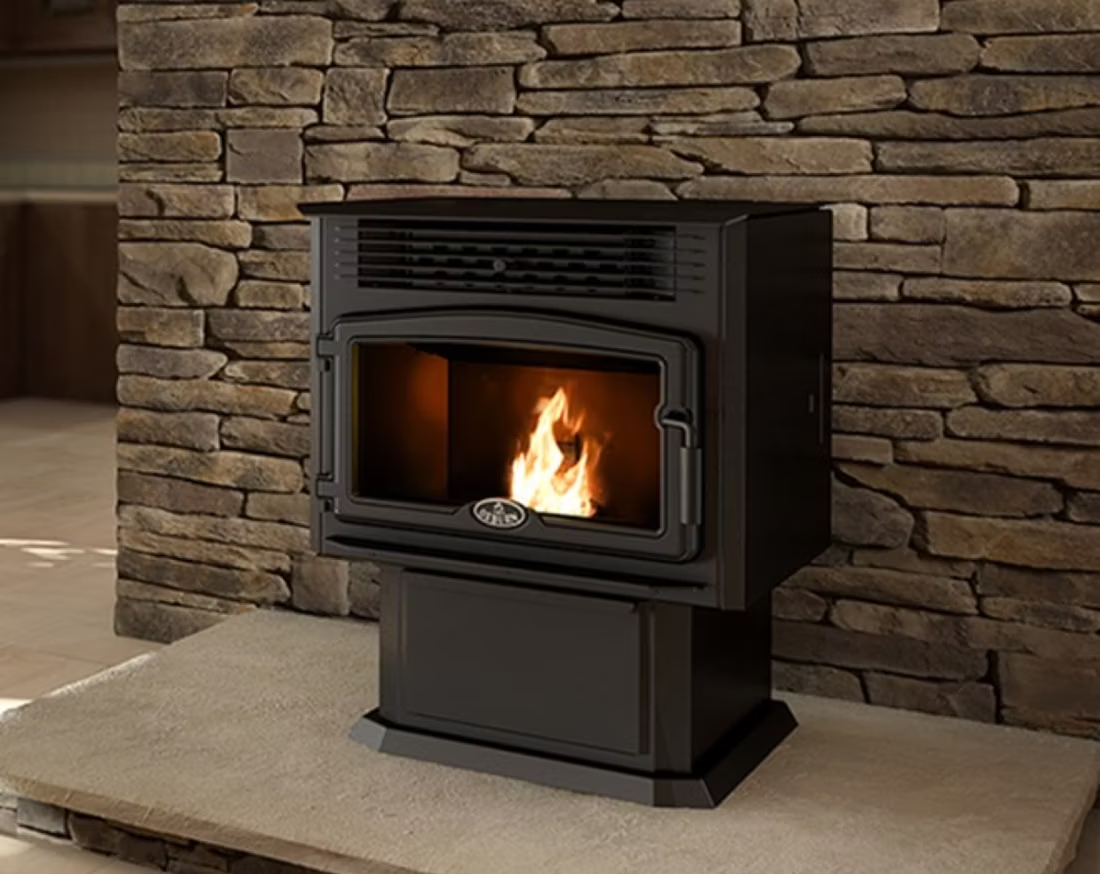
A pellet stove is a freestanding unit that sits on the floor and vents through a wall or existing chimney using PL venting—it can go almost anywhere with an outlet nearby. A pellet insert is built to slide into an existing masonry fireplace opening, using your current chimney chase for a smaller vent liner while sealing off the old open hearth. For Parkland homes with an existing wood-burning fireplace that rarely gets used because of the hassle of wood, a pellet insert is often the simplest upgrade—same footprint, dramatically better efficiency and heat output.
Do I need a permit to install a pellet stove in Parkland?
Yes. Parkland is unincorporated, so building permits for a new pellet stove installation go through the Pierce County Planning and Public Works Department rather than a city office. The permit covers the appliance clearance, hearth pad, and venting termination. Most local hearth dealers pull this permit as part of the installation and schedule the required inspection, so you generally don't have to navigate the county process yourself.
What's the best pellet stove for Parkland's climate?
Because Parkland's winters are damp and moderate rather than brutally cold, homeowners here often prioritize quiet operation and hopper capacity over raw BTU output. Quadra-Fire and Lopi—both manufactured by Travis Industries just up the road in Mukilteo, WA—are popular regional choices with large hopper options that reduce how often you're refilling pellets during a multi-day rain system when you might not want to run to the garage. For homes wanting a simple backup heat source, smaller units with basic thermostatic control are usually plenty for this climate.
Pellet vs. wood—which makes more sense in Parkland?
Wood is abundant locally—douglas fir, red alder, and lodgepole pine are the common species, and Forest Service cutting permits through Olympic National Forest or Mt. Baker-Snoqualmie National Forest run $5 to $20 per cord during the May-to-October season. But Parkland's wet winters make seasoning and storing firewood genuinely harder than in drier climates, since uncovered wood can stay damp for months. Pellets come kiln-dried and moisture-sealed in bags, store compactly in a garage, and burn cleaner with far less ash. For most Parkland homeowners without a dedicated dry wood-storage setup, pellet comes out ahead on convenience, even though wood remains cheaper per BTU for those set up to manage it.
Where can I buy pellet fuel in Parkland?
Local hearth retailers and several hardware and farm-supply stores in the Parkland and Tacoma area stock regional pellet brands including Bear Mountain, Lignetics, and Pacific Pellet, all produced in the Pacific Northwest. Because these brands manufacture close by, Parkland typically avoids the supply shortages and price spikes that hit regions dependent on pellets shipped in from the Midwest or Southeast. Expect to pay roughly $250 to $375 per ton depending on brand and softwood versus hardwood blend, with pricing typically at its lowest if you stock up during late summer before the winter rush.
Will my pellet stove work during a power outage?
Not without backup power. Pellet stoves rely on an electric auger to feed fuel and a blower to distribute heat and exhaust combustion air, so they shut down when the power does. Parkland is served by Peninsula Light Company and Parkland Light & Water Company, and outages here are usually tied to wind and winter storms rather than heat-driven grid strain—sometimes lasting a day or more. A small battery backup or inverter generator sized for a pellet stove's modest draw is a common workaround, and at Parkland's residential rate of roughly $0.105/kWh, running one occasionally is inexpensive. If uninterrupted heat during outages is a priority, some homeowners pair a pellet stove with a wood-burning unit as a no-power fallback.
What's the difference between an insert and a zero-clearance fireplace?
An insert is a fireplace that slides into a pre-existing wood-burning fireplace—if you don't have one, there's nothing to insert it into. A zero-clearance fireplace is built into a framed wall, which makes it the answer for remodels and new construction. Simple test: existing masonry fireplace means insert; blank or framed wall means zero-clearance.
Why is a fireplace insert so efficient?
An insert does two things: it seals the chimney completely, so you stop losing air you already paid to heat, and it radiates warmth into the room through the firebox and glass. Most add a heat-exchange fan that pulls cool room air underneath, wraps it around the hot firebox, and pushes it back out warm. Your home is more efficient before you've even lit the first fire.
Can I install a fireplace myself?
If you're putting a fire in your house on purpose, it's best to work with an expert. Unless you're genuinely experienced in framing, gas line, vent pipe, and the national code on clearances to combustibles, have a professional do it—and ideally the same company that sells you the fireplace, so warranty, service, and liability all live under one roof.
How much should I budget for a fireplace?
For an average home—covering the fireplace, the vent pipe, and basic installation—a budget between $3,900 and $5,500 gives you a lot of options across wood, gas, and pellet. By the time you add finish work, gas line, and electrical, the average complete installation lands between $5,000 and $12,000 all-in. In a remodel or new build, a good rule is to put about 2.5% of the total project cost toward the fireplace.
Nearby Dealers
Hearth shops serving Parkland and the surrounding area.
Pellet Brands Stocked Around Parkland
Manufacturers will point you to the nearest stocking dealer.
Find your pellet stove in Parkland.
Tell us a bit about your home and we'll put together a free Project Guide & Parts List—the right pellet stove or insert, the vent kit it needs, and a trusted local Parkland-area dealer to install it.
Find Your Fireplace →