
Instant heat and real ambiance for North Lynnwood homes.
No chimney, no gas line, no venting—just a fireplace that plugs in or wires into your wall. Find the right unit and connect with a trusted local dealer.
Every Project Starts From One of These Five Situations
The easiest fireplace upgrade in a mild marine climate.
North Lynnwood sits at about 550 feet in Snohomish County, inside a Zone 4C marine climate where winter lows average a relatively mild 37°F and the region sees a moderate, steady heating season through the cooler months each year. Compare that to a place like Fargo, ND, where homes need to survive weeks of sub-zero cold—North Lynnwood's heating load is a fraction of that. That matters for fireplace choice: a lot of homeowners here don't need a whole-home wood or pellet solution, they need supplemental warmth and ambiance in a specific room, on demand, without the mess of fuel storage.
Puget Sound Energy serves electric accounts throughout North Lynnwood at a residential rate around $0.1463/kWh, and because Washington's grid runs heavily on hydro power, electric heat here is relatively affordable compared to much of the country. Electric fireplaces fit naturally into this setup: a plug-in unit needs no permit and no venting at all, and even a hardwired, recessed wall unit is a same-day job for a licensed electrician. For condos, rentals, older homes without a gas line, or anyone who wants real flame-effect ambiance without the chimney maintenance, electric is often the simplest path to a finished-looking fireplace.
Three steps. No salesperson until you're ready.
Tell us about your project
Your zip code, your situation, and the fuel you're leaning toward—or let the answers point you to one.
See what's actually available
The brands dealers within 100 miles genuinely carry—real options, never a catalog mirage.
Get your dealer & Project Guide
A trusted local dealer, plus the free Project Guide & Parts List that names every component of the job.
Frequently Asked Questions
How much does an electric fireplace installation cost in North Lynnwood?
Cost depends heavily on the unit type. A plug-in freestanding or insert-style electric fireplace runs $150 to $800 for the unit itself and requires no installation labor—it plugs into a standard 120V outlet. A recessed, wall-mounted, or built-in unit that needs a dedicated circuit typically runs $800 to $2,500 all-in once you add a licensed Snohomish County electrician's time for wiring, a new circuit, and any surrounding millwork or mantel framing. Units built into a wall cavity with custom trim can push toward $3,000. Local dealers will usually quote the unit and install together after seeing your wall and electrical panel.
Do I need a permit or an electrician to install an electric fireplace?
A plug-in electric fireplace needs neither—you're just using an existing outlet. A hardwired unit is different: running a new dedicated circuit requires a licensed electrician, and that work needs an electrical permit through the city of Lynnwood or Snohomish County (depending on your exact address) plus a final inspection under Washington State L&I electrical code. Most hearth dealers either employ a licensed electrician or subcontract one as part of the install, so you're not left coordinating the permit yourself.
What size electric fireplace do I need for my room?
Because North Lynnwood's heating demand is moderate—average winter lows only dip to around 37°F—most homeowners here are choosing an electric fireplace for supplemental heat and visual impact rather than as a primary heat source. A standard 1,500-watt insert or wall unit will comfortably take the edge off a 400 to 1,000 square foot open space; larger great rooms may want a wider unit or two zones. Unlike wood or gas, sizing an electric fireplace is mostly about matching the unit's width to your wall and mantel, not BTU output for a whole-home heat load.
What does it cost to run an electric fireplace at Puget Sound Energy rates?
At PSE's residential rate of roughly $0.1463 per kWh, a typical 1,500-watt electric fireplace running on its heater setting costs about $0.22 per hour. Run it five hours a night through a chilly week and you're looking at roughly $1.10 a day, or about $30–35 a month of regular evening use—far less than most homeowners expect. Running the unit on flame-only mode with the heater off (common in shoulder-season months) draws only 30–100 watts, which is close to negligible on your bill.
Wall-mount, insert, or freestanding stove—which electric style fits my home?
A wall-mount unit hangs flush or recessed into drywall and works well in newer North Lynnwood construction with open floor plans. An electric insert is built to slide into an existing masonry or zero-clearance fireplace opening, which is the most common upgrade path for older homes in the 98037 area that already have a wood-burning firebox sitting unused. A freestanding electric stove mimics a traditional wood stove's footprint and works in a room with no existing fireplace opening at all. A local dealer can measure your existing opening or wall cavity and tell you which style actually fits.
Electric vs. gas fireplace—which makes more sense here?
Gas is also a standard, widely available option in North Lynnwood, and it produces more real heat output for larger or drafty rooms. But gas requires a gas line, venting or a direct-vent flue, and a larger upfront investment. Electric skips all of that—no gas line, no venting, no combustion byproducts—and installs in a fraction of the time. For a supplemental heat source, a converted fireplace nook, or a rental property where you can't run new gas lines, electric is usually the more practical answer. For a primary heat source in a larger open living area, gas still tends to outperform electric on raw output.
Why isn't wood heat a common option in North Lynnwood?
Wood-burning inserts and stoves are largely a non-factor for new installs in this part of Snohomish County. North Lynnwood's mild marine winters don't create the sustained cold that makes wood heat a necessity the way it is in harsher climates, and the Puget Sound region's air quality rules make new uncertified wood-burning installs impractical in denser residential areas like the 98087 and 98037 zips. If you're set on a wood-burning experience, some homeowners maintain an existing legacy fireplace, and self-cut firewood permits are available through the Mt. Baker-Snoqualmie National Forest (roughly $5–$20 per cord, May through October) for those willing to drive out to public land—but it's not something local dealers are actively installing new in North Lynnwood.
How much maintenance does an electric fireplace actually need?
Very little compared to wood or gas. There's no chimney to sweep, no gas line to inspect, and no combustion byproducts to vent. Maintenance is mostly dusting the interior, occasionally cleaning the reflective surface behind the flame effect, and eventually replacing the LED light strip or heating element after 10 to 20 years of regular use. There's no annual inspection requirement the way there is for a wood or gas appliance, which is part of why electric is popular with landlords and homeowners who want a low-maintenance fireplace.
Are there rebates or specific brands available through North Lynnwood dealers?
Puget Sound Energy periodically runs residential efficiency incentive programs, though electric fireplaces themselves are usually treated as a home improvement rather than a qualifying efficiency upgrade—it's worth asking your dealer if any current PSE program applies to your specific project. On the brand side, local Snohomish County hearth dealers commonly carry Dimplex, Napoleon, and Amantii electric lines, which cover everything from budget plug-in inserts to premium built-in units with realistic flame technology. A local dealer will know which of these lines they can actually get installed and serviced near you, rather than what's simply listed on a manufacturer's national website.
Do electric fireplaces actually produce heat?
Yes—most put out around 4,800–5,000 BTUs from a standard outlet, which comfortably warms a bedroom, office, or den as a comfort-zone heater. What they won't do is carry a whole house the way wood, gas, or pellet can. Think of electric as ambiance-first with honest supplemental heat: flames on with no heat in July, flames plus warmth in January.
Can I put a TV above my fireplace?
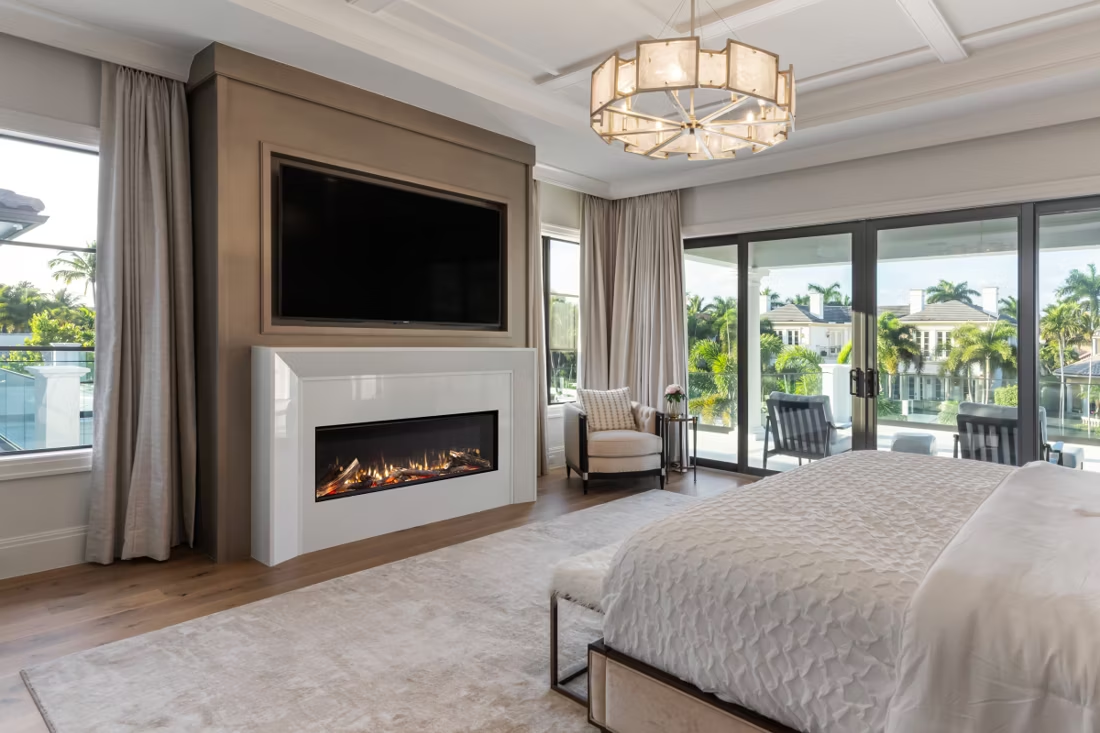
Yes—with an asterisk. Fireplaces are hot and TVs don't like heat. Either put a mantel between them to deflect rising warmth, or choose a fireplace with heat-management technology that creates a cool zone on the wall above—the wall stays around 125 degrees, barely warm, while the room still gets full heat. If you like clean lines and don't want a mantel, heat management is the answer.
Can a fireplace actually lower my heating bill?
Yes—by creating a comfort zone. A furnace heats every square foot of the house just to warm the one room you're in; a gas fireplace on low burns roughly a sixth of the gas a typical furnace does. Set the furnace around 55–60 degrees as a baseline, then heat the rooms your family actually uses. Families who heat this way commonly save $20–$60 a month.
Can I install a fireplace myself?
If you're putting a fire in your house on purpose, it's best to work with an expert. Unless you're genuinely experienced in framing, gas line, vent pipe, and the national code on clearances to combustibles, have a professional do it—and ideally the same company that sells you the fireplace, so warranty, service, and liability all live under one roof.
Nearby Dealers
Hearth shops serving North Lynnwood and the surrounding area.
Island Gas Piping & Installations, LLC
Electric Service in North Lynnwood
An electric fireplace's heater draws about 1,500 watts—pennies per hour at local rates.
Puget Sound Energy Inc
Find your electric fireplace in North Lynnwood.
Tell us a bit about your home and wall setup, and we'll match you with a trusted local dealer and send over a free Project Guide & Parts List—the exact unit, mounting or circuit requirements, and a recommended installer for your North Lynnwood project.
Find Your Fireplace →