
Keep Your Family Warm and Safe—No Matter What
Newcastle's mild Puget Sound winters and regional burn-ban rules mean most homes here run on gas or electric heat. If wood still fits your plans—a cabin retreat, backup heat, or the ambiance of a real fire—we'll connect you with a local dealer who can tell you honestly whether it works for your property.
Every Project Starts From One of These Five Situations
A mild lowland climate makes wood heat a niche choice.
Newcastle sits at just 381 feet elevation on the shore of the Puget Sound lowlands near Lake Washington, with an average winter low around 37°F and roughly 4,390 heating degree days a year. Compare that to a genuinely cold-climate city like Duluth, MN, which sees more than double the heating degree days and regular sub-zero nights—the kind of climate where a wood stove earns its keep as primary heat. In Newcastle, most homes simply don't need that much heat output, and a growing share are built with natural gas or electric systems from the start.
There's also a regulatory reality here: the Puget Sound Clean Air Agency issues Stage 1 and Stage 2 burn bans across King County during winter stagnant-air events, and uncertified wood stoves are restricted or banned outright during those periods. Combined with periodic wildfire smoke advisories in late summer, the air-quality math in this part of Western Washington tends to favor gas or electric appliances. That said, wood isn't off the table—some Newcastle homeowners with acreage, a detached shop, or a taste for a real fire still install EPA-certified stoves, and Mt. Baker-Snoqualmie National Forest and Olympic National Forest both issue cutting permits within a short drive. It's a smaller, more deliberate decision here than in a place like Bozeman, MT, but it's still a legitimate one.
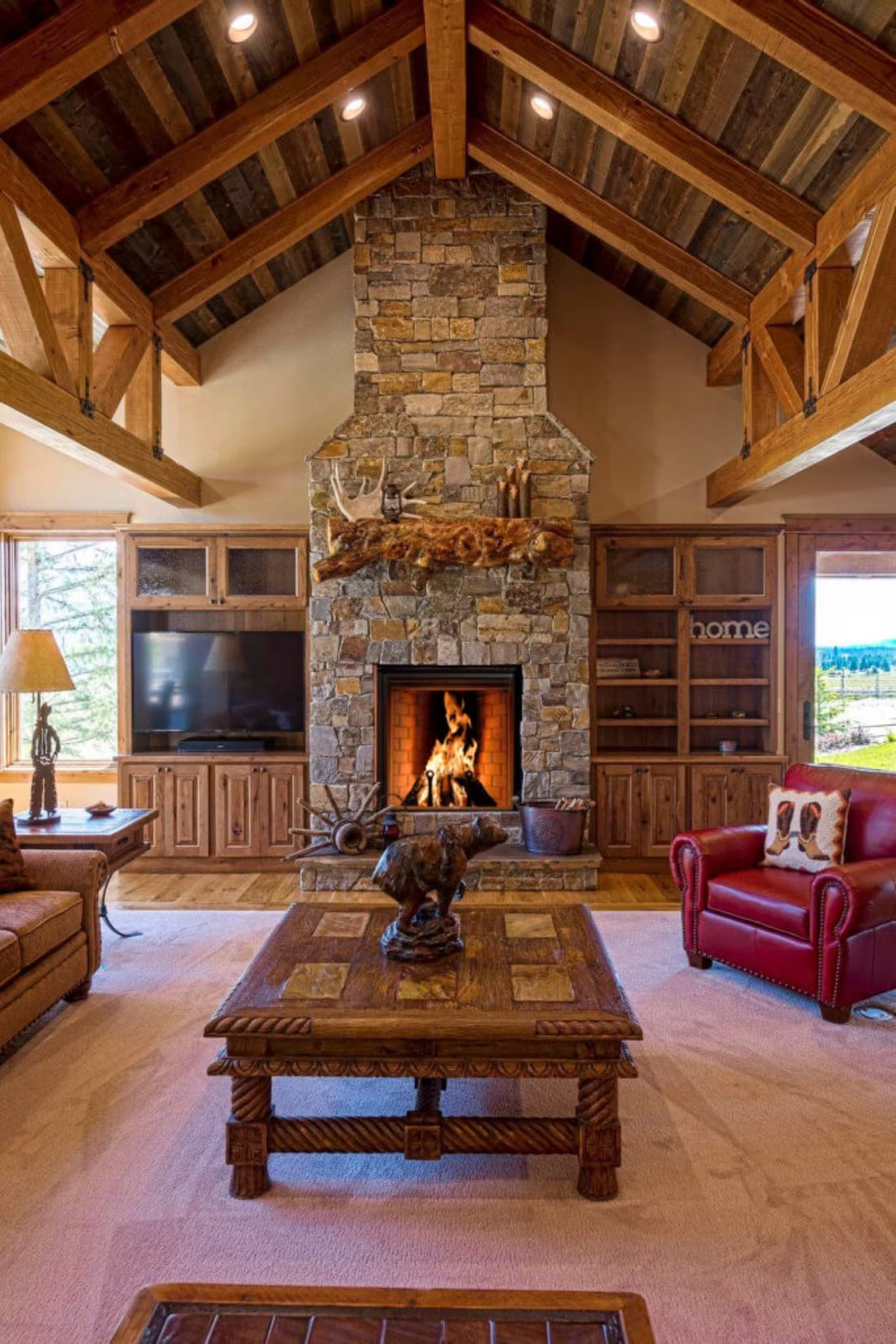
Firewood Cutting Permits Near Newcastle
Three steps. No salesperson until you're ready.
Tell us about your project
Your zip code, your situation, and the fuel you're leaning toward—or let the answers point you to one.
See what's actually available
The brands dealers within 100 miles genuinely carry—real options, never a catalog mirage.
Get your dealer & Project Guide
A trusted local dealer, plus the free Project Guide & Parts List that names every component of the job.
Frequently Asked Questions
Is wood heat actually common in Newcastle?
No, and we'd rather tell you that upfront than sell you on something that doesn't fit. With an average winter low near 37°F and about 4,390 heating degree days, Newcastle's climate doesn't demand the kind of sustained heat output wood stoves are built for. Most new construction and remodels in the area go with natural gas through Puget Sound Energy or an electric heat pump instead. Wood stoves still get installed here—just far less often than in colder parts of Washington or the interior Northwest.
Can I still install a wood stove in Newcastle if I want one?
Yes. It's less common, but it's not restricted beyond standard code. You'll need a building permit through the King County Department of Local Services (Newcastle contracts county permitting rather than running its own building department), and the stove itself has to meet current EPA New Source Performance Standards. A local hearth dealer who's actually pulled permits in King County will know the inspection process and can walk you through it—that local knowledge matters more here than in areas where wood stoves are installed every week.
What are the burn ban rules I need to know about?
The Puget Sound Clean Air Agency calls burn bans during winter temperature inversions when smoke gets trapped near the ground across King County and the greater Seattle basin. During a Stage 1 ban, uncertified wood stoves and fireplaces can't be used unless they're your only heat source; during a Stage 2 ban, even EPA-certified stoves are restricted for most households. If you're considering wood heat in Newcastle, plan on it being supplemental—a stove you use on clear, calm days and bank away for outages—rather than something you're guaranteed to burn every winter night.
What does a wood stove installation cost in Newcastle?
Because so few wood stoves get installed in this part of King County each year, there isn't the kind of well-worn local pricing benchmark you'd find in a wood-heavy market. Costs depend heavily on whether you have an existing masonry chimney, need new Class A venting run through a roof, or require a hearth pad rebuild for clearance codes. A local dealer can give you a firm number after seeing your home—that's part of what the free Project Guide & Parts List is for, so you're not guessing at a big-box price with no local context.
Where can I get a permit to cut my own firewood near Newcastle?
Mt. Baker-Snoqualmie National Forest and Olympic National Forest both sell personal-use cutting permits, typically running $5 to $20 per cord, valid during the May-through-October season. Both forests are within reasonable driving distance of Newcastle. Common species you'll find on permit maps include Douglas fir, red alder, and lodgepole pine—Douglas fir in particular burns hot and is widely available in this part of the Cascades' western slope.
What wood species burn best if I do install a stove?
Douglas fir is the regional workhorse—it's abundant, splits cleanly, and burns hot once properly seasoned (at least 6-12 months under cover, given how wet Western Washington winters get). Red alder is a softer hardwood that's easier to find locally and burns cleaner, good for shoulder-season fires. Lodgepole pine is common at higher elevations east of Newcastle and works fine but burns faster and leaves more creosote if not seasoned well. Whatever you burn, plan on covered, off-ground storage—Puget Sound humidity makes green or poorly stored wood a real problem here.
Should I get gas instead of wood in Newcastle?
For most homes here, yes. Natural gas is widely available through Puget Sound Energy, and a direct-vent gas fireplace or insert gives you instant, thermostat-controlled heat without burn-ban restrictions or firewood storage. Gas is the standard choice in this climate for a reason—it matches the mild, wet Puget Sound winters better than a wood stove sized for extreme cold. Wood still makes sense if you specifically want a non-electric backup heat source or the experience of a real fire, but if convenience and consistent heat output are the priority, gas is worth comparing before you commit to wood.
What about an electric fireplace instead of wood?
Electric is a reasonable option in Newcastle, especially for supplemental heat or ambiance without venting or fuel storage. Puget Sound Energy serves most of the area at roughly 14.6 cents per kWh, which keeps running costs for a zone-heating electric insert manageable given how few days a year Newcastle actually needs supplemental heat. Electric units also sidestep burn-ban rules entirely, since there's no combustion involved—worth factoring in if you live somewhere the Puget Sound Clean Air Agency issues frequent winter advisories.
Does wildfire smoke affect the decision to burn wood in Newcastle?
It's a factor worth understanding. Western Washington's summer wildfire smoke, which has become a regular late-summer event in the Puget Sound region, is a separate air quality issue from winter wood-stove burning, but it adds to the general scrutiny on particulate emissions in King County. It doesn't restrict wood stove installation, but it's part of why the Puget Sound Clean Air Agency takes winter burn bans seriously—the regional air basin already carries a meaningful smoke burden some years. If you do install a wood stove, an EPA-certified low-emission model will keep you compliant and considerate of neighbors during both wildfire season and winter inversions.
What's the difference between an insert and a zero-clearance fireplace?
An insert is a fireplace that slides into a pre-existing wood-burning fireplace—if you don't have one, there's nothing to insert it into. A zero-clearance fireplace is built into a framed wall, which makes it the answer for remodels and new construction. Simple test: existing masonry fireplace means insert; blank or framed wall means zero-clearance.
What do I measure to size a fireplace insert?
Four numbers tell you what fits: the front width, the front height, the back width, and the overall depth of your existing fireplace opening. Grab a tape measure, jot those down, and snap a photo of the wall—those two things do more to move your project forward than anything else you can do today.
Can I install a fireplace myself?
If you're putting a fire in your house on purpose, it's best to work with an expert. Unless you're genuinely experienced in framing, gas line, vent pipe, and the national code on clearances to combustibles, have a professional do it—and ideally the same company that sells you the fireplace, so warranty, service, and liability all live under one roof.
Should the dealer who sells my fireplace also install it?
Ideally, yes. A fireplace project involves vent pipe, gas line, electrical, and often tile or stone. Hire three or four separate trades and you own the liability and the game of telephone between them. One company selling and installing means one accountable party, start to finish—ask about factory training, on-time completion records, and what happens if an inspection fails.
Nearby Dealers
Hearth shops serving Newcastle and the surrounding area. Every listing shows whether it is a WhyFire partner, a dealer we have verified as authorized for the brands we recommend, or a local business carrying hearth products. No manufacturer pays for placement. How we verify dealers →
Aqua Quip
Rich’s Woodstoves & Spas
Rich's Stoves & Spas
Rich's For The Home
Chimney And Fireplace Solutions
Economy Wiring
Cressy Door & Fireplace
Dowell Company
Good Earth Works
Kirkland Fireplace
Rcs Fireplace
Fireside Hearth & Home-Auburn
Pristine Sweeps
Sundance Energy Services, Inc.
Sunrice Gas & Chimney Services
Rich's For The Home
Economy Hearth & Home
See if wood heat makes sense for your Newcastle home.
Tell us about your property and how you'd use a wood stove, and we'll give you a straight answer—plus, if it's a fit, connect you with a local dealer and a free Project Guide & Parts List covering the exact parts and vent kit your project needs.
Find Your Fireplace →