
Clean, Instant Heat for Lynnwood's Rainy Winters.
Puget Sound Energy keeps the gas lines running throughout Lynnwood—find the right direct-vent fireplace or insert, and connect with a trusted local dealer.
Every Project Starts From One of These Five Situations
The default heat source for a mild, damp climate.
Lynnwood sits in the Puget Sound lowlands at just 423 feet elevation, where winters are mild and wet rather than brutally cold—the average winter low hovers around 37°F, and the area racks up a long, steady heating season built more from persistent damp chill than deep freezes. Wood-burning appliances are largely off the table here: Lynnwood falls under the Puget Sound Clean Air Agency's jurisdiction, which enforces burn bans on high-pollution days and discourages uncertified wood stoves in this densely built suburban corridor between Seattle and Everett. That leaves gas as the default heat source for most homes that want a real fireplace rather than just a fire feature.
Puget Sound Energy runs natural gas service through most of Lynnwood's neighborhoods, from the Alderwood area to the Highway 99 corridor, and PSE also happens to be the area's electric utility, so gas fireplaces and electric heat pump systems often work side by side in the same house. A direct-vent gas fireplace or insert delivers instant, on-demand heat that doesn't rely on chimney draft fighting our marine air, performs well in the tighter, well-insulated homes built here since the 1990s, and provides zone heat that takes pressure off a central heat pump during a cold snap or a windstorm-driven outage.
Three steps. No salesperson until you're ready.
Tell us about your project
Your zip code, your situation, and the fuel you're leaning toward—or let the answers point you to one.
See what's actually available
The brands dealers within 100 miles genuinely carry—real options, never a catalog mirage.
Get your dealer & Project Guide
A trusted local dealer, plus the free Project Guide & Parts List that names every component of the job.
Frequently Asked Questions
How much does a gas fireplace installation cost in Lynnwood?
Most gas fireplace and insert installations in Lynnwood run $4,500 to $10,000, with the spread driven mainly by the venting path and whether new gas line work is required. A direct-vent insert dropped into an existing masonry fireplace with a gas line already stubbed in sits at the lower end. A new direct-vent fireplace for a remodel or addition—with framing, a fresh gas line run from the meter, and finish work—lands in the middle to upper range. Homes needing a longer gas line extension or a propane tank setup for properties outside PSE's natural gas service area run higher. A local retailer will give you a firm number after seeing your home.
Can I convert an existing wood-burning fireplace to gas?
Yes, and it's one of the most common projects in Lynnwood's older neighborhoods, where many homes built in the 1960s through 1980s have open masonry fireplaces that see little use. A gas insert fits into that existing firebox and vents through the chimney with a stainless liner, so you keep the look of the fireplace while gaining real, consistent heat. Given that Puget Sound Clean Air Agency rules make uncertified wood burning increasingly impractical here, converting to gas is often the more livable long-term choice. Expect $4,500 to $9,000 depending on the insert and whether the chimney needs a liner.
Do I need natural gas, or is propane an option?
Puget Sound Energy runs natural gas mains through most of Lynnwood, including the areas around Alderwood Mall and the Highway 99 corridor, so most homes in the 98036 and 98037 zip codes can tie a fireplace directly into existing gas service. A smaller number of properties near the edges of the 98046 zip code and unincorporated pockets of Snohomish County sit outside PSE's gas main coverage; propane from a local supplier is the standard workaround there, and most gas fireplace models can be configured to run on either fuel.
Will my gas fireplace still work if the power goes out?
In most cases, yes. Fireplaces with IPI (intermittent pilot ignition) include a battery backup, usually a set of AA batteries in the unit, that keeps the igniter working when the power drops—which matters here, since Snohomish County sees its share of windstorm-driven outages off Puget Sound, particularly in November and December. Valor fireplaces take a different approach: their pilot generates its own electricity through the thermocouple, so there's no battery to remember at all. Ask your local dealer which ignition system is built into any unit you're considering.
Gas fireplace vs. gas insert vs. gas stove—what's the difference?
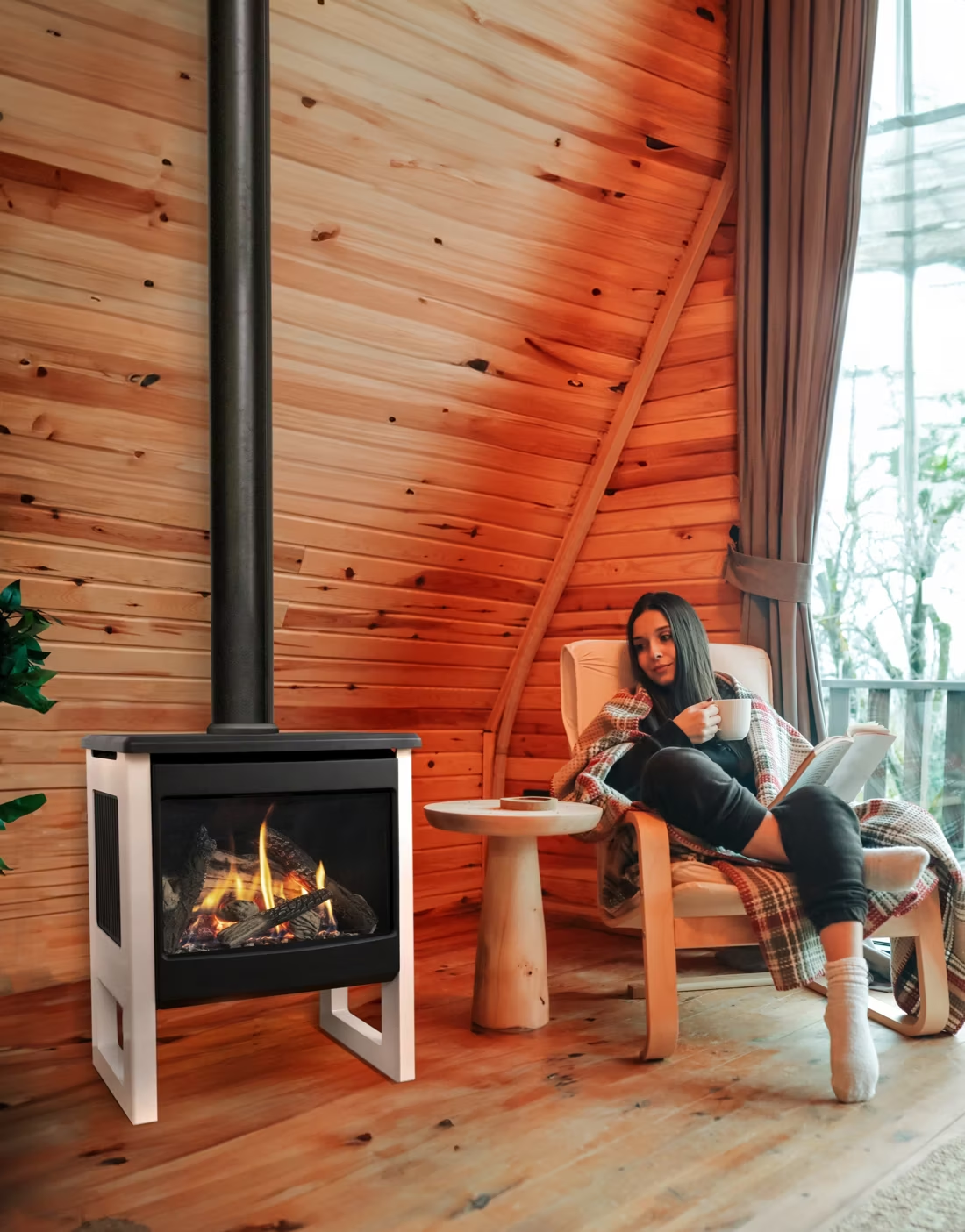
A gas fireplace is a built-in unit installed during new construction or a remodel, framed into a wall. A gas insert is sized to slide into an existing masonry firebox, turning an old wood-burning fireplace into a sealed, efficient heat source using the same chimney. A gas stove is a freestanding unit that sits on the floor on its own hearth pad, similar in shape to a wood stove but running on gas. For the many Lynnwood homes with an existing but rarely-used masonry fireplace, an insert is usually the right call; new construction or additions without an existing firebox are better suited to a built-in fireplace or a freestanding stove.
Do I need a permit to install a gas fireplace in Lynnwood?
Yes—the City of Lynnwood Building Department requires a building permit for the fireplace installation and a separate gas piping permit for any new gas line work, and that gas line has to be run by a licensed gas fitter. Most established local hearth retailers coordinate both permits and the gas line work as part of the installation package, so you're not left managing separate trades and inspections yourself.
What about vent-free gas fireplaces—are they an option here?
Not really. Washington's state mechanical code restricts unvented (vent-free) gas fireplaces in dwelling units, so direct-vent units—which draw combustion air from outside and exhaust it back outside through a sealed pipe—are effectively the standard in Lynnwood. That's not a downside: direct-vent fireplaces are more efficient, don't put moisture or combustion byproducts into the living space, and hold up well in our already-damp climate. Any local retailer can walk you through the direct-vent options available for your install.
How often does a gas fireplace need service?
Plan on an annual inspection, typically before the fall heating season starts. A certified technician checks the burner, pilot assembly, venting, and gas connections, and cleans the glass and interior—a much simpler visit than a wood chimney sweep, but still important, since a dirty burner or degraded gasket can affect both safety and efficiency. Local gas appliance service providers in the Lynnwood and Edmonds area typically charge $150 to $250 for this visit.
Why is gas so much more common than wood or pellet heat in Lynnwood?
Air quality rules and density make the difference. Puget Sound Clean Air Agency enforces burn bans on high-pollution days throughout Snohomish County, and Lynnwood's suburban lot sizes and HOA restrictions in many neighborhoods make wood storage and cutting impractical compared to more rural parts of the county near the Mt. Baker-Snoqualmie National Forest, where residents can still pull a cutting permit for $5 to $20 a cord. Pellet stoves face similar practical limits—there's little local demand or dealer support for them inside city limits, even though regional brands like Bear Mountain and Lignetics are available nearby. Gas, tied into Puget Sound Energy's existing infrastructure, is simply the cleaner, lower-hassle fit for how most Lynnwood homes are built and regulated.
Is my gas fireplace wasting gas?
If it was installed more than 15 years ago, probably. Older gas fireplaces keep a standing pilot light burning all the time, and that little flame can cost a couple hundred dollars a year. Newer models use pilot-on-demand ignition—the pilot lights only when you use the fireplace and goes out when you turn it off.
Why is a fireplace insert so efficient?
An insert does two things: it seals the chimney completely, so you stop losing air you already paid to heat, and it radiates warmth into the room through the firebox and glass. Most add a heat-exchange fan that pulls cool room air underneath, wraps it around the hot firebox, and pushes it back out warm. Your home is more efficient before you've even lit the first fire.
Can a fireplace actually lower my heating bill?
Yes—by creating a comfort zone. A furnace heats every square foot of the house just to warm the one room you're in; a gas fireplace on low burns roughly a sixth of the gas a typical furnace does. Set the furnace around 55–60 degrees as a baseline, then heat the rooms your family actually uses. Families who heat this way commonly save $20–$60 a month.
Does a fireplace add value to my home?
On average, a fireplace adds back to the home about the same amount you spent installing it. Add the monthly savings from heating the rooms you actually use instead of the whole house—often hundreds of dollars a year—and the value case is strong before you even count what a fire does for how your family uses the room.
Nearby Dealers
Hearth shops serving Lynnwood and the surrounding area.
Island Gas Piping & Installations, LLC
Find your gas fireplace in Lynnwood.
Tell us about your home and we'll match you with a trusted local dealer and send over a free Project Guide & Parts List—the exact parts, including the vent kit, for your Lynnwood gas fireplace project.
Find Your Fireplace →