
Add Real Warmth to Any Room, No Chimney Required.
Instant zone heat and ambiance for Larch Way homes and townhomes, with no venting, gas line, or masonry chimney to plan around. Find the right unit and connect with a trusted local dealer.
Every Project Starts From One of These Five Situations
Mild winters, modern convenience.
Larch Way sits at just 512 feet in the Snohomish County lowlands near Lynnwood and Mill Creek, inside climate zone 4C, where the marine air off Puget Sound keeps winters mild. Average winter lows here hover around 37°F, and the coldest snaps rarely approach the single digits homeowners deal with in a place like Bozeman, MT. With a heating season on par with a moderate, mild-winter climate, most homes need heat to take the edge off a damp, gray evening rather than to survive a hard freeze.
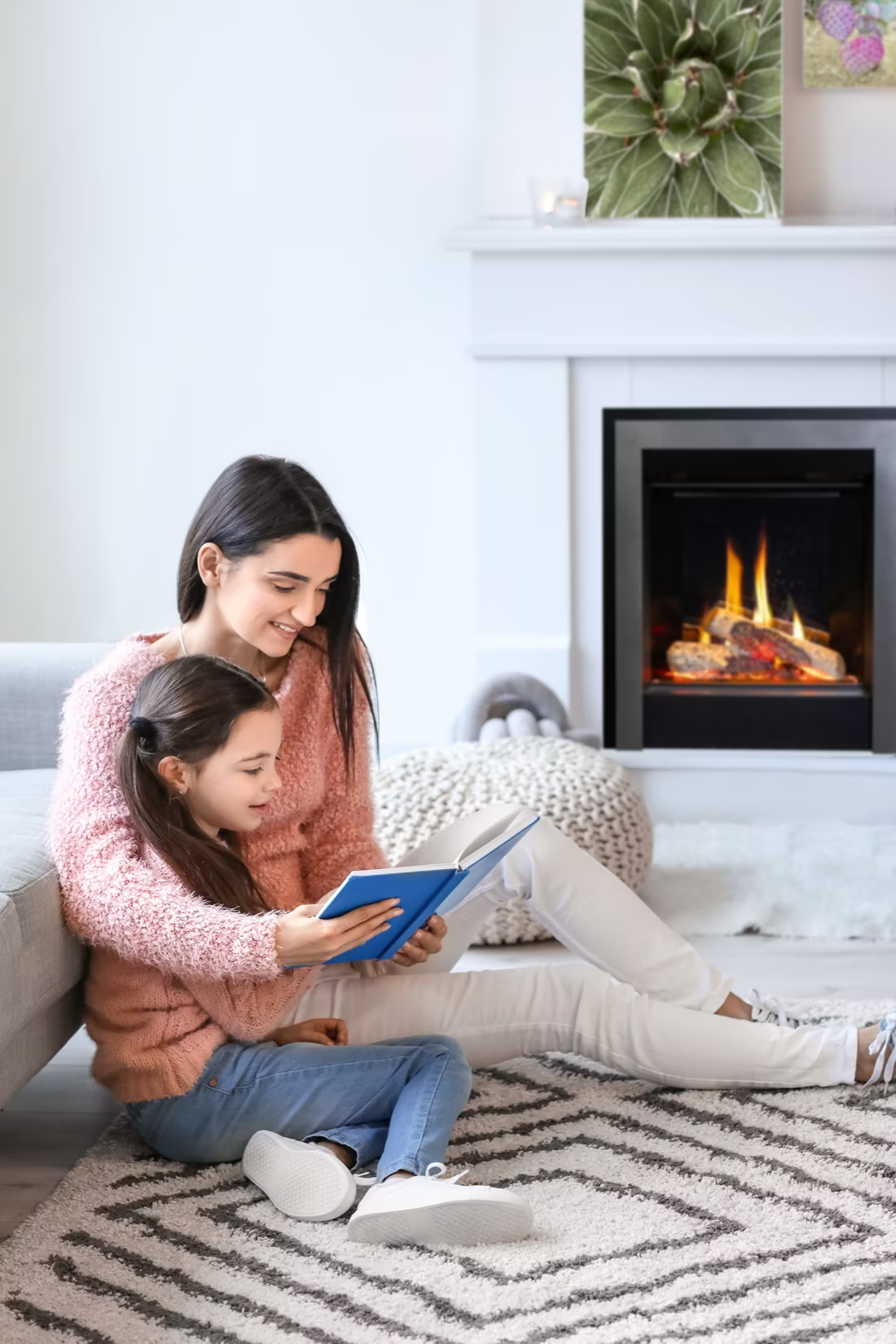
That climate pattern is exactly where electric fireplaces earn their keep. In the newer townhomes and condos filling in along the Larch Way corridor, an electric insert or wall-mounted linear unit adds instant supplemental heat and real ambiance without a flue, gas line, or masonry chimney—a meaningful advantage for HOA-restricted properties and renters alike. Puget Sound Energy serves the area at roughly 14.6 cents per kWh, and because there's no combustion involved, electric units also sidestep the wildfire smoke concerns that occasionally settle over the region in late summer.
Three steps. No salesperson until you're ready.
Tell us about your project
Your zip code, your situation, and the fuel you're leaning toward—or let the answers point you to one.
See what's actually available
The brands dealers within 100 miles genuinely carry—real options, never a catalog mirage.
Get your dealer & Project Guide
A trusted local dealer, plus the free Project Guide & Parts List that names every component of the job.
Frequently Asked Questions
How much does an electric fireplace cost to install in Larch Way?
Plug-in freestanding electric fireplaces or inserts that run on a standard 120V outlet typically cost $150 to $600 for the unit, with no professional installation required beyond setting it in place. Built-in or wall-mounted linear electric fireplaces—common in the newer construction going up around Mill Creek and Lynnwood—usually run $800 to $2,500 installed, including a dedicated 20-amp circuit pulled by a licensed electrician. Larger custom built-ins with surround millwork can reach $3,500 to $4,000. Because there's no venting or chimney to account for, electric is consistently the least expensive fireplace fuel to install in this climate.
Do I need a permit for an electric fireplace in unincorporated Snohomish County?
Most plug-in electric fireplaces need no permit at all since they simply plug into an existing outlet. If you're adding a dedicated circuit for a built-in or wall-mounted unit, that electrical work requires a permit through the Washington State Department of Labor & Industries—electrical permits are handled at the state level in Washington rather than through Snohomish County—and must be pulled by a licensed electrician. There's no building or venting permit involved since electric units don't penetrate a wall or roof for exhaust.
Does an electric fireplace make sense in Larch Way's mild climate?
Yes. Larch Way's marine west coast climate doesn't demand the sustained high-BTU output that homes in colder inland regions like Fargo, ND require. With winter lows averaging 37°F, most local homeowners run their electric fireplace for a few hours in the evening to knock the chill off a room, paired with a heat pump or forced-air furnace for whole-home heat. It's a supplemental-heat and ambiance solution here rather than a primary heat source, which lines up well with what electric fireplaces are actually built to do.
What will an electric fireplace cost to run per month?
Puget Sound Energy bills residential customers in Larch Way at about $0.1463 per kWh. A typical electric fireplace heater draws around 1,500 watts on the heat setting, so running it four hours a night for a month costs roughly $26 to $28. If you're mostly using it for the flame effect without heat, draw drops to under 100 watts, which costs only a few dollars a month. That's a fraction of what it costs to keep a wood stove supplied with cordwood or a gas fireplace's pilot and burner running through a Pacific Northwest winter.
Will my electric fireplace work if the power goes out?
No—electric fireplaces need grid power to run the heater, blower, and flame effect, so they go dark along with everything else during an outage. That's worth planning around in this part of Snohomish County, where winter windstorms off the Sound can knock out power for hours or occasionally days. If backup heat during an outage matters to your household, a wood stove or insert—burning locally available douglas fir, red alder, or lodgepole pine—is the only fireplace fuel that keeps working with no electricity at all.
Electric vs. wood or gas—which is right for my Larch Way home?
Electric wins on install simplicity and upfront cost: no chimney, no gas line, no annual sweep, and a licensed electrician can have a built-in unit running in a day. Wood offers real BTU output and works during power outages, which matters more here during windstorm season than during any hard freeze. Gas splits the difference—instant heat with more output than electric, but it requires either natural gas service or a propane tank and produces real combustion heat rather than a supplemental warm spot. For a townhome, condo, or a room without an existing chimney, electric is usually the simplest and least expensive path in Larch Way's mild climate.
Can I install an electric fireplace in a condo or townhome in Larch Way?
Yes, and it's one of the most common reasons homeowners in this area choose electric. With no venting, no chimney penetration, and no gas line, electric fireplaces are typically allowed under HOA rules that restrict exterior modifications, and renters can use a plug-in freestanding unit without altering the unit at all. For a permanent wall-mounted linear fireplace, you'll just need clearance from your HOA (if applicable) and a licensed electrician for the dedicated circuit.
Are electric fireplaces a good option during wildfire smoke season?
Yes. Larch Way sees occasional wildfire smoke drift into the region in late summer, and during those stretches, keeping windows closed and avoiding additional combustion indoors matters. An electric fireplace produces zero indoor emissions—no smoke, no particulates, no need to crack a window for combustion air—so it's a reasonable way to add ambiance or a bit of evening warmth without adding to indoor air quality concerns during a smoke advisory.
What size room will an electric fireplace actually heat in Larch Way?
Most standalone electric fireplace heaters are rated to comfortably heat 400 to 1,000 square feet, depending on ceiling height and how open the floor plan is. That's plenty for a living room, primary bedroom, or a converted den in most Larch Way homes, but electric units aren't designed to heat an entire house on their own—they're built as zone heat for the room they're in. A local dealer can help you match wattage and unit size to your specific room dimensions during a quick consultation.
Can I put a TV above my fireplace?
Yes—with an asterisk. Fireplaces are hot and TVs don't like heat. Either put a mantel between them to deflect rising warmth, or choose a fireplace with heat-management technology that creates a cool zone on the wall above—the wall stays around 125 degrees, barely warm, while the room still gets full heat. If you like clean lines and don't want a mantel, heat management is the answer.
Do electric fireplaces actually produce heat?
Yes—most put out around 4,800–5,000 BTUs from a standard outlet, which comfortably warms a bedroom, office, or den as a comfort-zone heater. What they won't do is carry a whole house the way wood, gas, or pellet can. Think of electric as ambiance-first with honest supplemental heat: flames on with no heat in July, flames plus warmth in January.
Should the dealer who sells my fireplace also install it?
Ideally, yes. A fireplace project involves vent pipe, gas line, electrical, and often tile or stone. Hire three or four separate trades and you own the liability and the game of telephone between them. One company selling and installing means one accountable party, start to finish—ask about factory training, on-time completion records, and what happens if an inspection fails.
Does a fireplace add value to my home?
On average, a fireplace adds back to the home about the same amount you spent installing it. Add the monthly savings from heating the rooms you actually use instead of the whole house—often hundreds of dollars a year—and the value case is strong before you even count what a fire does for how your family uses the room.
Nearby Dealers
Hearth shops serving Larch Way and the surrounding area. Every listing shows whether it is a WhyFire partner, a dealer we have verified as authorized for the brands we recommend, or a local business carrying hearth products. No manufacturer pays for placement. How we verify dealers →
Sundance Energy Services, Inc.
Rich's For The Home
All Points Heating
Pristine Sweeps
T.d.r Masonry LLC
Ecco Supply
Kirkland Fireplace
Island Gas Piping & Installations, LLC
Anderson Fireplace
Rich’s Woodstoves & Spas
Four Day Fireplace
Ace Freeland Home
Whidbey Heating And Stoves
Economy Hearth & Home
Electric Service in Larch Way
An electric fireplace's heater draws about 1,500 watts—pennies per hour at local rates.
Puget Sound Energy Inc
Find your electric fireplace in Larch Way.
Tell us a bit about your home and we'll match you with the right electric fireplace or insert, plus a free Project Guide & Parts List with the exact parts for your space and a recommended local dealer near Larch Way.
Find Your Fireplace →