
Reliable Warmth Through Snohomish County's Wet, Mild Winters.
Clean, instant gas heat for Lake Stickney homes—no wood stacking, no smoke, just warmth at the flip of a switch. Find the right unit and connect with a trusted local dealer.
Every Project Starts From One of These Five Situations
Convenient heat for a mild, marine climate.
Lake Stickney sits low in the Puget Sound trough at just 474 feet elevation, in climate zone 4C—mild and marine, with an average winter low around 37°F and a heating season load well below what a place like Duluth, MN sees. That's a fraction of what a place like Duluth, MN sees, but the Puget Sound lowlands make up for it with months of damp, gray, chilly weather where a fireplace runs almost daily from October through April. Late-summer wildfire smoke drifting in from eastern Washington and British Columbia has also made a lot of local homeowners rethink wood burning, which is part of why gas has become such a common choice here.
Puget Sound Energy serves Lake Stickney as both the electric and natural gas provider, and much of the housing stock around Everett, Lynnwood, and Mill Creek—including the neighborhoods surrounding Lake Stickney—is already plumbed for natural gas. That makes adding or upgrading a gas fireplace straightforward for a lot of homes. For the smaller number of properties outside PSE's gas footprint, propane is the standard fallback. Either way, a gas fireplace delivers instant, controllable heat that doesn't add smoke to an already smoke-sensitive airshed, and pairs well as zone heating alongside a central furnace during the long wet season.
Three steps. No salesperson until you're ready.
Tell us about your project
Your zip code, your situation, and the fuel you're leaning toward—or let the answers point you to one.
See what's actually available
The brands dealers within 100 miles genuinely carry—real options, never a catalog mirage.
Get your dealer & Project Guide
A trusted local dealer, plus the free Project Guide & Parts List that names every component of the job.
Frequently Asked Questions
How much does a gas fireplace installation cost in Lake Stickney?
Most gas fireplace installations in the Lake Stickney area run somewhere between $4,000 and $9,500, depending on the unit, the venting run, and whether new gas line work is needed. A direct-vent insert going into an existing masonry fireplace with a gas line already nearby sits toward the lower end. A new built-in gas fireplace for a remodel or an addition—with framing, venting, and a fresh gas line tie-in to PSE service—lands in the middle to upper range. Homes needing a propane tank setup because they're outside the natural gas service area typically run higher. A local retailer will give you a firm number after seeing your home.
Can I convert my wood-burning fireplace to gas?
Yes, and it's a common project in this part of Snohomish County, especially among homeowners who've grown tired of hauling firewood or dealing with smoke advisories during wildfire season. A gas insert typically drops into your existing masonry firebox, running a stainless liner up the existing chimney for venting. If your home already has a PSE natural gas line nearby—common in newer Lake Stickney-area subdivisions—the job is mostly insert and liner work. If not, running new gas line adds to the cost. Either way, you keep the look of your existing fireplace while gaining real, on-demand heat output.
Do I need natural gas, or can I use propane?
Both work. Puget Sound Energy provides natural gas service across much of Lake Stickney and the surrounding Everett/Lynnwood/Mill Creek area, so if your home already has a gas water heater, range, or furnace, adding a fireplace is usually simple. Homes on the edges of PSE's service territory, or in more rural pockets of Snohomish County, often run on propane instead, which requires either an existing tank or a new tank install from a local propane supplier. Most gas fireplace models can be set up for either fuel—your installer sets the orifice and regulator accordingly.
Will my gas fireplace still work if the power goes out?
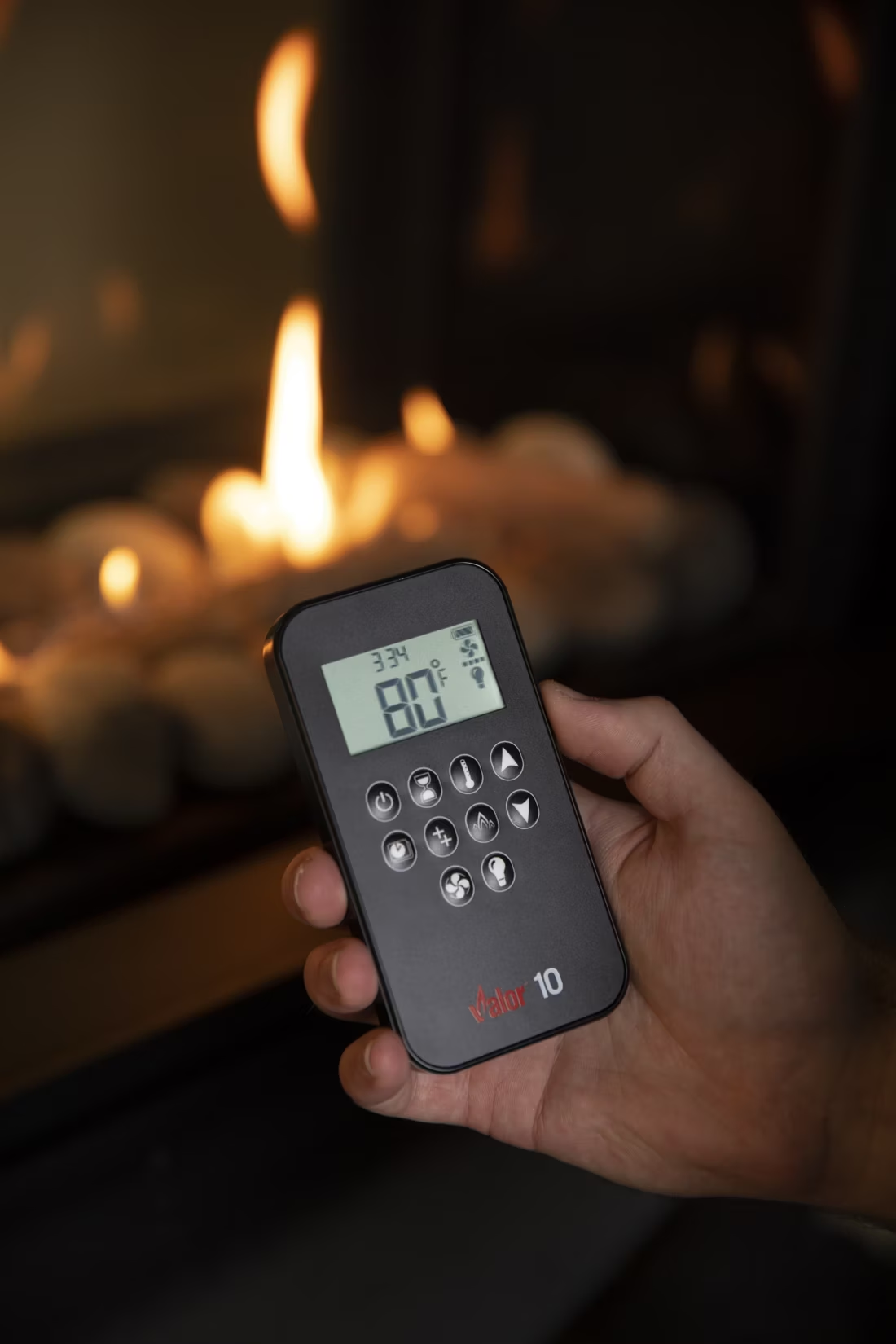
Most modern gas fireplaces will, which matters here—Puget Sound windstorms knock out PSE power in this area most winters, sometimes for a day or more. Units with intermittent pilot ignition (IPI) run on a battery backup that kicks in automatically when power drops, so the fireplace lights normally off stored battery power. Just remember to keep fresh batteries in the unit. Valor fireplaces take a different approach: they generate their own electricity through the pilot's thermocouple, so there's no battery to maintain or forget. For a household that wants heat guaranteed during the next windstorm outage, that's worth asking your local retailer about directly.
What's the difference between a gas fireplace, insert, and stove?
A gas fireplace is a fully built-in unit framed into a wall—the right choice for new construction or a larger remodel. A gas insert is built to slide into an existing masonry firebox, sealing it up and venting through the existing chimney, which is the more common upgrade for older Lake Stickney homes with a wood fireplace they no longer use. A gas stove is a freestanding cabinet-style unit that sits on the floor like a wood stove but burns gas, often used in homes without any existing fireplace opening. Most homeowners here with an existing masonry fireplace end up choosing an insert.
Do I need a permit to install a gas fireplace in Lake Stickney?
Yes. Lake Stickney is unincorporated, so gas fireplace installations go through Snohomish County Planning and Development Services, which requires both a mechanical/building permit and sign-off on the gas line work. A licensed gas-fitter has to handle the actual gas line connection, which is one reason it's worth using a certified hearth retailer—they coordinate the gas line, venting, and county inspection as one job instead of leaving you to manage separate trades and separate permit applications.
Can I install a vent-free gas fireplace in Lake Stickney?
Washington is one of the states that restricts vent-free (unvented) gas appliances more tightly than most—the state mechanical code limits where they can be installed and, in many jurisdictions including Snohomish County, they're effectively not approved for primary installations in occupied living space. Vented, direct-vent units are the standard here: they draw combustion air from outside and exhaust it back outside through a sealed pipe, so there's no debate about indoor air quality or code approval. If a retailer offers you a vent-free unit for a Lake Stickney home, confirm with Snohomish County PDS before you buy—direct-vent is almost always the right and legal answer here.
How often does a gas fireplace need to be serviced?
Plan on an annual inspection, ideally before the wet season starts in early fall. A certified technician checks the burner, pilot assembly, venting, and gas connections, and cleans the glass and interior—a much smaller job than chimney sweeping but just as important for safe operation. Local gas appliance service providers in the Everett/Lynnwood area typically charge $150 to $250 for this annual visit, and it's often required to keep manufacturer warranties valid.
Gas vs. wood—which makes more sense for a Lake Stickney home?
Wood has real advantages if you want it: this part of Snohomish County has ready access to douglas fir, red alder, and lodgepole pine, and Mt. Baker-Snoqualmie National Forest issues personal-use cutting permits from May through October for $5 to $20 per cord. Wood also keeps working during a power outage with no batteries needed. But wildfire smoke has become a bigger concern most late summers in Western Washington, and a lot of homeowners here would rather not add more particulates to the air even in winter. Gas gives you instant, smoke-free heat with none of the stacking, splitting, or ash cleanup—for most primary living spaces in Lake Stickney, gas is the more practical daily-use choice, with wood reserved by some households purely for backup or ambiance.
Why is my open fireplace making my house colder?
Open fireplaces suck—literally. As the fire burns, it consumes air your furnace already paid to heat and pulls it out through the chimney, so the house is actually colder after the fire goes out than before you lit it. An insert fixes this: it seals the chimney, puts fixed glass across the front, and turns that hole in your house into a real heat source.
Is my gas fireplace wasting gas?
If it was installed more than 15 years ago, probably. Older gas fireplaces keep a standing pilot light burning all the time, and that little flame can cost a couple hundred dollars a year. Newer models use pilot-on-demand ignition—the pilot lights only when you use the fireplace and goes out when you turn it off.
Can a fireplace actually lower my heating bill?
Yes—by creating a comfort zone. A furnace heats every square foot of the house just to warm the one room you're in; a gas fireplace on low burns roughly a sixth of the gas a typical furnace does. Set the furnace around 55–60 degrees as a baseline, then heat the rooms your family actually uses. Families who heat this way commonly save $20–$60 a month.
Can I install a fireplace myself?
If you're putting a fire in your house on purpose, it's best to work with an expert. Unless you're genuinely experienced in framing, gas line, vent pipe, and the national code on clearances to combustibles, have a professional do it—and ideally the same company that sells you the fireplace, so warranty, service, and liability all live under one roof.
Nearby Dealers
Hearth shops serving Lake Stickney and the surrounding area. Every listing shows whether it is a WhyFire partner, a dealer we have verified as authorized for the brands we recommend, or a local business carrying hearth products. No manufacturer pays for placement. How we verify dealers →
Rich's For The Home
All Points Heating
Sundance Energy Services, Inc.
T.d.r Masonry LLC
Ecco Supply
Pristine Sweeps
Island Gas Piping & Installations, LLC
Anderson Fireplace
Kirkland Fireplace
Four Day Fireplace
Ace Freeland Home
Rich’s Woodstoves & Spas
Whidbey Heating And Stoves
All Seasons Spa & Stove
Economy Hearth & Home
Find your gas fireplace in Lake Stickney.
Tell us a bit about your home and we'll match you with a trusted local dealer and send over a free Project Guide & Parts List—the exact parts, vent kit, and recommended dealer for your gas fireplace project in Lake Stickney.
Find Your Fireplace →