
Instant heat, zero smoke, no chimney required.
Clean, flip-of-a-switch warmth for Lake Shore's mild, damp winters—no venting, no wildfire-smoke tradeoffs, and a utility rate that keeps it affordable to run.
Every Project Starts From One of These Five Situations
Zone heat that works with your climate, not against it.
Lake Shore sits along the Columbia River in Clark County at about 217 feet of elevation, inside climate zone 4C. Winters here average around 32°F at the low and rack up roughly 5,295 heating degree days a year—a lot of cool, wet, gray weather, but nothing close to the sub-zero stretches homeowners deal with in a place like Bozeman, MT. That distinction matters for fireplace choice: this is a climate where a well-placed electric unit can genuinely carry a room through the season, not just look nice.
It also matters that summer and early fall bring wildfire smoke to the region most years, which pushes some Clark County households to think twice about adding another combustion source to the house. An electric fireplace or insert produces zero indoor emissions and needs no chimney, flue, or outside air intake, which makes it an easy add to a bedroom, basement, or home office. Run costs stay low too—Clark Public Utilities (PUD No. 1 of Clark County) bills residential power at about $0.1041 per kWh, among the lower rates in the Pacific Northwest, so an electric unit used as zone heat won't move the needle much on a monthly bill.
Three steps. No salesperson until you're ready.
Tell us about your project
Your zip code, your situation, and the fuel you're leaning toward—or let the answers point you to one.
See what's actually available
The brands dealers within 100 miles genuinely carry—real options, never a catalog mirage.
Get your dealer & Project Guide
A trusted local dealer, plus the free Project Guide & Parts List that names every component of the job.
Frequently Asked Questions
How much does an electric fireplace or insert cost to install in Lake Shore?
Because electric units need no chimney, gas line, or masonry work, they're the least expensive fireplace category to add. A plug-in freestanding electric fireplace or a basic insert that drops into an existing wood or gas firebox often runs $500 to $1,500 including the unit, with no additional labor beyond plugging it in or a simple surround fit. A built-in wall unit or a linear electric fireplace wired into its own dedicated circuit runs higher—typically $1,500 to $3,500 once an electrician sets the circuit and a carpenter frames the surround. Either way, expect a fraction of the cost of a vented gas or wood installation.
Will an electric fireplace actually heat a room in Lake Shore's climate?
Yes, for the way most people use it here. Most electric fireplace heaters put out 4,600 to 5,100 BTU and are rated to comfortably heat 400 to 500 square feet—enough for a living room, bedroom, or converted garage. With Lake Shore's average winter low sitting around 32°F rather than deep-freeze territory, an electric unit can function as legitimate supplemental or even primary heat for a single room, especially paired with the heat pump or furnace most Clark County homes already run for the rest of the house.
Is electric heat a better fit than wood or gas during wildfire smoke season?
For a lot of Lake Shore households, yes. Clark County sees wildfire smoke drift in most summers and some falls, and on the worst air-quality days local guidance is to keep indoor combustion to a minimum, which includes wood stoves and even some gas appliances. An electric fireplace burns nothing and adds no particulates or byproducts to indoor air, so it keeps working exactly the same during a smoke advisory as on a clear day. It's one of the more practical reasons Clark County homeowners pick electric as a second unit even when their main fireplace is wood or gas.
Do I need a permit to install an electric fireplace in Lake Shore?
A freestanding, plug-in electric fireplace needs no permit—you plug it into a standard outlet like any other appliance. A built-in electric fireplace or linear wall unit wired to its own dedicated circuit is different: that electrical work typically requires a permit through the Clark County Building Department, and the circuit should be run by a licensed electrician. Most local dealers who sell built-in electric units either handle this coordination themselves or can refer you to an electrician who does it regularly.
What does it cost to run an electric fireplace each month?
At Clark Public Utilities' residential rate of about $0.1041 per kWh, a typical 1,500-watt electric fireplace running its heater for five hours a day costs roughly $0.78 a day, or about $23 a month, in addition to the negligible cost of running the flame effect alone (a few cents an hour with the heater off). That's meaningfully cheaper to operate than most people expect, and it's a big part of why electric units get used as everyday supplemental heat rather than saved for special occasions.
What types of electric fireplaces are available for Lake Shore homes?
Three main categories cover most installs here: freestanding electric stoves and mantels that plug in and can be moved between rooms; inserts sized to slide into an existing wood or gas firebox opening, which is common in older Lake Shore homes with a fireplace that's no longer used for wood burning; and built-in linear wall units, popular in newer construction and remodels for a modern, frameless look. A trusted local dealer can walk you through which category fits your existing opening or wall, if any.
Electric vs. gas or wood—which makes more sense for my home?
Wood and gas both put out more raw heat and work well as a home's primary heat source; wood also keeps running with the power out, which electric can't do. But for Lake Shore's mild marine climate—average winter lows around 32°F rather than extended hard freezes—many homeowners don't need that much heat, and instead want a clean, low-maintenance way to warm one room, avoid another combustion source in the house, and skip the chimney sweep or gas line entirely. If you already have central heat and just want zone warmth for a bedroom or converted space, electric is usually the simpler and cheaper answer. If you're looking to heat the whole house or want backup heat during a winter storm, gas or wood is worth a closer look.
Can I convert an existing wood-burning fireplace to electric?
Yes, and it's one of the more common upgrades in older Lake Shore homes that have a wood fireplace they no longer use. An electric insert sized to your existing firebox opening slides in without any chimney work—the chimney can stay capped and unused, or continue serving another appliance if there is one. This route skips the sweep, the wood handling, and any wildfire-smoke-season concerns about burning, while keeping the look of the original fireplace opening.
What features should I look for in an electric fireplace?
Look for a thermostat with a built-in timer so the heater doesn't run needlessly, a flame effect that can run independently of the heat (useful for ambiance during smoke season when you want the look without added warmth), and, for insert models, a trim kit sized correctly to your firebox opening so there's no visible gap. Higher-end units use LED-driven flame technology that looks convincing at night, though the difference is mostly cosmetic and comes down to budget. A local dealer can show you the difference in person before you decide.
Can I put a TV above my fireplace?
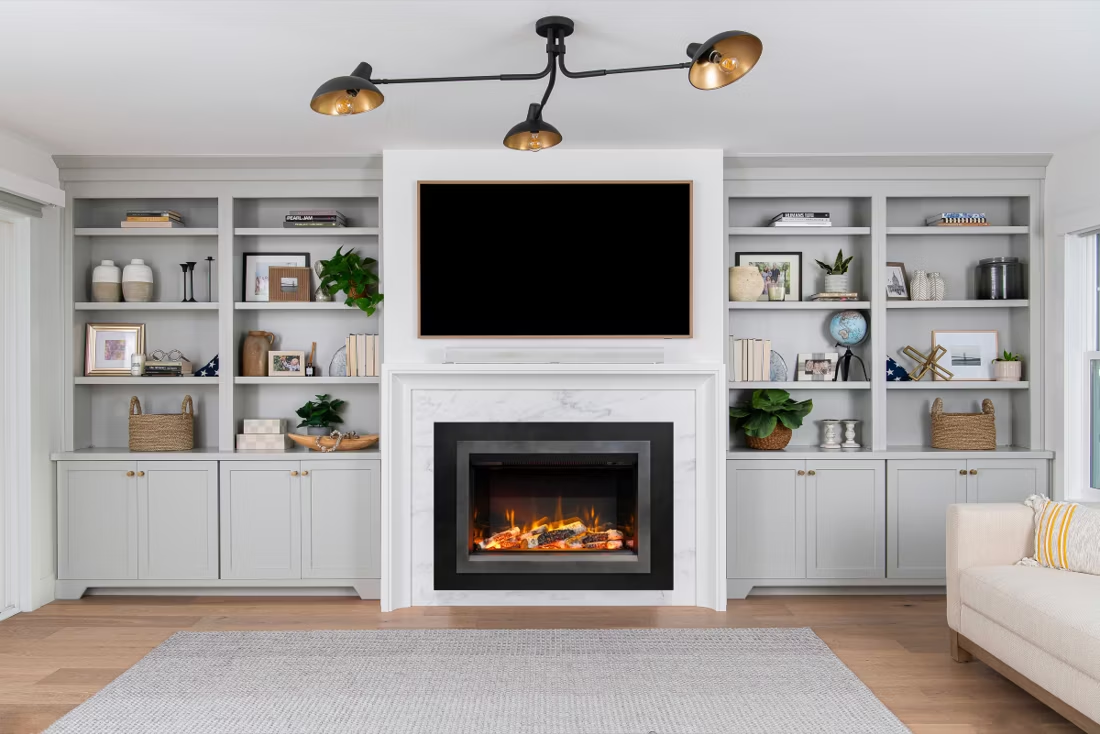
Yes—with an asterisk. Fireplaces are hot and TVs don't like heat. Either put a mantel between them to deflect rising warmth, or choose a fireplace with heat-management technology that creates a cool zone on the wall above—the wall stays around 125 degrees, barely warm, while the room still gets full heat. If you like clean lines and don't want a mantel, heat management is the answer.
Do electric fireplaces actually produce heat?
Yes—most put out around 4,800–5,000 BTUs from a standard outlet, which comfortably warms a bedroom, office, or den as a comfort-zone heater. What they won't do is carry a whole house the way wood, gas, or pellet can. Think of electric as ambiance-first with honest supplemental heat: flames on with no heat in July, flames plus warmth in January.
Can I install a fireplace myself?
If you're putting a fire in your house on purpose, it's best to work with an expert. Unless you're genuinely experienced in framing, gas line, vent pipe, and the national code on clearances to combustibles, have a professional do it—and ideally the same company that sells you the fireplace, so warranty, service, and liability all live under one roof.
What is an in-home preview and do I need one?
It's a visit where a hearth professional measures your space, confirms the model you picked actually works in your home, and walks the specs—framing, gas line, venting, finish work—before anything is ordered. Some details you just can't know until you see the house. Never make a down payment without one; it's the single most-skipped step that burns buyers.
Nearby Dealers
Hearth shops serving Lake Shore and the surrounding area. Every listing shows whether it is a WhyFire partner, a dealer we have verified as authorized for the brands we recommend, or a local business carrying hearth products. No manufacturer pays for placement. How we verify dealers →
Haven Spa Pool & Hearth
The Stove Shop
Performance Building Products
Ez Propane
New Flame Hearth & Grill
Tri-Tech Heating
Addco Electric Fireplaces
Bridgetown Chimney & Masonry
Lakewood Gas
Lumos Hearth & Home
Lisac’s Spark & Splash
Nw Natural Appliance Center
Buck's Stove Palace
Fireside Home Solutions
HomeTown Hearth & Grill
Classic Pool And Spa
Two Foot/Ten Foot Fireplaces
Rich's Stoves & Spa
Emerald Outdoor Living-Portland
Electric Service in Lake Shore
An electric fireplace's heater draws about 1,500 watts—pennies per hour at local rates.
Pud No 1 Of Clark County - (Wa)
Find your electric fireplace in Lake Shore.
Tell us about your room and your goals, and we'll match you with a trusted local dealer and send over your free Project Guide & Parts List—sized to your space, with the right unit and parts spelled out.
Find Your Fireplace →