
Find the right pellet stove for your Kitsap County home.
Mild, damp winters and reliable pellet supply make Kitsap County one of the easier places in the country to run a pellet stove well. Get matched with a trusted local dealer who can size and install it right.
Every Project Starts From One of These Five Situations
Consistent heat for a peninsula climate that rarely gets brutal.
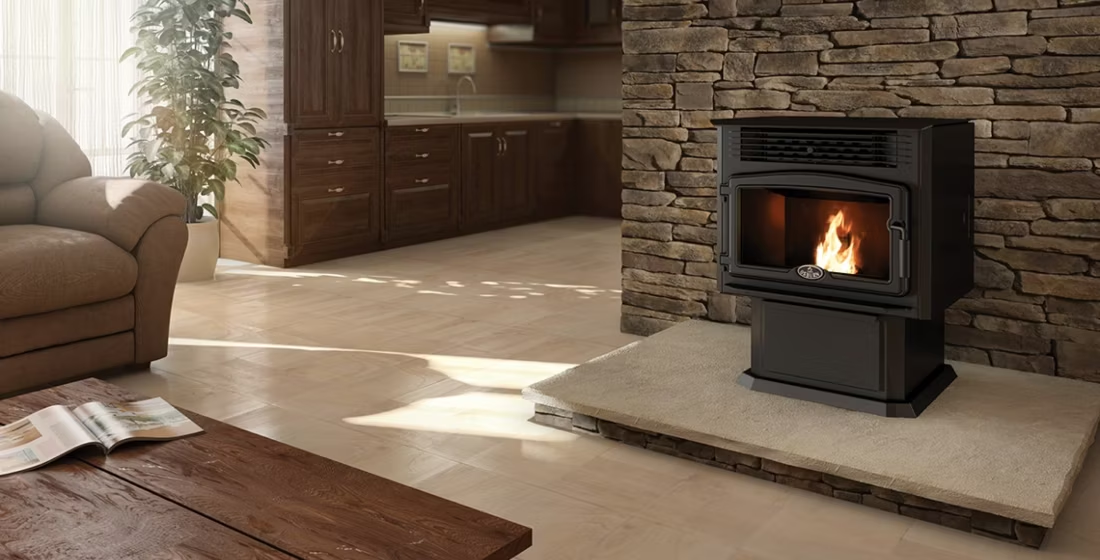
Kitsap County sits in climate zone 4C, with a winter low average around 36°F and roughly 4,825 heating degree days a year—a far cry from the sub-zero stretches you'd see in a place like Duluth or Fargo. That moderation is actually part of why pellet stoves fit so well here: homeowners don't need a monster catalytic wood stove to hold a fire through a brutal overnight low. A mid-size pellet insert set on a thermostat can comfortably carry a living room through the region's damp, gray winter without anyone splitting or stacking a single round of douglas fir.
The county's marine climate does bring wildfire smoke concerns in late summer, which pushes some homeowners toward pellet over wood for cleaner-burning, more consistent combustion year to year. Regional pellet brands like Bear Mountain, Lignetics, and Pacific Pellet are widely stocked at hearth shops and hardware stores across the peninsula, from Bremerton to Poulsbo to Port Orchard, so fuel supply isn't a concern here the way it can be in more remote counties. Bagged pellets are easy to store dry in a garage or shed even with Puget Sound humidity, and a hopper load typically runs 24 to 50 hours depending on stove size and burn setting.
Three steps. No salesperson until you're ready.
Tell us about your project
Your zip code, your situation, and the fuel you're leaning toward—or let the answers point you to one.
See what's actually available
The brands dealers within 100 miles genuinely carry—real options, never a catalog mirage.
Get your dealer & Project Guide
A trusted local dealer, plus the free Project Guide & Parts List that names every component of the job.
Frequently Asked Questions
How much does a pellet stove installation cost in Kitsap County?
Pellet stove and insert installations in Kitsap County typically run in line with regional pricing for the Puget Sound area, with most jobs landing in the $3,000 to $6,500 range depending on whether it's a freestanding stove on a new hearth pad or an insert going into an existing masonry fireplace. Inserts into an existing chimney with a flexible liner tend to be more affordable since no new venting chase needs to be built. Homes on Bainbridge Island or in more remote parts of the county may see a modest travel charge added by installers. A local dealer will give you a firm number after seeing your space in person.
What size pellet stove do I need for my Kitsap County home?
Given the county's relatively mild winters—average lows around 36°F rather than the deep-cold extremes of the Midwest or interior mountain West—most Kitsap homes don't need the largest pellet stove on the market. Small units (rated for 800-1,200 sq ft) handle a single great room or open floor plan comfortably, while medium units (1,200-2,000 sq ft) cover most main living areas in a typical Bremerton or Silverdale home. Larger, better-insulated homes or those wanting the pellet stove as primary heat rather than supplemental may want to size up. A local dealer can size your space for free and factor in ceiling height and how open your floor plan is.
Where can I buy pellets in Kitsap County?
Regional brands including Bear Mountain, Lignetics, and Pacific Pellet are widely available at hearth retailers and hardware stores throughout the county, and pellet supply is generally reliable given the Pacific Northwest's proximity to lumber and pellet mills. Prices fluctuate seasonally, so it's worth buying a season's supply—typically 2 to 3 tons for a home using a pellet stove as primary heat—in late summer or early fall before demand picks up. Your local dealer can usually point you toward the brands that burn cleanest in the specific stove model you buy, since ash content and BTU output vary somewhat between pellet brands.
What's the difference between a pellet stove and a pellet insert?
A pellet stove is a freestanding unit that sits on a hearth pad and vents out through a wall or existing chimney chase—it can go almost anywhere in a room with proper clearances. A pellet insert is built to slide into an existing masonry fireplace opening, converting an old wood-burning fireplace into an efficient, thermostat-controlled heat source using the same chimney for venting. For the many older homes across Kitsap County with an existing masonry fireplace that's rarely used, an insert is often the simpler and more cost-effective upgrade. Homes without an existing fireplace opening are better suited to a freestanding stove.
Do I need a permit to install a pellet stove in Kitsap County?
Yes—new pellet stove and insert installations require a building permit, whether you're inside Bremerton, Poulsbo, Port Orchard, Bainbridge Island city limits, or unincorporated Kitsap County. Jurisdiction depends on exactly where the home sits, so a local installer will know whether to file with the city or the county. Most hearth dealers handle the permit paperwork as part of the installation, which is one of the practical advantages of using a certified local pro rather than a big-box purchase with self-install.
What's the best pellet stove for Kitsap County's climate?
Because Kitsap County's winters are damp and moderate rather than harshly cold, most homeowners here prioritize efficient, quiet operation and lower pellet consumption over the maximum-BTU output models built for interior climates with deep sub-zero stretches. Mid-size units from established pellet stove manufacturers tend to be the sweet spot for a typical peninsula home, offering long hopper burn times and thermostat control that suits the region's gray, steady-cold weather pattern rather than sharp temperature swings. A local dealer can match specific models to your square footage and how you plan to use it—supplemental heat versus primary heat changes the recommendation.
How often does a pellet stove need cleaning and maintenance?
Pellet stoves need more frequent attention than gas but less than wood—expect to clean the burn pot every few days to weekly depending on use, vacuum the ash pan regularly, and have a full professional cleaning and inspection once a year, ideally before the fall burning season starts given the region's wet fall weather. Annual service also covers the exhaust motor, auger, and venting, which matters in Kitsap County's humid marine air where moisture can affect mechanical components over time. Local hearth shops that sell pellet stoves typically offer this service directly.
Will my pellet stove work during a power outage?
No—this is worth knowing before you buy. Pellet stoves rely on electricity to run the auger that feeds pellets and the blower that distributes heat, so they shut down during a power outage unless you have a battery backup or generator. Kitsap County does see winter windstorms off the Sound that knock out power, sometimes for extended periods, so homeowners who want backup heat during outages often pair a pellet stove with a small battery backup unit or keep a wood-burning option as well. Ask your local dealer about battery backup compatibility for any pellet stove you're considering.
Pellet stove vs. wood stove—which is right for my Kitsap County home?
Wood stoves work without electricity, burn abundant local species like douglas fir and red alder, and can be fed with wood cut under low-cost Forest Service permits through Olympic National Forest or Mt. Baker-Snoqualmie National Forest for $5 to $20 per cord. Pellet stoves are more convenient day-to-day—load the hopper, set the thermostat, less ash and creosote to manage—and burn cleaner, which matters during the county's late-summer wildfire smoke season when air quality is already a concern. Given Kitsap's mild, non-extreme winters, the loss of backup heat during an outage is a bigger tradeoff for pellet than it would be somewhere colder, so it's worth weighing how often your specific area loses power. Many local dealers carry both and can walk through the tradeoffs for your home.
What's the difference between an insert and a zero-clearance fireplace?
An insert is a fireplace that slides into a pre-existing wood-burning fireplace—if you don't have one, there's nothing to insert it into. A zero-clearance fireplace is built into a framed wall, which makes it the answer for remodels and new construction. Simple test: existing masonry fireplace means insert; blank or framed wall means zero-clearance.
Why is a fireplace insert so efficient?
An insert does two things: it seals the chimney completely, so you stop losing air you already paid to heat, and it radiates warmth into the room through the firebox and glass. Most add a heat-exchange fan that pulls cool room air underneath, wraps it around the hot firebox, and pushes it back out warm. Your home is more efficient before you've even lit the first fire.
What is an in-home preview and do I need one?
It's a visit where a hearth professional measures your space, confirms the model you picked actually works in your home, and walks the specs—framing, gas line, venting, finish work—before anything is ordered. Some details you just can't know until you see the house. Never make a down payment without one; it's the single most-skipped step that burns buyers.
Can a fireplace actually lower my heating bill?
Yes—by creating a comfort zone. A furnace heats every square foot of the house just to warm the one room you're in; a gas fireplace on low burns roughly a sixth of the gas a typical furnace does. Set the furnace around 55–60 degrees as a baseline, then heat the rooms your family actually uses. Families who heat this way commonly save $20–$60 a month.
Stove and Fireplace Dealers in Kitsap County
Listings include WhyFire partner dealers, dealers we have verified as authorized for the brands we recommend, and established local businesses that carry hearth products. Every listing shows which one it is. The ones marked Preferred run on WhyFire's software, so they can show you real pricing and book your appointment right here. No manufacturer pays for placement. How we verify dealers →
Economy Hearth & Home
Sunrice Gas & Chimney Services
Economy Wiring
Pristine Sweeps
Kirkland Fireplace
Rich's For The Home
Rich's Stoves & Spas
Aqua Rec’s Fireplace Shop
Chimney And Fireplace Solutions
Aqua Quip
Rich’s Woodstoves & Spas
Rich's For The Home
Sundance Energy Services, Inc.
Cressy Door & Fireplace
All Points Heating
Dowell Company
Pellet Brands Stocked Around Kitsap County
Manufacturers will point you to the nearest stocking dealer.
Find your pellet stove in Kitsap County.
Tell us a bit about your home and we'll match you with the right pellet stove or insert, plus a free Project Guide & Parts List with the vent kit and parts you'll need, and a recommended local dealer to install it.
Find Your Fireplace →