
Steady, thermostat-controlled heat for Jefferson County's damp Olympic Peninsula winters.
From Port Townsend's Victorian homes to the quieter stretches of Quilcene and Brinnon along Hood Canal, pellet heat fits the way Jefferson County actually lives through winter. Find the right stove or insert and get matched with a trusted local dealer.
Every Project Starts From One of These Five Situations
Convenient heat sized for a mild, wet climate.
Jefferson County sits on the northeastern shoulder of the Olympic Peninsula, wrapped by the Strait of Juan de Fuca, Hood Canal, and the rain shadow that keeps Port Townsend noticeably drier than Quilcene or Brinnon just a few miles south. Climate zone 4C means winter lows average around 38°F and the county logs roughly 4,837 heating degree days a year—a fraction of what a place like Duluth, MN or Burlington, VT sees in a typical winter. That mildness shapes the heating math: most homes here don't need a furnace-replacing inferno, they need dependable, controllable supplemental heat through a long stretch of gray, damp weeks rather than weeks of sustained deep cold.
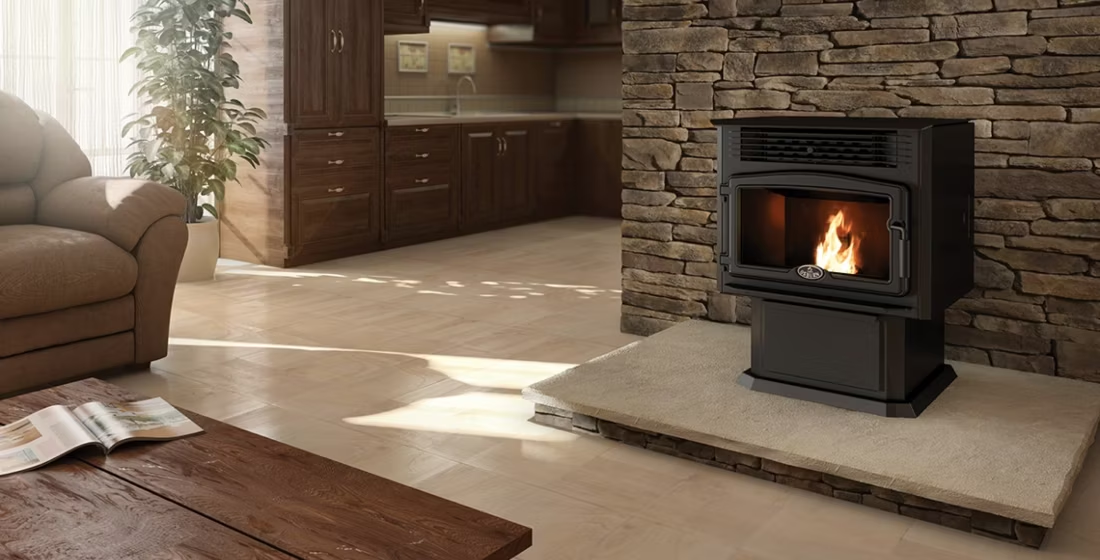
That's a big part of why pellet stoves fit so well in Jefferson County. Regional brands like Bear Mountain, Lignetics, and Pacific Pellet supply fuel throughout the Puget Sound region, and a pellet appliance's thermostat-driven, load-and-forget operation suits the county's older housing stock—including the many Port Townsend Victorians and Quilcene-area farmhouses that rely on a stove for zone heat rather than a whole-home system. Pellet units also burn noticeably cleaner than open wood fires, which matters locally: wildfire smoke drifting in from regional fire seasons already stresses air quality some summers, and a clean-burning pellet appliance doesn't add to that load the way an older wood stove can.
Three steps. No salesperson until you're ready.
Tell us about your project
Your zip code, your situation, and the fuel you're leaning toward—or let the answers point you to one.
See what's actually available
The brands dealers within 100 miles genuinely carry—real options, never a catalog mirage.
Get your dealer & Project Guide
A trusted local dealer, plus the free Project Guide & Parts List that names every component of the job.
Frequently Asked Questions
How much does a pellet stove installation cost in Jefferson County?
Most pellet stove installations run in the neighborhood of $3,000 to $6,000 in Jefferson County, depending on the unit, whether it vents through an existing wall or requires new penetration, and whether a hearth pad is needed for code clearance. Converting an existing masonry fireplace to a pellet insert typically runs a bit less than a full freestanding stove install with new venting, since the chimney chase often does double duty. Homes in more remote parts of the county—out toward Brinnon or up the Quilcene valley—sometimes see a modest travel charge added to the quote. A local dealer will give you a firm number after seeing the install location in person.
What size pellet stove do I need for my home?
Because Jefferson County's winters are mild by national standards—average lows around 38°F and roughly 4,837 heating degree days—most homes here do fine with a small to mid-size pellet stove rated for 1,000 to 1,800 square feet, even when the goal is primary zone heat rather than pure ambiance. That's a smaller unit than you'd see recommended in a colder inland climate carrying twice the heating degree days. Older, less-insulated Port Townsend homes or drafty farmhouses near Quilcene may need to size up slightly. A local retailer can walk your space and confirm the right BTU output rather than guessing from square footage alone.
Where can I find certified pellet stove installers near me?
Look for installers with NFI (National Fireplace Institute) certification, which covers proper venting, clearance, and appliance-specific installation practices. Dealers covering Jefferson County typically serve the corridor from Port Townsend and Port Hadlock down through Quilcene and out to Brinnon, though homes at the far ends of that range may see a small travel fee. Because pellet stoves involve both electrical and venting work, it's worth confirming the installer is the same outfit that will honor the manufacturer's warranty—that avoids finger-pointing later if something goes wrong with the auger, igniter, or venting.
What's the difference between a pellet stove and a pellet insert?
A pellet stove is a freestanding appliance that sits on its own hearth pad and vents through an exterior wall or existing chimney chase—it can go almost anywhere with the right clearances. A pellet insert is built to slide into an existing masonry fireplace opening, which is common in the older homes around Port Townsend that already have a wood fireplace they no longer use. If you have an existing fireplace you want to convert, an insert usually makes more sense; if you're starting from a bare wall or a room with no chimney, a freestanding stove is typically the simpler install.
Do I need a permit to install a pellet stove in Jefferson County?
Yes—a new pellet stove installation generally requires a building permit through the Jefferson County building department, covering the appliance, venting, and hearth clearance. Most local dealers handle the permitting as part of the installation, so it's rarely something homeowners have to manage on their own. Pellet stoves are also generally exempt from wood-burning curtailment periods that can apply during winter air quality events, which is one more reason they're a practical option in a county that does periodically deal with wildfire smoke impacts.
What's the best pellet stove for Jefferson County's climate?
Since winters here are mild rather than brutally cold, you don't need the biggest-BTU stove on the lot—a mid-size unit from a mainstream pellet manufacturer will comfortably handle most homes. The bigger consideration on the Olympic Peninsula is power reliability: pellet stoves need electricity to run the auger, igniter, and combustion blower, and winter windstorms coming off the Strait of Juan de Fuca can knock out power for hours or, occasionally, days. Ask your local dealer about battery-backup options or a small generator setup if outage resilience matters to you—it's a more relevant question here than the raw cold-weather rating of the stove.
How often does a pellet stove need to be cleaned and serviced?
Pellet stoves need the burn pot and ash pan cleaned weekly during regular use, and a full professional service—checking the auger, exhaust fan, gaskets, and venting—at least once a year, typically before the burning season starts in fall. Homes running the stove as primary heat through a full Jefferson County winter may want a mid-season check as well. Regular cleaning matters more for pellet stoves than most people expect, since a clogged burn pot or dirty exhaust sensor is the most common cause of ignition or feed problems.
Where can I buy pellet fuel in Jefferson County?
Bear Mountain, Lignetics, and Pacific Pellet are the regional brands most commonly stocked at hardware stores and feed suppliers around the Puget Sound, and dealers serving Jefferson County typically carry or can order one of these lines. Buying a full season's supply early in fall, before demand picks up, is the easiest way to avoid mid-winter shortages—pellet availability can tighten up during a hard cold spell when everyone's restocking at once. Your local dealer can tell you which brand burns cleanest in your specific stove model, since ash content varies by pellet brand and affects how often you'll need to clean the burn pot.
Pellet stove vs. wood stove—which is right for my home?
Wood is genuinely abundant in Jefferson County—douglas fir, red alder, and lodgepole pine are all common locally, and Mt. Baker-Snoqualmie National Forest issues personal-use cutting permits for $5 to $20 per cord during the May-through-October season, which makes self-cut firewood a real option for county residents. Wood stoves also keep working during a power outage, which matters given the Olympic Peninsula's exposure to winter windstorms. Pellet stoves trade that off for convenience: no splitting or stacking, more even thermostat-controlled heat, and less ash—but they won't run without electricity. For a primary residence with reliable power, pellet is often the easier day-to-day choice; for a place you want heat regardless of what the grid is doing, wood remains the more resilient option. Some Jefferson County homeowners end up with one of each.
Why is my open fireplace making my house colder?
Open fireplaces suck—literally. As the fire burns, it consumes air your furnace already paid to heat and pulls it out through the chimney, so the house is actually colder after the fire goes out than before you lit it. An insert fixes this: it seals the chimney, puts fixed glass across the front, and turns that hole in your house into a real heat source.
How often does a pellet stove need cleaning?
A clean pellet stove is a happy pellet stove. Plan on cleaning the burn pot about once a week when you're burning regularly—ash and clinkers gum up the air holes just like a pellet barbecue. Most pellet stove problems trace back to skipped cleaning that nobody explained up front. Some designs make it easy with a trapdoor burn pot: pull a lever and the gunk drops into the ash pan.
Does a fireplace add value to my home?
On average, a fireplace adds back to the home about the same amount you spent installing it. Add the monthly savings from heating the rooms you actually use instead of the whole house—often hundreds of dollars a year—and the value case is strong before you even count what a fire does for how your family uses the room.
How much should I budget for a fireplace?
For an average home—covering the fireplace, the vent pipe, and basic installation—a budget between $3,900 and $5,500 gives you a lot of options across wood, gas, and pellet. By the time you add finish work, gas line, and electrical, the average complete installation lands between $5,000 and $12,000 all-in. In a remodel or new build, a good rule is to put about 2.5% of the total project cost toward the fireplace.
Stove and Fireplace Dealers in Jefferson County
Listings include WhyFire partner dealers, dealers we have verified as authorized for the brands we recommend, and established local businesses that carry hearth products. Every listing shows which one it is. The ones marked Preferred run on WhyFire's software, so they can show you real pricing and book your appointment right here. No manufacturer pays for placement. How we verify dealers →
Sunshine Propane
Whidbey Heating And Stoves
Ace Freeland Home
Island Gas Piping & Installations, LLC
Olympic Hearth And Spa
All Points Heating
Pellet Brands Stocked Around Jefferson County
Manufacturers will point you to the nearest stocking dealer.
Find your pellet stove in Jefferson County.
Tell us a bit about your home—Port Townsend, Port Hadlock, Quilcene, Brinnon, or anywhere between—and we'll match you with a trusted local dealer and send over a free Project Guide & Parts List covering the exact stove, vent kit, and parts your install needs.
Find Your Fireplace →