
Pellet Heat Is a Niche Choice in Issaquah.
With mild Puget Sound winters and gas and electric heat readily available, pellet stoves aren't the default here—but for backup heat, foothill cabins, and ambiance without a full chimney, they still have a place.
Every Project Starts From One of These Five Situations
Issaquah's marine climate rarely calls for biomass heat.
Issaquah sits at just 63 feet in the Cascade foothills east of Lake Sammamish, in climate zone 4C—a mild, wet, marine climate where winter lows average only 37°F and the heating season totals around 4,390 degree days. Compare that to places like Duluth, MN or Bozeman, MT, where wood and pellet heat are near-essential for getting through winter—Issaquah's heating load is a fraction of that. Most homes here rely on heat pumps, electric resistance backup, or natural gas, all readily supplied through Puget Sound Energy across most King County neighborhoods.
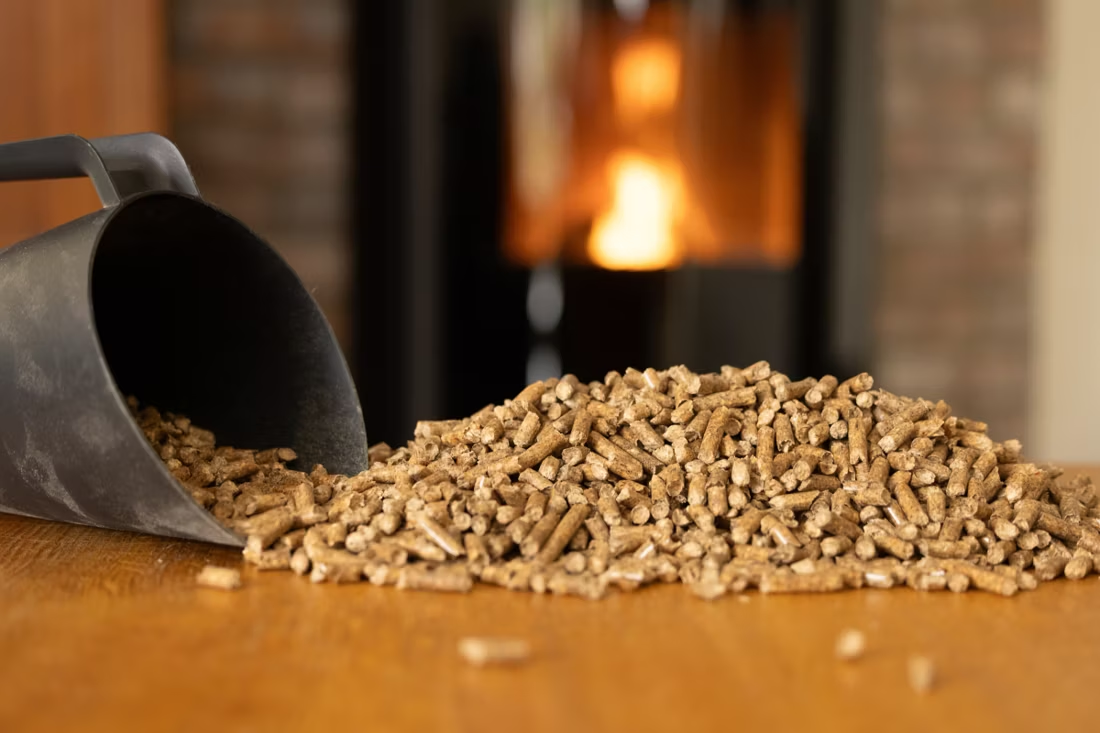
That's why pellet stoves show up in only a small share of Issaquah homes. The exceptions are real, though: properties on the flanks of Tiger Mountain or Squak Mountain without easy gas access, homeowners who want supplemental heat during the windstorm-driven power outages that hit the Puget Sound lowlands most winters, and people who like the look of a real flame without building or maintaining a masonry chimney. Regional pellet brands—Bear Mountain, Lignetics, and Pacific Pellet—are sold through hearth shops and hardware stores across western Washington, so fuel supply isn't the constraint. Demand simply runs low in a climate this mild.
Three steps. No salesperson until you're ready.
Tell us about your project
Your zip code, your situation, and the fuel you're leaning toward—or let the answers point you to one.
See what's actually available
The brands dealers within 100 miles genuinely carry—real options, never a catalog mirage.
Get your dealer & Project Guide
A trusted local dealer, plus the free Project Guide & Parts List that names every component of the job.
Frequently Asked Questions
Does a pellet stove actually make sense for my Issaquah home?
For most Issaquah homes, probably not as a primary heat source—the climate here is too mild to justify it, and gas or an electric heat pump will usually cost less to run and require less hands-on maintenance. Where a pellet stove does make sense: homes on septic and well systems in the foothills without natural gas service, households that want a hedge against the multi-day power outages that windstorms occasionally cause in King County (with the caveat below about needing electricity to run), or anyone who specifically wants the ambiance and heat of a real fire without a full chimney. A trusted local dealer can give you an honest read on whether it's worth it for your specific property.
How much does a pellet stove installation cost in Issaquah?
Pellet stove installations typically run $3,500 to $7,000 nationally, and that range holds reasonably well for the Issaquah area—on the lower end because pellet stoves vent through a small-diameter wall pipe rather than requiring a full masonry chimney like a wood stove. Costs climb if your installer needs to run a dedicated electrical outlet for the auger and blower, cut through exterior siding for the vent, or build a raised hearth pad to meet clearance requirements. A local dealer can give you a firm number after seeing your specific installation site.
Will a pellet stove keep my house warm during a power outage?
Not on its own—and this is the single most important thing to understand before buying one for backup heat. Pellet stoves rely on an electric auger to feed fuel and an electric blower to push heat into the room, so when the power goes out, so does the stove, unlike a wood stove or fireplace that burns on gravity and draft alone. If backup heat during a windstorm-driven outage is your main motivation, you'll need a battery backup system or a small generator sized to run the stove's electronics, or you should look seriously at a wood-burning or vented gas alternative instead.
What size pellet stove do I need for a home in Issaquah?
Because Issaquah's heating load is light compared to colder parts of the country, most homes here that do install a pellet stove only need a small to mid-size unit—often in the 40,000 to 55,000 BTU range—used as supplemental heat for a great room or a detached space like a shop or ADU, rather than to carry the whole house through winter. Oversizing is a common mistake; a stove that's too big for a well-insulated Issaquah home will cycle on and off constantly rather than running efficiently at a steady low burn.
Do I need a permit to install a pellet stove in Issaquah?
Yes. Inside city limits, a mechanical and building permit is required through the City of Issaquah's Development Services division, covering the appliance, the venting, and any electrical work for the auger circuit. For properties in unincorporated King County—common on the outskirts near Squak Mountain and Preston—permitting runs through the King County Permitting Division instead. Most hearth dealers who sell and install pellet stoves in the area handle the permit application as part of the job.
Where do I buy pellet fuel in Issaquah, and which brands are available?
Bear Mountain, Lignetics, and Pacific Pellet are the three regional brands most commonly stocked at hearth shops and hardware retailers throughout western Washington, including outlets serving the Issaquah and Eastside area. Pricing fluctuates seasonally but generally tracks regional averages for premium PNW-milled softwood pellets. Because demand for pellet heat is lower here than in colder regions, it's worth calling ahead in late fall to confirm stock rather than assuming a store carries a full pallet year-round.
Should I get a pellet stove or a gas insert instead?
For most Issaquah homes, a gas insert is the more practical choice. Puget Sound Energy's natural gas infrastructure reaches a large share of Issaquah neighborhoods, and a direct-vent gas insert or fireplace delivers instant, thermostat-controlled heat without hoppers, ash, or an electrical dependency for basic operation. Pellet stoves make more sense specifically where gas isn't available—certain foothill and rural King County properties—or where the owner wants the look and ritual of a real fire that a gas flame doesn't fully replicate. A local dealer who carries both can walk you through the trade-off for your actual address.
How much maintenance does a pellet stove need?
More than a gas appliance, less than a wood stove. Expect to empty the ash pan every few days to weekly depending on use, clean the glass and burn pot regularly, and vacuum out the hopper and auger area periodically. Most manufacturers recommend a full professional cleaning and inspection once a year, ideally before the fall heating season starts. Given how few pellet stoves are in service around Issaquah, finding a technician who services them regularly is worth confirming with your dealer at time of purchase.
Where do I store pellet bags in a Pacific Northwest climate like Issaquah's?
Dry, covered storage matters more here than in drier climates because Issaquah's marine air carries a lot of moisture much of the year. Pellets absorb humidity readily and will swell, crumble, or jam the auger if stored in a damp garage or an uncovered spot. Keep bags on pallets or shelving off a concrete floor, inside a garage or shed, and ideally in a sealed bin once a bag is opened. A ton of pellets (about fifty 40-pound bags) takes up roughly the space of a few stacked pallets, so plan storage space before you buy the stove.
How often does a pellet stove need cleaning?
A clean pellet stove is a happy pellet stove. Plan on cleaning the burn pot about once a week when you're burning regularly—ash and clinkers gum up the air holes just like a pellet barbecue. Most pellet stove problems trace back to skipped cleaning that nobody explained up front. Some designs make it easy with a trapdoor burn pot: pull a lever and the gunk drops into the ash pan.
Why is my open fireplace making my house colder?
Open fireplaces suck—literally. As the fire burns, it consumes air your furnace already paid to heat and pulls it out through the chimney, so the house is actually colder after the fire goes out than before you lit it. An insert fixes this: it seals the chimney, puts fixed glass across the front, and turns that hole in your house into a real heat source.
Does a fireplace add value to my home?
On average, a fireplace adds back to the home about the same amount you spent installing it. Add the monthly savings from heating the rooms you actually use instead of the whole house—often hundreds of dollars a year—and the value case is strong before you even count what a fire does for how your family uses the room.
What is an in-home preview and do I need one?
It's a visit where a hearth professional measures your space, confirms the model you picked actually works in your home, and walks the specs—framing, gas line, venting, finish work—before anything is ordered. Some details you just can't know until you see the house. Never make a down payment without one; it's the single most-skipped step that burns buyers.
Nearby Dealers
Hearth shops serving Issaquah and the surrounding area.
Rich's Stoves & Spas
Pellet Brands Stocked Around Issaquah
Manufacturers will point you to the nearest stocking dealer.
See if a pellet stove fits your Issaquah home.
Tell us about your home and heating goals, and we'll match you with a trusted local dealer who can give you an honest read on whether pellet is right for your property—plus a free Project Guide & Parts List with the exact parts, vent kit, and recommended installer for your project.
Find Your Fireplace →