
Reliable gas heat for Hoquiam's wet coastal winters.
Grays Harbor's marine air brings damp chill more than deep freeze—gas gives you instant, dry heat without hauling wood off the Olympic Peninsula. Find the right unit and get matched with a trusted local installer.
Every Project Starts From One of These Five Situations
Steady, dry heat for a damp harbor town.
Hoquiam sits at just 196 feet above sea level along the Grays Harbor estuary, in a Zone 4C marine climate where winter lows average a mild 38°F but the air stays wet for months at a stretch. With roughly 5,114 heating degree days a year, the challenge here isn't Rocky Mountain cold—it's the long, gray, moisture-heavy stretch from November through March when a house needs steady, dry heat to keep dampness and mold at bay as much as to keep anyone warm.
There's no natural gas main serving Hoquiam—PUD No. 1 of Grays Harbor County handles electric service, but gas heat here runs almost entirely on propane, delivered by tank from regional suppliers. That's not a downside: modern propane fireplaces and inserts perform identically to natural gas units, and a direct-vent propane insert into an existing masonry fireplace is one of the most common upgrades local installers handle. For Hoquiam homes, gas means flipping a switch for even heat on a foggy February evening instead of tending a stove.
Three steps. No salesperson until you're ready.
Tell us about your project
Your zip code, your situation, and the fuel you're leaning toward—or let the answers point you to one.
See what's actually available
The brands dealers within 100 miles genuinely carry—real options, never a catalog mirage.
Get your dealer & Project Guide
A trusted local dealer, plus the free Project Guide & Parts List that names every component of the job.
Frequently Asked Questions
How much does a gas fireplace installation cost in Hoquiam?
A typical gas fireplace or insert installation in Hoquiam runs roughly $4,500 to $10,000, with the spread coming down to the unit itself, whether a propane tank needs to be set or upgraded, and how much venting work is involved. A direct-vent insert dropped into an existing masonry fireplace with a tank already in place lands on the lower end. New construction or a built-in unit requiring fresh framing, venting through an exterior wall, and a new propane line runs toward the higher end. Local installers will give you a firm number after seeing the space in person.
Can I convert my existing wood fireplace to gas?
Yes—it's a common project for older Hoquiam homes with a masonry fireplace that was built for burning douglas fir or red alder decades ago. A gas insert goes into the existing firebox, using a stainless liner run through your current chimney, and typically costs $4,500 to $9,000 depending on whether you're on propane and whether a new tank or line is needed. Homes near the harbor with older brick fireplaces are especially good candidates, since the masonry shell is already in place and just needs the venting and gas work.
Do I need natural gas, or is propane the standard here?
Propane is the standard in Hoquiam. There's no natural gas utility serving the city—PUD No. 1 of Grays Harbor County provides electricity, not piped gas—so nearly every gas fireplace installed here runs on propane from a tank, either buried, above-ground, or a smaller portable cylinder for a stove. This isn't a compromise: propane fireplaces heat identically to natural gas units, and your installer will set the correct orifice and regulator for the fuel. If you don't already have a propane tank and supplier, your installer can coordinate that setup as part of the project.
Will my gas fireplace work during a power outage?
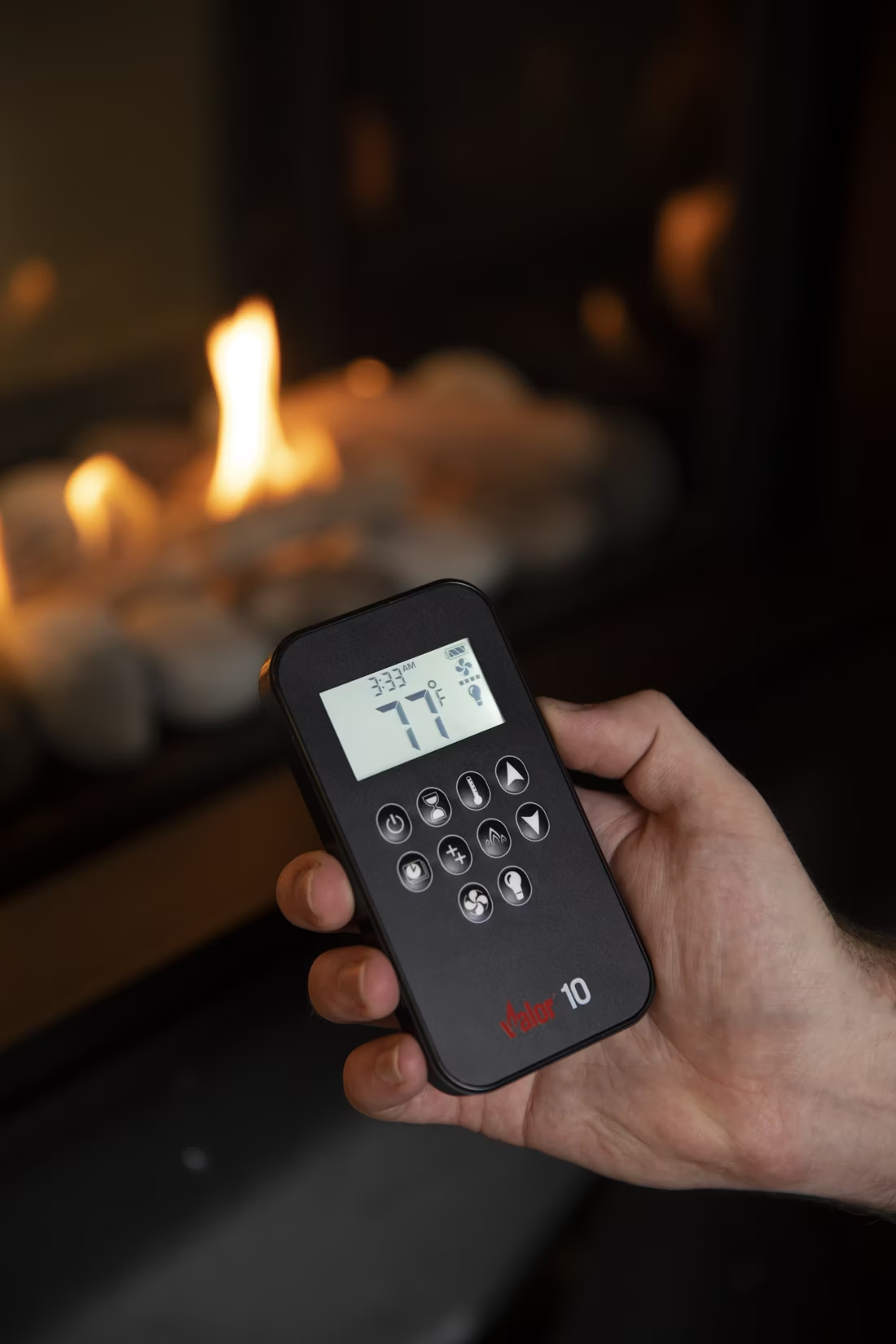
Most will, and that matters on the Washington coast, where winter windstorms off the Pacific regularly knock out power along Grays Harbor for hours or days at a stretch. Units with IPI (intermittent pilot ignition) run on AA batteries as backup, lighting on demand even with the grid down—just remember to swap the batteries each fall. Valor fireplaces take a different approach: their pilot generates its own electricity through the thermocouple, so there's no battery to forget at all. Ask your installer about the ignition system on any unit you're considering, especially if you're near the water where outages hit hardest.
What's the difference between a gas fireplace, gas insert, and gas stove?
A gas fireplace is a fully built-in unit set into a framed wall—the right call for new construction or a remodel without an existing hearth. A gas insert slides into an existing masonry firebox and uses your current chimney as the vent path, which fits a lot of the older homes around downtown Hoquiam and the west side. A gas stove is a freestanding cabinet-style unit that sits on the floor, similar in footprint to a wood stove, and works well in smaller rooms or homes without a fireplace opening at all. Most Hoquiam retrofits are inserts, simply because so many local homes already have a masonry fireplace to work with.
Do I need a permit to install a gas fireplace in Hoquiam?
Yes—a building permit and a gas piping permit are both required for a new gas fireplace or insert installation, typically through the City of Hoquiam Building Department or Grays Harbor County if you're outside city limits. Because propane line work has to be done by a licensed installer, most hearth retailers handle the permitting directly as part of the job rather than leaving you to coordinate it. If your project includes a new or relocated propane tank, that piece may also need separate sign-off from your propane supplier.
What's the difference between vented and vent-free gas fireplaces?
Vented (direct-vent) gas fireplaces draw combustion air from outside and exhaust it back outside through sealed venting—they're the standard, code-compliant choice everywhere, including Hoquiam. Vent-free units burn fuel directly into the room with no outside venting, releasing some water vapor and combustion byproducts indoors. That's a real consideration in a marine climate like Grays Harbor's, where houses already run damp for much of the year—adding indoor moisture from a vent-free unit isn't ideal in a coastal home that's already fighting condensation and mold. Direct-vent units are what most local installers recommend here, and it's worth asking any retailer directly about the tradeoff before you decide.
How often should my gas fireplace be serviced?
Plan on an annual inspection, ideally before the wet season sets in around October. A technician checks the burner, pilot or ignition system, gas connections, and venting, and cleans the glass and interior—a much quicker job than a wood chimney sweep, but just as important given how much a propane fireplace runs during a typical Hoquiam winter. Expect to pay in the $150 to $250 range for a standard annual service call from a local provider.
Gas vs. wood—which is right for my Hoquiam home?
Wood is genuinely accessible here—douglas fir, red alder, and lodgepole pine are all common locally, and Olympic National Forest cutting permits run just $5 to $20 per cord during the May-to-October season. Wood also keeps burning without power, which matters during coastal windstorms. Gas, on the other hand, means no wet wood to season through a damp Grays Harbor winter, no chimney creosote to manage, and instant heat at the flip of a switch—plus one less source of smoke during wildfire-smoke advisories that occasionally affect the region. Many Hoquiam homes end up with both: a propane insert for daily convenience in the main living area, and a wood stove or fireplace kept as backup heat for extended outages.
Why is my open fireplace making my house colder?
Open fireplaces suck—literally. As the fire burns, it consumes air your furnace already paid to heat and pulls it out through the chimney, so the house is actually colder after the fire goes out than before you lit it. An insert fixes this: it seals the chimney, puts fixed glass across the front, and turns that hole in your house into a real heat source.
What's the difference between an insert and a zero-clearance fireplace?
An insert is a fireplace that slides into a pre-existing wood-burning fireplace—if you don't have one, there's nothing to insert it into. A zero-clearance fireplace is built into a framed wall, which makes it the answer for remodels and new construction. Simple test: existing masonry fireplace means insert; blank or framed wall means zero-clearance.
Can I install a fireplace myself?
If you're putting a fire in your house on purpose, it's best to work with an expert. Unless you're genuinely experienced in framing, gas line, vent pipe, and the national code on clearances to combustibles, have a professional do it—and ideally the same company that sells you the fireplace, so warranty, service, and liability all live under one roof.
What is an in-home preview and do I need one?
It's a visit where a hearth professional measures your space, confirms the model you picked actually works in your home, and walks the specs—framing, gas line, venting, finish work—before anything is ordered. Some details you just can't know until you see the house. Never make a down payment without one; it's the single most-skipped step that burns buyers.
Nearby Dealers
Hearth shops serving Hoquiam and the surrounding area. Every listing shows whether it is a WhyFire partner, a dealer we have verified as authorized for the brands we recommend, or a local business carrying hearth products. No manufacturer pays for placement. How we verify dealers →
Rock Construction
JnL Stoves & Spas
Olympic Stove & Spa, Inc.
Energy Star Systems & Stoves
Find your gas fireplace in Hoquiam.
Tell us about your home and your propane setup, and we'll put together a free Project Guide & Parts List—the right unit, the vent kit, and a trusted local dealer near Grays Harbor who can install it correctly.
Find Your Fireplace →