
Steady heat for Grays Harbor's long, damp winters.
From Aberdeen and Hoquiam to Ocean Shores and Westport, gas fireplaces deliver instant, dry warmth against the coastal chill. Find the right unit and get matched with a trusted local dealer.
Every Project Starts From One of These Five Situations
Consistent warmth for a coastline that stays damp, not brutally cold.
Grays Harbor County sits on Washington's southwest coast, where the Chehalis River meets the Pacific and the southern edge of the Olympic Peninsula rolls down toward Willapa Bay. This is climate zone 4C—a marine climate where the average winter low hovers around 37°F and hard freezes are rare. But 5,017 heating degree days tell the real story: from October through April, homes here fight a low, persistent chill and near-constant dampness rather than deep cold snaps. That kind of weather calls for heat that comes on instantly and stays dry, not a fire that needs tending through a wet afternoon.
Cascade Natural Gas serves the population centers along the Highway 12 and 101 corridors—Aberdeen, Hoquiam, Elma, and Montesano—so many homes there already have a gas line to work with. Outside those towns, in Ocean Shores, Westport, Pacific Beach, and rural stretches toward Humptulips and Quinault, propane is the standard fuel, delivered and stored on-site. Either way, a gas fireplace means no rain-soaked firewood to haul in off an 80-inch annual rainfall, and—with the right ignition system—a source of heat that keeps working when Pacific storms knock out power along the coast, which happens more often here than most of Washington.
Three steps. No salesperson until you're ready.
Tell us about your project
Your zip code, your situation, and the fuel you're leaning toward—or let the answers point you to one.
See what's actually available
The brands dealers within 100 miles genuinely carry—real options, never a catalog mirage.
Get your dealer & Project Guide
A trusted local dealer, plus the free Project Guide & Parts List that names every component of the job.
Frequently Asked Questions
How much does a gas fireplace installation cost in Grays Harbor County?
A typical gas fireplace installation in Grays Harbor County runs roughly $4,000 to $9,500, depending on the unit, the venting path, and whether new gas or propane line work is needed. A direct-vent insert going into an existing masonry fireplace—common in the older timber-era homes around Aberdeen and Hoquiam—with a gas line already nearby sits toward the lower end. New construction or a fireplace going into a room without existing gas service, including a new propane tank setup for homes in Ocean Shores or Westport, runs higher. Expect a modest travel charge added to quotes for installs out toward the coast or the more rural parts of the county.
Can I convert my existing wood fireplace to gas?
Yes, and it's a common request in Grays Harbor County's older housing stock—many homes in Aberdeen and Hoquiam date to the timber boom era and still have their original masonry fireboxes. A gas insert typically drops into that existing opening, using a stainless liner run up your current chimney as the vent path. Costs generally land between $4,000 and $8,500 depending on the insert and whether you're on natural gas or need a propane hookup. The conversion keeps the look of the original fireplace while giving you instant heat with none of the moisture and mildew concerns that come with storing wet cordwood in this climate.
Do I need natural gas to install a gas fireplace, or can I use propane?
Either works, and which one you use mostly comes down to where you live in the county. Cascade Natural Gas provides service in Aberdeen, Hoquiam, Elma, and Montesano, so homes in and around those towns often already have a gas line for a range or water heater. Outside that service area—Ocean Shores, Westport, Pacific Beach, and rural areas toward Humptulips and the Quinault corridor—propane is the norm, supplied by a regional delivery company with either a buried or above-ground tank. Most gas fireplace models can be set up for either fuel; your installer configures the orifice and regulator to match.
Will my gas fireplace work during a power outage?
For most models, yes. Grays Harbor's exposed coastal location means winter windstorms off the Pacific regularly knock out power for hours or days, especially in Ocean Shores, Westport, and other low-lying coastal areas. Gas fireplaces with intermittent pilot ignition (IPI) run on a small battery backup that kicks in automatically when the grid drops, so the unit still lights on demand. Valor fireplaces take a different approach—their pilot assembly generates its own electricity through the thermocouple, so there's no battery to remember or replace. For a county where storm-driven outages are a real and recurring issue, that's worth asking your local dealer about directly.
What's the difference between a gas fireplace, gas insert, and gas stove?
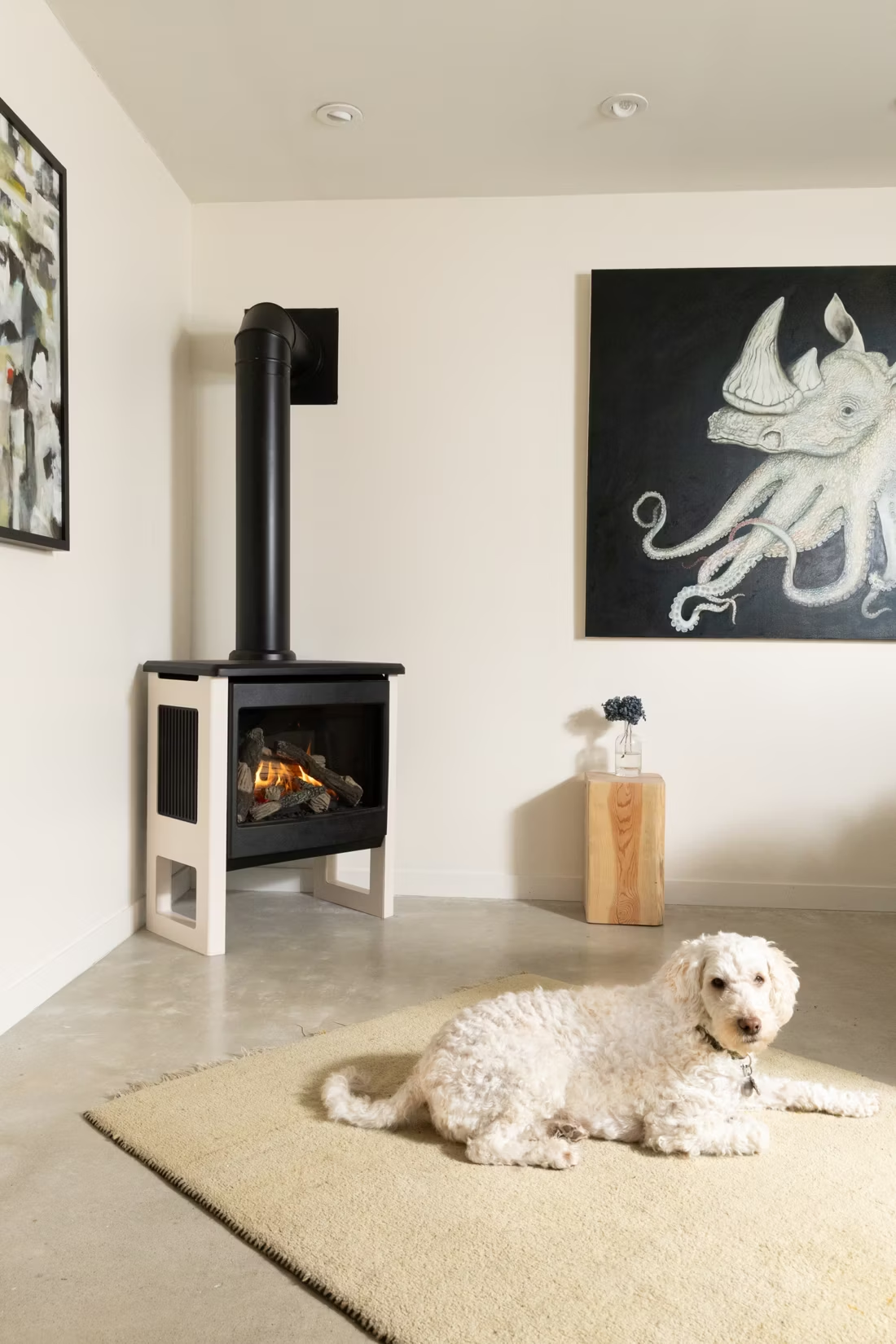
A gas fireplace is a fully built-in unit framed into a wall—the right call for new construction or a remodel without an existing hearth. A gas insert slides into an existing masonry fireplace opening and uses the existing chimney as its vent path, which is the common choice in Aberdeen and Hoquiam's older housing stock. A gas stove is a freestanding unit that sits on the floor like a wood stove but burns gas, and works well in a room with no existing fireplace and limited space for framing. Most Grays Harbor County homeowners upgrading an existing hearth end up with an insert; new builds and additions lean toward a built-in fireplace or freestanding stove.
Do I need a permit to install a gas fireplace in Grays Harbor County?
Yes. Inside city limits—Aberdeen, Hoquiam, Montesano, Elma, and Ocean Shores each maintain their own building department—you'll need a building permit and a separate gas line permit pulled by a licensed gas-fitter. In unincorporated areas, including much of the coastal strip and communities like Humptulips and Quinault, permits run through the Grays Harbor County Community Development Department. Most established hearth retailers handle this paperwork as part of the installation, coordinating the gas line, venting, and inspection so you don't have to manage multiple trades yourself.
What's the difference between vented and vent-free gas fireplaces?
Vented gas fireplaces (direct-vent or B-vent) draw combustion air from outside and exhaust exhaust gases back outside through sealed venting. Vent-free units burn fuel directly into the room without any outside venting, which means they release water vapor and trace combustion byproducts into your living space. Washington allows vent-free units with strict room-sizing and oxygen-depletion-sensor requirements, but in a marine climate like Grays Harbor's—where 80-plus inches of annual rainfall already pushes indoor humidity and mildew concerns in older homes—adding more moisture indoors is rarely the right trade-off. Direct-vent units are the far more common and generally recommended choice here, and local dealers can walk through both options if you're weighing them.
How often should my gas fireplace be serviced?
Plan on an annual inspection, ideally before the wet season sets in each fall. A technician checks the burner, pilot assembly, gas connections, and venting, and cleans the glass and interior. For homes closer to the coast—Ocean Shores, Westport, Pacific Beach—salt-laden air can accelerate corrosion on vent caps and exterior components faster than it would inland around Elma or Montesano, so those units sometimes benefit from a closer look at the exterior termination during each visit. Expect to pay roughly $150 to $250 for a standard annual service call.
Gas vs. wood—which is right for my home?
Wood has deep roots in Grays Harbor County, where Olympic National Forest cutting permits ($5-$20 per cord, May through October) make firewood from douglas fir, red alder, and lodgepole pine relatively accessible for rural households. Wood also keeps working without power, which matters given how often coastal storms interrupt electric service. But it means stacking and drying wood in a climate that gets little help from the sun, and it can add smoke to a summer airshed already affected by wildfire haze drifting in from the region. Gas offers instant, dry heat with none of the storage hassle, and it's the more common choice in town homes and newer construction across the county. Plenty of Grays Harbor households keep both: gas for daily convenience, wood as a backup when the power's out for more than a day.
Why is a fireplace insert so efficient?
An insert does two things: it seals the chimney completely, so you stop losing air you already paid to heat, and it radiates warmth into the room through the firebox and glass. Most add a heat-exchange fan that pulls cool room air underneath, wraps it around the hot firebox, and pushes it back out warm. Your home is more efficient before you've even lit the first fire.
Is my gas fireplace wasting gas?
If it was installed more than 15 years ago, probably. Older gas fireplaces keep a standing pilot light burning all the time, and that little flame can cost a couple hundred dollars a year. Newer models use pilot-on-demand ignition—the pilot lights only when you use the fireplace and goes out when you turn it off.
Can a fireplace actually lower my heating bill?
Yes—by creating a comfort zone. A furnace heats every square foot of the house just to warm the one room you're in; a gas fireplace on low burns roughly a sixth of the gas a typical furnace does. Set the furnace around 55–60 degrees as a baseline, then heat the rooms your family actually uses. Families who heat this way commonly save $20–$60 a month.
Can I install a fireplace myself?
If you're putting a fire in your house on purpose, it's best to work with an expert. Unless you're genuinely experienced in framing, gas line, vent pipe, and the national code on clearances to combustibles, have a professional do it—and ideally the same company that sells you the fireplace, so warranty, service, and liability all live under one roof.
Stove and Fireplace Dealers in Grays Harbor County
Listings include WhyFire partner dealers, dealers we have verified as authorized for the brands we recommend, and established local businesses that carry hearth products. Every listing shows which one it is. The ones marked Preferred run on WhyFire's software, so they can show you real pricing and book your appointment right here. No manufacturer pays for placement. How we verify dealers →
Rock Construction
JnL Stoves & Spas
Find your gas fireplace in Grays Harbor County.
Tell us a bit about your home and we'll match you with a trusted local dealer and send over a free Project Guide & Parts List—the exact parts, vent kit included, for your gas fireplace project.
Find Your Fireplace →