
Electric heat that pairs with some of the region's lowest power rates.
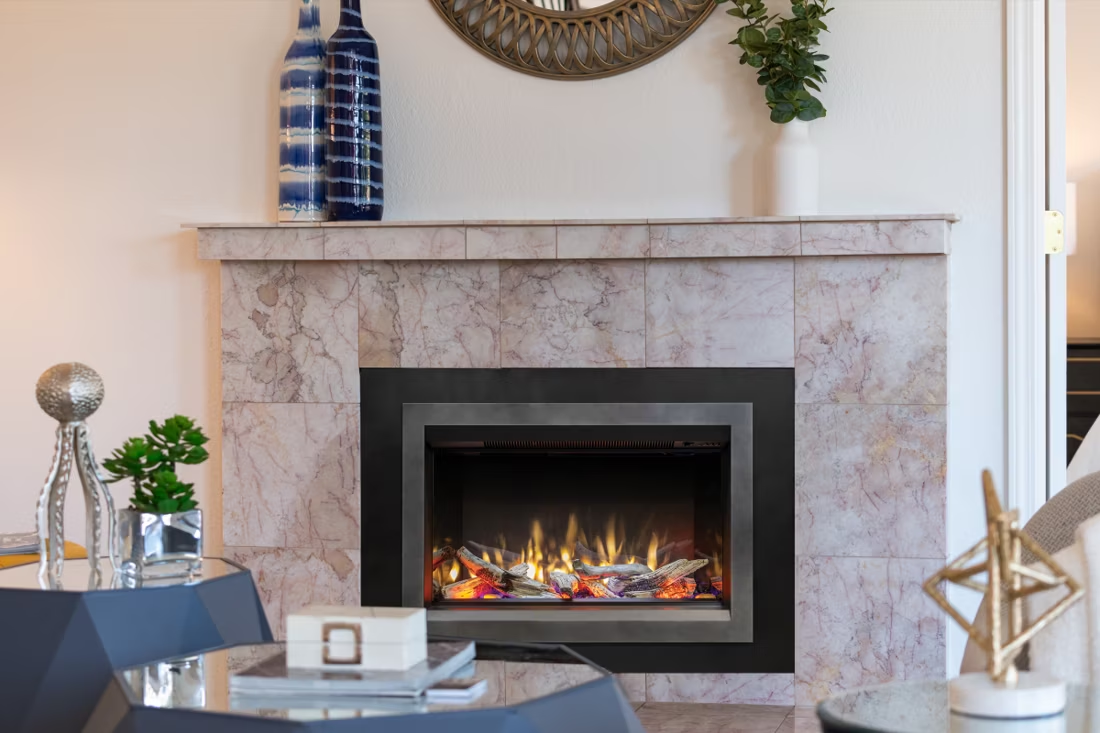
From Pasco to Connell and Mesa, Franklin County's mild Columbia Basin winters and Franklin County PUD's hydropower-driven rates make electric fireplaces and inserts a genuinely practical choice, not just a decorative one. Find the right unit and connect with a trusted local dealer.
Every Project Starts From One of These Five Situations
Cheap hydropower changes the math on electric heat.
Franklin County sits in the Columbia Basin's high desert steppe, climate zone 5B, with an average winter low around 28 degrees and roughly 5,011 heating degree days a year. That's a fraction of what a place like Fargo, ND or Duluth, MN sees each winter—Franklin County's cold season is real, especially with the fog and winter inversions that settle over the basin near Pasco, but it's rarely brutal enough to demand a wood stove running around the clock. That moderate profile is exactly where electric fireplaces earn their keep: enough heating need to matter, but not so much that a homeowner needs a high-output combustion appliance to get through January.
What makes electric heat unusually practical here, though, is the utility. Franklin County PUD sources most of its power from Bonneville Power Administration hydroelectric contracts, and residential rates in the county are among the lowest in the country. That changes the economics of running an electric fireplace or insert for zone heat in a bonus room, a converted garage, or a manufactured home addition—common housing types across Pasco, Connell, and the smaller agricultural towns in the county. No gas line, no chimney, no cutting permits through Umatilla National Forest—just a 120V or 240V circuit and a unit that heats the room you're actually using, without adding to wildfire smoke or contributing to winter inversion buildup that already concerns the basin's air quality each year.
Three steps. No salesperson until you're ready.
Tell us about your project
Your zip code, your situation, and the fuel you're leaning toward—or let the answers point you to one.
See what's actually available
The brands dealers within 100 miles genuinely carry—real options, never a catalog mirage.
Get your dealer & Project Guide
A trusted local dealer, plus the free Project Guide & Parts List that names every component of the job.
Frequently Asked Questions
How much does an electric fireplace or insert cost to install in Franklin County?
A plug-in electric insert or wall-mount unit typically runs $300 to $600 installed, since most just need an existing outlet or a simple circuit. A built-in electric fireplace with a custom mantel or surround, which requires a dedicated 120V or 240V line run by an electrician, usually falls in the $1,500 to $3,500 range depending on the wall configuration and finish work. Because there's no venting, no gas line, and no masonry work involved, electric installs in Franklin County are consistently the fastest and least expensive fireplace project a local dealer handles—often a single day from delivery to first use.
Do electric fireplaces actually heat a room, or are they just for looks?
Both, depending on the unit and how you use it. Most electric fireplaces put out around 4,600 to 5,000 BTUs on the heat setting, enough to noticeably warm a bedroom, home office, or converted garage in Franklin County's moderate winters—28-degree average lows, not the sub-zero stretches you'd get in Bismarck, ND. Many homeowners here run the flame effect year-round for ambiance and switch on the heat only during the coldest weeks, using it as zone heat to take pressure off a central furnace rather than as the sole heat source for the house. For a larger room or an older farmhouse with limited insulation, a local dealer can size a higher-output unit or recommend a second zone.
Will an electric fireplace actually save money given Franklin County's electric rates?
It can, because Franklin County PUD's residential rates—driven by Bonneville Power Administration hydropower contracts—are among the lowest in the country. Running a 1,500-watt electric fireplace for a few hours a night in a bonus room or addition costs noticeably less here than it would under a typical West Coast utility rate, and it avoids the cost of extending a gas line or maintaining a propane tank for a room that's only used occasionally. It won't outcompete a well-insulated central heat pump for whole-home heating, but as targeted zone heat for one or two rooms, it's a low-cost option that a lot of other counties simply don't have access to at this price.
Do I need a permit to install an electric fireplace in Franklin County?
Plug-in electric fireplaces that use an existing standard outlet don't require a permit. Built-in units that need a new dedicated circuit do require an electrical permit, since that work has to meet code and be inspected—most local dealers coordinate this with a licensed electrician as part of the installation. This is one of the simplest permitting paths of any fireplace fuel type in Franklin County; there's no building department review for venting or clearances the way there is with wood or gas installations.
Electric vs. wood—which makes more sense for a Franklin County home?
Wood stoves are common in the more rural parts of Franklin County, particularly for households that cut their own fuel through Umatilla National Forest permits (about $20 per four cords, May through October season) and want heat that works without power. Electric fireplaces don't provide backup heat during an outage, since they need electricity to run—a real consideration for outlying areas around Connell and Mesa. But electric adds zero particulate to the air, which matters during the winter inversions and wildfire smoke events the basin sees most years, and it skips the ash, creosote, and annual chimney sweep that come with a wood-burning setup. For a primary heat source in an outage-prone rural property, wood still has an edge; for a low-maintenance secondary heat source in town, electric usually wins.
What type of electric fireplace works best for Franklin County homes?
For the manufactured and modular homes common around Pasco and the smaller unincorporated communities, a slim wall-mount or insert-style electric fireplace is often the easiest fit—no structural changes needed, and it can go into a stud wall with a dedicated circuit. For stick-built homes with an existing masonry or zero-clearance fireplace that's rarely used, an electric insert that drops into the existing firebox is a popular no-mess upgrade. Freestanding electric stoves are less common here than in colder climates, since most homeowners are looking for supplemental zone heat rather than a primary heat appliance. A local dealer can walk through your specific wall type and framing before recommending a model.
Will my electric fireplace work during a power outage?
No—electric fireplaces require power to run the heater and, on most models, the flame effect as well, so they go dark along with everything else in the house during an outage. Franklin County PUD's hydropower-backed grid is generally reliable, but winter storms and ice can still cause outages in outlying areas around Kahlotus and Mesa. If backup heat during an outage is a priority for your household, pair an electric fireplace with a wood or propane appliance elsewhere in the home rather than relying on electric as your only heat source.
What size electric fireplace do I need for my room?
Most electric fireplaces are rated to heat 400 to 1,000 square feet, which covers the majority of single-room applications in Franklin County—a bonus room, primary bedroom, or den addition. For an open-concept living area or a larger farmhouse room, you may need a higher-wattage unit or a second zone rather than assuming one fireplace will cover the whole space. Because electric units don't lose efficiency to venting the way gas or wood appliances do, sizing is mostly about square footage and insulation quality rather than climate or elevation—a local dealer can confirm the right BTU output during a quick in-home look.
Electric vs. pellet—which is right for my home?
Pellet stoves burn compressed wood pellets from regional brands like Bear Mountain and Lignetics, produce real radiant heat, and can serve as a primary heat source in a well-suited room—but they require a hopper to be loaded, an ash pan to be emptied, and electricity to run the auger and blower, so they still fail during an outage. Electric fireplaces skip the fuel handling and venting entirely, install in a fraction of the time, and cost less upfront, but they're strictly zone heat with no combustion warmth. For a Franklin County homeowner who wants heat without ongoing maintenance and has reasonably priced electricity to work with, electric is usually the simpler answer. For someone who wants more heat output from a single appliance and doesn't mind the upkeep, pellet is worth a look.
Does an electric fireplace need a vent or chimney?
No—that's its superpower. An electric fireplace needs a wall and an outlet, period. No vent pipe, no gas line, no clearances to design around, which is why it works in bedrooms, offices, apartments, and walls where venting a gas or wood unit would be impractical or impossible. Installation is typically the simplest and least expensive of any fireplace type.
Can I put a TV above my fireplace?
Yes—with an asterisk. Fireplaces are hot and TVs don't like heat. Either put a mantel between them to deflect rising warmth, or choose a fireplace with heat-management technology that creates a cool zone on the wall above—the wall stays around 125 degrees, barely warm, while the room still gets full heat. If you like clean lines and don't want a mantel, heat management is the answer.
Can a fireplace actually lower my heating bill?
Yes—by creating a comfort zone. A furnace heats every square foot of the house just to warm the one room you're in; a gas fireplace on low burns roughly a sixth of the gas a typical furnace does. Set the furnace around 55–60 degrees as a baseline, then heat the rooms your family actually uses. Families who heat this way commonly save $20–$60 a month.
How much should I budget for a fireplace?
For an average home—covering the fireplace, the vent pipe, and basic installation—a budget between $3,900 and $5,500 gives you a lot of options across wood, gas, and pellet. By the time you add finish work, gas line, and electrical, the average complete installation lands between $5,000 and $12,000 all-in. In a remodel or new build, a good rule is to put about 2.5% of the total project cost toward the fireplace.
Stove and Fireplace Dealers in Franklin County
Listings include WhyFire partner dealers, dealers we have verified as authorized for the brands we recommend, and established local businesses that carry hearth products. Every listing shows which one it is. The ones marked Preferred run on WhyFire's software, so they can show you real pricing and book your appointment right here. No manufacturer pays for placement. How we verify dealers →
Total Energy Mgmnt
Fire & Water
Campbell & Company, Inc.
Apollo Heating & Air Conditioning
Legacy Pool & Spa LLC
Bruce Heating & Ac
Dayco Heating
Find your electric fireplace in Franklin County.
Tell us a bit about your home and we'll put together a free Project Guide & Parts List—the right electric fireplace or insert for your space, matched with a trusted local dealer in Franklin County.
Find Your Fireplace →