
Low-cost heat that plugs in and works in minutes.
With Big Bend Electric Cooperative rates well below the national average, electric fireplaces pencil out for a lot of Connell homes. Find the right unit and connect with a trusted local dealer.
Every Project Starts From One of These Five Situations
Cheap power changes the math on electric heat.
Connell sits in the Columbia Basin at just under 900 feet, where winter lows average around 27°F and the region logs roughly 5,450 heating degree days a year—real cold, but nothing like the deep-freeze winters of places such as Fargo or Bismarck. What Connell does share with the rest of the interior Northwest is a stretch of winter inversion days and wildfire-smoke seasons that put a premium on heat sources that don't add anything to the air. That's part of why electric fireplaces and inserts get a serious look here, especially in newer builds and manufactured housing where running a wood chimney or a new gas line isn't practical.
The bigger factor is the utility. Big Bend Electric Cooperative serves Connell and the surrounding farm country at a residential rate around $0.091 per kWh—close to half the roughly $0.16 national average, a byproduct of the region's access to low-cost Columbia River hydropower. That rate advantage is why an electric insert or wall unit can genuinely offset a heating bill here, not just look nice in a living room. Plenty of Connell households still keep wood on hand—ponderosa pine, lodgepole pine, and Douglas fir are all common and cuttable through Umatilla National Forest permits—but electric has earned a real place as clean, no-maintenance zone heat alongside it.
Three steps. No salesperson until you're ready.
Tell us about your project
Your zip code, your situation, and the fuel you're leaning toward—or let the answers point you to one.
See what's actually available
The brands dealers within 100 miles genuinely carry—real options, never a catalog mirage.
Get your dealer & Project Guide
A trusted local dealer, plus the free Project Guide & Parts List that names every component of the job.
Frequently Asked Questions
How much does an electric fireplace installation cost in Connell?
A plug-in freestanding electric fireplace or a wall-mounted unit that runs on a standard household outlet typically costs $200 to $900 for the unit itself, with no electrician required. Built-in electric inserts or larger units that need a dedicated 240V circuit run higher—usually $800 to $2,500 once you include an electrician's labor to run the new circuit. Franklin County requires an electrical permit for new circuit work, which most installers or electricians handle as part of the job. There's no chimney, venting, or combustion-related permitting involved either way, which keeps the process simpler than a wood or gas install.
Do electric fireplaces actually heat a room, or are they just for looks?
A typical 1,500-watt electric fireplace puts out around 5,100 BTU—enough to comfortably heat a single room in the 300 to 1,000 square foot range, depending on insulation. It won't replace central heat in a full-size Connell home during a cold January stretch, but as zone heat for a living room or bedroom it performs well, and it's inexpensive to run: at Big Bend Electric Cooperative's $0.091/kWh rate, running a 1,500-watt unit for eight hours costs roughly a dollar. That operating cost is a real selling point compared to propane space heaters in this area.
Do I need a permit to install an electric fireplace in Connell?
Most plug-in electric fireplaces need no permit at all—they run on a standard 120V outlet just like any other appliance. If you're installing a built-in unit or insert that requires a new dedicated circuit, Franklin County requires an electrical permit for that circuit work, which a licensed electrician typically pulls as part of the job. Because there's no combustion, there's no chimney inspection, no venting code, and no air-quality curtailment to worry about—a meaningful difference from wood or gas installs in this part of the Columbia Basin.
Can an electric fireplace replace my wood stove or become my primary heat?
For most Connell homes, electric works best as supplemental zone heat rather than a whole-house primary source—a 5,450-HDD winter is too much for a single electric unit to carry alone. Where electric earns its keep is on inversion days and during wildfire-smoke stretches when burning wood isn't appealing, or in rooms far from the woodstove that need a heat boost. Plenty of households here keep both: a wood stove burning ponderosa pine or Douglas fir (cuttable through Umatilla National Forest permits at $20 per 4 cords) for the bulk of winter heat, and an electric insert or wall unit for clean, instant heat in a secondary room.
What's the difference between an electric insert, a freestanding stove, and a wall-mounted unit?
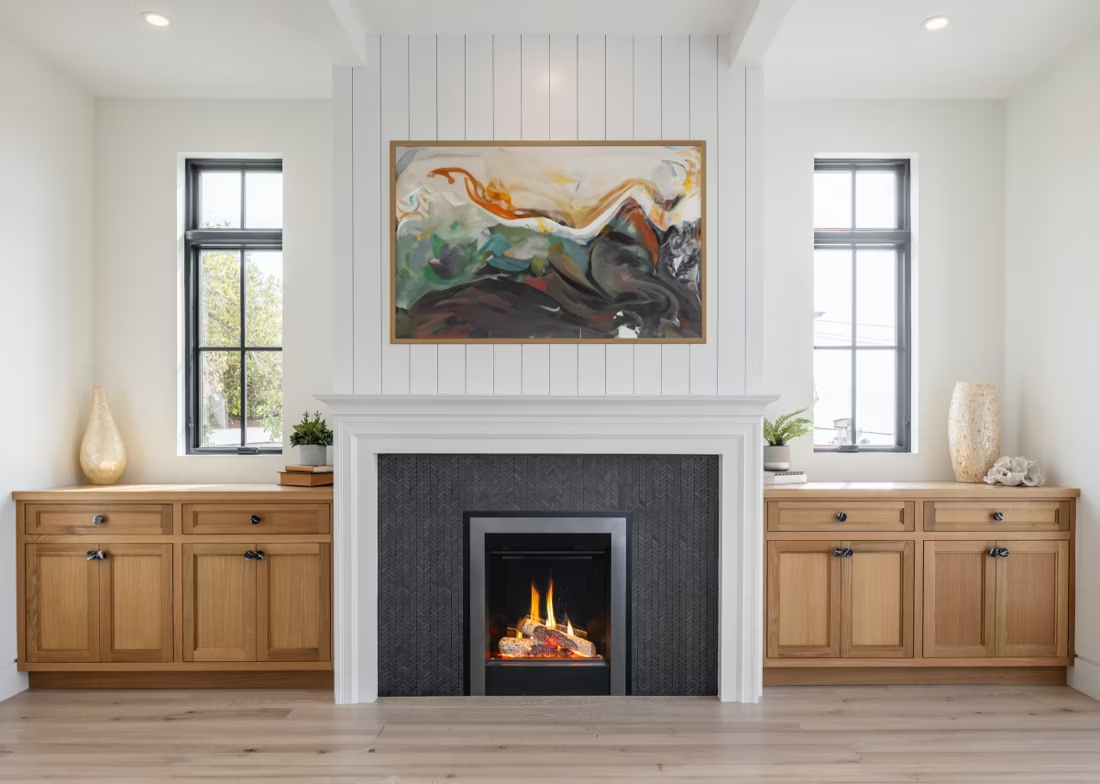
An electric insert is built to slide into an existing masonry fireplace opening, giving you flame visuals and heat output without touching your chimney (which stays capped and unused). A freestanding electric stove sits on the floor like a traditional wood stove and can go almost anywhere near an outlet. A wall-mounted or built-in unit is framed into a wall, similar to a flat-panel TV, and is popular in newer Connell construction where homeowners want a modern look without any masonry at all. All three plug into standard household current unless you choose a larger model requiring a dedicated 240V circuit.
Will my electric fireplace still work during a power outage?
No—unlike a wood stove, an electric fireplace has no function without power. That matters in Connell, where Big Bend Electric Cooperative's rural lines can see outages during winter windstorms and ice events common to the Columbia Basin. If backup heat during outages is a priority, most local dealers recommend keeping a wood stove or pellet stove in the home alongside an electric unit rather than relying on electric alone. Some higher-end electric fireplaces do accept battery backup for the flame effect and blower, but that's a limited stopgap, not real heat.
How does electric heat cost compare to propane or wood in Connell?
Connell isn't served by natural gas, so the usual comparison is electric against propane or wood. At Big Bend Electric Cooperative's $0.091/kWh rate, electric resistance heat is notably cheap for the Northwest—often competitive with or cheaper than propane per BTU delivered, and far simpler than maintaining a propane tank and delivery schedule. Wood remains the cheapest option by far for households willing to cut or buy cordwood, especially with Umatilla National Forest permits running just $20 per 4 cords, but it comes with labor, ash, and chimney maintenance that electric skips entirely.
What size electric fireplace do I need for my home?
Electric units are rated for the room they're heating, not the whole house—most top out around 1,500 watts (roughly 5,100 BTU) regardless of price, since that's the practical limit for a standard household circuit. For a bedroom or den under 500 square feet, a smaller wall unit or insert is plenty. For an open living/dining space, look at units with a stronger blower and consider whether a 240V built-in model makes sense. For anything larger, or as a primary heat strategy through a full Connell winter, electric should be paired with your existing furnace or a wood stove rather than asked to carry the whole load.
Electric vs. pellet stove—which is right for my home?
Pellet stoves, burning regional brands like Bear Mountain, Lignetics, or Pacific Pellet, put out significantly more heat than an electric fireplace and can serve as a real primary heat source for a Connell home—but they still need electricity to run the auger and blower, require a pellet supply and storage space, and need venting and periodic cleaning. Electric fireplaces need none of that: no fuel to store, no venting, no ash, and installation is far simpler and cheaper. If you want serious heat output and don't mind managing fuel, pellet wins. If you want simple, clean supplemental heat with the lowest possible install cost, electric is the better fit.
Does an electric fireplace need a vent or chimney?
No—that's its superpower. An electric fireplace needs a wall and an outlet, period. No vent pipe, no gas line, no clearances to design around, which is why it works in bedrooms, offices, apartments, and walls where venting a gas or wood unit would be impractical or impossible. Installation is typically the simplest and least expensive of any fireplace type.
Can I put a TV above my fireplace?
Yes—with an asterisk. Fireplaces are hot and TVs don't like heat. Either put a mantel between them to deflect rising warmth, or choose a fireplace with heat-management technology that creates a cool zone on the wall above—the wall stays around 125 degrees, barely warm, while the room still gets full heat. If you like clean lines and don't want a mantel, heat management is the answer.
Can a fireplace actually lower my heating bill?
Yes—by creating a comfort zone. A furnace heats every square foot of the house just to warm the one room you're in; a gas fireplace on low burns roughly a sixth of the gas a typical furnace does. Set the furnace around 55–60 degrees as a baseline, then heat the rooms your family actually uses. Families who heat this way commonly save $20–$60 a month.
Does a fireplace add value to my home?
On average, a fireplace adds back to the home about the same amount you spent installing it. Add the monthly savings from heating the rooms you actually use instead of the whole house—often hundreds of dollars a year—and the value case is strong before you even count what a fire does for how your family uses the room.
Nearby Dealers
Hearth shops serving Connell and the surrounding area. Every listing shows whether it is a WhyFire partner, a dealer we have verified as authorized for the brands we recommend, or a local business carrying hearth products. No manufacturer pays for placement. How we verify dealers →
Total Energy Mgmnt
Campbell & Company, Inc.
Fire & Water
Apollo Heating & Air Conditioning
Dayco Heating
Legacy Pool & Spa LLC
Bruce Heating & Ac
Electric Service in Connell
An electric fireplace's heater draws about 1,500 watts—pennies per hour at local rates.
Big Bend Electric Coop, Inc
Find your electric fireplace in Connell.
Tell us a bit about your home and we'll match you with the right electric fireplace, insert, or wall unit—plus a free Project Guide & Parts List—and connect you with a trusted local dealer.
Find Your Fireplace →