
Reliable Heat for the Rainiest Town in the Lower 48.
Pellet stoves deliver clean, consistent heat in Forks without the challenge of keeping firewood dry through 100+ inches of annual rainfall. Find the right stove and connect with a trusted local dealer.
Every Project Starts From One of These Five Situations
Heat that doesn't depend on dry wood.
Forks sits near the mouth of the Olympic Peninsula, minutes from the Hoh Rainforest, and averages well over 100 inches of rain a year—among the highest totals anywhere in the continental United States. Winters here are mild for the heating load they create (climate zone 4C, average winter lows near 35°F) but relentlessly damp, which makes keeping split firewood properly seasoned and dry through burn season a real logistical challenge for local households.
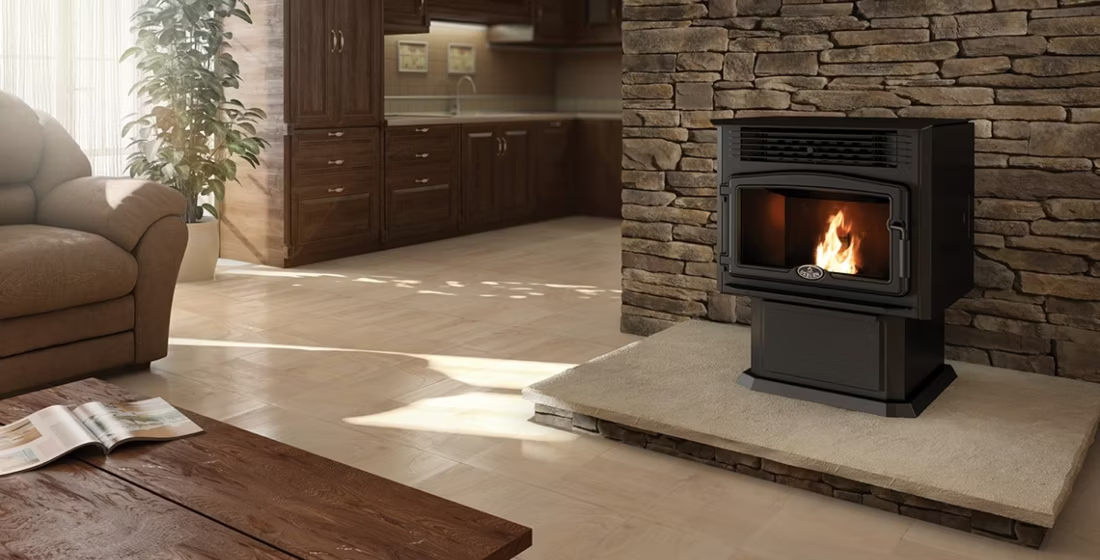
Pellet stoves sidestep that problem entirely. Bagged pellets from regional mills like Bear Mountain, Lignetics, and Pacific Pellet stay moisture-protected in a garage or shed, so there's no tarp-and-stack routine and no worrying about a wet cord going punky before it burns. Add in Clallam County PUD's residential electric rate of about 11.85 cents per kWh—which keeps the auger and blower cheap to run—and pellet heat pencils out well for a town where the alternative, hauling and seasoning wood in one of the wettest climates in the country, is genuinely harder than it is almost anywhere else.
Three steps. No salesperson until you're ready.
Tell us about your project
Your zip code, your situation, and the fuel you're leaning toward—or let the answers point you to one.
See what's actually available
The brands dealers within 100 miles genuinely carry—real options, never a catalog mirage.
Get your dealer & Project Guide
A trusted local dealer, plus the free Project Guide & Parts List that names every component of the job.
Frequently Asked Questions
How much does a pellet stove installation cost in Forks?
Pellet stove installations in Forks typically run $3,500 to $7,000 installed, depending on whether it's a freestanding stove venting through an exterior wall or an insert using an existing masonry fireplace. Because pellet stoves vent horizontally through a small-diameter PVC or stainless pipe rather than a full masonry chimney, installation is often simpler and less costly than a comparable wood stove—a real advantage in a town where many homes are older logging-era construction without existing hearths. Your local dealer will also confirm you have a dedicated 120V outlet nearby, since the auger and combustion blower both need continuous power.
Will my pellet stove keep working if the power goes out?
Not without a battery backup or generator—this is the one real tradeoff of pellet heat. Forks sees its share of Pacific storm systems that knock out power for Clallam County PUD customers, sometimes for a day or more, and a pellet stove's auger and combustion blower both require continuous electricity to run. Many local homeowners pair a pellet stove with a small battery backup unit or a portable generator for extended outages. If uninterrupted heat during storm-driven outages is your top priority, ask your dealer about pairing the pellet stove with a wood-burning unit as backup.
What pellet brands are available near Forks?
Regional mills supply most of what's sold on the Olympic Peninsula, including Bear Mountain, Lignetics, and Pacific Pellet—all producing softwood pellets well suited to the Douglas fir and red alder that dominate this part of Washington. Expect to pay roughly $250 to $320 per ton, usually sold by the pallet of forty-pound bags. Buying a season's supply in late summer, before demand picks up, is the standard local strategy, and bagged pellets stay dry in a garage or shed even through Forks's wettest months.
What size pellet stove do I need for a home in Forks?
Forks's climate is milder than the winter heating load suggests—winter lows average around 35°F and the marine air keeps hard freezes relatively rare, so most homes here do fine with a small to medium pellet stove rated for up to about 1,500 square feet, rather than the largest units built for continental cold. Older logging-town homes with less insulation may need a bit more capacity for the same square footage. A local dealer will size the stove to your home's insulation and layout during an in-home visit—an oversized stove leads to short, inefficient burn cycles rather than better heat.
Do I need a permit to install a pellet stove in Forks?
Yes—pellet stove installations require a building permit through the Clallam County building department, covering the appliance listing, venting termination clearances, and any required hearth pad. Most local hearth dealers handle the permit application as part of the installation. Unlike wood stoves, pellet stoves aren't typically subject to burn-curtailment restrictions in Washington, since they burn more completely and produce far less particulate—worth noting given the wildfire smoke that can settle over the Peninsula in late summer.
Pellet stove vs. wood stove—which makes more sense in Forks?
Wood is genuinely abundant here—Douglas fir, red alder, and lodgepole pine are all common locally, and self-cut permits through the Mt. Baker-Snoqualmie National Forest run just $5 to $20 per cord during the May-to-October cutting season. But Forks's near-constant rainfall makes properly seasoning and storing dry firewood a real chore, and wood that isn't kept covered and dry can smolder and build creosote fast. Pellets sidestep that entirely, arrive pre-dried and bagged, and burn cleaner with far less ash. For households with covered storage and time to season wood properly, wood remains the cheaper fuel. For anyone who wants consistent heat without babysitting moisture content, pellet is usually the easier call.
Are pellet stoves affected by wildfire smoke restrictions in Forks?
Wildfire smoke is Forks's main air quality concern, but it's an outdoor, late-summer issue tied to regional fire activity rather than a winter heating-season problem—it doesn't trigger the kind of burn curtailment programs seen in inversion-prone valley towns elsewhere in the Northwest. Pellet stoves also burn more completely than open wood fires or older wood stoves, producing minimal visible smoke, so they aren't a target of local air quality concern regardless of season.
How often does a pellet stove need cleaning and maintenance?
Plan on a full cleaning of the burn pot, hopper, and venting once a season, plus wiping down the burn pot every few days during heavy winter use to keep the stove burning efficiently. The exhaust vent—a horizontal PVC or stainless pipe run through an exterior wall—should be checked annually for blockage, which matters in Forks given how much wind-driven rain the Peninsula gets; a poorly sealed vent termination can let moisture in over time. Local hearth dealers offer annual service visits, typically $150 to $200, covering the full cleaning and safety check.
Why isn't natural gas an option for a fireplace in Forks?
Forks doesn't have natural gas utility infrastructure—there's no piped natural gas service on this stretch of the Olympic Peninsula, so a gas fireplace here would run on propane instead, delivered and stored in a tank. That's workable for some homeowners, but it adds ongoing delivery costs and tank rental that pellet and wood heat avoid entirely. For most Forks households, pellet or wood ends up being the simpler, more cost-effective path to a real fireplace or stove.
How often does a pellet stove need cleaning?
A clean pellet stove is a happy pellet stove. Plan on cleaning the burn pot about once a week when you're burning regularly—ash and clinkers gum up the air holes just like a pellet barbecue. Most pellet stove problems trace back to skipped cleaning that nobody explained up front. Some designs make it easy with a trapdoor burn pot: pull a lever and the gunk drops into the ash pan.
Why is my open fireplace making my house colder?
Open fireplaces suck—literally. As the fire burns, it consumes air your furnace already paid to heat and pulls it out through the chimney, so the house is actually colder after the fire goes out than before you lit it. An insert fixes this: it seals the chimney, puts fixed glass across the front, and turns that hole in your house into a real heat source.
What is an in-home preview and do I need one?
It's a visit where a hearth professional measures your space, confirms the model you picked actually works in your home, and walks the specs—framing, gas line, venting, finish work—before anything is ordered. Some details you just can't know until you see the house. Never make a down payment without one; it's the single most-skipped step that burns buyers.
Can I install a fireplace myself?
If you're putting a fire in your house on purpose, it's best to work with an expert. Unless you're genuinely experienced in framing, gas line, vent pipe, and the national code on clearances to combustibles, have a professional do it—and ideally the same company that sells you the fireplace, so warranty, service, and liability all live under one roof.
Nearby Dealers
Hearth shops serving Forks and the surrounding area. Every listing shows whether it is a WhyFire partner, a dealer we have verified as authorized for the brands we recommend, or a local business carrying hearth products. No manufacturer pays for placement. How we verify dealers →
Strait Comfort Systems
Silver Knight Heating Ltd
Olympic Hearth And Spa
Pellet Brands Stocked Around Forks
Manufacturers will point you to the nearest stocking dealer.
Find your pellet stove in Forks.
Tell us about your home and we'll match you with the right pellet stove or insert—plus a free Project Guide & Parts List with your recommended local dealer.
Find Your Fireplace →