
Warm, clean gas heat for Five Corners homes.
Instant, efficient heat for Clark County's mild but persistently damp winters—find the right gas fireplace or insert and connect with a trusted local dealer.
Every Project Starts From One of These Five Situations
Convenience wins in the Pacific Northwest's marine climate.
Five Corners sits at about 215 feet in unincorporated Clark County, just northeast of Vancouver, in climate zone 4C—the mild, wet marine climate typical of the lower Columbia region. Winter lows average around 32 degrees, and the area logs roughly 5,295 heating degree days a year, which is real heating season but nowhere near the deep-freeze numbers of places like Duluth or Fargo. What defines a Five Corners winter isn't extreme cold, it's months of gray, misty days from October through April where the heat just needs to come on and stay on without fuss.
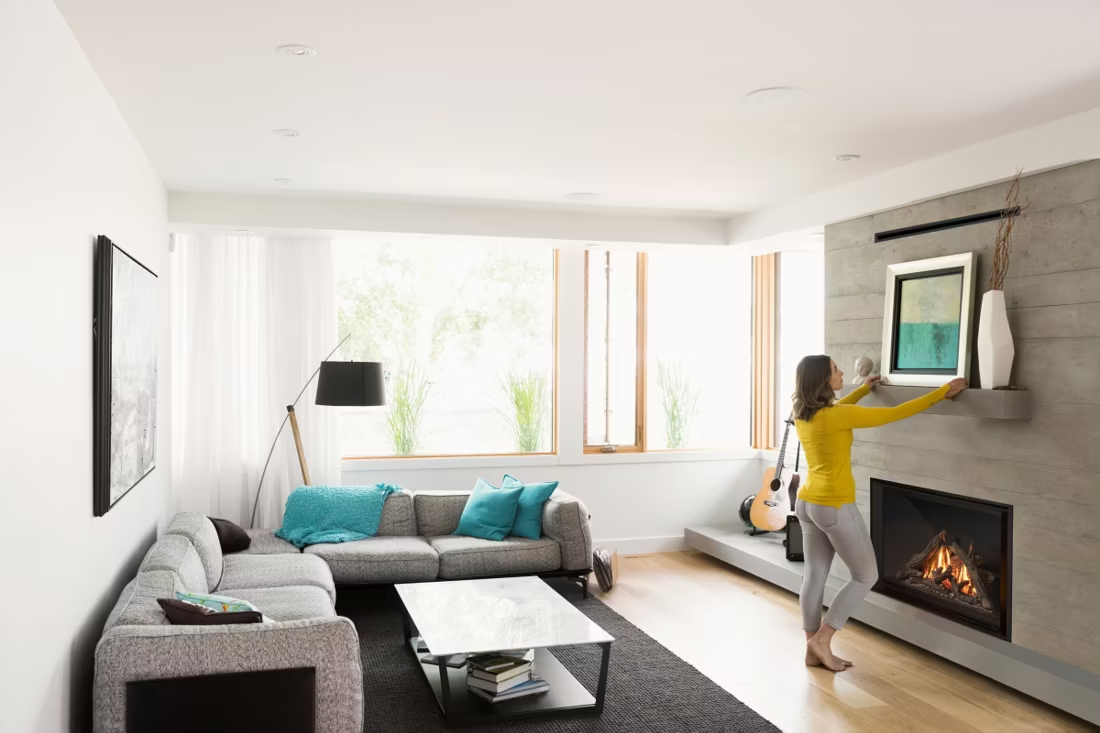
That's the case for gas. Plenty of homes in this part of Clark County still have the original wood-burning masonry fireplace, and converting it to a direct-vent gas insert is one of the most common upgrades local hearth dealers handle—instant heat at the flip of a switch, no ash, no creosote, and no need to source or store firewood. Natural gas mains reach a good share of the 98662 area given its proximity to Vancouver's infrastructure, though some outlying pockets of unincorporated Clark County still rely on propane delivery. Either way, a properly sized and vented gas fireplace gives you reliable zone heat that pairs well with central HVAC during the long stretch of cool, wet months here.
Three steps. No salesperson until you're ready.
Tell us about your project
Your zip code, your situation, and the fuel you're leaning toward—or let the answers point you to one.
See what's actually available
The brands dealers within 100 miles genuinely carry—real options, never a catalog mirage.
Get your dealer & Project Guide
A trusted local dealer, plus the free Project Guide & Parts List that names every component of the job.
Frequently Asked Questions
How much does a gas fireplace installation cost in Five Corners?
In the Vancouver-Clark County area, a typical gas fireplace or insert installation runs roughly $4,000 to $10,500. Converting an existing masonry fireplace to a direct-vent gas insert on a home already served by natural gas tends to land on the lower end. New construction, remodels that require running a fresh gas line, or homes in the outlying parts of Clark County that need a propane tank set and regulator tend to push toward the higher end. Because Five Corners is unincorporated, any gas line and venting work still needs to clear Clark County's building and mechanical permitting before a local installer can sign off on the job.
Can I convert my existing wood-burning fireplace to gas?
Yes, and it's a common upgrade in this part of Clark County, where a lot of homes built from the 1970s through 1990s still have open masonry fireplaces that were originally burning douglas fir or red alder. A gas insert with a stainless liner run up your existing chimney is usually the simplest path, typically running $4,500 to $9,000 depending on the insert and whether your home already has a gas line nearby. It preserves the look of your existing hearth while giving you instant, thermostatically controlled heat instead of a fire you have to build and tend.
Is natural gas available in Five Corners, or do I need propane?
It depends on the street. Five Corners sits close enough to Vancouver's built-out gas infrastructure that many homes already have natural gas service running to a furnace or water heater, which makes adding a fireplace straightforward. Some pockets of unincorporated Clark County, particularly newer subdivisions on the edges of the 98662 zip code, aren't on a gas main and rely on propane delivery instead. Either fuel works in nearly any gas fireplace or insert—your installer sets the orifice and regulator for whichever you have, and if you need a new propane tank, that gets coordinated separately with a local propane supplier.
Will a gas fireplace still work if the power goes out?
Most will, with the right ignition system. Units with intermittent pilot ignition (IPI) run on a battery backup that kicks in automatically if your PUD No. 1 of Clark County service drops, so the fireplace lights on demand just like normal. Winter windstorms are the more common outage risk here, not deep cold, and a gas fireplace with battery backup—or a Valor unit with a self-generating thermocouple pilot that needs no batteries at all—will keep running through a multi-hour or multi-day outage. Worth asking about specifically when you're comparing units.
What's the difference between a gas fireplace, insert, and stove?
A gas fireplace is a built-in unit framed into a wall, typically used in new construction or a remodel. A gas insert slides into an existing masonry firebox and uses your current chimney as the vent path, which is the more common project for older Five Corners homes with an existing wood fireplace. A gas stove is a freestanding cast-iron or steel unit that sits on the floor like a wood stove but burns gas—a good option if you want supplemental zone heat in a room without an existing fireplace. A local dealer can walk you through which fits your floor plan.
Do I need a permit to install a gas fireplace in Five Corners?
Yes. Because Five Corners is unincorporated, permitting runs through Clark County's building and mechanical permit process rather than a city office. Any new gas line requires a licensed gas-fitter, and the fireplace or insert itself needs a mechanical permit and inspection. Most established local hearth dealers handle this paperwork as part of the installation, coordinating the gas line, venting, and inspection so you're not managing separate trades yourself.
What's the difference between vented and vent-free gas fireplaces?
Vented, or direct-vent, fireplaces draw combustion air from outside and exhaust combustion gases back outside through a sealed pipe—they're the standard, code-friendly choice in nearly every home here. Vent-free units burn directly into the room without external venting; they're technically permitted in Washington under limited room-size and ventilation conditions, but most local installers steer Clark County homeowners toward direct-vent models by default because they don't add moisture and combustion byproducts to an already damp Pacific Northwest home. If you're weighing the two, ask your dealer specifically about the mechanical code requirements for your room.
How often does a gas fireplace need to be serviced?
Plan on an annual inspection, ideally before the wet season ramps up in October. A technician checks the burner, pilot assembly, venting, and gas connections, and cleans the glass and interior. This is a lighter lift than wood-stove chimney sweeping—usually $150 to $250—but skipping it is how you end up with pilot or ignition failures on the first cold, damp night you actually need the fireplace.
Gas vs. wood—which makes more sense for a Five Corners home?
Wood has real advantages if you value low fuel cost and off-grid operation: Gifford Pinchot and Mt. Hood National Forest both issue personal-use cutting permits for $5 to $20 per cord during the May-to-October season, and douglas fir, red alder, and lodgepole pine are all common, well-seasoning species in this area. Gas trades that self-sufficiency for convenience—instant on-off heat, no ash or creosote, and no smoke, which matters to some households given the wildfire smoke that already drifts into Clark County most summers. For a primary living space in a mild, wet climate like this one, gas is usually the lower-maintenance choice; wood still makes sense as backup heat or for homes that want the ambiance and don't mind the upkeep.
Is my gas fireplace wasting gas?
If it was installed more than 15 years ago, probably. Older gas fireplaces keep a standing pilot light burning all the time, and that little flame can cost a couple hundred dollars a year. Newer models use pilot-on-demand ignition—the pilot lights only when you use the fireplace and goes out when you turn it off.
What's the difference between an insert and a zero-clearance fireplace?
An insert is a fireplace that slides into a pre-existing wood-burning fireplace—if you don't have one, there's nothing to insert it into. A zero-clearance fireplace is built into a framed wall, which makes it the answer for remodels and new construction. Simple test: existing masonry fireplace means insert; blank or framed wall means zero-clearance.
What is an in-home preview and do I need one?
It's a visit where a hearth professional measures your space, confirms the model you picked actually works in your home, and walks the specs—framing, gas line, venting, finish work—before anything is ordered. Some details you just can't know until you see the house. Never make a down payment without one; it's the single most-skipped step that burns buyers.
Should the dealer who sells my fireplace also install it?
Ideally, yes. A fireplace project involves vent pipe, gas line, electrical, and often tile or stone. Hire three or four separate trades and you own the liability and the game of telephone between them. One company selling and installing means one accountable party, start to finish—ask about factory training, on-time completion records, and what happens if an inspection fails.
Nearby Dealers
Hearth shops serving Five Corners and the surrounding area. Every listing shows whether it is a WhyFire partner, a dealer we have verified as authorized for the brands we recommend, or a local business carrying hearth products. No manufacturer pays for placement. How we verify dealers →
New Flame Hearth & Grill
Ez Propane
Tri-Tech Heating
Performance Building Products
Haven Spa Pool & Hearth
The Stove Shop
Lumos Hearth & Home
Lakewood Gas
Lisac’s Spark & Splash
Bridgetown Chimney & Masonry
Addco Electric Fireplaces
A Your Town Chimney Service
Nw Natural Appliance Center
HomeTown Hearth & Grill
Buck's Stove Palace
All Fuel Installation & Service
Richs For The Home
Fireside Home Solutions
Rich's Stoves & Spa
Find your gas fireplace in Five Corners.
Tell us about your home and we'll match you with a trusted local dealer and send a free Project Guide & Parts List—the exact parts, vent kit, and recommended installer for your Five Corners gas project.
Find Your Fireplace →