
Gas Heat Built for Edmonds' Marine Winters.
Edmonds sees mild, wet winters off Puget Sound rather than deep cold - but damp 40-degree nights still call for real heat. Find the right gas fireplace or insert, and get matched with a trusted local dealer.
Every Project Starts From One of These Five Situations
Steady heat without stacking wood.
Edmonds sits right on Puget Sound at just 392 feet of elevation, in climate zone 4C - a marine climate where winters rarely dip below the high 30s and heating degree days total around 5,000, far short of what a place like Duluth, MN racks up in a single season. That mildness is exactly why gas has become the default fireplace fuel here: it delivers real, instant warmth on damp, gray days without asking anyone to stack and season cordwood on a quarter-acre lot.
Wood-burning fireplaces and stoves are uncommon in Edmonds - Puget Sound Clean Air Agency burn bans during winter stagnant-air events, plus the density of the city's residential neighborhoods, have pushed most homeowners toward cleaner-burning options. Puget Sound Energy runs natural gas service through most of the city, from the downtown bowl to Five Corners and Westgate, which makes a direct-vent gas insert or fireplace a straightforward retrofit for the many homes built here in the 1950s through 1970s. It's also one of the better hedges against the windstorm-driven power outages that hit the Puget Sound corridor most winters.
Three steps. No salesperson until you're ready.
Tell us about your project
Your zip code, your situation, and the fuel you're leaning toward—or let the answers point you to one.
See what's actually available
The brands dealers within 100 miles genuinely carry—real options, never a catalog mirage.
Get your dealer & Project Guide
A trusted local dealer, plus the free Project Guide & Parts List that names every component of the job.
Frequently Asked Questions
How much does a gas fireplace installation cost in Edmonds?
A typical gas fireplace installation in Edmonds runs roughly $4,000 to $10,500, depending on the unit and the venting path. Converting an existing masonry fireplace to a direct-vent gas insert - common in Edmonds' older neighborhoods, where many homes date to the 1950s through 1970s - sits toward the lower end because the chimney chase already exists. A new built-in gas fireplace for a remodel, with framing and a fresh gas line run from Puget Sound Energy's mains, lands higher. Ask a local dealer for a firm quote after an in-home visit; venting length and gas line distance are usually the biggest swing factors.
Can I convert my old wood fireplace to gas?
Yes, and it's one of the most common upgrades among Edmonds' older housing stock. Plenty of homes built before the 1980s have a wood-burning masonry fireplace that rarely gets used - between Puget Sound Clean Air Agency burn-ban days during winter stagnant-air events and the hassle of storing cordwood on a typical Edmonds lot, wood-burning fireplaces here see far less use than they once did. A gas insert reuses your existing chimney with a stainless liner, typically running $4,500 to $9,000 depending on the insert and whether new gas line work is needed.
Do I need natural gas service, or can I use propane?
Puget Sound Energy supplies natural gas to most of Edmonds, including the neighborhoods around Five Corners, Westgate, and the downtown bowl. If your home already has a PSE gas meter for a furnace or water heater, adding a fireplace is usually a straightforward tap into the existing line. A smaller number of homes - particularly newer construction at the edges of the service area or properties along the waterfront - rely on propane instead. Most gas fireplace models can be set up for either fuel; your installer configures the correct orifice sizing for whichever you have.
Will my gas fireplace still work if the power goes out?
Most direct-vent gas fireplaces sold in Edmonds use IPI (intermittent pilot ignition) with a battery backup, so they'll light and run even when the grid drops - useful during the windstorms that periodically knock out Puget Sound Energy service along this stretch of coastline each fall and winter. Valor is worth asking about specifically: its fireplaces generate their own electricity from the pilot's thermocouple, so there are no batteries to remember to replace. If backup heat during outages matters to you, tell your local dealer before you settle on a model.
What's the difference between a gas fireplace, insert, and stove?
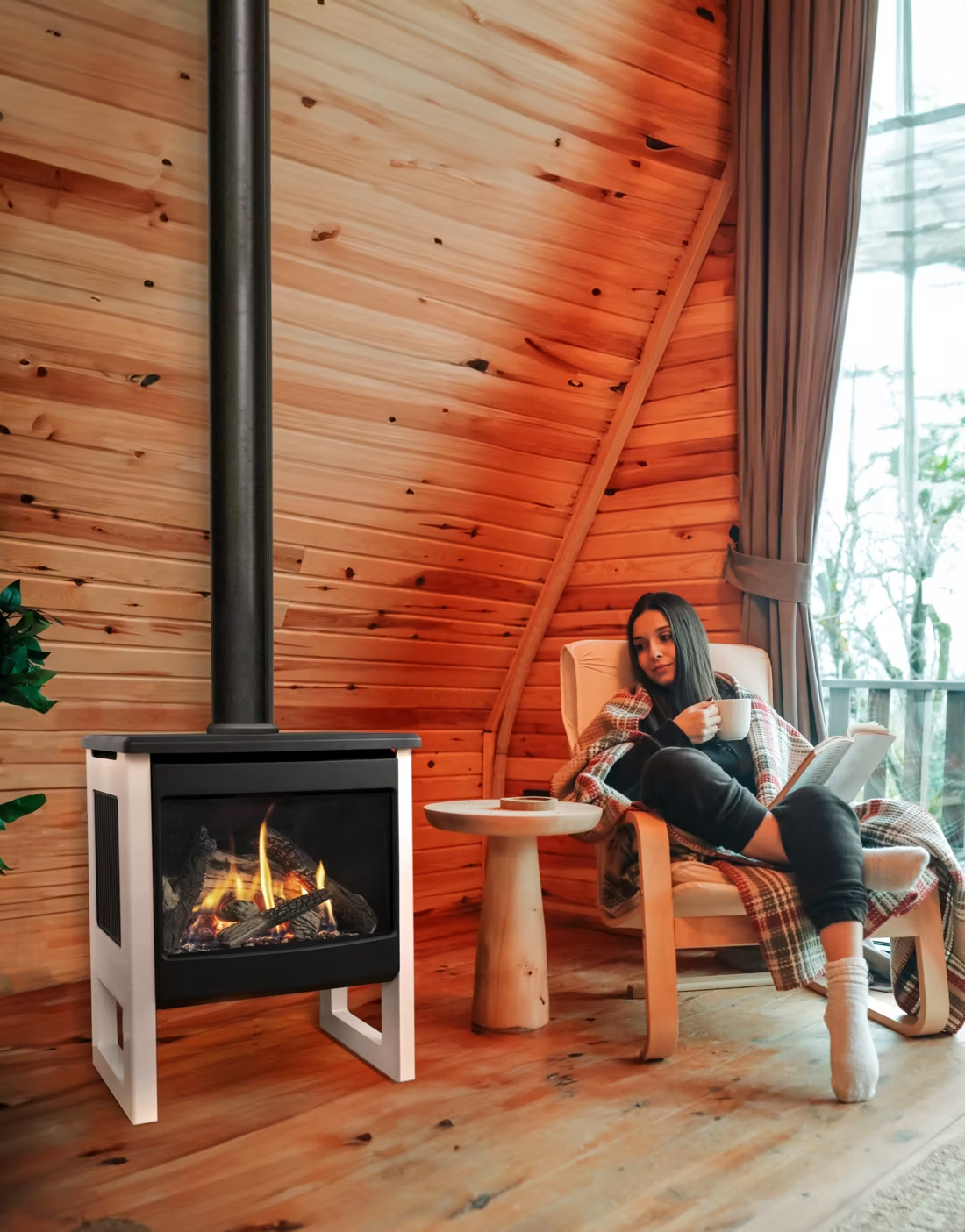
A gas fireplace is a fully built-in unit installed into a framed wall or new construction opening. A gas insert is sized to slide into an existing masonry fireplace, sealing it up and using the chimney as the vent path - the more common project in Edmonds given how much older masonry fireplace inventory the city has. A gas stove is a freestanding unit that sits on the floor and vents through a wall or ceiling, useful in a room without any existing fireplace opening at all. Most Edmonds homeowners with a fireplace already in place end up choosing an insert.
Do I need a permit to install a gas fireplace in Edmonds?
Yes - the City of Edmonds Development Services Department requires a building permit for new gas fireplace installations, along with a separate gas permit for any new gas line work. Both are typically pulled by your installer as part of the job. Because the gas line portion has to be done by a licensed gas fitter, working with an established hearth dealer means one company coordinates the gas line, venting, and inspection sign-off instead of you juggling separate contractors.
Should I get a vented or vent-free gas fireplace?
Washington's energy code is strict about unvented combustion appliances in tightly sealed homes, which is a big reason vent-free ('ventless') gas fireplaces are uncommon in Edmonds and, in many cases, effectively off the table under current code. Direct-vent gas fireplaces and inserts - which draw combustion air from outside and exhaust it back outside through a sealed pipe - are the standard here and what nearly every local dealer installs. They're also the more sensible choice in a damp, marine climate like this one, where indoor moisture and air quality are already worth paying attention to.
How often does a gas fireplace need servicing?
An annual inspection is recommended for any gas fireplace or insert, even though gas appliances need far less attention than a wood-burning chimney. A technician checks the burner, pilot assembly, venting, and glass seal, and cleans the interior - typically $150 to $250 for a standard visit. Given how much damp, salt-air weather Edmonds gets off Puget Sound, keeping the venting seals and glass gasket in good shape matters more here than it would in a drier inland climate.
Gas or electric fireplace - which makes more sense in Edmonds?
Both show up regularly in Edmonds homes, and the choice usually comes down to how much real heat you need versus how simple the install is. A gas fireplace or insert puts out genuine BTUs - enough to actually warm a room on a raw, 40-degree evening off the Sound - but requires venting and, in most cases, a gas line. An electric fireplace or insert plugs into a standard outlet, installs for a few hundred dollars, and runs on Puget Sound Energy's residential rate of about 14.6 cents per kWh, but it functions more as supplemental or ambiance heat than a primary source. Plenty of Edmonds homeowners run electric in a bedroom or den and save gas for the main living space.
What's the difference between an insert and a zero-clearance fireplace?
An insert is a fireplace that slides into a pre-existing wood-burning fireplace—if you don't have one, there's nothing to insert it into. A zero-clearance fireplace is built into a framed wall, which makes it the answer for remodels and new construction. Simple test: existing masonry fireplace means insert; blank or framed wall means zero-clearance.
Why is a fireplace insert so efficient?
An insert does two things: it seals the chimney completely, so you stop losing air you already paid to heat, and it radiates warmth into the room through the firebox and glass. Most add a heat-exchange fan that pulls cool room air underneath, wraps it around the hot firebox, and pushes it back out warm. Your home is more efficient before you've even lit the first fire.
What is an in-home preview and do I need one?
It's a visit where a hearth professional measures your space, confirms the model you picked actually works in your home, and walks the specs—framing, gas line, venting, finish work—before anything is ordered. Some details you just can't know until you see the house. Never make a down payment without one; it's the single most-skipped step that burns buyers.
Can I install a fireplace myself?
If you're putting a fire in your house on purpose, it's best to work with an expert. Unless you're genuinely experienced in framing, gas line, vent pipe, and the national code on clearances to combustibles, have a professional do it—and ideally the same company that sells you the fireplace, so warranty, service, and liability all live under one roof.
Nearby Dealers
Hearth shops serving Edmonds and the surrounding area.
Island Gas Piping & Installations, LLC
Find your gas fireplace in Edmonds.
Tell us a bit about your home and we'll match you with a trusted local Edmonds dealer and send over your free Project Guide & Parts List - the exact parts, including the vent kit, for your gas fireplace project.
Find Your Fireplace →