
Keep Your Family Warm and Safe—No Matter What
A real wood stove keeps a Kitsap Peninsula home warm through the long, damp heating season—and through the windstorm outages that come with living on Puget Sound. Find the right unit and connect with a trusted local dealer.
Every Project Starts From One of These Five Situations
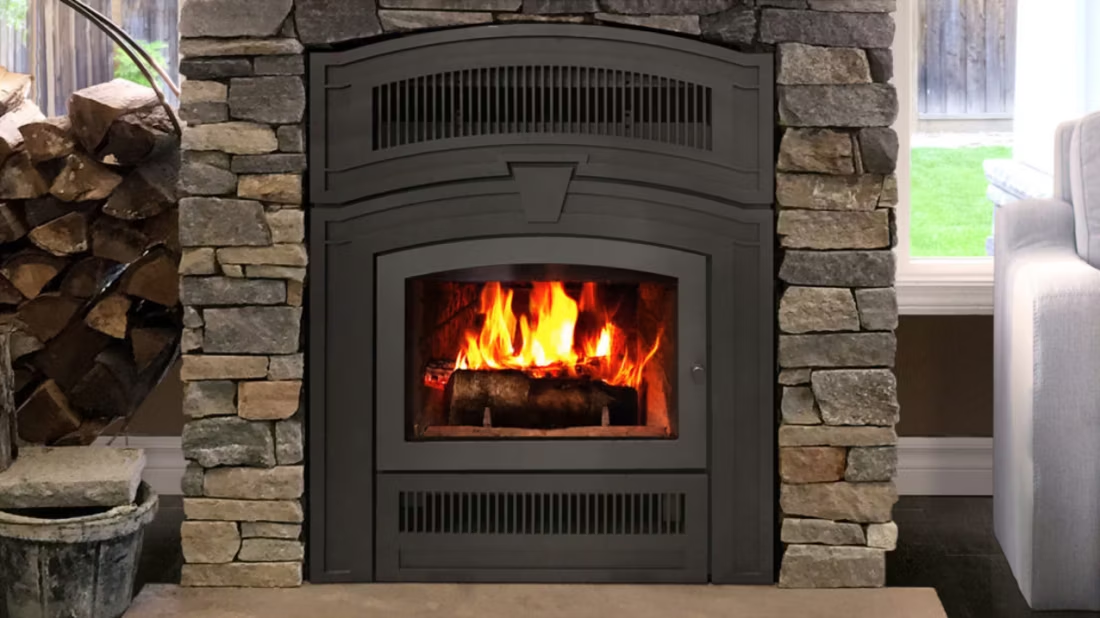
Wood heat that keeps up when the power lines don't.
East Port Orchard sits at just 342 feet on the Kitsap Peninsula, in climate zone 4C—a marine climate where winter lows average around 36°F rather than the deep-freeze conditions of a place like Duluth, MN or Bismarck, ND. Still, with 4,825 heating degree days, the heating season here is long even if it isn't brutally cold: gray, damp weather typically runs from October through April, and a wood stove or insert provides steady, dry radiant heat that cuts through the chill better than forced air alone.
Kitsap County is heavily timbered, and Douglas fir, red alder, and lodgepole pine are the wood species most commonly burned locally—much of it self-cut under permits from the nearby Olympic National Forest or Mt. Baker-Snoqualmie National Forest, both of which issue cutting permits from May through October for $5 to $20 per cord. Wood heat also matters here for a reason beyond cold: Puget Sound windstorms knock out power across the peninsula most winters, sometimes for days, and Puget Sound Energy customers in outlying areas are often last to be restored. A wood stove that doesn't depend on electricity to run is real backup heat, not just ambiance.
Firewood Cutting Permits Near East Port Orchard
Three steps. No salesperson until you're ready.
Tell us about your project
Your zip code, your situation, and the fuel you're leaning toward—or let the answers point you to one.
See what's actually available
The brands dealers within 100 miles genuinely carry—real options, never a catalog mirage.
Get your dealer & Project Guide
A trusted local dealer, plus the free Project Guide & Parts List that names every component of the job.
Frequently Asked Questions
How much does a wood stove installation cost in East Port Orchard?
A typical wood stove or insert installation in the East Port Orchard area runs roughly $4,000 to $8,500, depending on the unit, whether an existing masonry chimney can be reused, and how much new Class A pipe or through-wall venting is needed. Homes without an existing chimney—common in newer Kitsap County construction—tend to land toward the higher end once full venting and a code-compliant hearth pad are factored in. Local dealers typically include the permit application as part of the installation quote.
What size wood stove do I need for my home?
With winter lows averaging in the mid-30s rather than single digits, most East Port Orchard homes are well served by a small-to-medium stove rated for 1,000 to 1,800 square feet, even when the stove is meant to carry primary heat through a damp Puget Sound winter. Larger, all-day catalytic units built for sub-zero climates are usually more stove than this area needs unless you're heating a large, poorly insulated older farmhouse. A local dealer will size the unit to your square footage, ceiling height, and insulation during an in-home visit—sizing matters more here for efficient, clean burning than for raw heat output.
Where can I find certified wood stove installers near East Port Orchard?
Look for NFI (National Fireplace Institute) certified installers or CSIA (Chimney Safety Institute of America) credentialed technicians—both indicate formal training in wood-appliance clearances and venting. In the Kitsap Peninsula area, most hearth retailers that sell stoves also employ their own certified installers, which keeps warranty coverage and code sign-off under one roof. Given the wet climate here, ask specifically about the installer's experience with damp-site chimney sealing and cricket flashing—a poorly flashed roof penetration is a common source of leaks in this region's rainy winters.
What's the difference between a wood stove and a wood insert?
A wood stove is a freestanding unit set on a hearth pad, suitable for nearly any room with proper clearances. A wood insert slides into an existing masonry fireplace and uses a stainless liner run up the existing flue, turning a drafty open hearth into an efficient heat source. Many East Port Orchard homes built in the 1970s and 80s already have a masonry fireplace, which makes an insert the more straightforward retrofit. Newer homes without a masonry fireplace, or detached shops and outbuildings, are usually better candidates for a freestanding stove.
Do I need a permit to install a wood stove in East Port Orchard?
Yes. Because East Port Orchard is unincorporated, building permits for new wood-burning appliance installations go through the Kitsap County Department of Community Development, and the stove itself must meet current EPA New Source Performance Standards. There's no permit required just to burn once the stove is installed, but Kitsap County falls under the Puget Sound Clean Air Agency, which can call burn bans during winter stagnant-air events—check their advisory before burning on the still, foggy days that are common here in December and January.
What's the best wood stove for East Port Orchard's climate?
Because winters here are damp and mild rather than deeply cold, a mid-size non-catalytic stove from a Pacific Northwest-built brand like Lopi or Pacific Energy is a common, practical fit—efficient, easy to operate, and sized right for a marine climate rather than an Interior Alaska one. Where a home leans on wood as primary heat, a catalytic model can stretch a burn overnight, but most East Port Orchard households use wood as strong supplemental heat and a power-outage backup, which points toward a straightforward, easy-to-run non-catalytic unit. A local dealer can match the stove to your specific square footage and burn habits.
How often should my chimney be inspected and cleaned?
An annual inspection is the standard recommendation from the CSIA, and it matters more than usual in this climate: firewood cut and split locally—Douglas fir, red alder, lodgepole pine—needs a full 6 to 12 months of covered, well-ventilated seasoning to get below 20% moisture, and the Puget Sound region's humidity makes it easy for wood to stay too wet if it's not stacked and covered properly. Burning under-seasoned wood produces far more creosote, so homes that lean on wood heat through the winter should plan on a fall sweep and inspection before burning season, with a mid-season check for anyone burning heavily.
Where can I get firewood in East Port Orchard?
Local firewood dealers around the Kitsap Peninsula sell seasoned Douglas fir, red alder, and lodgepole pine by the cord, typically delivered and stacked. For self-cut wood, both the Olympic National Forest and the Mt. Baker-Snoqualmie National Forest issue personal-use cutting permits from May through October, generally priced between $5 and $20 per cord—a good option if you have a truck, a permit, and time to season the wood a full year before burning it.
Wood stove vs. pellet stove—which is right for my East Port Orchard home?
Wood stoves run on cordwood, work without electricity, and pair naturally with low-cost Forest Service permits—a real advantage during the multi-day Puget Sound Energy outages that follow winter windstorms here. Pellet stoves, using bagged pellets from regional brands like Bear Mountain, Lignetics, or Pacific Pellet, are easier to load and burn cleaner, but the auger and blower need continuous power, so they go dark in an outage unless paired with a battery backup. Given how often this area loses power to storms, many East Port Orchard homes that install wood do so specifically for that backup-heat reliability, while treating pellet as a convenience option for homes with a generator or very stable power.
Why is a fireplace insert so efficient?
An insert does two things: it seals the chimney completely, so you stop losing air you already paid to heat, and it radiates warmth into the room through the firebox and glass. Most add a heat-exchange fan that pulls cool room air underneath, wraps it around the hot firebox, and pushes it back out warm. Your home is more efficient before you've even lit the first fire.
What's the difference between an insert and a zero-clearance fireplace?
An insert is a fireplace that slides into a pre-existing wood-burning fireplace—if you don't have one, there's nothing to insert it into. A zero-clearance fireplace is built into a framed wall, which makes it the answer for remodels and new construction. Simple test: existing masonry fireplace means insert; blank or framed wall means zero-clearance.
How much should I budget for a fireplace?
For an average home—covering the fireplace, the vent pipe, and basic installation—a budget between $3,900 and $5,500 gives you a lot of options across wood, gas, and pellet. By the time you add finish work, gas line, and electrical, the average complete installation lands between $5,000 and $12,000 all-in. In a remodel or new build, a good rule is to put about 2.5% of the total project cost toward the fireplace.
Can a fireplace actually lower my heating bill?
Yes—by creating a comfort zone. A furnace heats every square foot of the house just to warm the one room you're in; a gas fireplace on low burns roughly a sixth of the gas a typical furnace does. Set the furnace around 55–60 degrees as a baseline, then heat the rooms your family actually uses. Families who heat this way commonly save $20–$60 a month.
Nearby Dealers
Hearth shops serving East Port Orchard and the surrounding area. Every listing shows whether it is a WhyFire partner, a dealer we have verified as authorized for the brands we recommend, or a local business carrying hearth products. No manufacturer pays for placement. How we verify dealers →
Sunrice Gas & Chimney Services
Economy Hearth & Home
Economy Wiring
Aqua Rec’s Fireplace Shop
Rich's For The Home
Rich's Stoves & Spas
Chimney And Fireplace Solutions
Aqua Quip
Cressy Door & Fireplace
Aqua Rec Swimmin Hole And Fireside
Dowell Company
Fireside Hearth & Home-Auburn
Pristine Sweeps
Rcs Fireplace
Rich’s Woodstoves & Spas
Rich’s Woodstoves & Spas
Find your wood fireplace in East Port Orchard.
Tell us a bit about your home and heating goals, and we'll match you with a trusted local dealer and send over a free Project Guide & Parts List—the exact stove or insert, venting, and hearth components recommended for your East Port Orchard home.
Find Your Fireplace →