
Steady, Clean Heat for Cottage Lake's Long Wet Winters.
Thermostat-controlled warmth for the gray, damp months around Cottage Lake—without splitting or stacking wood. Find the right pellet stove and connect with a trusted local dealer.
Every Project Starts From One of These Five Situations
Consistent warmth without the wood-splitting.
Cottage Lake sits at just 304 feet in unincorporated King County, between Woodinville and Redmond, where the marine climate (zone 4C) keeps winter lows hovering around 32°F rather than the single digits you'd see in a place like Duluth or Fargo. But mild doesn't mean short—a long, steady heating season running from October through April means the furnace or stove is doing real work, just at a gentler, steadier pace than a harsher inland climate demands.
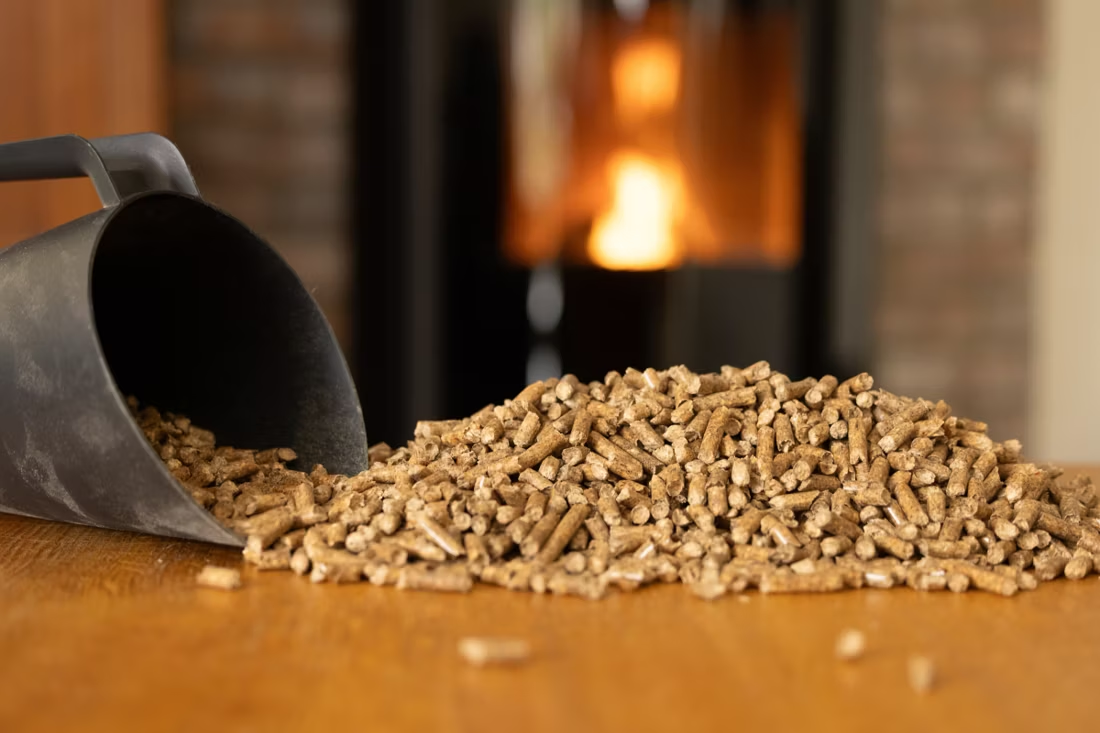
That steady demand is exactly where pellet stoves earn their keep. They hold a consistent, thermostat-set temperature through weeks of Pacific Northwest drizzle without the daily chore of hauling and splitting rounds of douglas fir or red alder. Regional pellet brands like Bear Mountain, Lignetics, and Pacific Pellet are stocked at hearth shops and hardware stores throughout the King County area, so fuel supply isn't a concern. The one tradeoff worth knowing upfront: pellet stoves run on electricity for the auger and blower, and Puget Sound Energy's service area does see windstorm-driven outages most winters—something to plan for with a battery backup or generator.
Three steps. No salesperson until you're ready.
Tell us about your project
Your zip code, your situation, and the fuel you're leaning toward—or let the answers point you to one.
See what's actually available
The brands dealers within 100 miles genuinely carry—real options, never a catalog mirage.
Get your dealer & Project Guide
A trusted local dealer, plus the free Project Guide & Parts List that names every component of the job.
Frequently Asked Questions
How much does a pellet stove installation cost in Cottage Lake?
Most pellet stove installations run in the $3,000 to $6,000 range once you account for the stove itself, a horizontal through-wall vent kit (the standard venting method for pellet appliances), a dedicated electrical outlet, and any hearth pad work required for clearance to combustibles. Pellet inserts going into an existing masonry fireplace tend to land toward the lower end since the chimney chase can sometimes be reused for venting or wiring access. A local dealer can give you a firm number after seeing your fireplace or install location.
Where do I buy pellets in Cottage Lake, and what do they cost?
Wood pellets from regional brands like Bear Mountain, Lignetics, and Pacific Pellet are widely available at hearth retailers and hardware stores throughout King County, typically running somewhere in the $250 to $350 per ton range depending on the brand and whether you buy a single bag or a full pallet (usually 50 forty-pound bags per ton). Buying your season's supply in September or October, before the first cold snap drives demand up, is the standard local strategy—a stove burning as primary heat through a Cottage Lake winter can go through 2 to 3 tons.
Will my pellet stove work during a power outage?
Not without a backup power source—pellet stoves need electricity to run the auger that feeds fuel and the blower that pushes heat into the room, so they'll shut down when the power drops. This matters in Cottage Lake specifically because Puget Sound Energy's territory sees regular windstorm-related outages, some lasting a day or more. Homeowners who want pellet heat as reliable backup heat typically pair the stove with a small battery backup unit or a portable generator sized to handle the stove's low wattage draw. If uninterrupted backup heat during outages is the top priority, a wood stove is worth comparing since it needs no electricity at all.
Are pellet stoves affected by wildfire smoke air quality advisories?
Summer and early fall wildfire smoke drifting in from eastern Washington and British Columbia is a real air quality concern around Cottage Lake, and it occasionally triggers burn restrictions from the Puget Sound Clean Air Agency. Those advisories are generally aimed at outdoor burning and older uncertified wood stoves—modern pellet stoves burn far more completely and cleanly, and are typically exempt from residential wood-burning curtailment rules. That efficiency is one of the reasons pellet stoves have become a popular alternative to wood in this part of King County.
Do I need a permit to install a pellet stove in Cottage Lake?
Yes. Because Cottage Lake is unincorporated, building permits are issued through the King County Department of Local Services rather than a city building department. A pellet stove install typically needs a mechanical or building permit for the appliance and venting, plus an electrical permit for the dedicated outlet the auger and blower require. Most established hearth dealers in the area handle this paperwork as part of the installation, which is one good reason to avoid a big-box DIY install.
What size pellet stove do I need for my Cottage Lake home?
Sizing depends on square footage, insulation, and whether the stove is your primary heat source or supplemental. As a rough guide for this climate: smaller units (rated around 40,000 BTU) suit a single room or open living area, while larger units (up to 60,000+ BTU) can handle a whole main floor in an older, less-insulated home. Because Cottage Lake's marine climate produces steady moderate cold rather than extreme cold snaps, many homeowners here find a mid-size stove on a low thermostat setting runs efficiently for weeks at a time. A local dealer will size the unit to your actual layout during an in-home visit.
Pellet stove vs. wood stove—which makes more sense here?
Wood is genuinely accessible around Cottage Lake—Mt. Baker-Snoqualmie and Olympic National Forest both issue personal-use cutting permits for $5 to $20 per cord during the May-to-October season, and douglas fir, red alder, and lodgepole pine are all common locally. But that means splitting, stacking, seasoning for a year, and manually feeding a fire. Pellet stoves trade that labor for a hopper you fill every day or two and a thermostat that holds a steady temperature automatically—at the cost of needing electricity to run. For a household without the time or space to process cordwood, pellet is usually the more practical fit; for those who already have a woodlot or want off-grid backup heat, wood still has the edge.
How much maintenance does a pellet stove need?
Pellet stoves are lower-maintenance than wood stoves but not maintenance-free. Plan on emptying the ash pan every few days during regular use, cleaning the burn pot weekly to keep the flame pattern even, and wiping down the glass as needed. Once a year—typically before the fall heating season starts—the venting, blower, and auger mechanism should get a professional inspection and cleaning, similar in spirit to an annual chimney sweep for a wood appliance. Local hearth shops that sell pellet stoves generally offer this service directly.
Pellet stove vs. electric heat—which costs less to run in Cottage Lake?
At Puget Sound Energy's residential rate of roughly 14.6 cents per kWh, running electric resistance heat through Cottage Lake's long, steady heating season adds up quickly compared to burning pellets, which typically deliver more heat per dollar of fuel. Electric heaters and electric fireplaces do win on install simplicity and upfront cost—often under $1,000 installed versus $3,000 or more for a pellet stove—so the right choice depends on whether you're heating a single room occasionally (electric) or looking for a lower-cost way to heat a larger space through the whole season (pellet).
What's the difference between an insert and a zero-clearance fireplace?
An insert is a fireplace that slides into a pre-existing wood-burning fireplace—if you don't have one, there's nothing to insert it into. A zero-clearance fireplace is built into a framed wall, which makes it the answer for remodels and new construction. Simple test: existing masonry fireplace means insert; blank or framed wall means zero-clearance.
Why is a fireplace insert so efficient?
An insert does two things: it seals the chimney completely, so you stop losing air you already paid to heat, and it radiates warmth into the room through the firebox and glass. Most add a heat-exchange fan that pulls cool room air underneath, wraps it around the hot firebox, and pushes it back out warm. Your home is more efficient before you've even lit the first fire.
Can I install a fireplace myself?
If you're putting a fire in your house on purpose, it's best to work with an expert. Unless you're genuinely experienced in framing, gas line, vent pipe, and the national code on clearances to combustibles, have a professional do it—and ideally the same company that sells you the fireplace, so warranty, service, and liability all live under one roof.
Does a fireplace add value to my home?
On average, a fireplace adds back to the home about the same amount you spent installing it. Add the monthly savings from heating the rooms you actually use instead of the whole house—often hundreds of dollars a year—and the value case is strong before you even count what a fire does for how your family uses the room.
Nearby Dealers
Hearth shops serving Cottage Lake and the surrounding area.
Rich's Stoves & Spas
Pellet Brands Stocked Around Cottage Lake
Manufacturers will point you to the nearest stocking dealer.
Find your pellet stove in Cottage Lake.
Tell us about your home and heating goals, and we'll match you with a trusted local dealer and send over a free Project Guide & Parts List—the exact stove, vent kit, and parts recommended for your Cottage Lake install.
Find Your Fireplace →