
Instant heat, zero venting, real savings in Clarkston.
Electric fireplaces and inserts built for the Lewis-Clark Valley's mild winters—no chimney, no gas line, just plug in and go. Find the right unit and connect with a trusted local dealer.
Every Project Starts From One of These Five Situations
Mild winters, modest bills, and heat where you actually need it.
Clarkston sits at the confluence of the Snake and Clearwater rivers, at just 811 feet—one of the mildest pockets in the Inland Northwest, often called the banana belt of the Palouse. Winter lows here average around 30°F and the area logs a mild, moderate-length heating season, noticeably gentler than the plateau towns above it and a fraction of the long, harsh winters places like Bismarck or International Falls see. That mildness, combined with Avista Corp's relatively moderate residential rate of $0.1187 per kWh, makes electric fireplaces a practical way to add heat to a specific room without the cost or complexity of running gas line or a chimney.
Electric units also sidestep two local headaches: chimney maintenance and wildfire smoke. Late-summer and early-fall smoke from regional fires is a recurring concern in the valley, and an electric fireplace produces zero combustion byproducts—no flue, no draw, no smoke added to a house that's already trying to keep it out. Plug-in inserts and freestanding units install in minutes; built-in wall units need an electrician for a dedicated circuit and, in some cases, a permit through Asotin County.
Three steps. No salesperson until you're ready.
Tell us about your project
Your zip code, your situation, and the fuel you're leaning toward—or let the answers point you to one.
See what's actually available
The brands dealers within 100 miles genuinely carry—real options, never a catalog mirage.
Get your dealer & Project Guide
A trusted local dealer, plus the free Project Guide & Parts List that names every component of the job.
Frequently Asked Questions
How much does an electric fireplace installation cost in Clarkston?
Plug-in electric inserts and freestanding stoves that run off a standard 120V outlet typically cost $300 to $1,200 installed in Clarkston, with most of that being the unit itself since there's no venting or gas line involved. Built-in wall units or full mantel packages that need a dedicated 240V circuit run higher, generally $1,500 to $4,000, once you factor in electrician time to add the circuit plus any framing or trim work. Because there's no chimney, flue, or gas line to install, electric consistently comes in as the least expensive fireplace category in the valley.
Will an electric fireplace actually heat my house in Clarkston's winters?
For the room it's in, yes, most of the season. Clarkston sits at just 811 feet in the Lewis-Clark Valley, one of the mildest spots in the Inland Northwest, with winter lows averaging around 30°F and a mild, moderate-length heating season—nothing close to what a place like Bozeman or Fargo deals with. A 1,500-watt electric unit provides real supplemental heat for a living room, bonus room, or addition. What it won't do is replace a furnace on a hard freeze night; electric fireplaces are built for zone heating, not whole-house heating.
Do I need a permit to install an electric fireplace in Clarkston?
Usually not. A plug-in electric insert or freestanding unit that runs off an existing outlet typically doesn't require a permit. If you're adding a built-in unit that needs a new dedicated circuit, an electrician will pull an electrical permit through Asotin County, and that circuit work should always go to a licensed electrician rather than a DIY job. Avista's residential service can generally absorb the added load, but your electrician will confirm panel capacity before starting.
Will my electric fireplace work if the power goes out?
No, and this is the real tradeoff with electric heat. Unlike a wood stove or a gas fireplace with battery-backed ignition, an electric fireplace has no independent heat source, so it goes dark the moment power drops. For Clarkston homes that want backup heat during a winter outage, it's worth pairing an electric unit in one room with a wood stove or gas insert elsewhere in the house, or having a generator plan for the coldest stretches.
What's the difference between an electric fireplace insert and a wall-mounted electric fireplace?
An insert is built to slide into an existing masonry fireplace opening or zero-clearance firebox, turning an old wood-burning fireplace into a clean, maintenance-free heat source without touching the chimney. A wall-mounted or built-in unit is framed into new construction or a remodel, often with a modern linear look. For Clarkston homes with an existing fireplace they want to simplify, an insert is the more direct upgrade. For additions or new rooms, a built-in wall unit offers more design flexibility.
How much does it cost to run an electric fireplace in Clarkston?
Avista Corp, the local electric utility, charges Clarkston customers around $0.1187 per kWh—a moderate rate for the region. A typical 1,500-watt electric fireplace running on high draws about 1.5 kWh per hour, or roughly 18 cents an hour at that rate. Run four hours an evening through a mild Lewis-Clark Valley winter and you're looking at somewhere around $15 to $25 a month, well under what it costs to heat an equivalent space with baseboard electric or an all-electric furnace.
What size electric fireplace do I need for my room?
Most electric fireplaces are rated for 400 to 1,000 square feet under ideal conditions, but an open floor plan or a room with high ceilings and older single-pane windows—common in Clarkston's older valley-floor homes—will need the higher end of that range or a supplemental unit. A 1,500-watt model is typically enough as supplemental heat for a standard living room; a local retailer can match wattage to your actual room and insulation during a quick consultation.
Are electric fireplaces a good option during wildfire smoke season?
Yes, and it's one of the more practical local reasons to choose one. Clarkston's late summers and early falls bring wildfire smoke from regional fires, and running a wood stove on a bad air day adds more smoke to a house already trying to keep it out. An electric fireplace produces zero combustion byproducts, so you get the ambiance and supplemental warmth without opening a flue or drawing outside air into the house.
Electric vs. gas vs. wood—which is right for my Clarkston home?
Wood is the traditional choice in this valley—ponderosa pine, lodgepole pine, and Douglas fir are all available locally, and cutting permits through the Nez Perce-Clearwater National Forests run $5 to $20 a cord—but it means chimney upkeep and smoke during a season when wildfire smoke is already a concern. Gas delivers instant, code-compliant heat, with battery-backup options that keep working through an outage, but it needs a gas line or propane tank. Electric is the simplest and cheapest to install, with no venting, no fuel storage, and modest running costs on Avista's rate—the tradeoff is no heat during a power outage, and it works best as supplemental rather than primary heat. Plenty of Clarkston homeowners land on electric for a bedroom or bonus room and keep wood or gas for the main living space.
Can I put a TV above my fireplace?
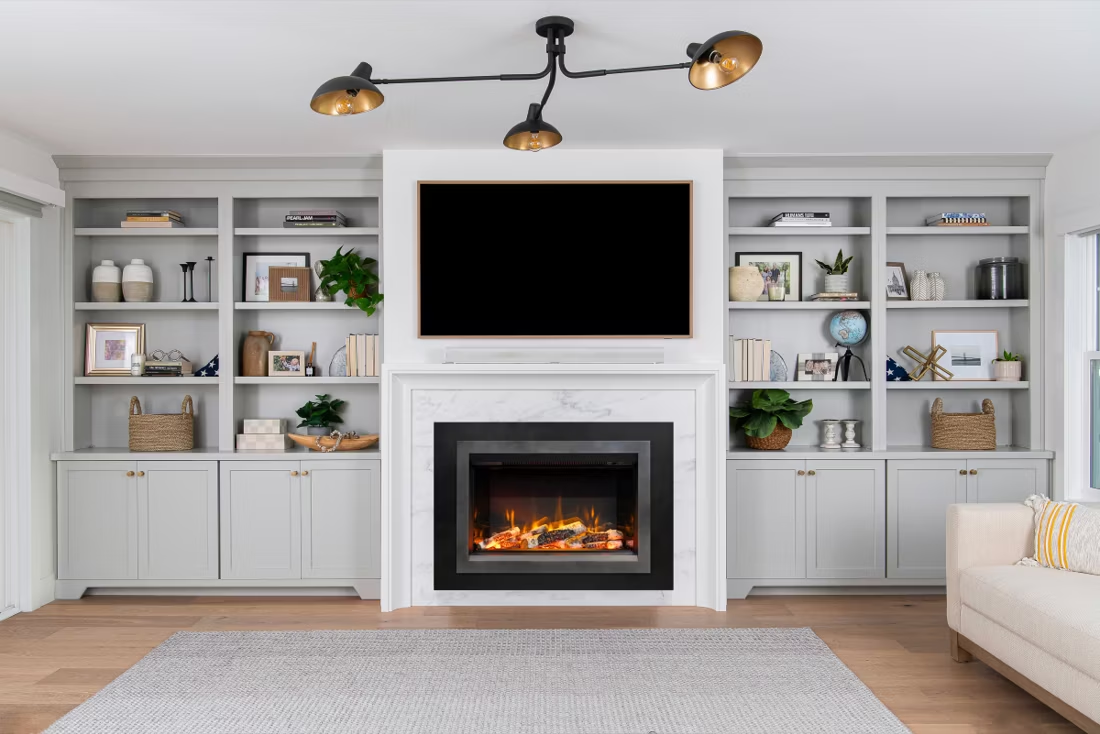
Yes—with an asterisk. Fireplaces are hot and TVs don't like heat. Either put a mantel between them to deflect rising warmth, or choose a fireplace with heat-management technology that creates a cool zone on the wall above—the wall stays around 125 degrees, barely warm, while the room still gets full heat. If you like clean lines and don't want a mantel, heat management is the answer.
Do electric fireplaces actually produce heat?
Yes—most put out around 4,800–5,000 BTUs from a standard outlet, which comfortably warms a bedroom, office, or den as a comfort-zone heater. What they won't do is carry a whole house the way wood, gas, or pellet can. Think of electric as ambiance-first with honest supplemental heat: flames on with no heat in July, flames plus warmth in January.
Can a fireplace actually lower my heating bill?
Yes—by creating a comfort zone. A furnace heats every square foot of the house just to warm the one room you're in; a gas fireplace on low burns roughly a sixth of the gas a typical furnace does. Set the furnace around 55–60 degrees as a baseline, then heat the rooms your family actually uses. Families who heat this way commonly save $20–$60 a month.
Does a fireplace add value to my home?
On average, a fireplace adds back to the home about the same amount you spent installing it. Add the monthly savings from heating the rooms you actually use instead of the whole house—often hundreds of dollars a year—and the value case is strong before you even count what a fire does for how your family uses the room.
Nearby Dealers
Hearth shops serving Clarkston and the surrounding area. Every listing shows whether it is a WhyFire partner, a dealer we have verified as authorized for the brands we recommend, or a local business carrying hearth products. No manufacturer pays for placement. How we verify dealers →
Welenco Stove Store
Panhandle Heating Solutions LLC
Moscow Building Supply
Pullman Heating
Electric Service in Clarkston
An electric fireplace's heater draws about 1,500 watts—pennies per hour at local rates.
Avista Corp
Find your electric fireplace in Clarkston.
Tell us a bit about your home and we'll match you with the right electric fireplace or insert—and connect you with a trusted local dealer who can get it installed correctly.
Find Your Fireplace →