
Heating solutions for every home along the Snake River.
Wood, gas, pellet, and electric fireplace resources for Clarkston, Asotin, and the smaller communities tucked into the canyon country of Asotin County. Find the right unit and get matched with a trusted local hearth retailer.
Every Project Starts From One of These Five Situations
Canyon-country winters in Asotin County, Washington.
Asotin County sits at the confluence of the Snake and Clearwater rivers in southeastern Washington, where the terrain runs from the river valley near Clarkston up into the forested canyon rim toward the Nez Perce-Clearwater National Forests in Idaho. Winters here are meaningfully milder than places like Bozeman or Fargo, but the average winter low still dips to around 30°F, and cold snaps off the canyon rim can drop temperatures fast. Ponderosa pine, lodgepole pine, and Douglas fir from the surrounding forestland are the common firewood species, and wildfire smoke in late summer and fall shapes how residents think about air quality and burning windows the rest of the year.
What you'll find on this hub: hearth retailers, service technicians, and fuel suppliers serving communities across the county—from Clarkston and Asotin along the river to the smaller unincorporated areas up toward the canyon rim. Pick your fuel below to drill into specifics—local dealers, installation costs, recommended units, and the resources that match your project. Whether you're heating a riverfront home in Clarkston or a place up toward the forest boundary, this is the starting point.
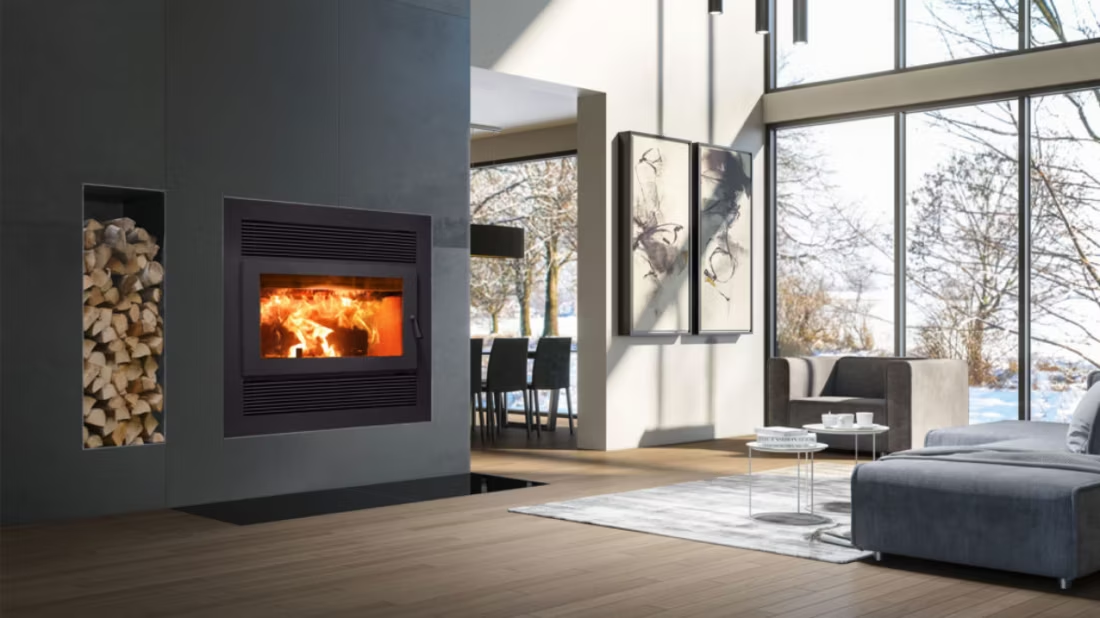
Four fuels. One honest answer for Asotin County.
Three steps. No salesperson until you're ready.
Tell us about your project
Your zip code, your situation, and the fuel you're leaning toward—or let the answers point you to one.
See what's actually available
The brands dealers within 100 miles genuinely carry—real options, never a catalog mirage.
Get your dealer & Project Guide
A trusted local dealer, plus the free Project Guide & Parts List that names every component of the job.
Frequently Asked Questions
Which fuel works best in Asotin County?
It depends on your home and priorities, but the county supports all four fuel types reasonably well. Wood is a natural fit given the ponderosa pine, lodgepole pine, and Douglas fir supply from the surrounding national forestland—a catalytic or non-cat stove handles the occasional canyon cold snap and gives you heat during a power outage. Gas is the convenience pick for homes in Clarkston with natural gas service or those running propane out toward the rim—instant heat, no wood handling. Pellet is a strong middle option here, with Bear Mountain and Lignetics both regionally available, and it's a good match for a county where winters are cold but not extreme—you get consistent heat without stacking a woodpile. Electric works well as a supplemental unit in bedrooms or secondary living spaces, though with a winter heating load well below places like Bozeman or Fargo, it's rarely anyone's sole heat source. Many households pair wood or pellet as primary with gas or electric for convenience rooms.
Do I need a permit to install a fireplace in Asotin County?
In most cases, yes. New wood stoves, wood inserts, gas fireplaces, gas inserts, gas stoves, and pellet stoves generally require a building permit, and gas installations need a separate gas line permit completed by a licensed gas-fitter. Wood-burning appliances installed new must meet current EPA emissions standards—older uncertified stoves can't be installed as new units. Electric fireplaces usually skip the permit process unless you're doing a built-in installation that requires new wiring or a dedicated circuit. Permitting runs through the city of Clarkston for in-city addresses and through Asotin County for unincorporated areas out toward the canyon rim. Most local hearth retailers handle this paperwork as part of the installation, so it's rarely something homeowners have to manage themselves.
Does wildfire smoke affect wood burning in Asotin County?
Not in the way winter inversions do in some parts of the Northwest, but it shapes the season differently here. Late-summer and fall wildfire smoke drifting through the Snake River canyon can push local air quality into unhealthy ranges well before the heating season even starts, and it's a reminder for wood-burning households to keep firewood cured and ready ahead of smoke season rather than scrambling once cold weather hits. Once winter arrives, burning restrictions in Asotin County are less about daily advisories and more tied to standard EPA-certified stove requirements for new installations. If you're burning wood as a primary heat source, well-seasoned Douglas fir or ponderosa pine and a properly sized, EPA-certified stove will burn cleaner and produce less visible smoke than an older uncertified unit.
Can one local hearth retailer handle all four fuel types?
Several dealers serving the Clarkston-Lewiston valley carry multiple fuel types, which makes cross-shopping easier if you're not sure yet whether wood, gas, pellet, or electric is the right fit. A retailer that stocks all four can walk you through working displays and talk through the trade-offs for your specific home—whether that's a riverfront place in Clarkston with natural gas access or a property closer to the Nez Perce-Clearwater National Forests where wood or pellet makes more practical sense. Smaller specialty shops may focus on two or three fuels rather than all four, so it's worth confirming fuel coverage before you drive out for a consultation—the county + fuel pages above list which dealers carry which fuel.
How does service work for homes outside Clarkston and Asotin?
Most service technicians covering Asotin County are based in the Clarkston-Lewiston valley and travel out to more rural addresses toward the canyon rim and county line. Expect a modest travel fee for calls farther from the valley floor, and know that scheduling gets tighter in the weeks right before the first hard cold spell. Booking your annual chimney sweep or gas inspection in late summer or early fall—before smoke season complicates travel and before the pre-winter rush—is the easiest way to get a convenient appointment. If you're in a more remote spot, it's also worth asking your installer about backup heat options, since a wood or pellet stove can keep a home warm if the power goes out.
What's the typical cost range for fireplace installation across all fuel types in Asotin County?
Costs vary by fuel and by how much venting or gas line work is involved. Wood stove or insert installation: roughly $4,000–$8,500 for a typical retrofit, more if new chimney construction is required. Gas fireplace, insert, or stove: roughly $4,000–$10,000 depending on whether a new gas line needs to be run; conversions where gas service already exists land on the lower end. Pellet stove or insert: roughly $4,000–$7,000 for most installs. Electric fireplace: $200–$3,000 for the unit itself, plus $400–$1,200 in labor for anything beyond a simple plug-and-play setup. For details specific to your fuel, see the county + fuel pages above, which tie cost breakdowns to local retailer pricing.
Can I install a fireplace myself?
If you're putting a fire in your house on purpose, it's best to work with an expert. Unless you're genuinely experienced in framing, gas line, vent pipe, and the national code on clearances to combustibles, have a professional do it—and ideally the same company that sells you the fireplace, so warranty, service, and liability all live under one roof.
Wood, gas, pellet, or electric—how do I choose?
Match the fuel to your life, not the other way around. Wood: lowest fuel cost and total power-outage independence, but you're hauling and stacking. Gas: press a button, set a thermostat, no maintenance to speak of. Pellet: wood economics with automatic feeding, in exchange for weekly cleaning and a need for electricity. Electric: plugs in anywhere with honest supplemental heat. Nobody regrets the fuel that fits how they actually live.
Does a fireplace add value to my home?
On average, a fireplace adds back to the home about the same amount you spent installing it. Add the monthly savings from heating the rooms you actually use instead of the whole house—often hundreds of dollars a year—and the value case is strong before you even count what a fire does for how your family uses the room.
Can a fireplace actually lower my heating bill?
Yes—by creating a comfort zone. A furnace heats every square foot of the house just to warm the one room you're in; a gas fireplace on low burns roughly a sixth of the gas a typical furnace does. Set the furnace around 55–60 degrees as a baseline, then heat the rooms your family actually uses. Families who heat this way commonly save $20–$60 a month.
Stove and Fireplace Dealers in Asotin County
Listings include WhyFire partner dealers, dealers we have verified as authorized for the brands we recommend, and established local businesses that carry hearth products. Every listing shows which one it is. The ones marked Preferred run on WhyFire's software, so they can show you real pricing and book your appointment right here. No manufacturer pays for placement. How we verify dealers →
Welenco Stove Store
Panhandle Heating Solutions LLC
Pullman Heating
Moscow Building Supply
Find your fireplace in Asotin County.
Pick your fuel below and I'll match you with a trusted local dealer and put together a free Project Guide & Parts List—the exact parts, including the vent kit, for your project.
Find Your Fireplace →