
Find your pellet stove in Chelan County.
Clean-burning, thermostat-controlled heat for the orchard valleys around Wenatchee, the Bavarian streets of Leavenworth, and the shores of Lake Chelan. Find the right pellet stove or insert and connect with a trusted local dealer.
Every Project Starts From One of These Five Situations
The clean-burning choice for Chelan County winters.
Chelan County runs from the orchard-covered benches along the Columbia River near Wenatchee and Cashmere, up through the Wenatchee Valley to Leavenworth, and into the high country around Lake Chelan, Manson, and the roadless community of Stehekin at the lake's head. Elevations swing from under 700 feet at the river to well over 5,000 feet in the surrounding Cascades, and winter lows average around 26°F countywide with a heating season similar in length to Boise. Summers bring a different challenge: wildfire smoke that regularly settles into the valley and triggers regional air quality advisories.
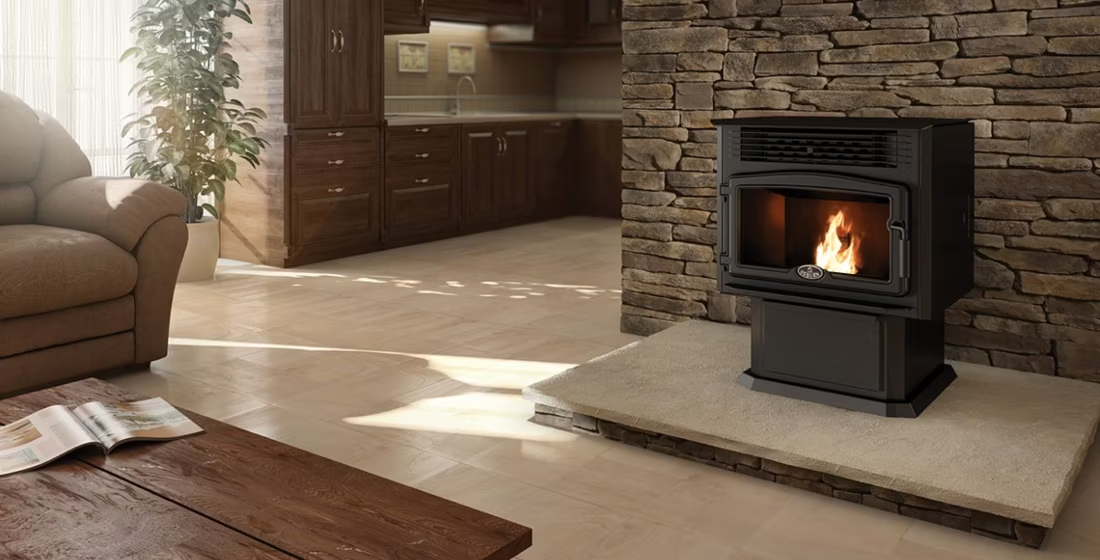
That wildfire-smoke reality is part of why pellet stoves have caught on across the county. Pellet appliances burn compressed fuel—typically sourced from regional producers like Bear Mountain, Lignetics, and Pacific Pellet, all of which supply Pacific Northwest markets—at a combustion efficiency that produces a fraction of the particulate output of an open wood fire. During the county's periodic burn-restriction days, EPA-certified pellet stoves are often exempt from the curtailments that apply to traditional wood stoves. You also skip the chainsaw and woodshed entirely, though a cutting permit through Okanogan-Wenatchee National Forest is available for $5 to $20 per cord if you'd rather harvest your own ponderosa pine, lodgepole pine, or Douglas fir. Between the cleaner burn, the thermostat control, and the availability of Chelan County PUD's low-cost hydro power to run the auger and blower, pellet has earned a steady place alongside wood and gas here.
Three steps. No salesperson until you're ready.
Tell us about your project
Your zip code, your situation, and the fuel you're leaning toward—or let the answers point you to one.
See what's actually available
The brands dealers within 100 miles genuinely carry—real options, never a catalog mirage.
Get your dealer & Project Guide
A trusted local dealer, plus the free Project Guide & Parts List that names every component of the job.
Frequently Asked Questions
How much does a pellet stove installation cost in Chelan County?
Pellet stove and insert installations typically run $3,000 to $6,500 depending on the unit, whether it's a freestanding stove or a conversion into an existing wood fireplace, and how much venting work the horizontal pellet vent kit requires through an exterior wall. Straightforward exterior-wall venting in a Wenatchee or Cashmere home tends toward the lower end; older Leavenworth-area homes needing masonry modification or a longer vent run push toward the higher end. A local dealer will give you a firm number after seeing the install location.
Where can I buy pellet fuel in Chelan County?
Regional brands including Bear Mountain, Lignetics, and Pacific Pellet are widely stocked at hardware stores, farm and ranch suppliers, and hearth dealers throughout the Wenatchee Valley and up toward Chelan and Leavenworth. Most homeowners buy pellets by the ton (roughly 50 forty-pound bags) in late summer or early fall, before mountain roads and passes see winter weather—a common practice given how quickly local dealers can sell through inventory once the first cold snap hits.
Will my pellet stove work during a power outage?
Not without a backup power source. Pellet stoves rely on an electric auger to feed fuel and a blower to circulate heat, so a power outage stops the stove even with a full hopper. This matters in Chelan County, where winter storms in the Cascade foothills and around Stevens Pass access roads can knock out power for hours, and where communities like Stehekin—reachable only by boat, floatplane, or trail—have no road-based utility backup at all. A small battery backup or portable generator sized for the stove's low wattage draw solves the problem for most homes; a local dealer can recommend a compatible setup, and Chelan County PUD's outage maps are worth checking during storm season.
Do I need a permit to install a pellet stove in Chelan County?
Yes—a building permit is required for new pellet stove and insert installations in Chelan County, and the unit needs to meet current EPA certification standards. Most local dealers handle the permitting as part of the install. You don't need a permit to operate the stove day to day, and because certified pellet appliances burn far cleaner than open wood fires, they're commonly exempt from the wood-burning curtailments issued during summer wildfire-smoke advisories—a real advantage during the county's smokiest stretches.
Pellet stove vs. wood stove—which is right for my Chelan County home?
Wood stoves work without electricity, which matters for backup heat during a power outage, and pair well with self-cut ponderosa pine, lodgepole pine, or Douglas fir from a Forest Service permit through Okanogan-Wenatchee National Forest (typically $5 to $20 per cord, May through October). Pellet stoves require electricity to run but burn cleaner, need less daily tending, and are frequently exempt from burn restrictions during the wildfire-smoke advisories that hit the Wenatchee Valley most summers. For a primary living space where convenience and air quality matter, pellet often wins; for a cabin, shop, or backup-heat scenario where grid power isn't guaranteed, wood still has the edge.
What size pellet stove do I need for my home?
Sizing depends on square footage, insulation, and elevation. Homes in the lower Wenatchee Valley and along the Columbia River near Cashmere and Entiat generally do fine with a mid-size unit for the main living area, while higher-elevation homes near Plain, Lake Wenatchee, or the Stevens Pass corridor typically need to size up given colder overnight lows and more exposure. A local dealer will walk your space and factor in ceiling height and layout—oversizing leads to a stove that cycles constantly and wastes fuel, while undersizing leaves you running the auger at full output just to keep pace on the coldest nights.
Does the brand of pellet fuel matter?
Yes, more than most people expect. Premium-grade pellets from brands like Bear Mountain typically have lower ash content and burn more consistently, which means less frequent burn-pot cleaning and more even heat output. Standard-grade pellets from regional suppliers like Lignetics or Pacific Pellet are usually less expensive and perform fine in most stoves, but tend to leave more ash and clinkers, especially in older units. Because Chelan County's dry eastern-Washington climate is good for pellet storage, buying a season's supply early and keeping bags off concrete and away from moisture is generally all you need to preserve fuel quality through winter.
How much maintenance does a pellet stove need?
Plan on emptying the ash pan and cleaning the burn pot every one to two weeks during regular winter use, and a full professional inspection and cleaning once a year, ideally before the heating season starts. The auger, hopper, and combustion blower should be checked annually for wear as well. Pellet stoves are lower-maintenance than wood stoves overall—no chimney creosote buildup to worry about—but the mechanical components (auger motor, igniter, blower) do need occasional service, which most local dealers offer as part of an annual service plan.
What's the difference between a pellet stove and a pellet insert?
A pellet stove is a freestanding unit that sits on its own hearth pad and vents horizontally through an exterior wall—it can go almost anywhere with a nearby outside wall. A pellet insert is built to slide into an existing masonry fireplace opening, converting an old wood-burning fireplace into an automated, thermostat-controlled heat source while reusing the existing chimney chase for venting. For Chelan County homes with an existing fireplace—common in older Wenatchee and Cashmere houses—an insert is usually the simpler retrofit. Homes without an existing fireplace are better suited to a freestanding stove.
Why is my open fireplace making my house colder?
Open fireplaces suck—literally. As the fire burns, it consumes air your furnace already paid to heat and pulls it out through the chimney, so the house is actually colder after the fire goes out than before you lit it. An insert fixes this: it seals the chimney, puts fixed glass across the front, and turns that hole in your house into a real heat source.
What's the difference between an insert and a zero-clearance fireplace?
An insert is a fireplace that slides into a pre-existing wood-burning fireplace—if you don't have one, there's nothing to insert it into. A zero-clearance fireplace is built into a framed wall, which makes it the answer for remodels and new construction. Simple test: existing masonry fireplace means insert; blank or framed wall means zero-clearance.
How much should I budget for a fireplace?
For an average home—covering the fireplace, the vent pipe, and basic installation—a budget between $3,900 and $5,500 gives you a lot of options across wood, gas, and pellet. By the time you add finish work, gas line, and electrical, the average complete installation lands between $5,000 and $12,000 all-in. In a remodel or new build, a good rule is to put about 2.5% of the total project cost toward the fireplace.
Can a fireplace actually lower my heating bill?
Yes—by creating a comfort zone. A furnace heats every square foot of the house just to warm the one room you're in; a gas fireplace on low burns roughly a sixth of the gas a typical furnace does. Set the furnace around 55–60 degrees as a baseline, then heat the rooms your family actually uses. Families who heat this way commonly save $20–$60 a month.
Stove and Fireplace Dealers in Chelan County
Listings include WhyFire partner dealers, dealers we have verified as authorized for the brands we recommend, and established local businesses that carry hearth products. Every listing shows which one it is. The ones marked Preferred run on WhyFire's software, so they can show you real pricing and book your appointment right here. No manufacturer pays for placement. How we verify dealers →
Seasonally Living By Chim Chimney
Patriot Plumbing, Heating & Cooling Inc.
Big R - Wenatchee
Pellet Brands Stocked Around Chelan County
Manufacturers will point you to the nearest stocking dealer.
Find your pellet stove in Chelan County.
Tell us a bit about your home and we'll match you with the right pellet stove or insert, plus a free Project Guide & Parts List—the exact parts, including the vent kit, and a recommended local Chelan County dealer to install it.
Find Your Fireplace →