
Steady, hands-off heat for Burbank winters.
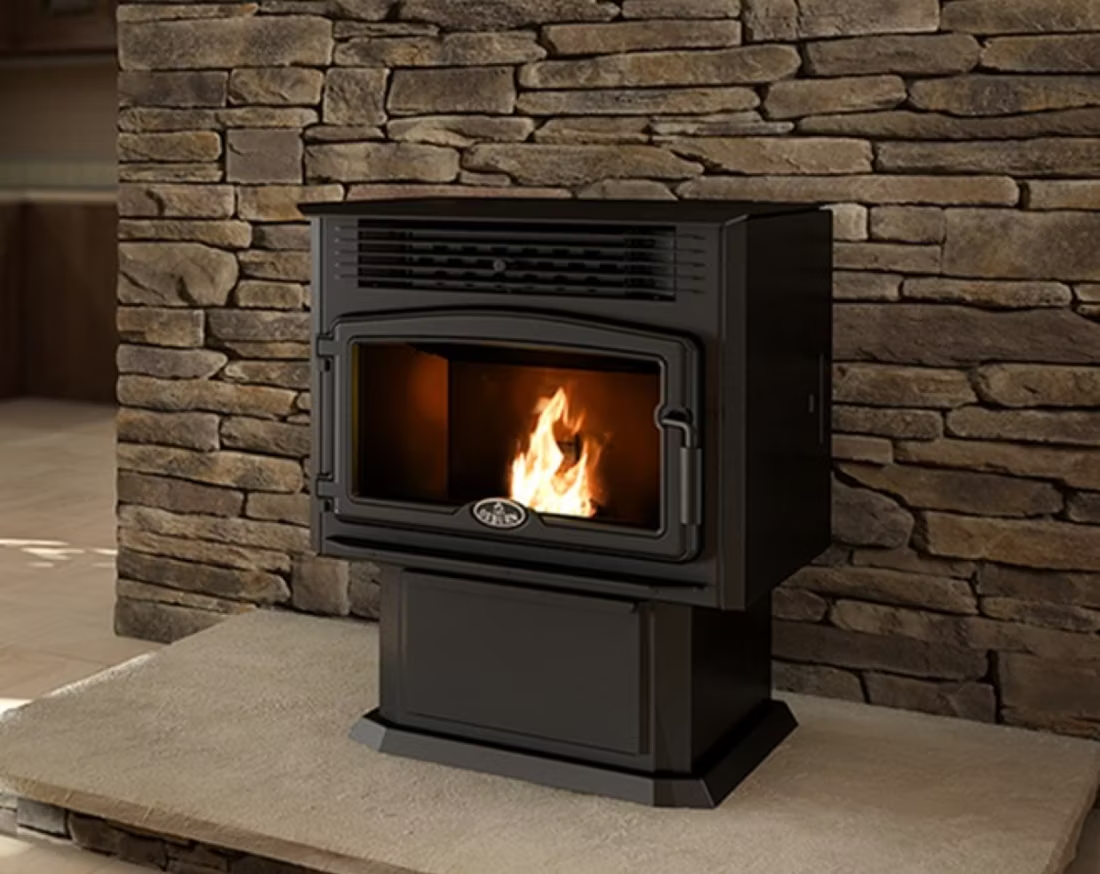
Burbank sits along the Snake and Columbia Rivers in Walla Walla County, where winter lows average in the high 20s and the heating season runs a solid four to five months a year. A pellet stove or insert delivers thermostat-controlled warmth without a wood pile or a chimney sweep—find the right unit and a vetted local dealer to install it.
Every Project Starts From One of These Five Situations
Steady warmth in the Walla Walla River valley.
Burbank is an unincorporated community at the confluence of the Snake and Columbia Rivers, sitting at just 347 feet of elevation in southeastern Washington's Walla Walla County. Winters here are milder than the Cascade foothills or the Rockies—average lows hover around 29°F and the area sees a winter heating season closer to a Willamette Valley winter than a deep cold-climate one like Bozeman, MT. Still, that's enough sustained cold for four to five months a year that a dedicated heat source matters, and pellet stoves have become a popular middle ground between wood's mess and propane's cost.
Because Burbank has no listed natural gas utility, most rural homes here run on propane, electric heat through Columbia Rural Electric Association, or wood. A pellet stove sidesteps the propane tank and the firewood stacking, running instead on bagged pellets from regional producers like Bear Mountain, Lignetics, and Pacific Pellet—all distributed through Tri-Cities and Walla Walla area farm and hardware stores. The tradeoff is that pellet stoves need electricity to run the auger and combustion blower, which matters here given how wind events through the Columbia Gorge occasionally knock out rural power lines.
Three steps. No salesperson until you're ready.
Tell us about your project
Your zip code, your situation, and the fuel you're leaning toward—or let the answers point you to one.
See what's actually available
The brands dealers within 100 miles genuinely carry—real options, never a catalog mirage.
Get your dealer & Project Guide
A trusted local dealer, plus the free Project Guide & Parts List that names every component of the job.
Frequently Asked Questions
How much does a pellet stove installation cost in Burbank?
Most pellet stove and insert installations in Burbank run $3,500 to $7,000, with the low end covering a freestanding stove vented through an exterior wall with 3-inch or 4-inch PL-vent pipe, and the higher end covering a pellet insert set into an existing masonry fireplace with a stainless liner. Because pellet stoves don't need a full masonry chimney, venting costs are typically lower than a wood stove install—the horizontal wall-vent kit most installers use is simpler and cheaper than running Class A pipe through a roof. A local dealer will give you a firm number after seeing your hearth and wall layout.
Where do I buy pellets in the Burbank area, and what do they cost?
Regional brands like Bear Mountain, Lignetics, and Pacific Pellet are the most common bags on shelves at farm supply and hardware stores throughout the Tri-Cities and Walla Walla area. Expect to pay roughly $250 to $375 per ton depending on the brand and whether you buy single bags or a full ton pallet during the fall pre-season sale. A typical Burbank home burns 1.5 to 3 tons per heating season depending on square footage and whether the stove supplements or replaces central heat.
Do I need a permit to install a pellet stove in Burbank?
Yes. Burbank is unincorporated, so building permits go through the Walla Walla County Community Development Department rather than a city office. A pellet stove installation typically requires a mechanical/building permit covering the appliance listing, clearances, and the vent termination point—most local dealers pull this permit as part of the install. Unlike wood stoves, pellet stoves are generally exempt from air quality curtailment periods because they burn cleaner and more consistently.
Will my pellet stove still work if the power goes out?
Not without a backup plan. Pellet stoves rely on an electric auger to feed fuel and a blower to distribute heat, so a power outage shuts the stove down even with a full hopper. This is worth thinking through in Burbank, where Columbia Rural Electric Association service can see outages during Gorge wind events. Options include a battery backup or small UPS unit sized for the stove's low wattage draw, or a portable generator. If uninterrupted heat during outages is the priority, a wood stove might be worth comparing alongside the pellet option.
What size pellet stove do I need for my Burbank home?
Sizing depends on square footage and how well-insulated the home is, but Burbank's climate is milder than much of eastern Washington—a winter heating season closer to a Willamette Valley winter than an inland mountain one. Small pellet stoves (under 1,000 sq ft) suit a single room or a manufactured home; medium units (1,000-1,800 sq ft) cover most Burbank ranch and split-level homes; larger units handle bigger open floor plans. A local dealer will walk your home and size the stove based on ceiling height, window area, and whether you want primary or supplemental heat.
Should I get a pellet stove or a wood stove instead?
Wood is still common around Burbank—ponderosa pine, lodgepole pine, and Douglas fir are all cut locally, and permits through the Umatilla National Forest run about $20 per 4 cords during the May-through-October cutting season. Wood is cheaper if you're willing to cut, split, stack, and feed a firebox by hand, and it keeps working during a power outage. A pellet stove trades that labor for convenience: load a 40-pound bag into the hopper, set a thermostat, and let it run for 24-plus hours unattended. For a lot of Burbank households, especially those without a truck and a woodlot, pellet wins on time saved even though the fuel costs a bit more per BTU.
Are there any air quality restrictions on pellet stoves in Burbank?
Burbank's main air quality concern is summer wildfire smoke rather than winter wood-smoke inversions, so there isn't the kind of burn-ban culture you'd find in a basin like Klamath Falls, OR. Pellet stoves are EPA-certified appliances that burn far cleaner than open wood fires or older uncertified wood stoves, and they're generally exempt from any curtailment periods that do apply to wood burning in Washington. That said, keep the stove serviced and the exhaust vent clear—even clean-burning appliances add to particulate levels on the worst wildfire-smoke days.
How much maintenance does a pellet stove need?
Less than a wood stove, but it's not zero-maintenance. Plan on emptying the ash pan every few days during heavy use, wiping the glass weekly, and vacuuming the burn pot and heat exchanger tubes monthly. Once a season—usually before fall heating season starts—a technician should clean the auger, inspect the venting, and check the gaskets and blower motor. Because there's no masonry chimney involved, you skip the annual CSIA chimney sweep that wood stoves require, which is one of the appeal points for Burbank homeowners who don't want that yearly chore.
Are there rebates available for pellet stoves in Burbank?
Check with Columbia Rural Electric Association directly, since member-owned co-ops in Washington sometimes offer efficiency rebates or low-interest financing for qualifying heating upgrades, including EPA-certified pellet appliances. Washington State also periodically runs weatherization and clean-heat incentive programs through the Department of Commerce that can apply to pellet stove replacements of older wood stoves. Availability and amounts change year to year, so a local dealer who's filed the paperwork before is often the fastest way to find out what you currently qualify for.
How often does a pellet stove need cleaning?
A clean pellet stove is a happy pellet stove. Plan on cleaning the burn pot about once a week when you're burning regularly—ash and clinkers gum up the air holes just like a pellet barbecue. Most pellet stove problems trace back to skipped cleaning that nobody explained up front. Some designs make it easy with a trapdoor burn pot: pull a lever and the gunk drops into the ash pan.
Why is a fireplace insert so efficient?
An insert does two things: it seals the chimney completely, so you stop losing air you already paid to heat, and it radiates warmth into the room through the firebox and glass. Most add a heat-exchange fan that pulls cool room air underneath, wraps it around the hot firebox, and pushes it back out warm. Your home is more efficient before you've even lit the first fire.
Can a fireplace actually lower my heating bill?
Yes—by creating a comfort zone. A furnace heats every square foot of the house just to warm the one room you're in; a gas fireplace on low burns roughly a sixth of the gas a typical furnace does. Set the furnace around 55–60 degrees as a baseline, then heat the rooms your family actually uses. Families who heat this way commonly save $20–$60 a month.
Can I install a fireplace myself?
If you're putting a fire in your house on purpose, it's best to work with an expert. Unless you're genuinely experienced in framing, gas line, vent pipe, and the national code on clearances to combustibles, have a professional do it—and ideally the same company that sells you the fireplace, so warranty, service, and liability all live under one roof.
Nearby Dealers
Hearth shops serving Burbank and the surrounding area. Every listing shows whether it is a WhyFire partner, a dealer we have verified as authorized for the brands we recommend, or a local business carrying hearth products. No manufacturer pays for placement. How we verify dealers →
Dayco Heating
Legacy Pool & Spa LLC
Apollo Heating & Air Conditioning
Bruce Heating & Ac
Campbell & Company, Inc.
Fire & Water
Total Energy Mgmnt
Young's Heating & Cooling
Tires Shop Center
Pellet Brands Stocked Around Burbank
Manufacturers will point you to the nearest stocking dealer.
Find your pellet stove in Burbank.
Tell us about your home and heating goals, and we'll match you with a trusted local dealer plus a free Project Guide & Parts List—the exact stove, vent kit, and hearth components for your Burbank install.
Find Your Fireplace →