
Keep Your Family Warm and Safe—No Matter What
Mild winters and citywide natural gas service mean most Bellevue homes skip wood heat entirely. For the homeowners who still want it—for backup power, ambiance, or an older fireplace—we'll connect you with a local dealer who knows the rules.
Every Project Starts From One of These Five Situations
Wood-burning is the exception in Bellevue's mild, gas-heavy market.
Bellevue sits at just 340 feet in the Puget Sound lowlands, in climate zone 4C, with average winter lows around 37°F and a fairly mild, modest winter heating load—nowhere close to the cold of places like Duluth, MN or Fargo, ND, where wood heat carries a household through months of sub-zero nights. Puget Sound Energy's natural gas network reaches nearly every neighborhood from Medina to Eastgate, and most homes built across zip codes like 98006, 98007, and 98008 were designed with gas or electric heat as the default from day one. On top of that, the Puget Sound Clean Air Agency enforces burn bans across King County during winter inversions when fine particulate builds up over the lowlands, and older, uncertified stoves face increasing restrictions, including required removal at resale in some cases.
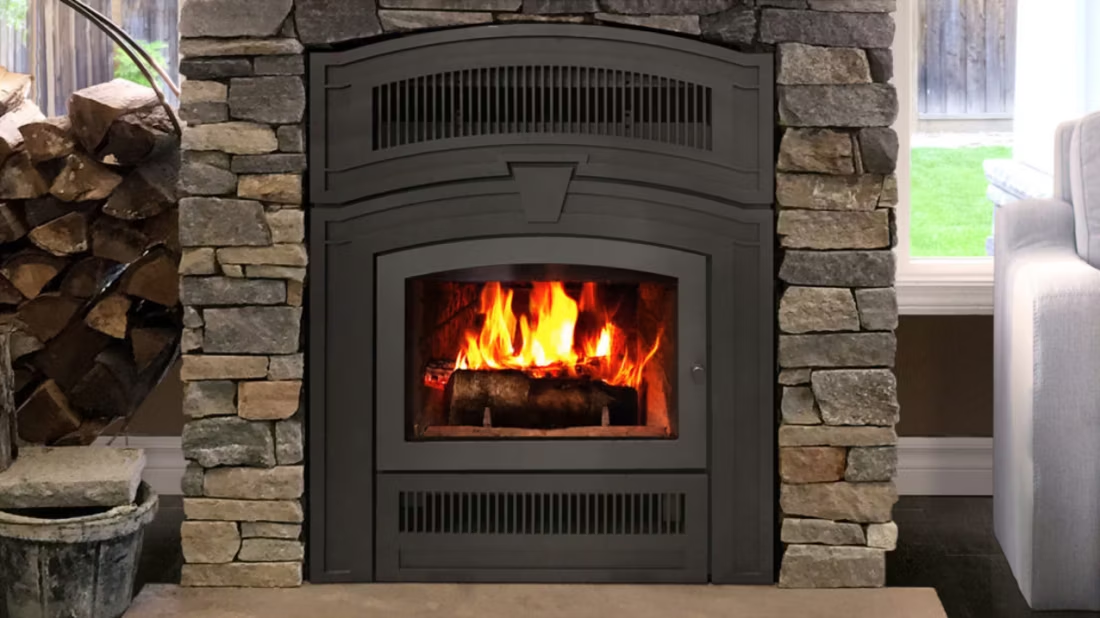
That doesn't mean wood heat has disappeared from Bellevue entirely. Owners of older homes near Somerset, Newport Hills, or West Bellevue with an existing masonry fireplace sometimes install an EPA-certified wood insert as backup heat for the windstorm-driven outages that occasionally hit the Puget Sound Energy grid, or simply for the appeal of a real, radiant fire. A smaller number of properties with more acreage toward the Sammamish plateau edge or Cougar Mountain use a wood stove to heat a shop or detached space. For most Bellevue households, though, wood is a deliberate, secondary choice—one worth making with a clear understanding of local burn-ban rules and a certified installer who works within them.
Firewood Cutting Permits Near Bellevue
Three steps. No salesperson until you're ready.
Tell us about your project
Your zip code, your situation, and the fuel you're leaning toward—or let the answers point you to one.
See what's actually available
The brands dealers within 100 miles genuinely carry—real options, never a catalog mirage.
Get your dealer & Project Guide
A trusted local dealer, plus the free Project Guide & Parts List that names every component of the job.
Frequently Asked Questions
Is it even legal to install a wood stove in Bellevue?
Yes, but with real restrictions. The Puget Sound Clean Air Agency (PSCAA), which covers King, Pierce, Snohomish, and Kitsap counties, requires any new wood-burning appliance to be EPA-certified, and it calls burn bans on high-pollution winter days when PM2.5 builds up over the Puget Sound lowlands. During a Stage 1 or Stage 2 burn ban, uncertified stoves and fireplaces can't be used at all, and even certified stoves are restricted during Stage 2. A City of Bellevue building permit is also required for any new installation. None of this makes wood heat off-limits—it just means an installer familiar with PSCAA rules is more important here than in less-regulated parts of the state.
How much does a wood stove installation cost in Bellevue?
Because demand is low, fewer Bellevue-area retailers stock wood stoves compared to gas units, but regional installers across the greater Seattle market typically quote somewhere in the $4,500 to $9,000 range for a stove or insert, chimney work included. Homes with an existing masonry fireplace and chimney—common in Bellevue neighborhoods built in the 1960s through 1980s—tend to land on the lower end since a certified insert can reuse the existing flue with a stainless liner. New chimney construction where none exists pushes costs toward the higher end.
Why don't more Bellevue homes have wood stoves or fireplaces?
Mostly climate and infrastructure. With average winter lows around 37°F and a fairly mild, modest winter heating load, Bellevue simply doesn't get cold enough, long enough, to make wood a heating necessity the way it is in colder inland climates. Puget Sound Energy's natural gas lines already reach most of the city, so builders default to gas furnaces and fireplaces rather than wood-burning appliances. Add in PSCAA's winter burn-ban rules, and wood heat ends up being a specific, intentional choice rather than the default it might be elsewhere in Washington.
What are the Puget Sound burn ban rules, and how do they affect my wood stove?
The Puget Sound Clean Air Agency issues burn ban advisories through the winter whenever fine particulate pollution builds up in the region's low-lying air basin, which includes Bellevue. A Stage 1 ban prohibits burning in older, uncertified stoves and fireplaces. A Stage 2 ban, called during more severe pollution events, prohibits burning in nearly all wood-burning devices, including EPA-certified stoves, with limited exceptions for homes where wood is the sole heat source. If you're considering wood heat in Bellevue, an EPA-certified stove is essentially mandatory, and it's worth signing up for PSCAA's burn ban alerts before burning season starts.
Where can I get firewood, and what species are common around Bellevue?
Douglas fir, red alder, and lodgepole pine are the most common species available in the region, either through local firewood suppliers or self-cut permits. If you want to cut your own, the Mt. Baker-Snoqualmie National Forest and Olympic National Forest both sell cutting permits, typically $5 to $20 per cord, valid during the May-to-October season. Douglas fir is the regional workhorse for heat output, while red alder burns cleaner and faster—a good mix for anyone splitting their own wood rather than buying it delivered.
Can I convert my existing Bellevue fireplace into a working wood stove insert?
Often, yes, and it's the most common wood project in Bellevue for the homes where it happens at all. Many houses in neighborhoods like Northtowne, Wilburton, and West Bellevue built decades ago have a masonry, wood-burning fireplace that was never particularly efficient. An EPA-certified insert dropped into that existing firebox, with a stainless steel liner run up the existing chimney, turns a decorative fireplace into a real heat source without needing new venting built from scratch. A local hearth retailer can confirm your chimney and flue are in good enough condition to accept a liner before quoting the job.
Would a wood stove actually help during a Puget Sound Energy power outage?
Yes—this is one of the strongest arguments for wood heat in a市 like Bellevue where it isn't otherwise necessary. Windstorms off the Sound periodically knock out Puget Sound Energy service for days at a time, and most gas fireplaces and furnaces still need electricity to run their blowers and ignition systems, and electric heat obviously stops working entirely. A wood stove keeps producing heat with zero electrical input, which is why some Bellevue homeowners who otherwise have no reason to burn wood still keep a stove or insert as a cold-weather insurance policy.
Wood vs. gas—which makes more sense for a Bellevue home?
For the vast majority of Bellevue homes, gas wins on nearly every practical measure: Puget Sound Energy service already reaches most neighborhoods, gas fireplaces need no wood storage or ash cleanup, and the mild 37°F average winter lows mean you don't need wood's higher raw heat output to stay comfortable. Wood only pulls ahead in specific situations—backup heat during a PSE outage, an existing masonry fireplace you want to make more efficient, or simply wanting the smell and sound of a real fire. If none of those apply to your household, gas is almost certainly the simpler, more common choice in this market.
Where do I find an installer who knows Bellevue's wood-burning rules?
Because wood installations are less common here than gas, it's worth specifically asking any installer about their experience with PSCAA-compliant, EPA-certified stoves and Bellevue building permits, rather than assuming every hearth retailer in the greater Seattle area handles wood regularly. Look for NFI (National Fireplace Institute) or CSIA (Chimney Safety Institute of America) certification, and confirm they'll pull the City of Bellevue permit as part of the job. A dealer who mainly installs gas units may subcontract wood work out, so it's a fair question to ask upfront.
Why won't my new wood stove get going like my old one?
New wood stoves are 70%+ efficient, so far less heat goes up the flue—which also means less draft to get a fire established. The rule: build a genuinely hot fire for about 45 minutes before you choke it down. Skip that and you get smoke in the room, creosote in the chimney, and a fire that never takes off. Most performance complaints trace straight back to this.
Can a wood stove burn all night?
The right one can. If waking up to a warm house and live coals matters to you, say exactly that when you're shopping—firebox size and burn-rate control determine overnight performance far more than any number on a spec sheet. It's a much more useful question than asking about BTUs.
Does a fireplace add value to my home?
On average, a fireplace adds back to the home about the same amount you spent installing it. Add the monthly savings from heating the rooms you actually use instead of the whole house—often hundreds of dollars a year—and the value case is strong before you even count what a fire does for how your family uses the room.
Can a fireplace actually lower my heating bill?
Yes—by creating a comfort zone. A furnace heats every square foot of the house just to warm the one room you're in; a gas fireplace on low burns roughly a sixth of the gas a typical furnace does. Set the furnace around 55–60 degrees as a baseline, then heat the rooms your family actually uses. Families who heat this way commonly save $20–$60 a month.
Nearby Dealers
Hearth shops serving Bellevue and the surrounding area. Every listing shows whether it is a WhyFire partner, a dealer we have verified as authorized for the brands we recommend, or a local business carrying hearth products. No manufacturer pays for placement. How we verify dealers →
Rich’s Woodstoves & Spas
Kirkland Fireplace
Aqua Quip
Rich's Stoves & Spas
Rich's For The Home
Chimney And Fireplace Solutions
Economy Wiring
Cressy Door & Fireplace
Good Earth Works
Pristine Sweeps
Dowell Company
Sundance Energy Services, Inc.
Rcs Fireplace
Fireside Hearth & Home-Auburn
Rich's For The Home
All Points Heating
See what's realistic for wood heat in Bellevue.
Tell us about your home and situation, and we'll match you with a local Bellevue-area dealer who understands PSCAA burn-ban rules and permitting—plus a free Project Guide & Parts List laying out exactly what a compliant wood stove or insert project looks like for your house.
Find Your Fireplace →