
Instant Heat for Anacortes's Marine-Layer Winters.
Clean, on-demand warmth for Fidalgo Island's damp, gray winters—whether you're on natural gas, propane, or converting an old masonry fireplace. Find the right unit and get matched with a trusted local dealer.
Every Project Starts From One of These Five Situations
Mild winters, steady demand for gas heat.
Anacortes sits at just 305 feet on Fidalgo Island, wrapped by Puget Sound and the Salish Sea, with a heating load of roughly 4,520 degree days—nowhere near the brutal cold of a place like Fargo, ND, but far from mild once the marine layer sets in. Winter lows average around 37°F, and the real challenge here isn't deep freezes, it's the long, damp, gray stretch from November through February when the air feels colder than the thermometer suggests and older homes without efficient central heat struggle to feel warm.
Piped natural gas infrastructure is limited on Fidalgo Island, so a meaningful share of Anacortes homeowners run their gas fireplace or insert on propane rather than a municipal gas line—Puget Sound Energy serves the area's electricity, but gas service on the island is a patchwork rather than a given. That makes gas fireplaces especially practical here: instant, adjustable heat for a ferry-town housing stock that includes plenty of part-time vacation properties, waterfront cottages, and older homes where running new gas line or a fresh propane tank is simpler than retrofitting ductwork.
Three steps. No salesperson until you're ready.
Tell us about your project
Your zip code, your situation, and the fuel you're leaning toward—or let the answers point you to one.
See what's actually available
The brands dealers within 100 miles genuinely carry—real options, never a catalog mirage.
Get your dealer & Project Guide
A trusted local dealer, plus the free Project Guide & Parts List that names every component of the job.
Frequently Asked Questions
How much does a gas fireplace installation cost in Anacortes?
Most Anacortes gas fireplace and insert installations run roughly $4,000 to $9,500, with the spread driven mostly by fuel source and venting. A propane insert going into an existing masonry fireplace, using the chimney as a chase for direct-vent piping, sits toward the lower end—especially if you already have a propane tank on the property. A new built-in gas fireplace in a remodel, or a home that needs a first-time propane tank set and a longer line run, lands higher. Homes near a natural gas main are generally the least expensive to hook up, but those pockets are limited on Fidalgo Island, so ask a local dealer to confirm what's actually available at your address before you budget.
Can I convert my existing wood fireplace to gas?
Yes, and it's a common request from owners of the older homes scattered around downtown Anacortes and the Fidalgo Island waterfront. A gas insert typically slides into the existing masonry firebox with a stainless liner run up the original chimney, which keeps the exterior look intact while replacing a smoky, drafty wood fireplace with clean, controllable heat. Because piped natural gas doesn't reach every neighborhood here, many of these conversions run on propane instead—your installer will confirm which fuel makes sense for your lot before quoting the job.
Do I need natural gas, or should I plan on propane?
On Fidalgo Island, that depends heavily on your street. Natural gas mains don't cover the whole city, and Puget Sound Energy's local service is electric, not gas, so a fair number of Anacortes households run their fireplace, water heater, and range on propane delivered and stored in a tank on the property. If you already have propane appliances, adding a gas fireplace usually just means tapping into your existing tank and line. If you're unsure what serves your address, a local hearth dealer can check before you commit to a specific unit, since most gas fireplaces can be configured for either fuel with the right orifice kit.
Will my gas fireplace still work if the power goes out?
Most modern direct-vent gas fireplaces will, which matters in a place like Anacortes where winter windstorms off the Salish Sea regularly knock out power for hours at a time. Units with standing pilot or IPI (intermittent pilot ignition) systems run on battery backup, so the fireplace lights and operates normally even with the grid down—as long as the batteries are fresh. Valor fireplaces take a different approach: their pilot assembly generates its own electricity through the thermocouple, so there's no battery to remember at all. For a ferry-town home that can lose power during a Pacific storm system, that self-powering detail is worth asking your local dealer about.
What's the difference between a gas fireplace, gas insert, and gas stove?
A gas fireplace is a fully built-in unit framed into a wall, typically chosen for new construction or a full remodel. A gas insert is sized to slide into an existing masonry firebox, converting an old wood-burning fireplace into a sealed, efficient gas unit while reusing the chimney as a vent chase. A gas stove is freestanding, sitting on its own hearth pad like a wood stove but burning gas or propane. For the many older Anacortes homes with an existing masonry fireplace, an insert is usually the simplest upgrade; new builds or rooms without a chimney are better suited to a built-in fireplace or a freestanding stove.
Do I need a permit to install a gas fireplace in Anacortes?
Yes—installing a new gas fireplace or insert requires a building permit and, if new gas or propane line work is involved, a mechanical or gas-fitting permit through the City of Anacortes Building Department (or Skagit County's building department for properties outside city limits). A licensed gas-fitter has to handle any new line or tank connection. Most established hearth dealers coordinate all of this as part of the installation, which is one of the practical advantages of working with a certified local pro instead of piecing the job together yourself.
What's the difference between vented and vent-free gas fireplaces?
Vented (direct-vent) gas fireplaces draw combustion air from outside and exhaust it back outside through a sealed pipe—they're the standard choice and the type nearly every Anacortes dealer will recommend and install. Vent-free units burn fuel directly into the room without external venting, and while they're technically permitted in Washington under specific conditions, the state's building code applies strict limits on room size, oxygen-depletion sensors, and where they can be installed, which is part of why they're uncommon in local installations. For a marine-climate home where indoor air quality already has to contend with damp conditions and closed-up winter windows, a direct-vent unit is the safer, more common recommendation.
How often should my gas fireplace be serviced?
Plan on an annual inspection, ideally in early fall before the wet season sets in. A qualified technician checks the burner, pilot assembly, gas connections, and venting, and cleans the glass and interior components—a much quicker job than a wood chimney sweep, but no less important for safety, especially on propane systems where a technician will also check the regulator and tank connection. Local gas appliance service providers in the Anacortes and greater Skagit County area typically charge $150 to $250 for this annual visit.
Gas vs. wood—which makes more sense for an Anacortes home?
Wood burns hot and cheap if you're willing to source it—Douglas fir, red alder, and lodgepole pine are the common local species, and self-cut permits through the Mt. Baker-Snoqualmie National Forest run just $5 to $20 per cord during the May-to-October season. Wood also keeps working without power, which matters during Puget Sound windstorms. Gas trades that self-sufficiency for convenience: instant on-off operation, no ash or wood handling, and steadier heat output, which fits well with Anacortes's large share of part-time and vacation properties where nobody's around to tend a fire. A lot of local homes end up with both—gas for daily comfort in the main living space, wood or a wood insert elsewhere as backup and ambiance.
Why is my open fireplace making my house colder?
Open fireplaces suck—literally. As the fire burns, it consumes air your furnace already paid to heat and pulls it out through the chimney, so the house is actually colder after the fire goes out than before you lit it. An insert fixes this: it seals the chimney, puts fixed glass across the front, and turns that hole in your house into a real heat source.
Can I put a TV above my fireplace?
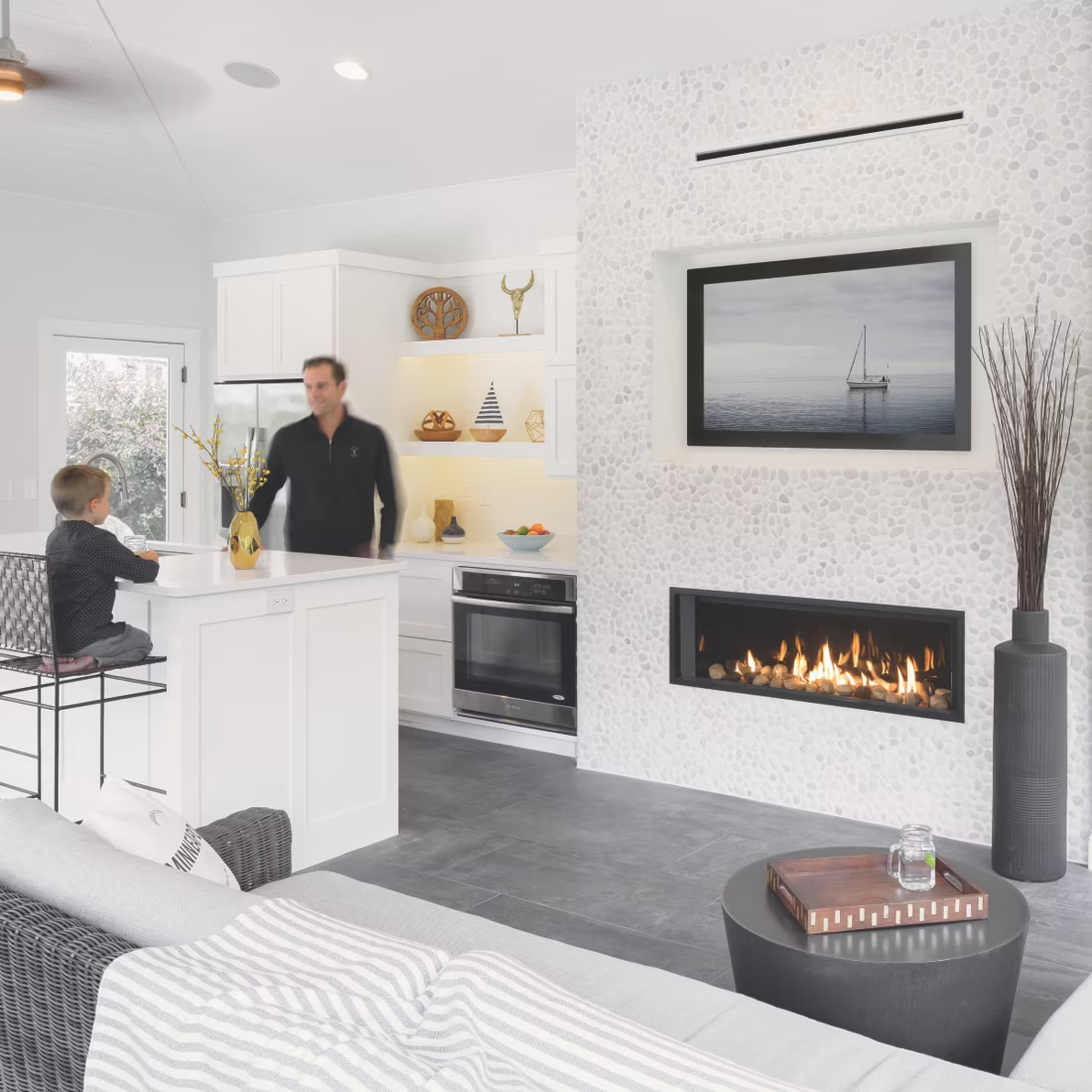
Yes—with an asterisk. Fireplaces are hot and TVs don't like heat. Either put a mantel between them to deflect rising warmth, or choose a fireplace with heat-management technology that creates a cool zone on the wall above—the wall stays around 125 degrees, barely warm, while the room still gets full heat. If you like clean lines and don't want a mantel, heat management is the answer.
Can I install a fireplace myself?
If you're putting a fire in your house on purpose, it's best to work with an expert. Unless you're genuinely experienced in framing, gas line, vent pipe, and the national code on clearances to combustibles, have a professional do it—and ideally the same company that sells you the fireplace, so warranty, service, and liability all live under one roof.
How much should I budget for a fireplace?
For an average home—covering the fireplace, the vent pipe, and basic installation—a budget between $3,900 and $5,500 gives you a lot of options across wood, gas, and pellet. By the time you add finish work, gas line, and electrical, the average complete installation lands between $5,000 and $12,000 all-in. In a remodel or new build, a good rule is to put about 2.5% of the total project cost toward the fireplace.
Nearby Dealers
Hearth shops serving Anacortes and the surrounding area. Every listing shows whether it is a WhyFire partner, a dealer we have verified as authorized for the brands we recommend, or a local business carrying hearth products. No manufacturer pays for placement. How we verify dealers →
Jacobson Heating & Air
Handy's Heating
Barron Heating - Burlington
Craft Stoves Of Western Wa
Rich’s For The Home
Sundance Energy Services, Inc.
Merle's Masonry,Chimney Care And Stoves
Berry Garage Door Company
Northwest Energy Systems
Find your gas fireplace in Anacortes.
Tell us about your home and fuel situation—natural gas, propane, or an existing masonry fireplace—and we'll send you a free Project Guide & Parts List with the right unit, vent kit, and a trusted local Anacortes dealer to install it.
Find Your Fireplace →