
Keep Your Family Warm and Safe—No Matter What
From Wytheville to Rural Retreat and out along the Blue Ridge foothills, wood heat has been a mainstay of this county for generations. Get matched with a trusted local dealer who can size, permit, and install it right.
Every Project Starts From One of These Five Situations
A ridge-and-valley county built on cordwood.
Wythe County sits in the Blue Ridge foothills of southwest Virginia, with roughly 5,100 heating degree days and average winter lows around 24°F—a solidly cold-climate zone 4A profile, though nowhere near the extremes of Fargo or Bismarck. Winters here are steady rather than brutal, which is exactly the kind of climate where a wood stove earns its keep as either a primary heat source in older farmhouses or a reliable backup for the newer homes scattered around Wytheville and Rural Retreat. Oak, hickory, and maple dominate the local woodlots, and all three season well and burn hot, dense, and long—hickory in particular is prized by county residents for overnight coals.
The county borders the George Washington & Jefferson National Forest, which issues cutting permits from May through October at $20 per cord—a genuinely affordable way for rural Wythe County households to supply their own firewood. There are no air quality non-attainment concerns here, no winter inversion restrictions, and no curtailment periods to navigate, which simplifies wood burning considerably compared to counties out west. The right stove or insert, sized correctly by a local dealer, turns that abundant local hardwood into steady, radiant heat that keeps running even when an ice storm takes down the power lines along the ridges.
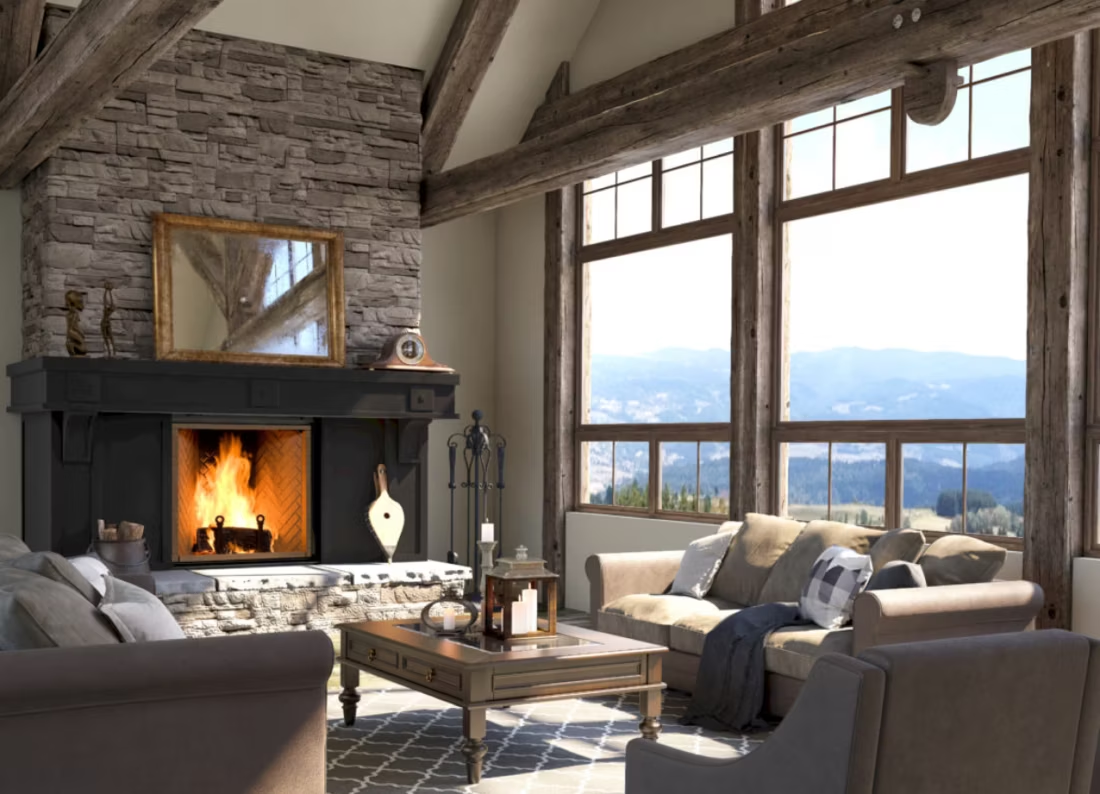
Firewood Cutting Permits Near Wythe County
Three steps. No salesperson until you're ready.
Tell us about your project
Your zip code, your situation, and the fuel you're leaning toward—or let the answers point you to one.
See what's actually available
The brands dealers within 100 miles genuinely carry—real options, never a catalog mirage.
Get your dealer & Project Guide
A trusted local dealer, plus the free Project Guide & Parts List that names every component of the job.
Frequently Asked Questions
How much does a wood stove installation cost in Wythe County?
Installation costs in Wythe County typically fall in a broad range depending on whether you're installing a freestanding stove, converting an existing masonry fireplace with an insert, or starting from scratch with no existing chimney. Expect the low end to cover a straightforward insert install into a working chimney, and the higher end to reflect new Class A chimney pipe, roof penetration, and hearth pad work for homes without an existing masonry structure. Rural properties outside Wytheville and Rural Retreat may see a modest travel charge added by installers coming from the county seat.
What size wood stove do I need for my Wythe County home?
With average winter lows around 24°F and roughly 5,100 heating degree days, Wythe County sits in a moderate cold-climate zone—noticeably milder than the upper Midwest but still cold enough that undersized stoves struggle on the coldest January nights. Small stoves suit cabins and single rooms up to about 1,000 square feet; medium stoves in the 1,000–2,000 square foot range cover most farmhouses and ranch homes around Wytheville; larger stoves make sense for well-insulated whole-home heating on bigger footprints. Older, less-insulated farmhouses common in the county often need a size bump over what square footage alone would suggest. A local dealer will size your space during an in-home visit, factoring in ceiling height, insulation, and layout.
Where can I find a certified wood stove installer near me in Wythe County?
Look for installers carrying NFI (National Fireplace Institute) or CSIA (Chimney Safety Institute of America) certification—both indicate proper training in clearances, venting, and code compliance for wood-burning appliances. Trusted local dealers matched through Find My Fireplace handle Wytheville, Rural Retreat, and the surrounding unincorporated county, and most bundle the installation with the sale so warranty coverage and permitting stay simple. Skip general handyman installs for anything wood-burning—improper flue sizing and clearance mistakes are the leading cause of chimney fires in older county homes.
What's the difference between a wood stove and a wood insert for my home?
A wood stove is freestanding, sits on its own hearth pad, and can go almost anywhere with the right clearances—a good fit for newer homes around Wytheville without an existing fireplace. A wood insert slides into an existing masonry fireplace and uses that chimney, which makes it the better choice for the many older farmhouses across Wythe County that already have a brick hearth but lose most of their heat up an open flue. Converting one of those drafty original fireplaces to an insert is one of the most cost-effective upgrades available to county homeowners.
Do I need a permit to install a wood stove in Wythe County?
Yes—new wood stove installations require a building permit, and the unit itself needs to meet current EPA emissions standards. Most local dealers handle the permitting paperwork as part of the installation, so this typically isn't something you have to manage yourself. Unlike some western counties, Wythe County has no air quality non-attainment status and no seasonal burn curtailment periods, so once your stove is installed and permitted, day-to-day burning isn't restricted by local air advisories.
What's the best wood stove for Wythe County's climate?
Given the moderate cold-climate profile here—closer to a mild winter than the sub-zero stretches you'd see in Duluth or International Falls—mid-sized non-catalytic stoves from brands like Pacific Energy or Lopi are a solid fit for most homes, offering strong heat output without oversizing for a room. For households burning primarily hickory and oak, both dense hardwoods that hold coals well, a catalytic model can extend overnight burn times if you want to wake up to usable coals rather than restarting a fire. Talk to a local dealer about your home's square footage and insulation level for a specific model recommendation.
How often should my chimney be inspected and cleaned in Wythe County?
The CSIA recommends an annual inspection for any wood-burning appliance, and that holds true regardless of climate severity. Plan on a sweep and inspection each late summer or early fall, before the first fires of the season around Wytheville and Rural Retreat. Households burning oak and hickory as a primary heat source through the winter should watch creosote buildup a bit more closely than occasional users, since dense hardwood burned at low, smoldering temperatures can still leave deposits even though it burns cleaner than softwood.
Where can I get firewood or a cutting permit in Wythe County?
Wythe County borders the George Washington & Jefferson National Forest, which issues personal-use cutting permits from May through October at $20 per cord—one of the more affordable permit rates in the region and a popular option for rural households who want to supply their own oak, hickory, and maple firewood. For those who'd rather buy split and seasoned wood, several local suppliers around Wytheville deliver by the cord, with hardwood species commanding a premium over mixed loads.
Wood stove vs. pellet stove—which is right for my Wythe County home?
Wood stoves burn cordwood, work without electricity—a real advantage when ice storms take down power lines along the county's ridges—and pair naturally with the abundant oak and hickory available through Forest Service permits or local suppliers. Pellet stoves burn compressed pellets from regional brands like Energex or Hamer Pellet Fuel, are easier to load and run, and produce less ash, but they need electricity for the auger and blower, so they can't serve as backup heat during an outage. For rural Wythe County properties where power interruptions are a real seasonal concern, wood tends to be the more resilient choice. For in-town homes prioritizing convenience with reliable electric service, pellet is worth considering too.
Why won't my new wood stove get going like my old one?
New wood stoves are 70%+ efficient, so far less heat goes up the flue—which also means less draft to get a fire established. The rule: build a genuinely hot fire for about 45 minutes before you choke it down. Skip that and you get smoke in the room, creosote in the chimney, and a fire that never takes off. Most performance complaints trace straight back to this.
Why is my open fireplace making my house colder?
Open fireplaces suck—literally. As the fire burns, it consumes air your furnace already paid to heat and pulls it out through the chimney, so the house is actually colder after the fire goes out than before you lit it. An insert fixes this: it seals the chimney, puts fixed glass across the front, and turns that hole in your house into a real heat source.
How much should I budget for a fireplace?
For an average home—covering the fireplace, the vent pipe, and basic installation—a budget between $3,900 and $5,500 gives you a lot of options across wood, gas, and pellet. By the time you add finish work, gas line, and electrical, the average complete installation lands between $5,000 and $12,000 all-in. In a remodel or new build, a good rule is to put about 2.5% of the total project cost toward the fireplace.
What is an in-home preview and do I need one?
It's a visit where a hearth professional measures your space, confirms the model you picked actually works in your home, and walks the specs—framing, gas line, venting, finish work—before anything is ordered. Some details you just can't know until you see the house. Never make a down payment without one; it's the single most-skipped step that burns buyers.
Stove and Fireplace Dealers in Wythe County
Listings include WhyFire partner dealers, dealers we have verified as authorized for the brands we recommend, and established local businesses that carry hearth products. Every listing shows which one it is. The ones marked Preferred run on WhyFire's software, so they can show you real pricing and book your appointment right here. No manufacturer pays for placement. How we verify dealers →
Clark Gas & Oil Company
Hillsville Building & Landscape Supply
Marsh Lp Gas Company
Country Power Equipment
Blue Ridge Energy - Sparta
Radford Chimney Works
Ferrellgas
Get matched with a Wythe County wood stove dealer.
Tell us about your home and we'll put together a free Project Guide & Parts List—the right stove or insert, the vent kit it needs, and a trusted local dealer in Wythe County to install it.
Find Your Fireplace →