
Instant heat, no chimney required, in Washington County.
From Abingdon to Damascus to the farmhouses scattered through Washington County's ridges and hollows, electric fireplaces add real zone heat and ambiance without a flue, a gas line, or a masonry chimney. Find the right unit and connect with a trusted local dealer.
Every Project Starts From One of These Five Situations
Heat where you actually spend time.
Washington County sits in the Blue Ridge foothills of far southwest Virginia, home to about 12,546 people spread across Abingdon, Damascus, Glade Spring, and Meadowview along with a lot of unincorporated mountain and farm country in between. Climate zone 4A, with a winter heating load a bit above average for the region, and a winter low averaging 24°F make for a heating season that runs long but rarely turns brutal—nothing like a Duluth, MN winter, but cold enough that a lot of older farmhouses and doublewides in the hollows struggle to hold heat in a single room without help. Electric fireplaces fill that gap: a wall-mounted unit or insert in a bonus room, finished basement, or add-on doesn't need a flue, doesn't need a gas line, and can go in almost anywhere there's a wall and an outlet.
Appalachian Power, part of the AEP system, serves most of Washington County, and that's the practical starting point for any electric fireplace decision—a simple plug-in unit runs on a standard 15-amp circuit, while a larger hardwired linear fireplace often needs a dedicated 20-amp circuit that a licensed electrician has to run, especially in older Abingdon-area homes with dated panels. There are no local air quality restrictions here (unlike burn-ban counties elsewhere in Virginia), so electric isn't solving a smoke problem—it's solving a practicality problem. Wood heat still runs deep in this county, with oak, hickory, and maple burned as primary or supplemental heat on plenty of rural properties, but electric is the go-to where running a flue just doesn't make sense: rental units, additions, over an existing gas log set for ambiance, or manufactured housing common throughout the county's ridge communities.
Three steps. No salesperson until you're ready.
Tell us about your project
Your zip code, your situation, and the fuel you're leaning toward—or let the answers point you to one.
See what's actually available
The brands dealers within 100 miles genuinely carry—real options, never a catalog mirage.
Get your dealer & Project Guide
A trusted local dealer, plus the free Project Guide & Parts List that names every component of the job.
Frequently Asked Questions
How much does an electric fireplace installation cost in Washington County?
A plug-in electric insert or freestanding unit that runs on a standard outlet typically costs $300 to $1,200 installed, since there's no new wiring involved—just mounting and trim work. A hardwired built-in or linear wall unit, which usually needs a dedicated circuit run by a licensed electrician, runs closer to $1,500 to $3,500 once you factor in panel capacity, wire runs through older plaster or log-home walls common around Abingdon and Damascus, and any custom surround or mantel work. Homes with older electrical panels—not uncommon in Washington County's older farmhouses—sometimes need a panel upgrade first, which adds to the total.
Do I need a permit to install an electric fireplace in Washington County?
A simple plug-in electric fireplace that uses an existing outlet generally doesn't require a permit. If your installation needs a new dedicated circuit—which most larger built-in or linear units do—that electrical work requires a permit through the Washington County Building Department, and it has to be pulled by a licensed electrician. Most local dealers coordinate this as part of the installation quote, so you're not left tracking down permits yourself.
Will an electric fireplace actually heat my home in Washington County's winters?
Not on its own for the whole house—and that's true anywhere, not just here. A typical 1,500-watt electric fireplace puts out roughly 5,000 BTU, enough to comfortably warm a single room in the 300 to 400 square foot range. With average winter lows around 24°F and cold snaps in the mountain hollows dropping well below that, an electric unit works best as zone heat: warming the room you're actually in so you can turn down the thermostat elsewhere, or supplementing a wood stove or central system on the coldest nights. For whole-home heat in Washington County's colder pockets, wood or a heat pump is a better primary source.
What happens to my electric fireplace during a power outage?
It won't run—electric fireplaces are entirely dependent on grid power, unlike a wood stove. Appalachian Power's rural lines through Washington County's ridges and hollows can go down during ice storms, and outages in the more remote parts of the county sometimes stretch longer than in Abingdon proper. If backup heat during outages matters to you, an electric fireplace should be a supplemental unit, not your only heat source—pair it with a wood stove or a generator-backed system for winter storm resilience.
What's the best type of electric fireplace for an older Washington County home?
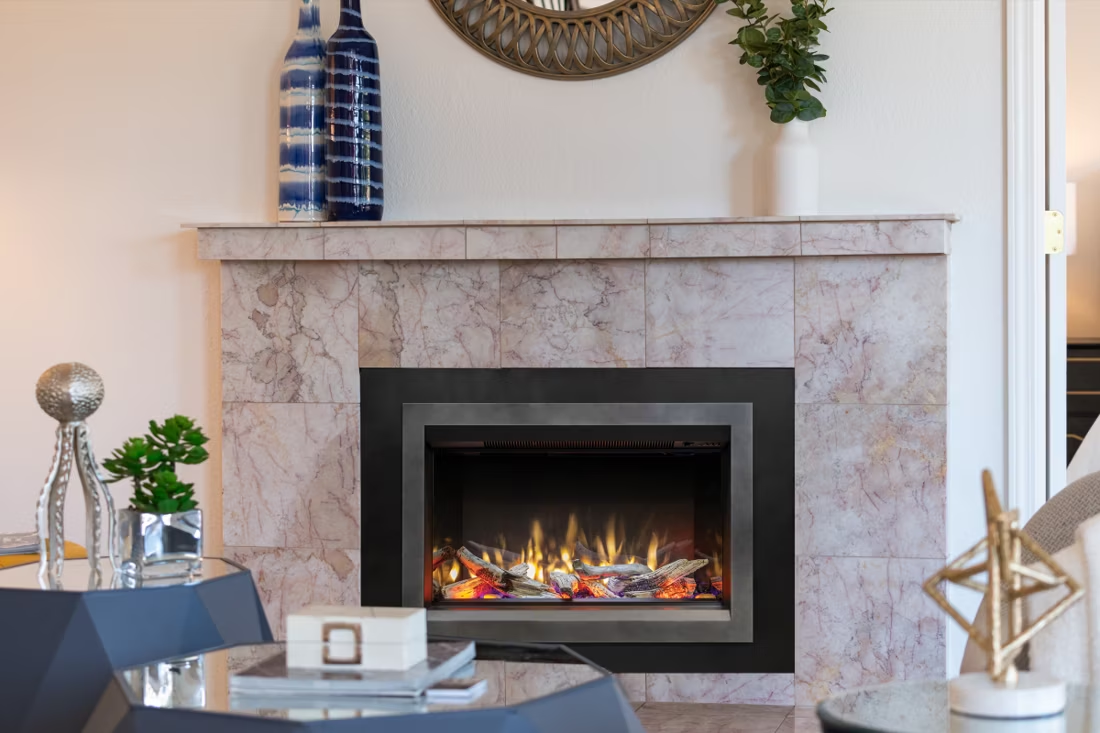
For historic homes around Abingdon with plaster walls and limited electrical capacity, a plug-in insert into an existing (possibly non-functional) fireplace opening is often the simplest fix—no new wiring, no structural changes. For additions, finished basements, or the manufactured and modular homes common in the county's rural areas, a wall-mounted linear unit gives a modern look and can be sized to the room without any venting concerns. Freestanding stove-style electric units are a good fit where you want something that reads more like a traditional wood stove but without a hearth pad or clearance requirements.
How much does it cost to run an electric fireplace in Washington County?
At Appalachian Power's typical residential rate, a 1,500-watt electric fireplace running on high costs roughly 15 to 20 cents per hour to operate. Most units let you run the flame effect alone without the heater, which uses only a few watts and costs pennies a day—useful if you want the look without the energy cost during shoulder-season months when Washington County doesn't need extra heat.
Electric vs. pellet stove—which makes more sense here?
Pellet stoves burn compressed wood pellets—regional brands like Energex, Hamer Pellet Fuel, and Greene Team Pellet Fuel are all available in this part of southwest Virginia—and produce real, substantial heat output, but they need venting, a hopper to reload, and electricity to run the auger and blower, so they still go dark in an outage. Electric fireplaces need zero venting and no fuel handling at all, but produce far less heat and, like pellet stoves, need grid power. For serious heat output in a Washington County home, pellet usually wins; for low-maintenance ambiance and zone warmth in a room where running a vent pipe isn't practical, electric is the simpler answer.
Electric vs. gas fireplace—which is right for my home?
Much of rural Washington County is off the natural gas grid, so a gas fireplace here usually means propane—a tank, a gas line, and ongoing fuel costs. Electric skips all of that: no tank, no gas line permit, no annual gas appliance service. The tradeoff is heat output and the realism of a live flame—gas fireplaces put out real, adjustable heat and a more convincing fire, while electric is lower heat and an LED flame effect. For homes without existing propane service or gas lines, especially additions and outbuildings, electric is often the more practical and lower-cost path.
Where should I buy and install an electric fireplace in Washington County?
Skip the big-box shelf unit if you're going with anything larger than a small plug-in model. A local dealer will size the unit to your room correctly, confirm whether your existing wiring can handle it or whether you need a dedicated circuit, and install the mounting bracket and surround so it's structurally sound—especially important for wall-mounted units going into older log or plaster construction common around Abingdon and Damascus. A properly matched local installer also means someone accountable if the unit needs warranty service down the road.
Can I put a TV above my fireplace?
Yes—with an asterisk. Fireplaces are hot and TVs don't like heat. Either put a mantel between them to deflect rising warmth, or choose a fireplace with heat-management technology that creates a cool zone on the wall above—the wall stays around 125 degrees, barely warm, while the room still gets full heat. If you like clean lines and don't want a mantel, heat management is the answer.
Do electric fireplaces actually produce heat?
Yes—most put out around 4,800–5,000 BTUs from a standard outlet, which comfortably warms a bedroom, office, or den as a comfort-zone heater. What they won't do is carry a whole house the way wood, gas, or pellet can. Think of electric as ambiance-first with honest supplemental heat: flames on with no heat in July, flames plus warmth in January.
How much should I budget for a fireplace?
For an average home—covering the fireplace, the vent pipe, and basic installation—a budget between $3,900 and $5,500 gives you a lot of options across wood, gas, and pellet. By the time you add finish work, gas line, and electrical, the average complete installation lands between $5,000 and $12,000 all-in. In a remodel or new build, a good rule is to put about 2.5% of the total project cost toward the fireplace.
Can a fireplace actually lower my heating bill?
Yes—by creating a comfort zone. A furnace heats every square foot of the house just to warm the one room you're in; a gas fireplace on low burns roughly a sixth of the gas a typical furnace does. Set the furnace around 55–60 degrees as a baseline, then heat the rooms your family actually uses. Families who heat this way commonly save $20–$60 a month.
Stove and Fireplace Dealers in Washington County
Listings include WhyFire partner dealers, dealers we have verified as authorized for the brands we recommend, and established local businesses that carry hearth products. Every listing shows which one it is. The ones marked Preferred run on WhyFire's software, so they can show you real pricing and book your appointment right here. No manufacturer pays for placement. How we verify dealers →
Alfresco Lifestyles
Marsh Lp Gas
Berry Home Center- Abingdon
Abingdon Gas
Holston Hardware Company
Find your electric fireplace in Washington County.
Tell us a bit about your home and we'll put together a free Project Guide & Parts List—the right electric fireplace or insert for your space, matched with a trusted local dealer in Washington County who can install it correctly.
Find Your Fireplace →