
Find the Right Hearth for Every Corner of Washington County.
Wood, gas, pellet, and electric fireplace resources for every town and hollow in Washington County—from Abingdon and Damascus to Glade Spring and Meadowview. Find the right unit and connect with a trusted local hearth retailer.
Every Project Starts From One of These Five Situations
Hardwood heating in the Virginia Highlands.
Washington County sits in the far southwestern corner of Virginia, tucked between the Iron Mountains and the Tennessee state line, with elevations running from valley farmland near 1,900 feet up past 4,000 feet along the ridgelines. Winters here are moderate by Appalachian standards—an average low of 24°F and a heating season on the milder side, nowhere near the brutal stretch a place like Duluth or Fargo sees, but cold enough that the heating season stretches from October into April. The county's rolling hardwood forests of oak, hickory, and maple have supported wood heat here for generations, and unlike more urbanized parts of Virginia, there's no non-attainment status or winter burn-ban history to work around.
What you'll find on this hub: hearth retailers, service technicians, and fuel suppliers serving every community in the county—from the county seat of Abingdon to the Appalachian Trail town of Damascus, east to Glade Spring, and out along the back roads to Meadowview, Emory, and Konnarock. Pick your fuel below to drill into specifics—local dealers, installation costs, recommended units, and the resources that match your project. Whether you're heating a farmhouse outside Glade Spring or a cabin near the Virginia Creeper Trail, this is the starting point.
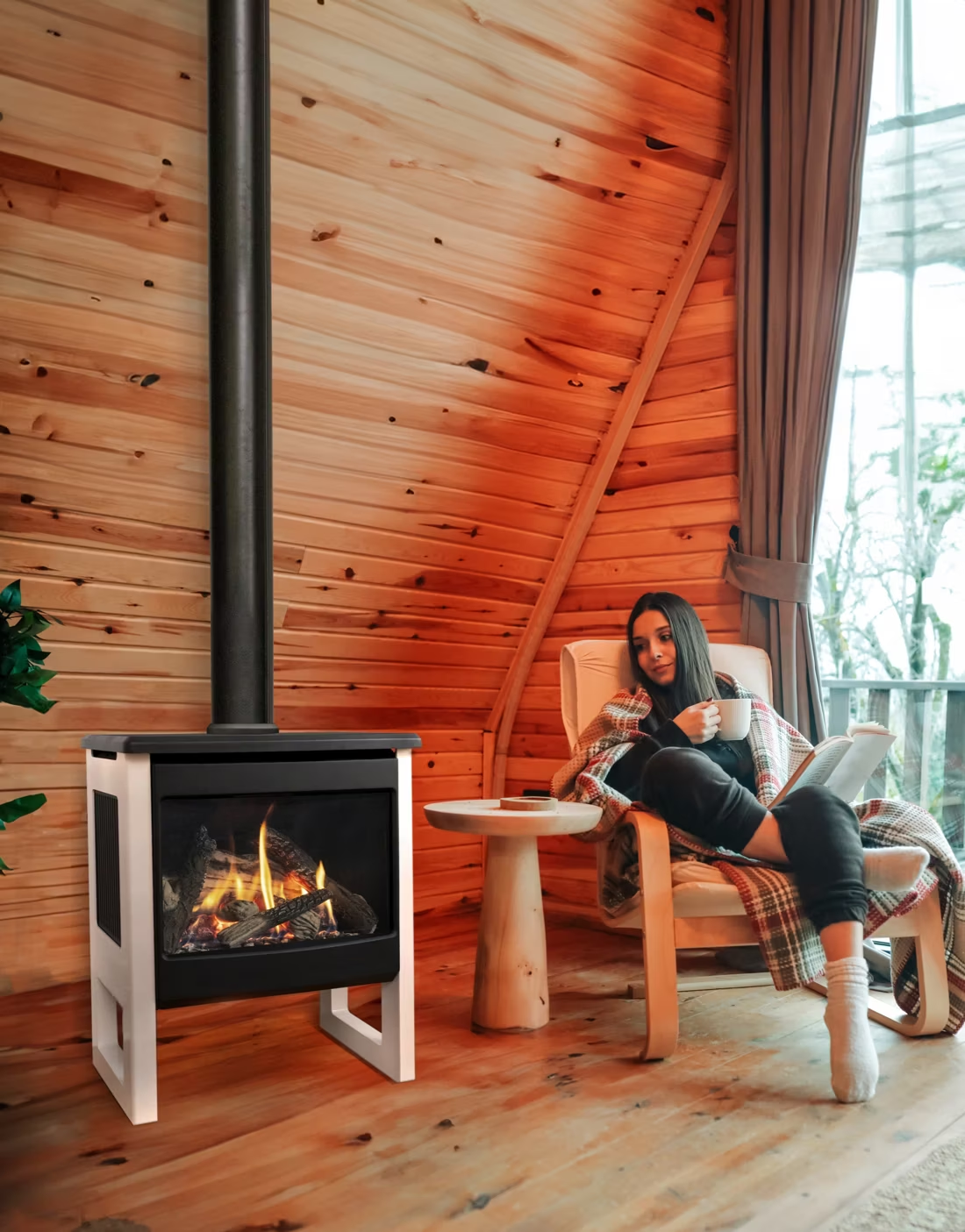
Four fuels. One honest answer for Washington County.
Three steps. No salesperson until you're ready.
Tell us about your project
Your zip code, your situation, and the fuel you're leaning toward—or let the answers point you to one.
See what's actually available
The brands dealers within 100 miles genuinely carry—real options, never a catalog mirage.
Get your dealer & Project Guide
A trusted local dealer, plus the free Project Guide & Parts List that names every component of the job.
Frequently Asked Questions
Which fuel works best in Washington County?
It depends on the home and the budget, but wood has deep roots here—the county's oak, hickory, and maple forests have kept farmhouses and cabins warm for generations, and plenty of households still cut and split their own firewood off family land. Gas is the convenience option, though it's mostly propane outside the Abingdon town limits, where natural gas service is more consistently available; propane inserts and stoves give instant heat without the labor of wood. Pellet is a solid middle ground—Hamer Pellet Fuel out of the Shenandoah Valley and brands like Energex and Greene Team are commonly stocked at local farm and hearth suppliers, so fuel isn't hard to find. Electric works well as a supplemental heat source in bedrooms, sunrooms, or rental properties, but with winters this moderate—a 24°F average low and a heating season on the milder side—it's rarely anyone's sole heat source. Most Washington County homes end up with wood or a propane unit doing the primary work and something smaller filling in the gaps.
Do I need a permit to install a fireplace in Washington County?
For most installs, yes. New wood stoves, wood inserts, gas fireplaces, gas inserts, gas stoves, and pellet stoves typically require a building permit through the Washington County Building & Zoning Office, or through the Town of Abingdon's permitting desk if you're inside town limits. Wood-burning appliances installed new need to meet current EPA 2020 NSPS emissions standards, and gas work requires a separate gas-line permit along with licensed gas-fitter involvement for the actual hookup. Electric fireplaces are usually the exception—plug-in units don't need a permit, though a built-in unit that requires new wiring or a dedicated circuit will. Most local hearth retailers and installers in the county handle the paperwork as part of the job, so homeowners rarely have to navigate the permit office directly.
Are there air quality restrictions on wood burning in Washington County?
No—Washington County has no non-attainment designation and no history of mandatory or voluntary burn-ban days, which puts it in a different position than counties dealing with winter inversions or wildfire smoke. That said, new wood stove and insert installations still need to meet current EPA 2020 NSPS emissions standards under the building code, and an older uncertified stove being installed new (rather than an existing one already in place) generally won't pass permitting. Beyond that, there's no seasonal curtailment schedule or air quality advisory to check before lighting a fire, which is one less thing to plan around compared to more urbanized parts of the state.
Can one local hearth retailer handle all four fuel types?
Many full-service hearth retailers serving the Abingdon area carry at least three of the four fuel types—typically wood, gas, and pellet, with electric as a smaller display line. Some also function as fuel suppliers, stocking bagged pellets from brands like Hamer Pellet Fuel and Energex alongside their stove and insert showroom. If a dealer specializes more narrowly—say, propane and gas work only, or wood and pellet without gas licensing—that's noted on their listing so you know what to expect before you make the drive out. If you're still deciding between fuels, a multi-fuel dealer near Abingdon can usually show you working displays side by side and talk through what fits your house and your wood supply situation.
How does service work in rural areas of Washington County?
Most chimney sweeps and gas or pellet technicians are based in or near Abingdon and travel out to the rest of the county—Damascus and the Highway 58 corridor toward the Tennessee line, Glade Spring and Meadowview to the east, and the smaller communities like Konnarock and Emory tucked against the Iron Mountains. Because the terrain is hilly and roads wind through the ridges, expect a modest travel fee for calls well outside Abingdon, and expect scheduling to tighten up once the weather turns cold. Booking a chimney sweep or pellet stove cleaning in September or early October, before the first real cold snap, is easier than trying to get someone out during a January cold spell.
What's the typical cost range for fireplace installation across all fuel types in Washington County?
Costs vary by fuel and by how much venting or gas-line work is involved. Wood stove or insert installation: roughly $3,500–$8,000 for a typical retrofit into an existing masonry chimney, more if new chimney construction is required. Gas fireplace, insert, or stove: roughly $4,000–$9,500, with propane conversions often landing on the lower end when a tank and line are already in place. Pellet stove or insert: roughly $4,000–$6,500 for most installs. Electric fireplace: $200–$2,500 for the unit itself, with labor adding $300–$1,000 unless it's a simple plug-in model. For a more precise number tied to your home, a local dealer can walk the site and give you a firm quote.
Can I install a fireplace myself?
If you're putting a fire in your house on purpose, it's best to work with an expert. Unless you're genuinely experienced in framing, gas line, vent pipe, and the national code on clearances to combustibles, have a professional do it—and ideally the same company that sells you the fireplace, so warranty, service, and liability all live under one roof.
What are the biggest mistakes people make buying a fireplace?
Five come up constantly: budgeting for the unit but not the full job (vent, gas line, electrical, finish work); drowning in options instead of starting from style and fuel; buying without an in-home preview; handing installation to a handyman instead of a pro; and giving up out of sheer indecision. Every one is avoidable with a clear plan—step one, step two, step three.
How much should I budget for a fireplace?
For an average home—covering the fireplace, the vent pipe, and basic installation—a budget between $3,900 and $5,500 gives you a lot of options across wood, gas, and pellet. By the time you add finish work, gas line, and electrical, the average complete installation lands between $5,000 and $12,000 all-in. In a remodel or new build, a good rule is to put about 2.5% of the total project cost toward the fireplace.
Wood, gas, pellet, or electric—how do I choose?
Match the fuel to your life, not the other way around. Wood: lowest fuel cost and total power-outage independence, but you're hauling and stacking. Gas: press a button, set a thermostat, no maintenance to speak of. Pellet: wood economics with automatic feeding, in exchange for weekly cleaning and a need for electricity. Electric: plugs in anywhere with honest supplemental heat. Nobody regrets the fuel that fits how they actually live.
Stove and Fireplace Dealers in Washington County
Listings include WhyFire partner dealers, dealers we have verified as authorized for the brands we recommend, and established local businesses that carry hearth products. Every listing shows which one it is. The ones marked Preferred run on WhyFire's software, so they can show you real pricing and book your appointment right here. No manufacturer pays for placement. How we verify dealers →
Alfresco Lifestyles
Marsh Lp Gas
Berry Home Center- Abingdon
Abingdon Gas
Holston Hardware Company
Start your hearth project in Washington County.
Tell us about your home and pick a fuel below. We'll match you with a trusted local dealer and send a free Project Guide & Parts List—the exact parts, including the vent kit, and the recommended installer near you.
Find Your Fireplace →