
Simple electric warmth for Sussex County homes.
No chimney, no gas line, no burn permit—just plug-and-heat comfort for the mild coastal-plain winters of Waverly, Wakefield, Stony Creek, and the rest of Sussex County. Find the right unit and connect with a trusted local dealer.
Every Project Starts From One of These Five Situations
Electric heat fits a mild, rural climate.
Sussex County sits on Virginia's coastal plain, a farming and timber county of about 4,320 people spread thin across Waverly, Wakefield, Stony Creek, Jarratt, and Dendron. Winters here are genuinely mild—an average low of 28°F and a short, light heating season, a fraction of what a place like Fargo, ND or Burlington, VT deals with. That milder heating load is exactly the situation where an electric fireplace makes the most practical sense: most Sussex County homes don't need a high-BTU wood or gas appliance running as primary heat, they need supplemental warmth in a den, a converted porch, or a bedroom on the coldest nights.
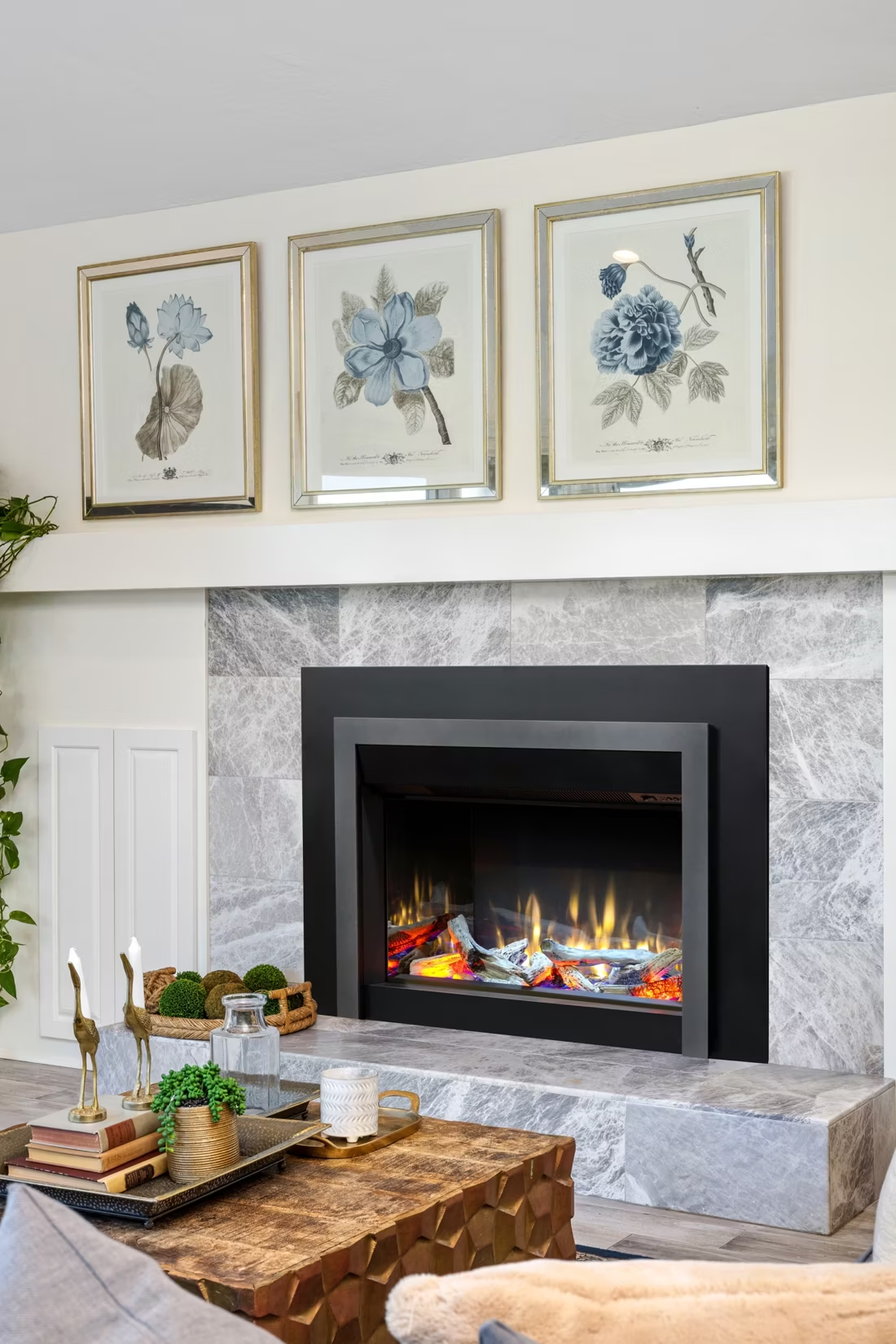
Plenty of homes in Sussex County still have an old masonry fireplace that hasn't been used in years—a common feature in the county's older farmhouses. Rather than rebuild a chimney or run a gas line out to a rural property, many homeowners drop in a zero-clearance electric insert and get instant, controllable heat with none of the venting work. It's also a natural fit for the manufactured and single-wide homes common across the county's rural tracts, where a dedicated electric circuit is far simpler than adding solid-fuel venting. Electric service in the county splits between Dominion Energy in and around the towns and Southside Electric Cooperative for many of the outlying rural properties—either provider can support a standard 120V unit, and larger built-ins on a dedicated 240V circuit are straightforward for a licensed electrician to add.
Three steps. No salesperson until you're ready.
Tell us about your project
Your zip code, your situation, and the fuel you're leaning toward—or let the answers point you to one.
See what's actually available
The brands dealers within 100 miles genuinely carry—real options, never a catalog mirage.
Get your dealer & Project Guide
A trusted local dealer, plus the free Project Guide & Parts List that names every component of the job.
Frequently Asked Questions
How much does an electric fireplace installation cost in Sussex County?
Most electric fireplace projects in Sussex County run $400 to $1,500. A plug-in insert dropped into an existing masonry fireplace opening sits at the low end—often just the unit cost plus an afternoon of labor. A built-in wall unit or a larger insert that needs a dedicated 20- or 30-amp circuit run from the panel costs more, especially in older farmhouses where the electrical panel itself may need attention first. Because electric units don't need a chimney liner, gas line, or venting, the labor bill is almost always lighter than a comparable wood or gas project in the county.
Will an electric fireplace actually heat a room in Sussex County's winters?
For supplemental heat, yes—and for many rooms, as the only heat source. Sussex County's winters are mild by national standards, averaging a 28°F low and a short, light heating season, so a standard 1,500-watt electric unit (roughly 5,100 BTU) is enough to comfortably carry a bedroom, den, or converted sunroom through the county's coldest stretches. It's not designed to replace a heat pump or furnace for the whole house, but as zone heat for the room you actually live in during a cold snap, it holds up well here in a way it wouldn't in a harsher climate.
What type of electric fireplace fits an older Sussex County farmhouse best?
A lot of the county's older farmhouses have an existing masonry fireplace that's gone unused for years. In that case, a zero-clearance electric insert sized to the firebox opening is usually the simplest upgrade—it slides into the existing opening, plugs into a standard outlet, and needs no chimney work. For homes without an existing fireplace, or for manufactured and single-wide homes common in the county's rural tracts, a freestanding electric stove or a wall-mounted unit is often easier since it doesn't require any masonry at all.
Do I need a permit to install an electric fireplace in Sussex County?
A basic plug-in electric fireplace that uses an existing outlet typically doesn't require a permit. If your unit needs a new dedicated circuit—common with larger built-ins or 240V models—that electrical work needs to be pulled through the Sussex County Building & Zoning Department and installed by a licensed electrician. Because there's no venting, chimney, or gas line involved, the permitting process for electric is far simpler than for a wood stove or gas insert in the county.
Does it matter whether I'm on Dominion Energy or Southside Electric Cooperative?
Not for the installation itself, but it's worth knowing which provider serves your property. Dominion Energy covers much of the towns and more built-up parts of Sussex County, while Southside Electric Cooperative serves a large share of the county's rural, outlying farmland. Both can support a standard electric fireplace on existing household wiring, and both providers occasionally offer efficiency rebates or off-peak rate programs—it's worth a call to your provider before you install a larger unit to see if any incentive applies.
Electric vs. wood—which makes more sense for my Sussex County home?
Wood heat has deep roots in Sussex County, where oak, hickory, and maple are all locally available and plenty of rural households still burn as backup or supplemental heat. Wood also keeps working during a power outage, which matters on a county grid that can see storm-related outages. Electric, on the other hand, is dramatically simpler to install, requires zero maintenance beyond dusting, produces no ash or creosote, and doesn't need a permit for cutting or hauling firewood. For a primary living space where convenience matters most, or for a rental property, electric is usually the easier call. For genuine backup heat during winter storms, wood still has an edge.
Is an electric fireplace a good fit for a manufactured or mobile home in Sussex County?
Yes—it's one of the more common uses in the county's rural areas. Manufactured and single-wide homes generally can't accommodate a masonry chimney or the clearances a wood stove needs, and running a new gas line to an older single-wide is often more trouble than it's worth. A wall-mounted or freestanding electric unit sidesteps all of that: no venting, no combustible clearance concerns beyond the manufacturer's spec sheet, and installation that a licensed electrician can usually complete in a single visit.
How much maintenance does an electric fireplace need?
Very little. There's no chimney to sweep, no creosote to worry about, and no annual gas line inspection. Maintenance is mostly dusting the unit, occasionally cleaning the glass front, and replacing the LED light strip or heating element every several years as it wears—most manufacturers rate these components for years of regular use. For Sussex County homeowners who want heat without an ongoing maintenance routine, that's a real selling point compared to wood or gas.
Are there rebates available for electric fireplaces in Sussex County?
Both Dominion Energy and Southside Electric Cooperative periodically run efficiency and demand-reduction rebate programs, and Southside Electric Cooperative—as a Touchstone Energy co-op—sometimes offers incentives tied to efficient electric heating equipment. Rebate availability changes year to year, so it's worth checking directly with your provider before you buy. Because electric fireplaces use so little energy compared to whole-home heating equipment, the bigger financial upside for most Sussex County homeowners is simply the lower installation cost versus wood or gas.
Can I put a TV above my fireplace?
Yes—with an asterisk. Fireplaces are hot and TVs don't like heat. Either put a mantel between them to deflect rising warmth, or choose a fireplace with heat-management technology that creates a cool zone on the wall above—the wall stays around 125 degrees, barely warm, while the room still gets full heat. If you like clean lines and don't want a mantel, heat management is the answer.
Do electric fireplaces actually produce heat?
Yes—most put out around 4,800–5,000 BTUs from a standard outlet, which comfortably warms a bedroom, office, or den as a comfort-zone heater. What they won't do is carry a whole house the way wood, gas, or pellet can. Think of electric as ambiance-first with honest supplemental heat: flames on with no heat in July, flames plus warmth in January.
What is an in-home preview and do I need one?
It's a visit where a hearth professional measures your space, confirms the model you picked actually works in your home, and walks the specs—framing, gas line, venting, finish work—before anything is ordered. Some details you just can't know until you see the house. Never make a down payment without one; it's the single most-skipped step that burns buyers.
Can I install a fireplace myself?
If you're putting a fire in your house on purpose, it's best to work with an expert. Unless you're genuinely experienced in framing, gas line, vent pipe, and the national code on clearances to combustibles, have a professional do it—and ideally the same company that sells you the fireplace, so warranty, service, and liability all live under one roof.
Stove and Fireplace Dealers in Sussex County
Listings include WhyFire partner dealers, dealers we have verified as authorized for the brands we recommend, and established local businesses that carry hearth products. Every listing shows which one it is. The ones marked Preferred run on WhyFire's software, so they can show you real pricing and book your appointment right here. No manufacturer pays for placement. How we verify dealers →
Phillips Energy,Inc - Providence Forge
Fireplace Innovations - Chester Location
Fireside Hearth & Home - Newport News
Parker Oil Company
Find your electric fireplace in Sussex County.
Tell us a bit about your home and we'll put together a free Project Guide & Parts List for your electric fireplace or insert—then match you with a trusted local dealer in Sussex County.
Find Your Fireplace →