
Find the right hearth for your Sussex County home.
Wood, gas, pellet, and electric fireplace resources for Waverly, Wakefield, Stony Creek, and the farms and rural properties in between. Find the right unit and connect with a trusted local hearth retailer.
Every Project Starts From One of These Five Situations
Moderate winters, real heating needs, across rural Sussex County.
Sussex County sits in Virginia's Coastal Plain, a mostly rural stretch of farmland and pine and hardwood forest between the James and Blackwater rivers. At around 3,700 heating degree days and an average winter low near 28°F, the climate here is far milder than places like Duluth MN or Burlington VT—but with roughly 4,300 residents spread across a large, sparsely populated county, many homes still rely on a wood stove or insert as a genuine primary or supplemental heat source, especially on the older farmhouses and outlying properties where oak, hickory, and maple are cut and split close to home.
What you'll find on this hub: hearth retailers, service technicians, and fuel suppliers covering the whole county—from Waverly and Wakefield to Stony Creek and the unincorporated crossroads communities in between. Pick your fuel below to see local dealers, typical installation costs, and recommended units for a Sussex County home. Whether you're replacing an aging wood stove on a family farm or adding a gas insert for convenience, this is the starting point.
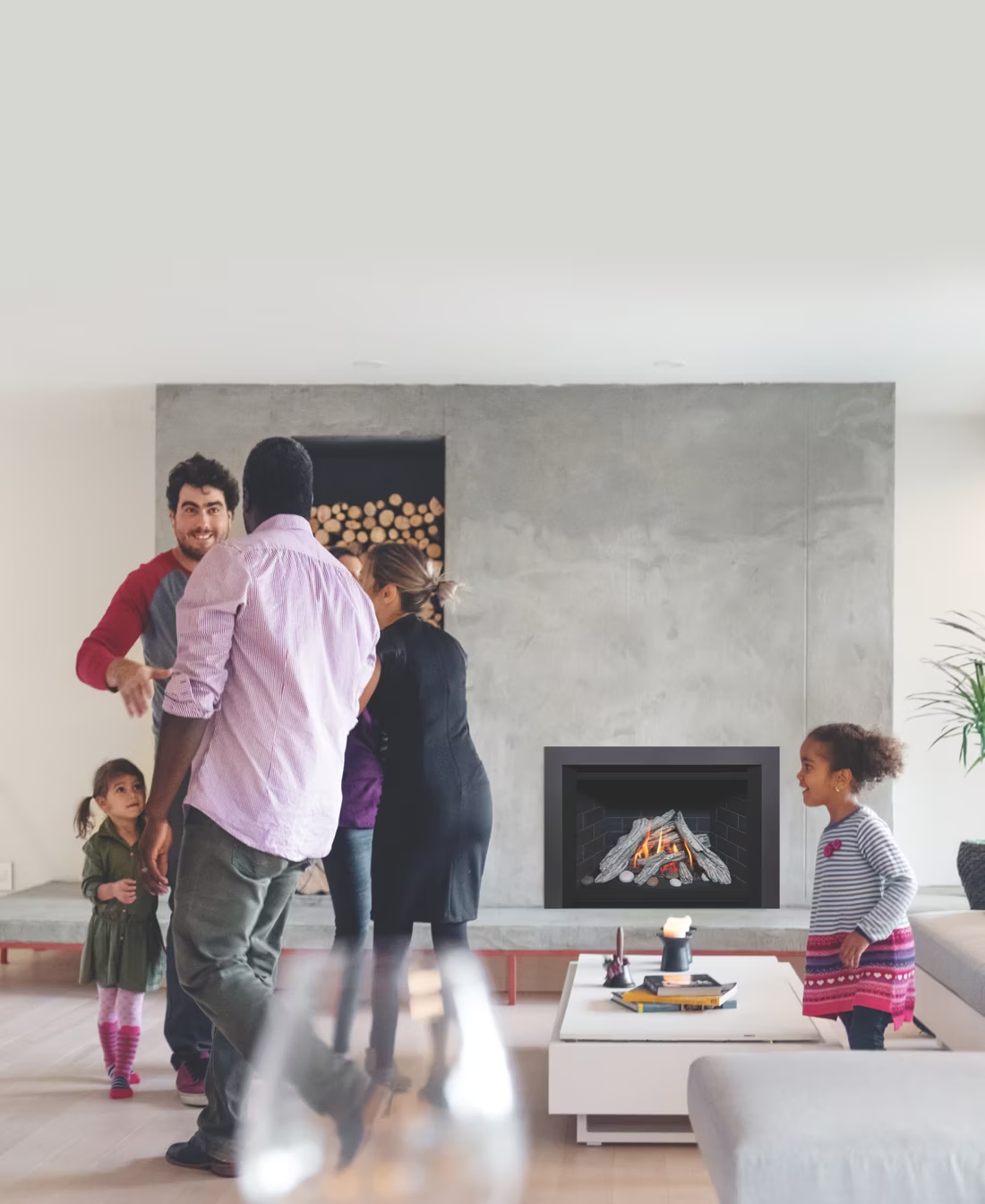
Four fuels. One honest answer for Sussex County.
Three steps. No salesperson until you're ready.
Tell us about your project
Your zip code, your situation, and the fuel you're leaning toward—or let the answers point you to one.
See what's actually available
The brands dealers within 100 miles genuinely carry—real options, never a catalog mirage.
Get your dealer & Project Guide
A trusted local dealer, plus the free Project Guide & Parts List that names every component of the job.
Frequently Asked Questions
Which fuel works best for a home in Sussex County?
It depends on the home and the property. Wood remains a practical, cost-effective choice on the county's many farms and larger rural lots, where oak and hickory are often already available from clearing or standing timber—a well-sized wood stove or insert can carry a farmhouse through most of the winter without straining a budget. Gas is the convenience pick for in-town homes in Waverly or Wakefield, or anywhere propane delivery is already set up for a water heater or range—it lights instantly and needs no wood handling. Pellet is a middle option: less labor than splitting wood, and regional brands like Energex and Hamer Pellet Fuel are within reasonable delivery range. Electric fireplaces work well as supplemental heat in a bedroom, sunroom, or den, but with our relatively mild 3,693 HDD climate, they're a realistic option for full secondary heat in ways they wouldn't be farther north.
Do I need a permit to install a fireplace in Sussex County?
Generally yes for anything beyond a plug-in electric unit. New wood stoves, wood inserts, gas fireplaces, gas inserts, and gas stoves typically require a building permit through the county building department, and gas work also needs the gas-line connection handled by a licensed installer. Most established Sussex County hearth retailers are familiar with the local permitting process and will pull permits as part of the installation quote, so you're not left tracking down paperwork yourself. Electric fireplaces usually skip the permit process unless you're doing a built-in installation that requires a new dedicated circuit.
Are there air quality restrictions on wood burning in Sussex County?
No—Sussex County has no listed air quality non-attainment issues or wood-burning curtailment program, unlike inversion-prone basins in the Mountain West. That doesn't mean burning practices don't matter: a well-seasoned load of oak or hickory (dried at least six months to a year) burns cleaner and more efficiently than green wood, and an EPA-certified stove will produce far less visible smoke than an older pre-1990s unit. For a rural county like this, good burning habits are mostly about efficiency and chimney safety rather than regulatory compliance.
Can one local hearth retailer handle all four fuel types?
In a county this size and this rural, it's common for a single dealer to carry a mix of fuels rather than specializing in just one—often wood and gas as the core lines, with pellet and electric as secondary offerings. Because Sussex County doesn't have a dense retail corridor, many homeowners end up working with a retailer based just outside the county line in a larger town along Route 460 or I-95, who then travels in for the installation. When you're comparing fuels, ask a retailer directly which lines they stock and install regularly versus which they can special-order—that distinction matters more in a low-population county than it would in a metro area.
How does fireplace service work in a rural county like Sussex?
Most chimney sweeps and gas/pellet technicians serving Sussex County are based in a neighboring, larger community and drive in on a route basis rather than keeping a dedicated local shop. Expect to schedule a bit further ahead than you would in a city, especially for pre-winter chimney sweeps in September and October when everyone in the region is trying to book the same handful of technicians. A modest trip fee for outlying properties near the county's edges is normal. Waiting until a cold snap to call is the surest way to end up on a long waitlist—booking your annual sweep or gas inspection in late summer avoids that entirely.
What's the typical cost range for fireplace installation across all fuel types in Sussex County?
Costs run in line with rural Virginia norms. Wood stove or insert installation: roughly $4,000–$8,500 for a standard install, more if new masonry chimney work is needed on an older farmhouse. Gas fireplace, insert, or stove: about $4,000–$10,000, with cost driven largely by how far the gas line has to run and whether propane tank work is involved. Pellet stove or insert: typically $4,000–$7,000. Electric fireplace: $200–$2,800 for the unit itself, plus $300–$1,000 in labor for anything beyond a simple plug-in unit. See the county + fuel pages above for cost detail tied to specific local retailers.
I know I want a fireplace—where do I actually start?
Do two things today: snap a photo of the wall or fireplace you want to transform, and take a tape measure to the space—width, height, depth. Those two artifacts answer most of a hearth professional's first questions. Then settle fuel (wood, gas, pellet, or electric) and set a realistic budget: $3,900–$5,500 covers fireplace, vent, and basic install for most homes.
What is an in-home preview and do I need one?
It's a visit where a hearth professional measures your space, confirms the model you picked actually works in your home, and walks the specs—framing, gas line, venting, finish work—before anything is ordered. Some details you just can't know until you see the house. Never make a down payment without one; it's the single most-skipped step that burns buyers.
How much should I budget for a fireplace?
For an average home—covering the fireplace, the vent pipe, and basic installation—a budget between $3,900 and $5,500 gives you a lot of options across wood, gas, and pellet. By the time you add finish work, gas line, and electrical, the average complete installation lands between $5,000 and $12,000 all-in. In a remodel or new build, a good rule is to put about 2.5% of the total project cost toward the fireplace.
Wood, gas, pellet, or electric—how do I choose?
Match the fuel to your life, not the other way around. Wood: lowest fuel cost and total power-outage independence, but you're hauling and stacking. Gas: press a button, set a thermostat, no maintenance to speak of. Pellet: wood economics with automatic feeding, in exchange for weekly cleaning and a need for electricity. Electric: plugs in anywhere with honest supplemental heat. Nobody regrets the fuel that fits how they actually live.
Stove and Fireplace Dealers in Sussex County
Listings include WhyFire partner dealers, dealers we have verified as authorized for the brands we recommend, and established local businesses that carry hearth products. Every listing shows which one it is. The ones marked Preferred run on WhyFire's software, so they can show you real pricing and book your appointment right here. No manufacturer pays for placement. How we verify dealers →
Phillips Energy,Inc - Providence Forge
Fireplace Innovations - Chester Location
Fireside Hearth & Home - Newport News
Parker Oil Company
Find your fireplace in Sussex County.
Tell us your fuel and your project—we'll match you with a trusted local dealer and send a free Project Guide & Parts List with the exact parts, vent kit, and recommended installer for your Sussex County home.
Find Your Fireplace →