
No chimney needed for warmth along the James River.
For the brick farmhouses, colonial-era homes, and rural properties scattered across Surry County—heat and ambiance without cutting into a historic chimney. Find the right electric unit and connect with a trusted local dealer.
Every Project Starts From One of These Five Situations
Electric heat for a county built long before central heating.
Surry County sits on the south bank of the James River, across from Jamestown by way of the free state ferry, in a landscape dotted with 17th- and 18th-century structures—Bacon's Castle, the oldest documented brick house in English North America, and the farmhouses around Chippokes Plantation State Park among them. With just over a thousand residents by our count, this is a rural, low-density county where a lot of the housing stock predates modern wiring standards, let alone modern HVAC. Climate zone 4A here means real winters—cold enough for a fire to matter—but nothing like the sustained sub-zero stretches you'd get in Burlington, VT. Most Surry County winters are a mix of chilly nights and a lot of days where a little supplemental heat in one room is all a household actually needs.
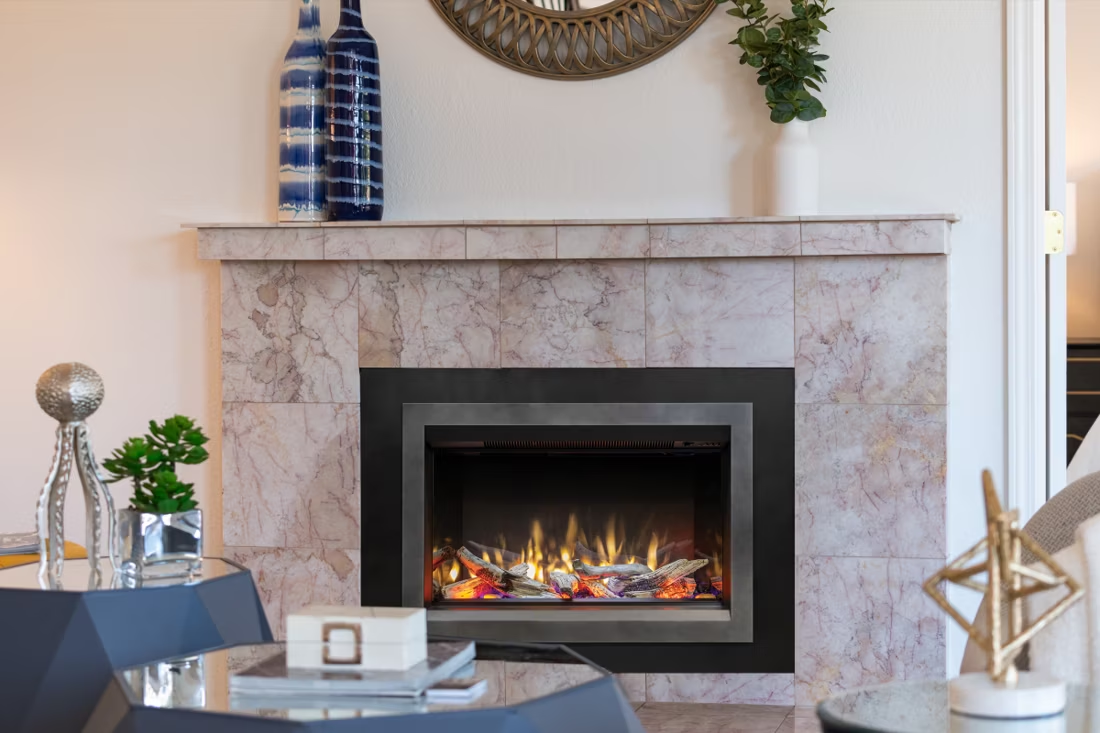
That's the gap electric fills. A lot of Surry County's older homes have fireplace openings that were never built for a modern gas line or a new Class A chimney, and many owners of historic or historically-adjacent properties are understandably reluctant to alter original masonry. An electric insert drops into an existing firebox with no venting, no gas line, and no combustion byproducts—just a cord or a dedicated circuit. There's also a bit of local irony worth noting: Surry County is home to Dominion Energy's Surry Nuclear Power Station right on the James River, so the electric grid running through this county is, at minimum, well-supplied. None of that changes how a fireplace installs, but it's a fitting backdrop for a county where plugging in a heater is about as straightforward as it gets.
Three steps. No salesperson until you're ready.
Tell us about your project
Your zip code, your situation, and the fuel you're leaning toward—or let the answers point you to one.
See what's actually available
The brands dealers within 100 miles genuinely carry—real options, never a catalog mirage.
Get your dealer & Project Guide
A trusted local dealer, plus the free Project Guide & Parts List that names every component of the job.
Frequently Asked Questions
How much does an electric fireplace installation cost in Surry County?
Electric is the least expensive fuel type to install almost anywhere, and Surry County is no exception. A plug-in freestanding unit or a wall-mount model that runs off a standard household outlet typically costs $200 to $800 including the unit itself, with no installation labor required beyond hanging it. A built-in electric insert or a unit that needs a dedicated 240V circuit—common for larger units meant to actually heat a room rather than just provide ambiance—runs closer to $1,000 to $2,500 once an electrician runs the circuit. For older Surry County homes with original knob-and-tube or otherwise dated wiring, expect the electrician's portion of that estimate to run a bit higher.
Do I need a permit to install an electric fireplace in Surry County?
A simple plug-in unit that uses an existing outlet generally doesn't require a permit—it's treated like any other appliance. If you're having a dedicated 240V circuit run for a built-in unit or a larger insert, that electrical work does need a permit through Surry County's building department, and it should be pulled by a licensed electrician rather than done informally. This matters more than it might sound like in a county with a lot of older housing stock, where panel capacity and wiring condition vary a lot from one farmhouse to the next.
What's the best electric fireplace option for a historic Surry County home?
For homes with an existing masonry fireplace—which describes a lot of the older housing around Bacon's Castle, Chippokes, and the county's rural back roads—an electric insert that slides into the existing firebox opening is usually the cleanest fit. It preserves the original mantel and brickwork, requires no venting or alteration to the chimney, and can often be installed in an afternoon. For homes without an existing fireplace, a freestanding electric stove or a wall-mount unit gives you flexibility to place the heat source in whichever room actually needs it, without any construction at all.
Electric vs. wood—which makes more sense for my Surry County home?
Wood still has a real place in Surry County—oak, hickory, and maple are all common locally, and plenty of rural households burn wood as a primary or serious supplemental heat source, especially since there's no air quality restriction here to worry about. Wood also keeps working during a power outage, which matters in a county that sees its share of storm-related outages off the Chesapeake Bay and James River. Electric doesn't compete on that front—it goes dark with the grid—but it wins on convenience: no cutting, no stacking, no chimney maintenance, and it's the only realistic option for a lot of older homes where altering the masonry isn't something the owner wants to do. Many households here end up with both: wood for real heat and resilience, electric for a low-maintenance secondary room or a rental property.
Will my electric fireplace work during a power outage?
No—electric fireplaces require power to run, whether that's for the heating element, the flame-effect display, or both. In a county where storm-driven outages happen periodically along the James River and Chesapeake Bay corridor, that's worth factoring into your decision if you're relying on this as your only heat source in a given room. For households that want backup heat during outages, a wood stove or a propane appliance with a non-electric ignition is the more reliable choice; electric is best treated as a convenient, everyday supplemental option rather than a storm-outage plan.
Electric vs. pellet stove—which is right for me?
Pellet stoves burn compressed wood pellets—regional brands like Energex, Hamer Pellet Fuel, and Greene Team Pellet Fuel are available to Virginia customers—and produce real, substantial heat output, but they need electricity to run the auger and blower, so they share electric's vulnerability during outages. The tradeoff is that pellet stoves genuinely heat a space, while a basic electric fireplace is often more about ambiance with modest supplemental warmth (higher-output electric heaters do exist, but they're not in the same league as a pellet appliance for whole-room heat). If your goal is a low-maintenance accent with a little heat, electric is simpler. If you want serious secondary heat and don't mind loading a hopper, pellet is worth a look.
What size electric fireplace do I need?
Sizing depends mostly on the room and what you want it to do. A small wall-mount or tabletop unit (under 1,500 watts) suits a bedroom or den where you want ambiance and light supplemental warmth. A larger insert or built-in unit on a dedicated 240V circuit can meaningfully take the edge off a living room on a cold Surry County evening. If you're fitting a unit into an existing colonial-era firebox, measure the opening carefully first—a lot of the older fireplaces in this county were built to smaller, shallower dimensions than modern fireplace openings, so not every insert on the market will fit without modification.
I own a historic property in Surry County—does that limit my options?
If your home is on or near a historic register, or simply predates modern construction standards, electric is usually the path of least resistance rather than a limitation. Because there's no venting, no new chimney penetration, and no gas line, an electric insert or freestanding unit doesn't require the kind of exterior alteration that can run into historic preservation concerns. It's one of the few heating upgrades that can go into a property like one near Bacon's Castle or Chippokes without touching the original masonry or roofline at all—worth mentioning to your dealer if preservation is a factor.
Electric vs. propane—which costs less to run in Surry County?
Surry County has little to no natural gas infrastructure in most rural areas, so propane is the common alternative fuel here, typically supplied by tank from a regional propane company. Electric fireplaces are almost always cheaper to install since there's no tank, no gas line, and no venting to account for. Running costs depend on local electric rates versus propane pricing and how much heat you're actually asking the unit to produce—for occasional supplemental use in one room, electric is usually the lower-cost choice; for heating a larger space for long stretches, propane appliances tend to produce more heat per dollar. A local dealer can walk through the specifics for your home.
Can I put a TV above my fireplace?
Yes—with an asterisk. Fireplaces are hot and TVs don't like heat. Either put a mantel between them to deflect rising warmth, or choose a fireplace with heat-management technology that creates a cool zone on the wall above—the wall stays around 125 degrees, barely warm, while the room still gets full heat. If you like clean lines and don't want a mantel, heat management is the answer.
Does an electric fireplace need a vent or chimney?
No—that's its superpower. An electric fireplace needs a wall and an outlet, period. No vent pipe, no gas line, no clearances to design around, which is why it works in bedrooms, offices, apartments, and walls where venting a gas or wood unit would be impractical or impossible. Installation is typically the simplest and least expensive of any fireplace type.
Does a fireplace add value to my home?
On average, a fireplace adds back to the home about the same amount you spent installing it. Add the monthly savings from heating the rooms you actually use instead of the whole house—often hundreds of dollars a year—and the value case is strong before you even count what a fire does for how your family uses the room.
Can a fireplace actually lower my heating bill?
Yes—by creating a comfort zone. A furnace heats every square foot of the house just to warm the one room you're in; a gas fireplace on low burns roughly a sixth of the gas a typical furnace does. Set the furnace around 55–60 degrees as a baseline, then heat the rooms your family actually uses. Families who heat this way commonly save $20–$60 a month.
Stove and Fireplace Dealers in Surry County
Listings include WhyFire partner dealers, dealers we have verified as authorized for the brands we recommend, and established local businesses that carry hearth products. Every listing shows which one it is. The ones marked Preferred run on WhyFire's software, so they can show you real pricing and book your appointment right here. No manufacturer pays for placement. How we verify dealers →
Fireside Hearth & Home - Newport News
Phillips Energy,Inc - Providence Forge
Find your electric fireplace in Surry County.
Tell us a bit about your home—including whether you're working with an existing fireplace opening—and we'll match you with the right electric unit and a free Project Guide & Parts List from a trusted local dealer.
Find Your Fireplace →