
Find the right hearth for your Surry County home.
Wood, gas, pellet, and electric fireplace resources for every community along the James River in Surry County—from the town of Surry to Claremont, Dendron, and Bacon's Castle. Get matched with a local hearth dealer who knows the region.
Every Project Starts From One of These Five Situations
Rural hearth heritage on the banks of the James River.
Surry County sits on the south shore of the James River, directly across from Jamestown and Williamsburg—reachable by the free Jamestown-Scotland Ferry that carries commuters and contractors across the water year-round. With a population just over 1,000, the county is still largely agricultural and forested, and oak, hickory, and maple line the woodlots and fence rows that many longtime residents cut for their own stoves. The climate here falls in zone 4A, mixed-humid—winters are milder than what you'd find in Bozeman, MT or Burlington, VT, but cold snaps into the teens and occasional ice storms still make a reliable heat source worth planning for. The heating season typically runs from late November through March, and wood heat has deep roots here, tied to the same family land that's grown tobacco and soybeans for generations.
This hub covers hearth retailers, service technicians, and fuel suppliers reaching every corner of the county—the town of Surry, Claremont on the river, Dendron, Bacon's Castle, Spring Grove, and Cabin Point. Because Surry County's population is small, most hearth dealers and technicians are based just across the water in Williamsburg or up Route 10 in Isle of Wight and Prince George County, but they regularly service homes here. Pick your fuel below to see local dealers, typical installation costs, and the specific units that make sense for a Surry County property—whether that's a farmhouse woodlot burner or a propane insert in a river-view addition.
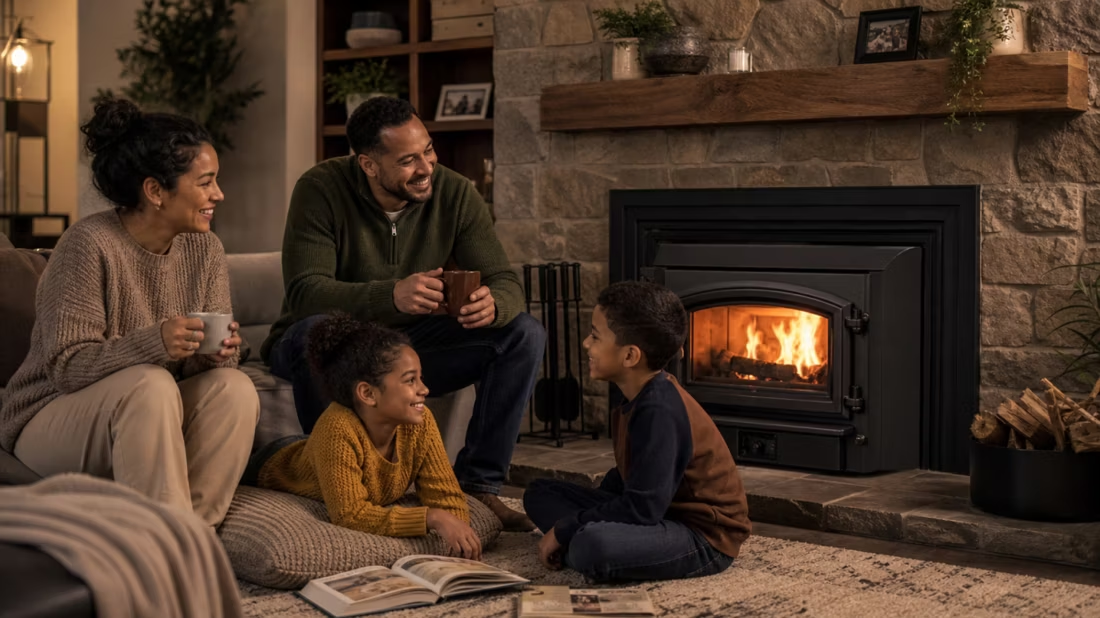
Four fuels. One honest answer for Surry County.
Three steps. No salesperson until you're ready.
Tell us about your project
Your zip code, your situation, and the fuel you're leaning toward—or let the answers point you to one.
See what's actually available
The brands dealers within 100 miles genuinely carry—real options, never a catalog mirage.
Get your dealer & Project Guide
A trusted local dealer, plus the free Project Guide & Parts List that names every component of the job.
Frequently Asked Questions
Which fuel works best in Surry County?
It depends on the property. Wood is the traditional choice on the county's farms and wooded parcels—oak, hickory, and maple are the dominant species cut locally, and a cord from your own woodlot or a neighbor's costs far less than delivered firewood elsewhere. Gas in Surry County generally means propane rather than piped natural gas, since municipal gas lines are limited outside a few pockets—a propane fireplace or insert gives you push-button heat without needing a gas main. Pellet stoves are a solid middle ground for homeowners who want wood-like heat without splitting and stacking; regional brands like Energex, Hamer Pellet Fuel, and Greene Team Pellet Fuel are commonly stocked at feed and farm-supply stores in the area. Electric fireplaces work well as supplemental heat in additions, sunrooms, or outbuildings where running a chimney or gas line isn't practical. Many Surry County homes end up running two fuels—a wood or pellet stove as the primary heater and a propane or electric unit in a secondary space.
Do I need a permit to install a fireplace in Surry County?
Yes, in most cases. New wood stoves, wood-burning inserts, propane fireplaces, propane inserts, and pellet stoves typically require a building permit through the Surry County Building Department, and any propane line work needs to be done by a licensed gas fitter as part of that permit. Wood-burning appliances need to meet current EPA emissions standards to pass inspection. Electric fireplaces usually skip the permit process unless you're hardwiring a built-in unit into a new circuit. Given the county's small size, the building department can often turn permits around quickly—but it's worth calling ahead, since most local hearth retailers who serve Surry County can handle the permitting as part of the installation.
Are there air quality or burning restrictions in Surry County?
No, not in the way you'd see in a western non-attainment area. Surry County doesn't have the winter inversion or wildfire smoke issues that trigger burn bans in places like Klamath Falls, OR—the region's humid mixed climate and open rural geography mean smoke disperses easily, and there are no curtailment periods or air quality advisories tied to wood burning here. That said, basic chimney maintenance still matters: oak and hickory burn hot and clean when properly seasoned, but a poorly maintained flue can still build creosote regardless of local air quality rules, so annual sweeping is worth keeping on schedule.
Can one local retailer handle all four fuel types for a Surry County home?
Not usually within the county itself—with a population just over 1,000, Surry doesn't support a large hearth showroom of its own. Most homeowners end up working with a multi-fuel dealer based across the James River in Williamsburg or up Route 10 in Isle of Wight or Prince George County, several of which carry wood, gas (propane), pellet, and electric lines and are used to servicing rural James River properties. If you're not sure which fuel fits your home, a dealer that stocks all four can walk you through working displays and talk through the trade-offs for a farmhouse, a riverside cottage, or a new addition.
How does installation and service work for such a rural, low-population county?
Plan for a bit more lead time than you would in a denser area. Many technicians and installers serving Surry County are based on the other side of the James River and cross via the free Jamestown-Scotland Ferry or drive around through Isle of Wight County, so scheduling a same-week emergency visit isn't always realistic—booking annual service in late summer or early fall, before the November-through-March heating season, is the easiest way to avoid a mid-winter wait. Expect a modest travel charge for service calls out to more remote parts of the county, like Bacon's Castle or Cabin Point, and keep a backup heat source on hand if you're relying on a single wood or pellet stove through an ice storm.
What does fireplace installation typically cost across fuel types in Surry County?
Costs run in line with the broader Hampton Roads and Tri-Cities region. Wood stove or insert installation: roughly $3,500-$8,000, depending on chimney condition and whether new masonry or liner work is needed. Propane fireplace, insert, or stove: roughly $4,000-$9,000, with cost driven mainly by whether an existing propane tank and line are already in place. Pellet stove or insert: roughly $4,000-$6,500 for a typical install. Electric fireplace: $200-$2,500 for the unit itself, plus $300-$1,000 in labor for anything beyond a simple plug-in unit. Rural travel and any ferry-dependent scheduling can add modestly to labor costs compared to a dealer working entirely on one side of the river.
What is an in-home preview and do I need one?
It's a visit where a hearth professional measures your space, confirms the model you picked actually works in your home, and walks the specs—framing, gas line, venting, finish work—before anything is ordered. Some details you just can't know until you see the house. Never make a down payment without one; it's the single most-skipped step that burns buyers.
How much should I budget for a fireplace?
For an average home—covering the fireplace, the vent pipe, and basic installation—a budget between $3,900 and $5,500 gives you a lot of options across wood, gas, and pellet. By the time you add finish work, gas line, and electrical, the average complete installation lands between $5,000 and $12,000 all-in. In a remodel or new build, a good rule is to put about 2.5% of the total project cost toward the fireplace.
Wood, gas, pellet, or electric—how do I choose?
Match the fuel to your life, not the other way around. Wood: lowest fuel cost and total power-outage independence, but you're hauling and stacking. Gas: press a button, set a thermostat, no maintenance to speak of. Pellet: wood economics with automatic feeding, in exchange for weekly cleaning and a need for electricity. Electric: plugs in anywhere with honest supplemental heat. Nobody regrets the fuel that fits how they actually live.
I know I want a fireplace—where do I actually start?
Do two things today: snap a photo of the wall or fireplace you want to transform, and take a tape measure to the space—width, height, depth. Those two artifacts answer most of a hearth professional's first questions. Then settle fuel (wood, gas, pellet, or electric) and set a realistic budget: $3,900–$5,500 covers fireplace, vent, and basic install for most homes.
Stove and Fireplace Dealers in Surry County
Listings include WhyFire partner dealers, dealers we have verified as authorized for the brands we recommend, and established local businesses that carry hearth products. Every listing shows which one it is. The ones marked Preferred run on WhyFire's software, so they can show you real pricing and book your appointment right here. No manufacturer pays for placement. How we verify dealers →
Fireside Hearth & Home - Newport News
Phillips Energy,Inc - Providence Forge
Find your fireplace project in Surry County.
Tell us about your fuel, your home, and your timeline, and we'll match you with a trusted local hearth dealer and send over your free Project Guide & Parts List—the exact parts, including the vent kit, and the dealer we recommend for your Surry County project.
Find Your Fireplace →