
Consistent Heat, Minus the Woodpile.
Thermostat-controlled warmth for Loudoun County winters, without splitting or stacking cordwood. Find the right pellet stove or insert and connect with a trusted local dealer.
Every Project Starts From One of These Five Situations
Steady, low-maintenance heat for a Loudoun County winter.
Sugarland Run sits at about 271 feet in eastern Loudoun County, in the Dulles corridor between Sterling and Herndon. Winters here are real but moderate compared to the upper Midwest—average lows hover around 25°F and the area's overall winter heating need is well under half of what a place like Madison, WI sees in a typical winter. That means most homes here need dependable supplemental heat for the cold stretches of December through February, not a stove built to run nonstop for months.
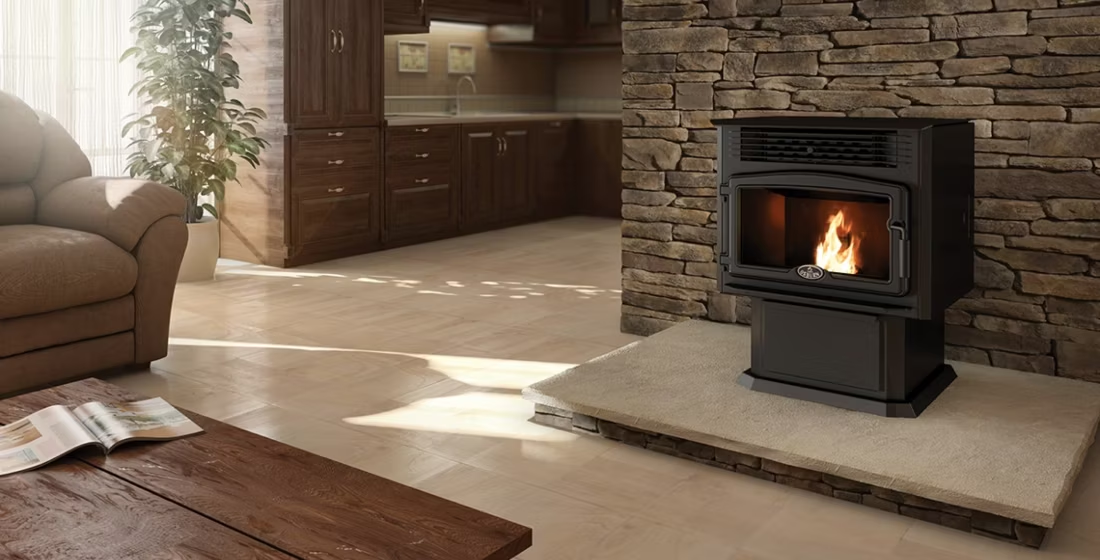
That's exactly the niche a pellet stove fills. The surrounding Piedmont hardwood forests of oak, hickory, and maple that make Loudoun County good wood-heat territory also feed regional pellet mills—brands like Energex, Hamer Pellet Fuel, and Greene Team Pellet Fuel are readily available at hearth shops and farm stores throughout Northern Virginia. With no air quality non-attainment status or wood-burning curtailment periods on the books here, there's nothing stopping you from running a pellet stove daily through the coldest months. A hopper-fed pellet stove gives you thermostatic, set-it-and-forget-it heat without a chimney full of creosote to manage—a real advantage for Sugarland Run's mix of townhomes, colonials, and split-levels that often lack an existing masonry fireplace to work with.
Three steps. No salesperson until you're ready.
Tell us about your project
Your zip code, your situation, and the fuel you're leaning toward—or let the answers point you to one.
See what's actually available
The brands dealers within 100 miles genuinely carry—real options, never a catalog mirage.
Get your dealer & Project Guide
A trusted local dealer, plus the free Project Guide & Parts List that names every component of the job.
Frequently Asked Questions
How much does a pellet stove installation cost in Sugarland Run?
Most pellet stove installations in the Sugarland Run area run $3,000 to $6,500. Converting an existing masonry fireplace with a pellet insert and a liner run through the flue sits toward the lower end. A new freestanding pellet stove—which needs sidewall PL venting through an exterior wall plus a dedicated electrical outlet for the auger and blower—runs higher, especially in homes without an existing fireplace. Loudoun County requires a building permit for the install, and most local hearth dealers handle the permit and inspection scheduling as part of the job.
What size pellet stove do I need for my home?
Sizing depends on square footage, insulation, and whether you're heating one room or trying to offset your whole HVAC bill. Given Sugarland Run's moderate winter heating need, a mid-size pellet stove (rated for roughly 1,000–2,000 sq ft) is usually enough for a single-family colonial's main level, while smaller units work fine for a den, basement, or townhome great room. Because pellet stoves burn at very consistent output, oversizing is less risky than with wood—but a local dealer should still walk through your floor plan and insulation before you buy.
Will my pellet stove still work if the power goes out?
Not without help. Pellet stoves rely on electricity to run the auger, igniter, and combustion blower, so a standard unit shuts down the moment power drops. Dominion Energy's grid in the Sugarland Run and Loudoun County area is generally reliable, but winter ice storms do occasionally knock out power for hours at a time. If backup heat during an outage matters to you, ask your local dealer about pellet stoves with battery-backup kits, or pair a small inverter generator with your stove. Homes that need guaranteed no-power heat sometimes choose a wood stove for that specific reason.
Pellet stove vs. wood stove—which makes more sense here?
Loudoun County's oak, hickory, and maple forests make wood heat entirely viable in Sugarland Run, but it comes with splitting, stacking, seasoning, and chimney creosote to manage. A pellet stove trades that labor for a 40-lb bag hopper you refill every day or two, a thermostat you can set and leave, and far less ash and maintenance. The tradeoff is the electricity dependency covered above. For homes without an existing chimney, or homeowners who want consistent, low-effort heat rather than a wood-heat ritual, pellet is usually the better fit.
Where do I buy pellets locally, and what do they cost?
Regional brands like Energex, Hamer Pellet Fuel, and Greene Team Pellet Fuel are commonly stocked at Northern Virginia hearth shops, farm supply stores, and some home centers serving the Sterling and Loudoun County area. Bagged premium hardwood pellets typically run in the $250–$320-per-ton range, sold by the pallet (usually 50 forty-pound bags to a ton). Buying your season's supply in late summer or early fall, before the first cold snap drives up demand, is the easiest way to avoid price spikes and stock-outs.
What are the venting requirements for a pellet stove?
Pellet stoves vent through small-diameter PL (pellet vent) pipe, which can typically run straight out an exterior wall rather than needing a full vertical chimney. That makes them a practical option for Sugarland Run townhomes and newer subdivisions that were never built with a masonry fireplace. Homes that do have an existing chimney can still use a pellet insert with a liner run down the flue. Either way, your local installer will confirm clearances and termination location as part of the Loudoun County permit process.
Do I need a permit to install a pellet stove in Sugarland Run?
Yes—Loudoun County requires a building permit for a new pellet stove or insert installation, and an electrical permit if a new dedicated circuit is being added for the unit. Most local hearth dealers include permitting and the final inspection as part of their installation package, so you generally don't have to coordinate it yourself. It's worth confirming with your installer up front that this is included in your quote.
How much maintenance does a pellet stove actually need?
Less than a wood stove, but it's not zero. Plan on emptying the ash pan every few days to weekly depending on use—pellet stoves produce a fraction of the ash a wood stove does. Most manufacturers recommend a professional cleaning once a year to clear the exhaust venting, check the auger motor, and replace door gaskets as needed. Local hearth dealers that sell pellet stoves in the area typically offer this service on an annual contract.
Are there rebates or tax credits for a pellet stove in Sugarland Run?
Sugarland Run has no wood-smoke non-attainment designation or curtailment periods to worry about, so there's no local restriction on running a pellet stove regularly through the winter. On the incentive side, high-efficiency biomass stoves—including many pellet models rated at 75% HHV efficiency or higher—can qualify for the federal 25(C) biomass stove tax credit, worth up to 30% of the equipment and installation cost. Ask your local dealer which specific models on their floor currently qualify, since certification changes model to model.
Why is my open fireplace making my house colder?
Open fireplaces suck—literally. As the fire burns, it consumes air your furnace already paid to heat and pulls it out through the chimney, so the house is actually colder after the fire goes out than before you lit it. An insert fixes this: it seals the chimney, puts fixed glass across the front, and turns that hole in your house into a real heat source.
Why is a fireplace insert so efficient?
An insert does two things: it seals the chimney completely, so you stop losing air you already paid to heat, and it radiates warmth into the room through the firebox and glass. Most add a heat-exchange fan that pulls cool room air underneath, wraps it around the hot firebox, and pushes it back out warm. Your home is more efficient before you've even lit the first fire.
Does a fireplace add value to my home?
On average, a fireplace adds back to the home about the same amount you spent installing it. Add the monthly savings from heating the rooms you actually use instead of the whole house—often hundreds of dollars a year—and the value case is strong before you even count what a fire does for how your family uses the room.
Can a fireplace actually lower my heating bill?
Yes—by creating a comfort zone. A furnace heats every square foot of the house just to warm the one room you're in; a gas fireplace on low burns roughly a sixth of the gas a typical furnace does. Set the furnace around 55–60 degrees as a baseline, then heat the rooms your family actually uses. Families who heat this way commonly save $20–$60 a month.
Nearby Dealers
Hearth shops serving Sugarland Run and the surrounding area. Every listing shows whether it is a WhyFire partner, a dealer we have verified as authorized for the brands we recommend, or a local business carrying hearth products. No manufacturer pays for placement. How we verify dealers →
Lawn & Leisure
Genesis Chimney Services
Aspen Green Gasworks
Homeliving Fireplaces
Costello's Hearth & Spa - Rockville
Cyprus Air
The Fireplace Shop
Deckscapes Of Virginia
Holtzman Propane
Chelsea's Chimney
Chimney.com
Bodmer's Stoves And Pottery
Capitol Chimney Service
Fireside Hearth & Home - Manassas
Best Htg And Air
Cyprus Air, Indoor Comfort
Pellet Brands Stocked Around Sugarland Run
Manufacturers will point you to the nearest stocking dealer.
Find your pellet stove in Sugarland Run.
Tell us about your home and we'll put together your free Project Guide & Parts List—the right pellet stove or insert, the exact vent kit, and a trusted local Loudoun County dealer to install it.
Find Your Fireplace →