
Real Fireplace Warmth, Zero Chimney Required.
No flue, no gas line, no permit headaches—just plug in or wire in and go. Find the right electric fireplace for your Strasburg home and connect with a trusted local dealer.
Every Project Starts From One of These Five Situations
The easiest heat upgrade in the Shenandoah Valley.
Strasburg sits in the Shenandoah Valley at just 580 feet elevation, between the Shenandoah River and Massanutten Mountain. Winters here are real but moderate—average lows around 21°F and roughly 5,362 heating degree days a year, a fraction of what a true cold-climate town like Duluth, MN sees, but still enough for a genuine six-month heating season from October through April. That's exactly the kind of climate where a well-placed electric fireplace earns its keep as supplemental warmth, not a science project.
Strasburg's downtown King Street corridor—known locally as the heart of the town's antique trade—is lined with older homes and storefronts, many with masonry fireplaces that were never built for modern solid-fuel inserts and would need expensive liner work to burn wood or gas safely. Newer construction on the edges of town, meanwhile, often has no chimney at all. In both cases, an electric fireplace sidesteps the problem entirely: no venting, no gas line, and in most cases no building permit, just genuine flame-effect ambiance and zone heat wired or plugged into what's already there.
Three steps. No salesperson until you're ready.
Tell us about your project
Your zip code, your situation, and the fuel you're leaning toward—or let the answers point you to one.
See what's actually available
The brands dealers within 100 miles genuinely carry—real options, never a catalog mirage.
Get your dealer & Project Guide
A trusted local dealer, plus the free Project Guide & Parts List that names every component of the job.
Frequently Asked Questions
How much does an electric fireplace installation cost in Strasburg?
A basic plug-in electric insert that drops into an existing fireplace opening or media console typically runs $300 to $800 including the unit and a simple swap-in install—no electrician needed if you're using an existing outlet. A built-in wall unit or full mantel package usually needs a dedicated 20-amp circuit run by a licensed electrician, which pushes the total to roughly $1,200 to $2,500 depending on wall framing, wire run length, and finish work. Local dealers can walk you through both tiers during an in-home or virtual consultation.
What's the best electric fireplace option for an older Strasburg home?
For the historic homes along King Street and elsewhere in town with an existing masonry fireplace opening that's no longer safe or practical for wood, an electric insert is usually the cleanest fix—it slides into the existing firebox, uses the mantel and surround you already have, and needs no chimney work at all. For rooms without an existing fireplace, a wall-mounted or built-in electric unit set into a stud bay gives you the same flame effect without disturbing original plaster or brick. Either way, no masonry work and no venting means minimal impact on a historic structure.
Do I need a permit to install an electric fireplace in Strasburg?
In most cases, no. Plug-in electric inserts and freestanding units don't require a building permit through Shenandoah County since there's no gas line, no venting, and no structural change involved. If you're installing a built-in unit that requires a new dedicated electrical circuit, your electrician will typically need to pull an electrical permit for that wiring work—but that's a straightforward, same-week process compared to the gas line and venting permits required for a gas fireplace installation in town.
How much does it actually cost to run an electric fireplace in Strasburg?
Most electric fireplaces run a 1,500-watt heating element on high. At Shenandoah Valley Electric Cooperative's residential rate of $0.1381 per kWh, that works out to about 21 cents an hour of heater use—roughly $1.50 for a typical five- to seven-hour evening of use with the heater running, or closer to a nickel an hour if you're just running the flame effect without heat. That's noticeably cheaper to operate than most homeowners expect, especially compared to running a whole-house HVAC system to heat a single room.
Electric vs. gas—which makes more sense for my Strasburg home?
Gas fireplaces are common and well-supported in Strasburg, particularly in homes on propane where a fireplace is added alongside an existing propane tank, and they put out more usable heat per hour for a genuinely cold night. Electric fireplaces cost far less to install, require no gas line or venting, and work in nearly any room of the house—including apartments, condos, and finished basements where running gas line isn't practical. If you want a strong secondary heat source for the coldest stretches of a Shenandoah Valley winter, gas usually wins. If you want low-cost ambiance and light supplemental heat with the simplest possible install, electric is the better fit.
Will an electric fireplace actually heat my home during a cold Strasburg winter?
An electric fireplace with a 1,500-watt element will comfortably heat a single room—typically 300 to 400 square feet—and takes the edge off a chilly evening even at Strasburg's average winter low of 21°F. It's not designed to replace your furnace or heat pump on the valley's coldest nights, and it won't function during a power outage the way a wood stove would. Think of it as zone heat for the room you're actually sitting in, letting you turn down the thermostat elsewhere in the house.
What's the difference between an electric insert, a built-in, and a freestanding electric stove?
An electric insert is built to slide into an existing fireplace opening, using your current surround and mantel. A built-in electric fireplace is designed to be framed into a wall from scratch—common in new construction or remodels without an existing firebox. A freestanding electric stove sits on the floor like a traditional wood stove but plugs into a standard outlet, making it the simplest option for renters or homes where no permanent modification is wanted. For Strasburg's mix of historic downtown homes and newer outlying construction, all three show up regularly depending on what's already in the room.
What happens to my electric fireplace during a power outage?
It won't run—electric fireplaces need household power for both the flame effect and the heating element, so they offer zero backup heat value during a Shenandoah Valley Electric Cooperative outage. If backup heat during winter storms matters to you, most Strasburg homeowners who want that redundancy pair an electric fireplace in one room with a gas or propane appliance elsewhere in the house, since gas units with standing pilots or battery-backed ignition can run without grid power.
Is an electric fireplace safer than a space heater for daily use?
Generally yes. Electric fireplaces are built with tip-over shut-off switches, cool-touch glass or housings, and thermostatic controls that cycle the element on and off rather than running wide open, which is more reliable than most portable space heaters. They're also permanently placed rather than dragged from room to room and left unattended near furniture or bedding—one of the leading causes of space-heater house fires. For families with kids or pets, a fixed electric fireplace with a enclosed heating element is a meaningfully safer choice than a plug-in space heater.
Can I put a TV above my fireplace?
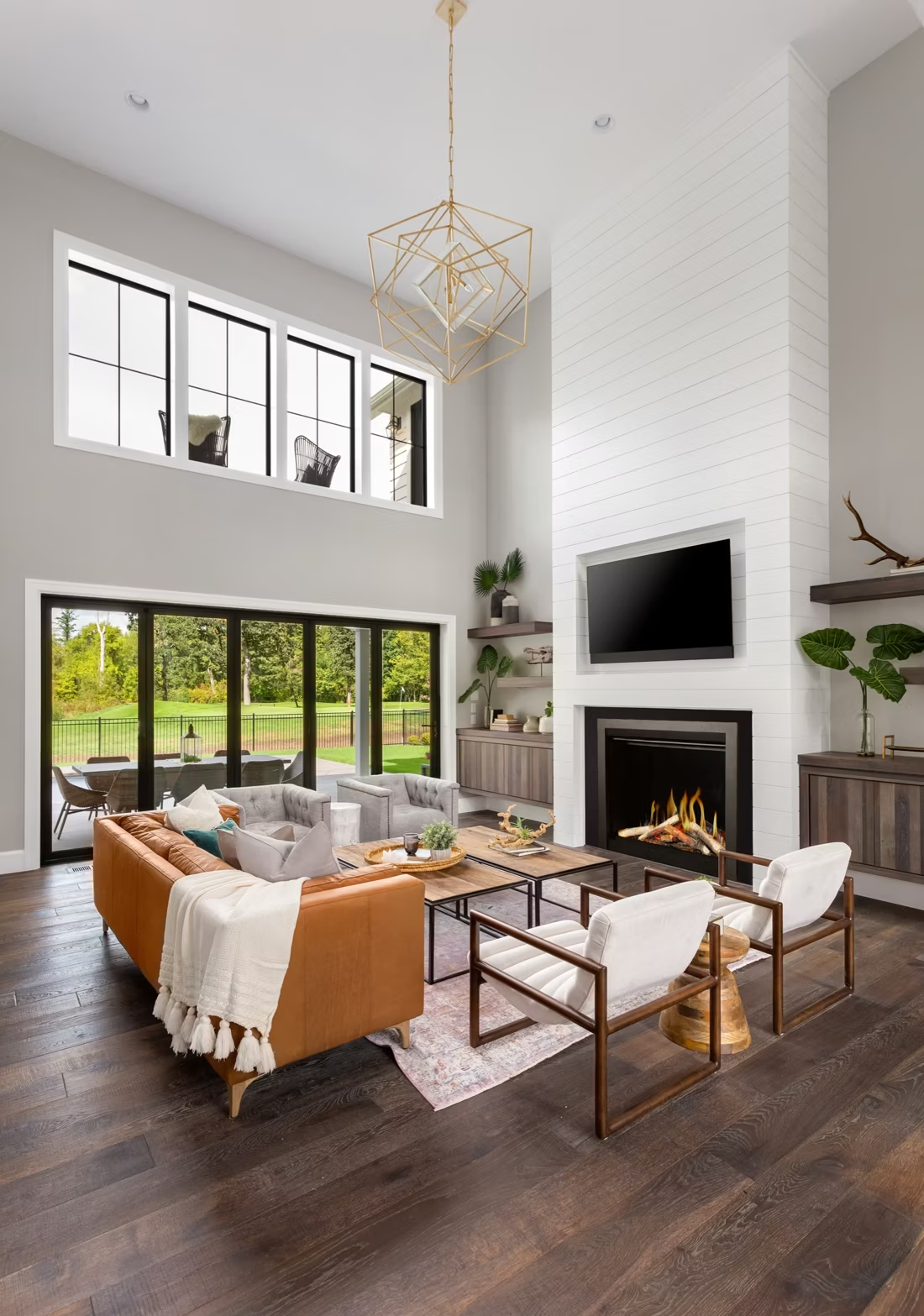
Yes—with an asterisk. Fireplaces are hot and TVs don't like heat. Either put a mantel between them to deflect rising warmth, or choose a fireplace with heat-management technology that creates a cool zone on the wall above—the wall stays around 125 degrees, barely warm, while the room still gets full heat. If you like clean lines and don't want a mantel, heat management is the answer.
Do electric fireplaces actually produce heat?
Yes—most put out around 4,800–5,000 BTUs from a standard outlet, which comfortably warms a bedroom, office, or den as a comfort-zone heater. What they won't do is carry a whole house the way wood, gas, or pellet can. Think of electric as ambiance-first with honest supplemental heat: flames on with no heat in July, flames plus warmth in January.
Can a fireplace actually lower my heating bill?
Yes—by creating a comfort zone. A furnace heats every square foot of the house just to warm the one room you're in; a gas fireplace on low burns roughly a sixth of the gas a typical furnace does. Set the furnace around 55–60 degrees as a baseline, then heat the rooms your family actually uses. Families who heat this way commonly save $20–$60 a month.
How much should I budget for a fireplace?
For an average home—covering the fireplace, the vent pipe, and basic installation—a budget between $3,900 and $5,500 gives you a lot of options across wood, gas, and pellet. By the time you add finish work, gas line, and electrical, the average complete installation lands between $5,000 and $12,000 all-in. In a remodel or new build, a good rule is to put about 2.5% of the total project cost toward the fireplace.
Nearby Dealers
Hearth shops serving Strasburg and the surrounding area. Every listing shows whether it is a WhyFire partner, a dealer we have verified as authorized for the brands we recommend, or a local business carrying hearth products. No manufacturer pays for placement. How we verify dealers →
Holtzman Propane
Amazing Flame
Miller Ace Hardware
Dmv Chimneys & Masonry Repair
Prouty's Chimney Sweep
Area – Huntly, Va
Blossman Gas And Appliance
Justin Funk Lawn And Landscaping LLC
Electric Service in Strasburg
An electric fireplace's heater draws about 1,500 watts—pennies per hour at local rates.
Shenandoah Valley Elec Coop
Find your electric fireplace in Strasburg.
Tell us a bit about your home and we'll put together a free Project Guide & Parts List for your Strasburg project—the right unit, the exact parts, and a trusted local dealer to install it.
Find Your Fireplace →