
Ambiance and easy heat for Shenandoah Valley homes.
No chimney, no gas line, no venting—just plug in and go. From historic downtown Woodstock to Strasburg, Edinburg, New Market, and Toms Brook, electric fireplaces fit rooms that wood and gas can't reach. Find the right unit and connect with a trusted local dealer.
Every Project Starts From One of These Five Situations
Electric heat that fits where wood and gas can't.
Shenandoah County sits in the valley floor between the Blue Ridge and the Massanutten range, with the George Washington National Forest running along much of its edge and small towns—Woodstock, Strasburg, Edinburg, New Market, Mount Jackson—strung along the Route 11 and I-81 corridor. Climate zone 4A means a genuinely four-season winter: average lows around 21°F and 5,362 heating degree days, noticeably milder than a place like Burlington, VT, but still cold enough that most homes run supplemental heat from November through March. Wood has deep roots here—oak, hickory, and maple from the surrounding forest and private woodlots have heated valley farmhouses for generations—but electric fireplaces have carved out a real, practical role of their own.
Electric units solve problems that wood and gas can't: no chimney required for the 19th-century brick storefronts and farmhouses around Woodstock and Edinburg, no gas line to run in rural stretches of the county where propane delivery is the only gas option, and no permit hassle for a simple plug-in unit in a basement or spare bedroom. Power comes from Shenandoah Valley Electric Cooperative (SVEC) across most of the county, with Dominion Energy serving some pockets—either way, a 120-volt insert or mantel package runs on a standard outlet. For rental properties, apartments above Main Street businesses, or any room where running venting simply isn't practical, electric is often the only realistic option—and increasingly, homeowners choose it on purpose for the low-maintenance ambiance rather than as a fallback.
Three steps. No salesperson until you're ready.
Tell us about your project
Your zip code, your situation, and the fuel you're leaning toward—or let the answers point you to one.
See what's actually available
The brands dealers within 100 miles genuinely carry—real options, never a catalog mirage.
Get your dealer & Project Guide
A trusted local dealer, plus the free Project Guide & Parts List that names every component of the job.
Frequently Asked Questions
How much does an electric fireplace installation cost in Shenandoah County?
A plug-in electric insert or freestanding mantel package that runs off an existing outlet typically costs $300 to $1,500 installed, including the unit and basic setup—no electrician needed in most cases. A built-in, wall-recessed linear electric fireplace, especially one requiring a dedicated 240-volt circuit and custom surround or mantel carpentry, runs $2,500 to $5,000 depending on the finish work. Homes in older sections of Woodstock or Edinburg with limited existing wiring sometimes need panel or circuit upgrades, which adds to the electrician's portion of the bill. Local dealers will scope this during an in-home visit.
How does an electric fireplace compare to a plug-in space heater?
A quality electric fireplace from a brand like Dimplex, Napoleon, or Touchstone does more than a box-store space heater: most cover 400 to 1,000 square feet with a fan-forced heater, offer a realistic flame effect using LED or mirror-reflection technology, and let you run the flame with the heater off—useful in shoulder seasons in Shenandoah County when you want ambiance but not extra warmth. A generic space heater is cheaper but has no aesthetic value, tends to be less efficient at even heat distribution, and doesn't integrate into a mantel or built-in surround the way a purpose-built fireplace insert does.
Do I need a permit to install an electric fireplace in Shenandoah County?
In most cases, no—a plug-in unit that uses an existing standard outlet doesn't require a permit. If your installation involves adding a new dedicated circuit, running new wiring, or any panel work for a built-in electric fireplace, an electrical permit through the Shenandoah County Building Inspections Department is required, and the work should be done by a licensed electrician. Most local dealers either employ a licensed electrician or coordinate directly with one as part of the installation, so the permit gets pulled and inspected without you having to manage it yourself.
Where can I install an electric fireplace in a Shenandoah County home?
Electric fireplaces work almost anywhere there's an outlet or the ability to add one—basements, secondary bedrooms, home offices, and finished attic spaces in the older farmhouses common around New Market and Mount Jackson. They're also the practical choice for the apartments and businesses above Main Street storefronts in downtown Woodstock and Strasburg, where adding a chimney or running new gas line simply isn't feasible in a historic structure. Landlords and rental property owners in the county lean on electric units for the same reason—no venting, no combustion byproducts, and simple installation that doesn't disturb existing walls or roofing.
Electric vs gas fireplace—which is right for my Shenandoah County home?
Gas gives you a stronger heat output and, with the right ignition system, can run during a power outage on battery backup—a real advantage during valley ice storms. But gas requires either an existing natural gas line (limited outside town centers) or a propane tank and delivery service, plus venting and a gas-fitter for installation. Electric skips all of that: plug it in, and you're done, with no ongoing fuel deliveries or venting to maintain. For most Shenandoah County homeowners without existing gas infrastructure, or anyone converting a space that doesn't have chimney access, electric is the simpler, lower-cost path. Homes already plumbed for gas often prefer it for the stronger heat.
What's the best electric fireplace for supplemental heat in Shenandoah Valley winters?
With average winter lows around 21°F and roughly 5,362 heating degree days, Shenandoah County winters are cold enough that a well-chosen electric unit earns its keep as real supplemental heat, not just ambiance. Look for a model with a fan-forced heater rated for at least 750 to 1,000 square feet if you want it to meaningfully warm a room—Dimplex and Napoleon both make linear inserts with this coverage. Electric fireplaces aren't sized for whole-home heating the way a wood stove or gas furnace is; they're best paired with central heat as a zone-heating supplement for the room you use most, like a family room or finished basement.
What's the difference between an electric insert, built-in, and freestanding electric fireplace?
An electric insert is built to slide into an existing masonry fireplace opening—common in older farmhouses around Edinburg and Toms Brook that have an unused wood-burning fireplace they want converted to something maintenance-free. A built-in electric fireplace is designed to be framed into a wall during new construction or a remodel, with no existing opening required. A freestanding or mantel-package unit is the simplest option: it comes with its own cabinet and plugs into a standard outlet, making it the easiest choice for a rental unit or a room where you don't want to touch the walls at all.
Will my electric fireplace work during a power outage?
No—this is worth being direct about. An electric fireplace needs power to run the heater, fan, and flame effect, so it goes dark the moment the electricity does. Shenandoah Valley Electric Cooperative's service area, like much of rural Virginia, sees occasional outages during ice storms and high-wind events, and an electric fireplace offers no backup during those stretches. If outage-proof heat is a priority for your household, a wood stove or a gas unit with battery-backed ignition is a better primary choice—many local homeowners keep an electric fireplace for everyday convenience and pair it with a wood stove or gas insert elsewhere in the house for storm resilience.
Electric vs wood—which is right for my home?
Wood heat has deep roots in Shenandoah County—oak, hickory, and maple from the George Washington National Forest and private woodlots have heated valley homes for generations, and a wood stove keeps working when the power doesn't. Electric offers none of that self-sufficiency, but it also asks nothing of you: no wood to split and stack, no ash to clean, no chimney to sweep, and no smoke to manage. For a primary living space where you want real heat output and outage resilience, wood usually wins. For a secondary bedroom, rental unit, or historic building where a chimney isn't an option, electric is often the only practical answer—and plenty of local homes run both.
Can I put a TV above my fireplace?
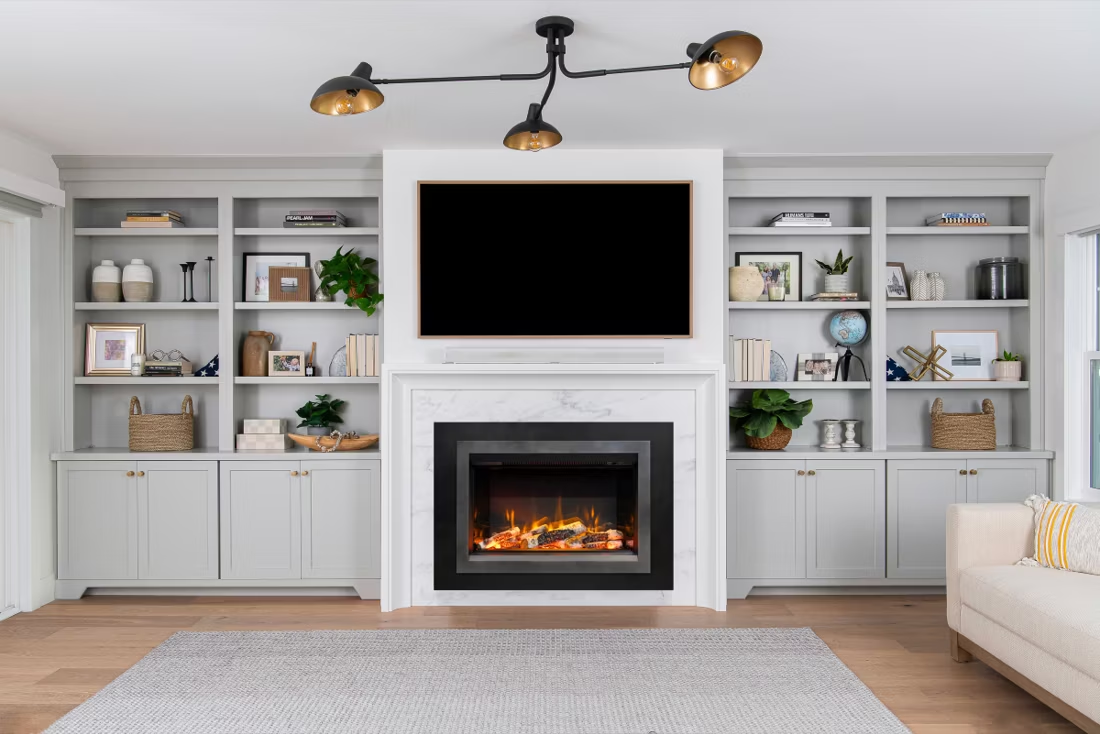
Yes—with an asterisk. Fireplaces are hot and TVs don't like heat. Either put a mantel between them to deflect rising warmth, or choose a fireplace with heat-management technology that creates a cool zone on the wall above—the wall stays around 125 degrees, barely warm, while the room still gets full heat. If you like clean lines and don't want a mantel, heat management is the answer.
How much does an electric fireplace cost to run?
With the heater on, a typical unit draws about 1,500 watts—at average electric rates that's roughly 20 cents an hour. Run the flame effect alone and it costs pennies; the flames are LED-driven and use about as much power as a light bulb. There's no pilot light, no fuel delivery, and essentially no maintenance.
Can a fireplace actually lower my heating bill?
Yes—by creating a comfort zone. A furnace heats every square foot of the house just to warm the one room you're in; a gas fireplace on low burns roughly a sixth of the gas a typical furnace does. Set the furnace around 55–60 degrees as a baseline, then heat the rooms your family actually uses. Families who heat this way commonly save $20–$60 a month.
Can I install a fireplace myself?
If you're putting a fire in your house on purpose, it's best to work with an expert. Unless you're genuinely experienced in framing, gas line, vent pipe, and the national code on clearances to combustibles, have a professional do it—and ideally the same company that sells you the fireplace, so warranty, service, and liability all live under one roof.
Stove and Fireplace Dealers in Shenandoah County
Listings include WhyFire partner dealers, dealers we have verified as authorized for the brands we recommend, and established local businesses that carry hearth products. Every listing shows which one it is. The ones marked Preferred run on WhyFire's software, so they can show you real pricing and book your appointment right here. No manufacturer pays for placement. How we verify dealers →
Amazing Flame
Holtzman Propane
Find your electric fireplace in Shenandoah County.
Tell us a bit about your home and we'll put together a free Project Guide & Parts List—the exact unit, any electrical work needed, and a trusted local Shenandoah County dealer to install it.
Find Your Fireplace →