
Pellet Stoves Are Uncommon in Sterling, But Not Unheard Of.
Pellet heat is a niche fit in Sterling's mild-winter, natural-gas suburb—but for the right home, it's still a real option. Find out where it makes sense and connect with a trusted local dealer.
Every Project Starts From One of These Five Situations
A Niche Fit in a Natural-Gas Suburb.
Sterling sits in eastern Loudoun County at just 335 feet of elevation, in Climate Zone 4A with an average winter low around 25°F and a mild heating season overall—a fraction of what a place like Duluth, MN sees each winter. Most of the housing stock here is newer suburban construction with central heat pumps or natural gas already piped in, and gas service is widely available across the area. That combination—mild winters, near-universal utility hookups, and dense HOA-governed neighborhoods—means pellet stoves rarely show up on local dealer showroom floors the way they do in more rural, off-grid parts of Virginia.
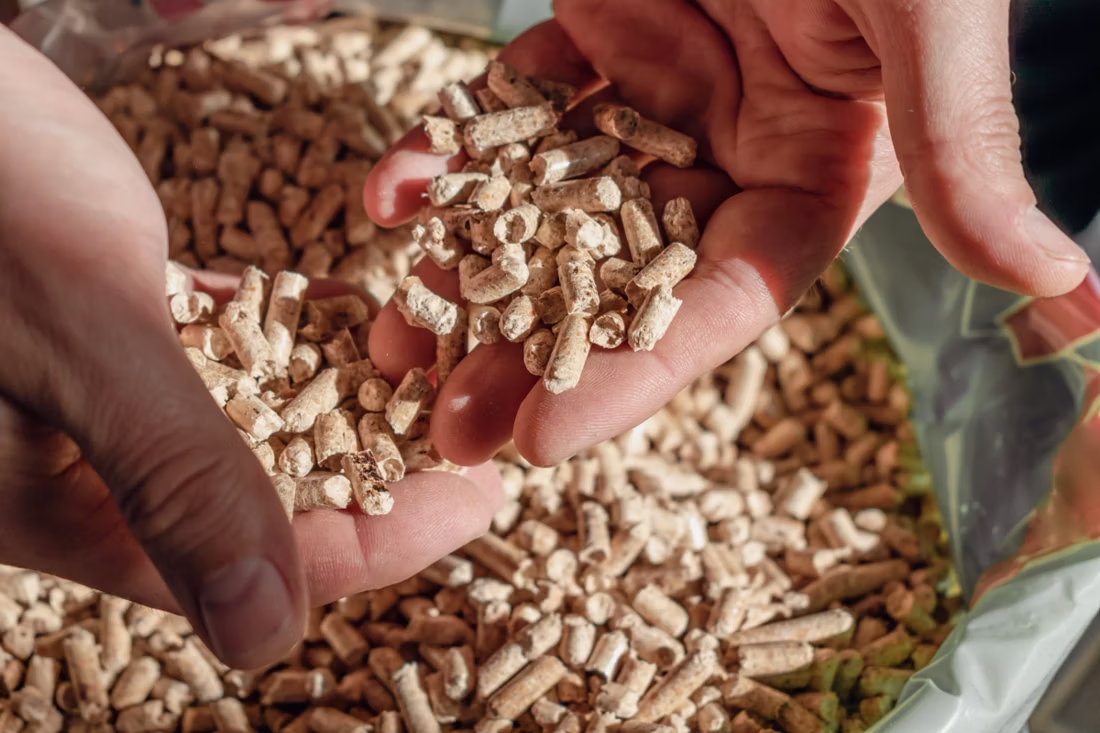
That doesn't mean pellet heat is nonexistent in Sterling. A handful of homeowners still install pellet stoves or inserts—people who want the convenience of loading a hopper without splitting oak, hickory, or maple cordwood, owners of older homes with an existing masonry fireplace looking for a cleaner supplemental heat source, or Loudoun residents who also maintain a second property farther west toward the Blue Ridge foothills where power and gas access are less certain. Regional pellet brands like Energex, Hamer Pellet Fuel, and Greene Team Pellet Fuel are sold through farm-supply outlets serving Northern Virginia, so fuel itself is easy enough to find—even though installers who specialize in pellet appliances are far fewer here than the gas-fireplace dealers serving the DC exurbs.
Three steps. No salesperson until you're ready.
Tell us about your project
Your zip code, your situation, and the fuel you're leaning toward—or let the answers point you to one.
See what's actually available
The brands dealers within 100 miles genuinely carry—real options, never a catalog mirage.
Get your dealer & Project Guide
A trusted local dealer, plus the free Project Guide & Parts List that names every component of the job.
Frequently Asked Questions
Are pellet stoves common in Sterling?
Not especially. Sterling sits in eastern Loudoun County, where natural gas service is close to universal and winters are relatively mild—with average lows near 25°F, a fraction of what a place like Duluth, MN experiences. Most local hearth retailers stock direct-vent gas fireplaces and inserts because that's what the housing stock and utility infrastructure support. Pellet stoves exist here, but they're a special-order request rather than a showroom staple.
How much does a pellet stove installation cost in Sterling?
There isn't a large enough local install base in Sterling for dealers to quote a standardized range the way they can for gas fireplaces. Nationally, pellet stove installations typically run $3,000 to $6,500 depending on the unit, whether venting can use an existing chimney chase, and whether new electrical work is needed for the hopper and blower. Because few Loudoun County dealers specialize in pellet appliances, expect to pull in a hearth shop that also serves Fairfax or Prince William County, and get a firm in-home quote before committing.
What's the best pellet stove for Sterling's climate?
Sterling's winters are mild enough—Climate Zone 4A, average lows around 25°F—that most households don't need a whole-home pellet solution. A mid-size pellet insert or freestanding stove is plenty for supplemental heat in a family room, finished basement, or an older home with an existing masonry fireplace. Because pellet stoves depend on electricity to run the auger and blower, look for a model with a battery-backup option if you also want it to double as emergency heat during a winter storm outage.
Where can I buy pellet fuel near Sterling?
Regional brands like Energex, Hamer Pellet Fuel, and Greene Team Pellet Fuel are distributed through farm-supply and hardware retailers serving Northern Virginia, including outlets in Loudoun and neighboring Fairfax County. Because pellet stoves are uncommon in Sterling itself, don't expect a dedicated pellet-fuel depot in town—most owners either stock up in bulk each fall or arrange pallet delivery from a regional supplier.
Do I need a permit to install a pellet stove in Sterling?
Yes. Pellet stove installations in Sterling fall under Loudoun County's Department of Building and Development, which requires a mechanical or building permit for solid-fuel appliances regardless of how common they are locally. Because pellet installs are infrequent here, it's worth confirming with the county—or directly with your installer—that they've handled a pellet-specific permit before, since some contractors default to the more familiar gas-fireplace paperwork out of habit.
Pellet vs. gas—which is right for my Sterling home?
For most Sterling homeowners, gas wins on convenience and infrastructure: natural gas service is widely available in the area, installation costs are well understood by local dealers, and a direct-vent gas fireplace or insert requires no fuel storage or hopper loading. Pellet stoves make more sense if you specifically want a renewable, wood-based fuel without cutting cordwood, or if you're heating a workshop, basement, or secondary property where running a new gas line isn't practical. Given how few Loudoun County dealers stock pellet appliances compared to gas, expect a longer search for parts and service if you go the pellet route.
Will my pellet stove work during a power outage?
Not without a battery backup or generator. Pellet stoves rely on an electric auger to feed fuel and a blower to circulate heat, so a Virginia Electric and Power Company (Dominion Energy) outage will shut the unit down unless you've added battery backup or plan to run it off a portable generator. This is one of the tradeoffs Sterling homeowners weigh against wood heat, which doesn't need electricity at all—though wood stoves are equally uncommon here for the same climate and infrastructure reasons pellet stoves are.
Are there air quality restrictions on pellet stoves in Sterling?
No. Loudoun County has no listed air quality non-attainment issues or winter burn curtailment programs, unlike Western states dealing with wintertime inversions. That means pellet stove owners in Sterling don't face the yellow or red burn-ban restrictions common in places like the Pacific Northwest—though local dealers will still recommend an EPA-certified unit for better efficiency and lower maintenance.
Pellet vs. wood—which is right for my Sterling home?
Honestly, neither is a mainstream choice in Sterling. Both wood and pellet appliances are niche here given the mild climate, dense suburban housing stock, and near-universal natural gas access. If you're drawn to a solid-fuel option anyway, pellet stoves are generally easier to live with on a suburban lot—no cordwood storage, more consistent heat output, cleaner glass—while wood suits homeowners who specifically want a fire that works without electricity or who have access to oak, hickory, or maple firewood from a rural property elsewhere in Loudoun County.
What's the difference between an insert and a zero-clearance fireplace?
An insert is a fireplace that slides into a pre-existing wood-burning fireplace—if you don't have one, there's nothing to insert it into. A zero-clearance fireplace is built into a framed wall, which makes it the answer for remodels and new construction. Simple test: existing masonry fireplace means insert; blank or framed wall means zero-clearance.
Why is my open fireplace making my house colder?
Open fireplaces suck—literally. As the fire burns, it consumes air your furnace already paid to heat and pulls it out through the chimney, so the house is actually colder after the fire goes out than before you lit it. An insert fixes this: it seals the chimney, puts fixed glass across the front, and turns that hole in your house into a real heat source.
How much should I budget for a fireplace?
For an average home—covering the fireplace, the vent pipe, and basic installation—a budget between $3,900 and $5,500 gives you a lot of options across wood, gas, and pellet. By the time you add finish work, gas line, and electrical, the average complete installation lands between $5,000 and $12,000 all-in. In a remodel or new build, a good rule is to put about 2.5% of the total project cost toward the fireplace.
What is an in-home preview and do I need one?
It's a visit where a hearth professional measures your space, confirms the model you picked actually works in your home, and walks the specs—framing, gas line, venting, finish work—before anything is ordered. Some details you just can't know until you see the house. Never make a down payment without one; it's the single most-skipped step that burns buyers.
Nearby Dealers
Hearth shops serving Sterling and the surrounding area.
Pellet Brands Stocked Around Sterling
Manufacturers will point you to the nearest stocking dealer.
Find your pellet stove in Sterling.
Even though pellet heat is a niche fit in Sterling, we can match you with a trusted local dealer who actually handles it—and send you a free Project Guide & Parts List with the exact components, including the vent kit, for your Sterling pellet project.
Find Your Fireplace →