
Warm up South Riding without splitting a single log.
South Riding winters average 25°F with roughly 4,600 heating degree days a year—enough to want real zone heat, not enough to justify a woodpile. Find the right gas fireplace and connect with a trusted local dealer.
Every Project Starts From One of These Five Situations
Modern homes were built for modern heat.
South Riding is one of eastern Loudoun County's larger planned communities, built out mostly from the late 1990s through the 2000s. That timing matters for heating: most of the neighborhood's single-family homes and townhomes were constructed with natural gas lines already run to the house, and many came standard with a builder-grade direct-vent gas fireplace in the great room. At 282 feet elevation with a 25°F average winter low, South Riding sits in climate zone 4A—nowhere near the brutal depths of Fargo or Duluth, but cold enough for months at a stretch that a gas fireplace earns its keep as real supplemental heat, not just ambiance.
Wood-burning fireplaces are largely absent from South Riding's newer construction, and there's no meaningful wood or pellet market to speak of here—this is a natural gas neighborhood. Much of eastern Loudoun County is served by Washington Gas, so if your home already has a gas water heater, range, or furnace, adding or upgrading a fireplace usually means tying into a line you've already got. Homes on the community's outer edges without a gas main nearby typically run on propane instead. Either way, a properly sized direct-vent unit gives you instant, thermostatically controlled heat for a family room or basement without touching your HVAC system.
Three steps. No salesperson until you're ready.
Tell us about your project
Your zip code, your situation, and the fuel you're leaning toward—or let the answers point you to one.
See what's actually available
The brands dealers within 100 miles genuinely carry—real options, never a catalog mirage.
Get your dealer & Project Guide
A trusted local dealer, plus the free Project Guide & Parts List that names every component of the job.
Frequently Asked Questions
How much does a gas fireplace installation cost in South Riding?
For a home already plumbed for natural gas—common in South Riding since most of the community was built with gas service from the start—swapping a dated builder-grade fireplace for a new direct-vent unit typically runs $3,500 to $6,500. Add a new gas line run, reframing for a different fireplace size, or a fresh installation in a basement or addition with no existing venting, and the project moves closer to $8,000 to $10,000. Propane installations on the community's outer edges follow similar pricing but may include tank rental or purchase costs. A local dealer will give you a firm number after seeing the space.
Can I convert my existing wood fireplace to gas?
It's possible but less common here than in older Loudoun County towns like Leesburg or Waterford, since South Riding's newer construction mostly skipped masonry wood fireplaces in favor of gas from the outset. If your home is one of the exceptions with a traditional masonry firebox, a gas insert with a stainless liner run up the existing chimney is the standard approach, typically running $4,000 to $7,500 depending on the insert and whether the flue needs relining. More often in South Riding, the project is a straight swap: replacing an aging builder-installed gas fireplace that's 15-20 years old with a more efficient current model.
Do I need natural gas, or can I use propane?
Most of South Riding falls within Washington Gas's natural gas service territory, so if your home already has gas appliances, adding a fireplace is usually a matter of tapping an existing line. Homes further out toward the edges of eastern Loudoun County that aren't reached by a gas main typically rely on propane, delivered and stored in an above-ground or buried tank. Nearly every direct-vent fireplace on the market can be configured for either fuel—your installer sets the correct orifice and regulator for whichever you have.
Will my gas fireplace still work if the power goes out?
It depends on the ignition system. Units with a standing pilot or IPI (intermittent pilot ignition) will typically keep running on battery backup during an outage—worth remembering given that ice storms and downed trees do occasionally knock out power in this part of Loudoun County. Fully electronic ignition models tied to a wall switch, by contrast, usually won't fire without utility power unless they have a battery backup module built in. Valor's line generates its own power through the pilot's thermocouple, so it never depends on batteries or the grid at all. Ask your local dealer which ignition type you're getting if outage performance matters to you.
What's the difference between a gas fireplace, gas insert, and gas stove?
A gas fireplace is a built-in unit framed into a wall—the standard setup in most South Riding great rooms and the type most builders originally installed. A gas insert is designed to drop into an existing masonry firebox, which applies to the smaller number of homes here with traditional fireplaces. A gas stove is a freestanding cabinet-style unit that sits on the floor and vents out a nearby wall, a good option for a basement rec room or a finished space without an existing chimney. For most South Riding homeowners replacing a tired original fireplace, matching the existing built-in footprint with a new gas fireplace insert is the simplest path.
Do I need a permit to install a gas fireplace in South Riding?
Yes. South Riding is unincorporated, so building and gas permits go through Loudoun County's Department of Building and Development rather than a town office. A gas line permit generally requires work by a licensed gas fitter, and the fireplace installation itself needs a mechanical permit and inspection. Most established local hearth dealers handle the entire permitting process as part of the installation, which is one of the real advantages of working with a certified installer instead of a big-box purchase and self-install.
Vented vs. vent-free gas fireplaces—what should I know?
Vented (direct-vent) fireplaces draw combustion air from outside and exhaust exhaust gases back outside through a sealed pipe—they're the standard, code-friendly choice and what you'll find in the overwhelming majority of South Riding homes. Vent-free units burn without any outside venting and release some combustion byproducts into the room; Virginia permits them under specific room-size and oxygen-sensor requirements, but they're a harder sell in a tightly built, newer-construction community like South Riding where indoor air quality and HOA aesthetics both tend to favor a true direct-vent installation. Ask your local dealer to walk through both if you're weighing the tradeoff.
How often should a gas fireplace be serviced?
Plan on an annual inspection, ideally in early fall before the first cold snap. A technician checks the burner, pilot or ignition system, venting, and gas connections, and cleans the glass and interior—a much lighter lift than chimney sweeping for a wood-burning unit, but still important given how many South Riding fireplaces are now 15+ years old and original to the house. Local gas appliance service providers typically charge $150 to $250 for this visit, and it's worth doing even if the fireplace still lights fine—pilot assemblies and thermocouples degrade quietly over time.
Gas vs. electric fireplace—which makes more sense in South Riding?
Gas delivers real flame, higher heat output, and genuine zone heating that can take the edge off a cold evening without running the furnace—a real advantage across South Riding's roughly 4,600 heating degree day winters. Electric fireplaces need no venting or gas line at all, install in an afternoon, and cost far less upfront, which makes them a good fit for a townhome, a finished basement without gas access, or a secondary room where ambiance matters more than heat output. Running an electric unit costs a bit more per hour under Dominion Energy's residential rate of roughly 14 cents per kWh (a bit less if you're served by NOVEC, closer to 11.6 cents), but there's no installation complexity to weigh against that. Homes with existing gas service and a room that gets genuinely cold tend to lean gas; homes without a nearby gas line often land on electric.
Can I put a TV above my fireplace?
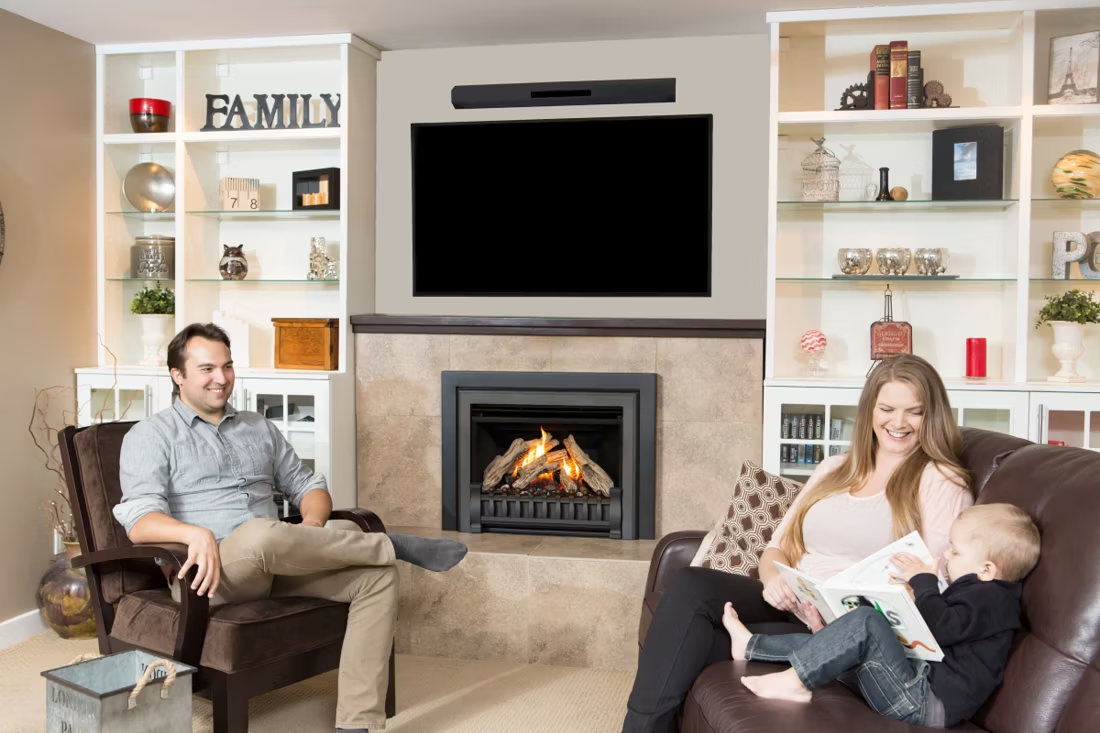
Yes—with an asterisk. Fireplaces are hot and TVs don't like heat. Either put a mantel between them to deflect rising warmth, or choose a fireplace with heat-management technology that creates a cool zone on the wall above—the wall stays around 125 degrees, barely warm, while the room still gets full heat. If you like clean lines and don't want a mantel, heat management is the answer.
Is my gas fireplace wasting gas?
If it was installed more than 15 years ago, probably. Older gas fireplaces keep a standing pilot light burning all the time, and that little flame can cost a couple hundred dollars a year. Newer models use pilot-on-demand ignition—the pilot lights only when you use the fireplace and goes out when you turn it off.
Can I install a fireplace myself?
If you're putting a fire in your house on purpose, it's best to work with an expert. Unless you're genuinely experienced in framing, gas line, vent pipe, and the national code on clearances to combustibles, have a professional do it—and ideally the same company that sells you the fireplace, so warranty, service, and liability all live under one roof.
Can a fireplace actually lower my heating bill?
Yes—by creating a comfort zone. A furnace heats every square foot of the house just to warm the one room you're in; a gas fireplace on low burns roughly a sixth of the gas a typical furnace does. Set the furnace around 55–60 degrees as a baseline, then heat the rooms your family actually uses. Families who heat this way commonly save $20–$60 a month.
Nearby Dealers
Hearth shops serving South Riding and the surrounding area.
Find your gas fireplace in South Riding.
Tell us about your home and your existing setup, and we'll match you with a trusted local Loudoun County dealer plus a free Project Guide & Parts List—the exact fireplace, venting, and parts your South Riding project needs.
Find Your Fireplace →