
Real ambiance for South Riding homes, no chimney required.
South Riding's newer construction was never built around a flue—electric heat fits right in. Find the right unit and connect with a trusted local dealer.
Every Project Starts From One of These Five Situations
Built for homes without a flue.
South Riding is a planned community built out mostly from the 1990s through the 2000s, and most of its townhomes and single-family homes were never framed with a masonry chimney. Many sections also fall under HOA covenants that limit or prohibit solid-fuel appliances entirely. That combination is exactly why wood stoves and pellet stoves rarely show up here, and why electric fireplaces have become the go-to option for adding a fireplace feature to a family room, basement, or primary suite without touching the roofline.
Loudoun County's climate—zone 4A, with a moderate winter heating season and average winter lows around 25°F—doesn't demand a whole-home wood-burning setup the way colder regions do. It's a climate where a well-placed electric unit can genuinely take the edge off a chilly evening as supplemental heat, while central HVAC (often gas-fired, since natural gas is common in South Riding) carries the base load. Depending on which part of the zip code you're in, your home is served by either Dominion Energy (Virginia Electric & Power Co) at roughly 14.1 cents per kWh or Northern Virginia Electric Cooperative at roughly 11.6 cents per kWh—both make electric fireplace operating costs modest for occasional use.
Three steps. No salesperson until you're ready.
Tell us about your project
Your zip code, your situation, and the fuel you're leaning toward—or let the answers point you to one.
See what's actually available
The brands dealers within 100 miles genuinely carry—real options, never a catalog mirage.
Get your dealer & Project Guide
A trusted local dealer, plus the free Project Guide & Parts List that names every component of the job.
Frequently Asked Questions
How much does an electric fireplace installation cost in South Riding?
Costs vary widely by unit type. A plug-in electric insert that drops into an existing firebox or media console runs $200 to $600 installed, since it just needs a standard outlet. A built-in linear electric fireplace with a custom mantel or wall surround—the more common upgrade in South Riding's open-concept family rooms—typically runs $1,500 to $3,500 once framing, finish work, and an electrician's dedicated 120V or 240V circuit are included. Local hearth dealers can walk your specific room and give a firm number based on the wall you're working with.
Why do so many South Riding homes go electric instead of wood or gas?
Two things line up here. First, most South Riding homes were built without a masonry chimney, so a wood stove or wood-burning fireplace would mean adding an entirely new Class A chimney chase—an expensive retrofit most homeowners skip. Second, many South Riding sections carry HOA covenants that restrict solid-fuel burning appliances outright. Electric sidesteps both issues: no venting, no combustion, and no covenant conflict, which is why it's become the default way to add fireplace ambiance in this community. Gas is still a strong option too, since natural gas service reaches much of South Riding—it comes down to whether you want real heat output or primarily ambiance and easy install.
Do I need a permit to install an electric fireplace in South Riding?
A plug-in electric fireplace or insert that runs off an existing outlet generally doesn't require a permit. A built-in unit that needs a new dedicated circuit does require an electrical permit through Loudoun County's Building and Development Department, since a licensed electrician has to run and inspect that circuit. Most hearth dealers coordinate this as part of the install so you're not chasing down inspections yourself.
Which electric utility serves my home, and does it affect my choice of fireplace?
South Riding's 20152 zip code is split between Dominion Energy (Virginia Electric & Power Co) and Northern Virginia Electric Cooperative (NOVEC), so your rate depends on which side of the community you're on—roughly 14.1 cents per kWh with Dominion versus roughly 11.6 cents per kWh with NOVEC. That difference doesn't change what unit you should buy, but it's worth knowing if you're comparing running costs between a 1,500-watt supplemental heater and running your central HVAC longer instead.
Will an electric fireplace actually heat a room, or is it just for looks?
Most electric fireplaces top out around 1,500 watts, which translates to roughly 5,000 BTU—enough to noticeably warm a single room (say, a 300-400 sq ft family room) on a chilly Loudoun County evening, but not enough to replace central heat for the whole house. Given South Riding's average winter low of 25°F, an electric unit works well as zone heat: run it in the room you're actually using and dial back the thermostat elsewhere. If you want a unit that can carry more of the heating load in a finished basement or addition, ask a local dealer about models with higher-wattage heaters versus ones built primarily for the flame effect.
What's the difference between an electric insert, a built-in, and a mantel package?
An electric insert is a self-contained unit sized to slide into an existing fireplace opening or a media cabinet cutout—the simplest option if you already have a firebox-shaped space. A built-in electric fireplace is designed to be framed into a wall, typically with a linear, low-profile look that reads more like a piece of architecture than an appliance—common in South Riding's newer open floor plans. A mantel package pairs a smaller electric firebox with a freestanding wood or MDF mantel surround, which works well in a room where you don't want to touch the drywall at all. Local dealers carry all three and can help match one to your wall and budget.
What does it cost to run an electric fireplace in South Riding?
A typical 1,500-watt electric fireplace uses 1.5 kWh per hour. Running it five hours an evening in a Dominion-served home (about 14.1 cents/kWh) costs roughly $1.06 a day, or about $32 a month for regular winter evening use. On the NOVEC side (about 11.6 cents/kWh), the same usage runs closer to $0.87 a day, or about $26 a month. That's generally cheaper than running a gas fireplace insert for the same hours, though it depends on your specific gas rate and unit efficiency.
Can I put an electric insert into an older masonry fireplace?
Yes—if your section of South Riding or a nearby Loudoun County neighborhood has an older home with an existing masonry firebox, an electric insert is one of the easiest upgrades available. It drops into the opening, plugs into a standard outlet (or a new dedicated circuit if the unit calls for it), and requires no venting, liner work, or chimney sweep. It's a common way to bring a dead or rarely-used wood fireplace back into daily use without the upkeep of burning wood.
Electric vs. gas—which is right for my South Riding home?
Gas fireplaces, which are common in South Riding since natural gas service reaches much of the community, deliver real, sustained heat output and the look of an actual flame, but require a gas line and venting work that adds cost and complexity. Electric fireplaces install almost anywhere with just an outlet or a simple new circuit, cost less upfront, and produce zero emissions or combustion byproducts—a real plus in a townhome or a finished basement with limited ventilation. For homeowners who want a fast, low-cost ambiance upgrade or who are working around HOA restrictions on open flame, electric is usually the better fit. For those who want the room to feel genuinely warm without also running the furnace, gas has the edge. A local dealer can walk through both once they see your room.
Does an electric fireplace need a vent or chimney?
No—that's its superpower. An electric fireplace needs a wall and an outlet, period. No vent pipe, no gas line, no clearances to design around, which is why it works in bedrooms, offices, apartments, and walls where venting a gas or wood unit would be impractical or impossible. Installation is typically the simplest and least expensive of any fireplace type.
Can I put a TV above my fireplace?
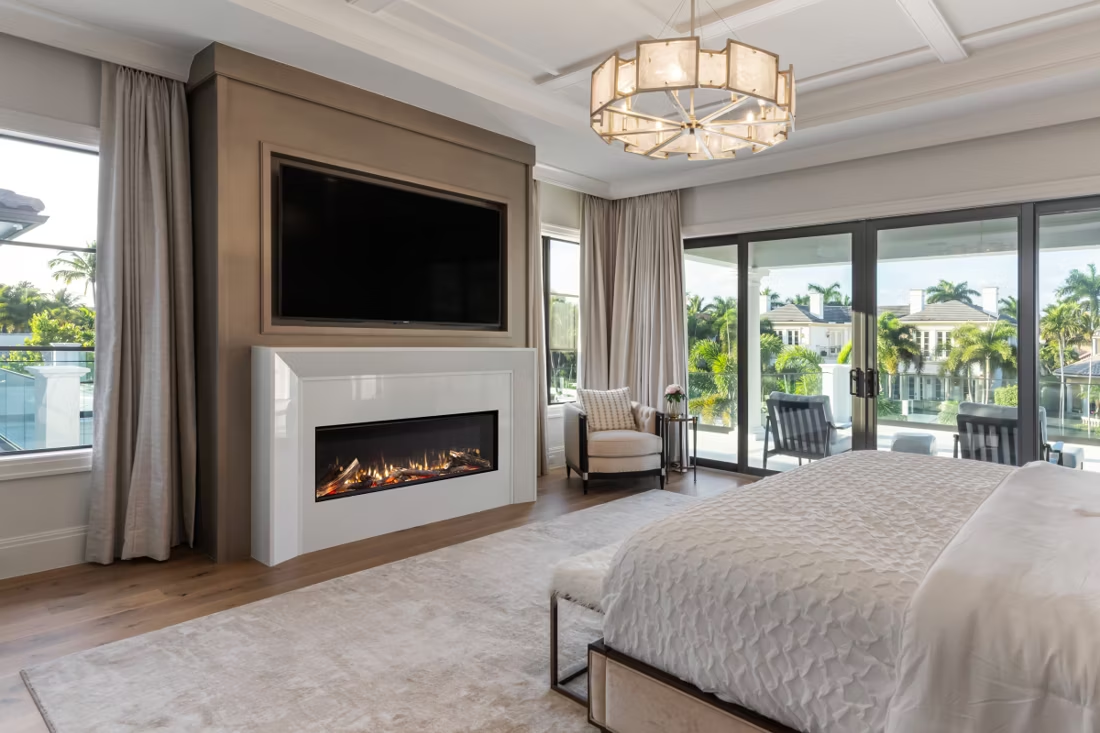
Yes—with an asterisk. Fireplaces are hot and TVs don't like heat. Either put a mantel between them to deflect rising warmth, or choose a fireplace with heat-management technology that creates a cool zone on the wall above—the wall stays around 125 degrees, barely warm, while the room still gets full heat. If you like clean lines and don't want a mantel, heat management is the answer.
What is an in-home preview and do I need one?
It's a visit where a hearth professional measures your space, confirms the model you picked actually works in your home, and walks the specs—framing, gas line, venting, finish work—before anything is ordered. Some details you just can't know until you see the house. Never make a down payment without one; it's the single most-skipped step that burns buyers.
Can I install a fireplace myself?
If you're putting a fire in your house on purpose, it's best to work with an expert. Unless you're genuinely experienced in framing, gas line, vent pipe, and the national code on clearances to combustibles, have a professional do it—and ideally the same company that sells you the fireplace, so warranty, service, and liability all live under one roof.
Nearby Dealers
Hearth shops serving South Riding and the surrounding area.
Electric Service in South Riding
An electric fireplace's heater draws about 1,500 watts—pennies per hour at local rates.
Virginia Electric & Power Co
Northern Virginia Elec Coop
Find your electric fireplace in South Riding.
Tell us a bit about your home and we'll put together a free Project Guide & Parts List—the exact unit, mounting or framing details, and a trusted local South Riding dealer who can install it right.
Find Your Fireplace →